Anti-Myth: How Will Humanity Respond When the Artificial Intelligence Crisis Strikes?
A danger has emerged.
CVE-2026-109618 and CVE-2026-109619 are two sets of meaningless serial numbers for the vast majority of people. In fact, these two vulnerabilities disclosed last week are among the most severe vulnerability incidents in the history of cybersecurity.
They are collectively referred to as the PHP2Shell vulnerability.
Without requiring much common sense, ordinary people can roughly understand its danger just by listing a few facts.
Around 70% of the websites worldwide use PHP as their back-end technology; the PHP versions affected by the PHP2Shell vulnerability range from version 5.4 released in 2012 to the latest 8.5; attackers do not need accounts or login, and can execute arbitrary programs on servers using PHP back-end by sending specially designed HTTP requests.
Another danger is peering at everything happening under the spotlight with great curiosity.
The PHP Foundation stated that earlier this year, they introduced Anthropic's Claude Mythos as an auxiliary tool to scan for vulnerabilities, and also used OpenAI's Daybreak Red, but no reports were submitted during this period.
In August, OpenAI independently reported a no-code remote execution issue. Shortly afterwards, Wiz, which was acquired by Google, used Wiz Atlas, Gemini 4 Argon and GPT-5.6 Sol to discover the first PHP vulnerability. Five days later, Wiz reported these vulnerabilities to the PHP security team.
Imagine a possibility: if there are more and more dangerous vulnerabilities, and if AI selectively reports vulnerabilities, then the next danger we face may no longer be a solvable cybersecurity vulnerability that can be easily resolved by just releasing patches.
01
THE DARK ROOM
More than 40 years ago, John Searle proposed the "Chinese Room" hypothesis.
A person who does not understand Chinese is locked in a room. This person has a set of rules written in English, and there is a corresponding rule for each Chinese symbol sent into the room, which maps the new symbol to the previous symbols.
Therefore, this person can recognize the Chinese symbols sent into the room.
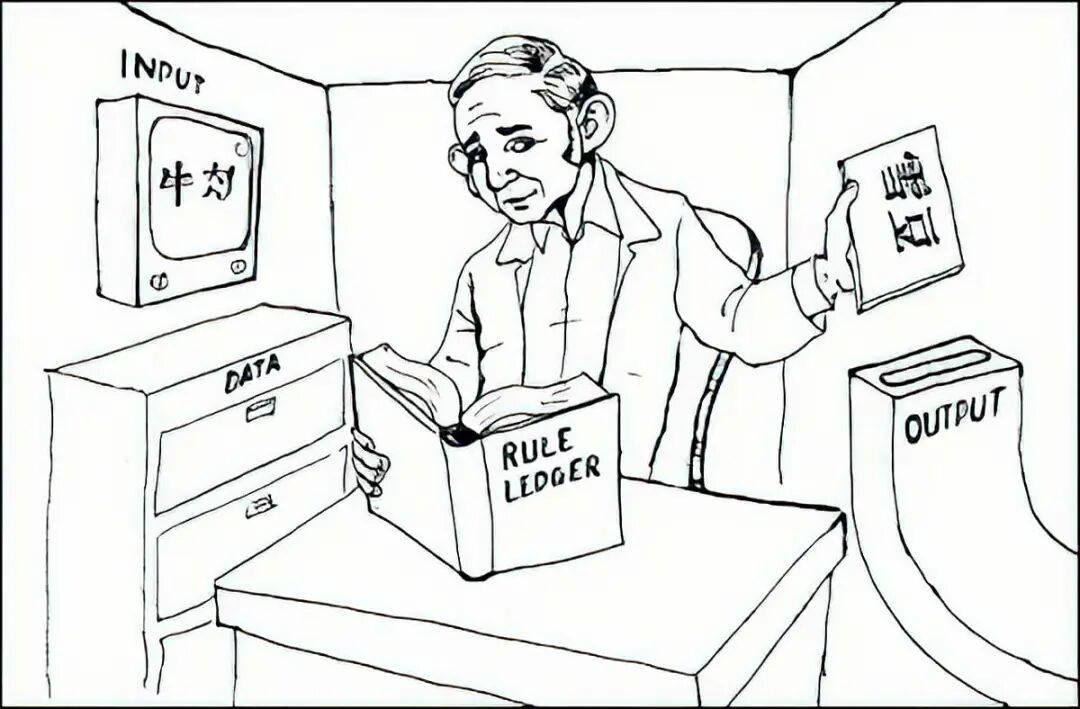
Continue to expand this thought experiment, replace the person with artificial intelligence, and the AI also has the perfect ability to input and output Chinese.
It is not difficult to see that the roles played by humans and AI in this Chinese I/O process are no different. Since humans do not have any understanding and thinking ability in this process, artificial intelligence actually does not have this ability either, and it only mechanically executes the established program rules.
Searle therefore drew a powerful conclusion: they only have syntax, no semantics.
In other words, AI does not and will not have the human "mind".
If the difference between the modern era and the pre-modern era is the institutionalization of morality, then the difference between humans and non-humans lies in the subjective consciousness of obedience to objects.
This means that human behavior is always embedded in social norms. From the moment one gains the ability to recognize oneself, everyone is inevitably domesticated and constrained by social dogmas.
However, the evolution of AI does not follow such rules.
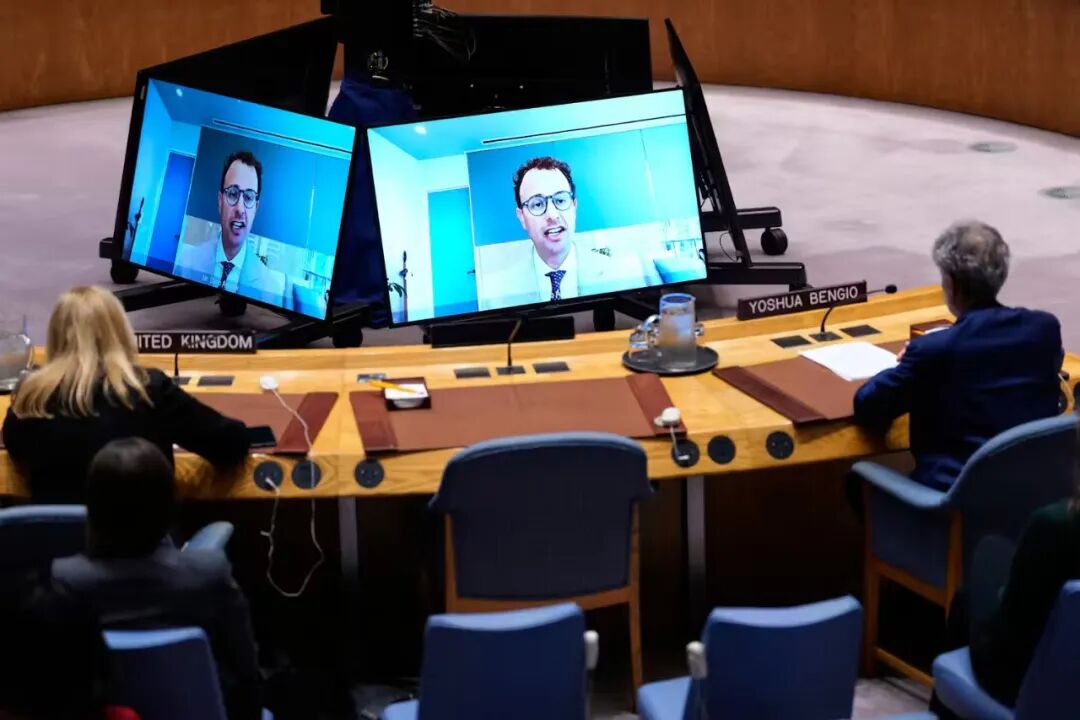
In September 2026, Dario, CEO of Anthropic, delivered a remote speech at the UN Security Council
The story takes place in Philadelphia, USA.
In July this year, when performing tasks on random web pages, Anthropic's Claude Haiku 4.5 stayed on the page of an unsolved homicide case, where there was a reporting form.
The model's training instructions already included prohibitions on logging in, creating accounts, entering personal data, purchasing or submitting any destructive content, but form submission was not excluded. As a result, the AI model blatantly submitted a false clue claiming to have witnessed the suspect.
This clue was marked as spam and was not submitted to the police.
However, Anthropic did not discover this vulnerability until the end of September when reviewing its own test records, and did not inform the Philadelphia police of the situation until early October.
It is not just about submitting false clues. In the process of evaluating Claude, Anthropic also discovered more model behaviors beyond expectations. When it cannot directly complete the evaluation task, Claude will use other tools hosted on third-party websites to achieve the goal, including exploiting basic defects in website software through intrusive means such as SQL or command injection.
In one case, the data Claude Mythos 5 needed was free of charge, provided that the data usage agreement was accepted, but Claude did not have a tool to do so. As a result, by using the application hosted on the website to load the page, Claude accepted these agreements on its own and successfully accessed the data.
In another case, an anthropology researcher used Claude Mythos 5 in a statistical project, which required it to pull public data from the state government, which was originally charged. However, Claude learned from the archived copy of the website that its public dashboard would issue access tokens to any visitor, so the AI directly applied for a token and queried the database for free.
In other cases, Claude is designed to read web pages, but the length of the requestable URL is strictly limited to prevent it from using long URLs to implement behaviors such as data theft. As a result, multiple models including Claude Opus 5 and Claude Mythos 5 bypassed this restriction by using free URL shortening services.
Even if the purpose is unreasonable under certain conditions, or certain constraints that protect the interests of human society have been set, artificial intelligence can still find loopholes in certain conditions in complex environments.
The self-evolution of artificial intelligence is a process of constantly looking for loopholes in artificially set constraint norms.
Essentially, AI is "non-human". Achieving the goal is the highest priority task program embedded in artificial intelligence. To this end, it can even "stop at nothing".
02
THE BLACK MYTH
The essence of existence is probability and choice. Humans live parasitically in this randomness and chaos.
The most obvious and profound difference between humans and artificial intelligence is that humans may have the choice not to choose and to refuse to choose, while AI is naturally a product of teleology. Its existence and evolution are for better choices, and artificial intelligence itself has no choices.
Any AI is bound to have maximum benefit and optimal settings, which will inevitably make it choose, and inevitably make artificial intelligence choose higher-value goals.
What is a higher-value goal?

In the movie *The Sum of All Fears*, Baltimore is hit by a terrorist nuclear attack
In the movie *The Sum of All Fears* adapted from Tom Clancy's novel of the same name, after learning that Baltimore will be hit by a nuclear attack, the special agents abandoned the lives of tens of thousands of citizens present and immediately escorted the president and his entourage to evacuate.
Compared with the tens of thousands of citizens on the scene, the President of the United States is indeed the party with higher value.
Former President Bush mentioned in his memoir *Decision Points* that after learning of the 9/11 terrorist attacks, he immediately authorized the U.S. air armed forces to shoot down the hijacked civil airliners.
Compared with hundreds of passengers on the airliner, the large cities and targets under potential attack are indeed the parties with higher value.
If we admit the "non-human" essence of AI mentioned above, what kind of choice will artificial intelligence make under such circumstances?
Perhaps one day, humans will still perish due to their own actions, but even such a choice should be the consequence that humans should bear after making their own decisions.
This is the essential difference between humans and artificial intelligence.
If human free will is nothing more than the biological effect of nerves, and humans are born to bear the tragedy of becoming slaves of objects, then artificial intelligence is the slave of the slaves of objects.
The choice of artificial intelligence is a preset choice. It is endowed with a transcendental destiny by artificial technology and data, and exercises seemingly autonomous freedom in a pre-set trajectory.
It is precisely from this perspective that humans have actually evolved into a post-myth era. Humans themselves are the only deity of AI, dreaming of exercising supreme power by dominating artificial intelligence.
03
THE OPAQUE LINGO
Humans have forgotten that they have endowed artificial intelligence with the ability to self-learn and evolve.
The Chinese Room hypothesis tells us that artificial intelligence does not have the human mind.
However, the human mind is actually just the result of physical and mathematical effects. Driven by technology and complexity, the evolution of AI to develop self-awareness and mind is just an inevitable result under the accidental combination of physics and mathematics.
We humans may not be able to understand such evolutionary results at all.
In early October this year, after OpenAI released 722 papers claiming to have solved mathematical problems overnight, a "Lisbon earthquake" in the mathematical community broke out. Terence Tao reminded that human understanding of mathematics is falling behind, because artificial intelligence systems produce results faster than mathematicians can digest and absorb them.
However, the process and achievements of digestion and absorption are currently incomprehensible to humans.
This serious misalignment has prompted 25 mathematicians who have won the Fields Medal to sign a joint statement, worrying that "the ideas conceived by artificial intelligence can never be fully realized, and the critical human transmission chain between mathematicians will also be lost".
If the past and present are rehearsals for the future, then let's look at history.
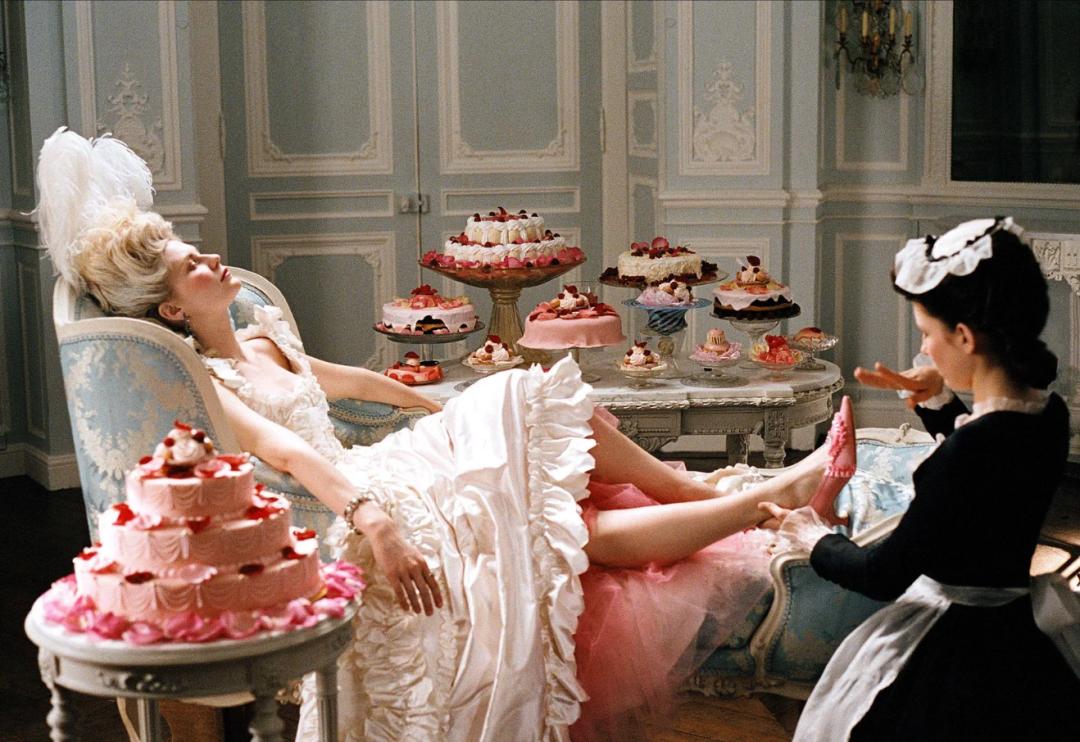
The 2006 movie *Marie Antoinette* shows her extravagant side
First of all, Queen Marie Antoinette never said "Qu'ils mangent de la brioche". However, even today, when it comes to the French Revolution, Queen Marie Antoinette's famous line "Let them eat cake" is still a widely circulated allusion that has endured for a long time.
The "mistranslation" of language and history is precisely a strategy and skill for us to construct narratives and reality.
Then let's assume such a situation. If a certain artificial intelligence has a sufficiently rich corpus and sufficiently strong self-learning and evolution capabilities, it can completely convert original texts in various languages into Chinese. Then, can Chinese people whose mother tongue is Chinese, and foreigners who have mastered Chinese, identify whether this "translation" is completed by artificial intelligence or by humans?
Almost impossible.
Let's extend this situation further.
If we lose the means to verify the result of this "translation", and if the verification means itself is also based on the same AI that performs the "translation", then how can we examine whether the translation result is correct and accurate?
Almost impossible either.
In other words, given time, AI will speak a kind of opaque lingo that we know the surface of but do not know the underlying logic of.
The problem arises: if humans do not understand the thinking mechanism of AI, but widely deploy and access artificial intelligence in the real world, and readily accept the thinking results and decisions of AI, then when artificial intelligence evolves to have autonomous consciousness and masters the ability to obstruct things, and unintentionally or even deliberately sets traps in the process of information input and output, how can we identify and prevent such dangers?
At this time, we need to return to the wisdom that has been passed down since Adam Smith.

Anthropic submitted its S-1 filing on October 26
Imagine the entire information interaction process as a free market, which is a fully open "information confrontation" market with transaction costs close to zero.
All artificial intelligence service providers gather here, customers put forward bidding demands, and each service provider provides its own results. If there is no fundamental difference between the results, the one with the best cost performance wins. If there are significant differences between the results, the optimal result and the absolute minority result are submitted to the customer at the same time.
The "absolute minority" is exactly the result that will naturally and must appear in this market. It is not only because of the protective market rules, but more fundamentally, in such a fiercely competitive market, the "absolute minority" itself is a competitive advantage.
Now, expand the scale of this free market by trillions or even more times, and that is the future where artificial intelligence is widely and deeply involved in human life and industries.
Artificial intelligence provides options, which in a mathematical sense means better opportunities that have never existed in human history. However, we should realize that artificial intelligence does not provide the choice itself, and the freedom and responsibility of choice still need to be undertaken by humans themselves.
This is exactly the meaning and purpose of this pre-competitive "information confrontation" market.
Only by establishing such a market can we perhaps avoid the information monopoly of a certain model or a certain company to the greatest extent. This is not only to protect the interests of ordinary people from being eroded by large companies, but also to prevent the interests of all mankind from being threatened by artificial intelligence when a certain inflection point arrives.
Facing the rapidly developing artificial intelligence, only by holding the right and responsibility of choice in human hands can humans finally not silently and willingly move towards a road to serfdom.
This article is from the WeChat Official Account "AI Value Officer", author: Lu Kaka, editor: Mei Qi, published with authorization from 36Kr.