Counting this touchscreen Mac, how many times has Apple slapped Steve Jobs in the face over all these years?
A few days ago, Apple released the touchscreen-equipped MacBook Pro, and the comment section was once again flooded with a group of "old-school loyalists" who kept worrying whether Steve Jobs' coffin lid could still be held down.
This time it is not completely groundless. Back in 2010, Steve Jobs gave a detailed explanation at the launch event of "why the MacBook should never be equipped with a touchscreen". He said Apple had run a large number of tests and found that people would get unbearably tired after holding their arms up to operate a vertical screen for a short while, "This design is absolutely terrible in terms of ergonomics!"
Sixteen years later, Apple installed a touchscreen on the MacBook.
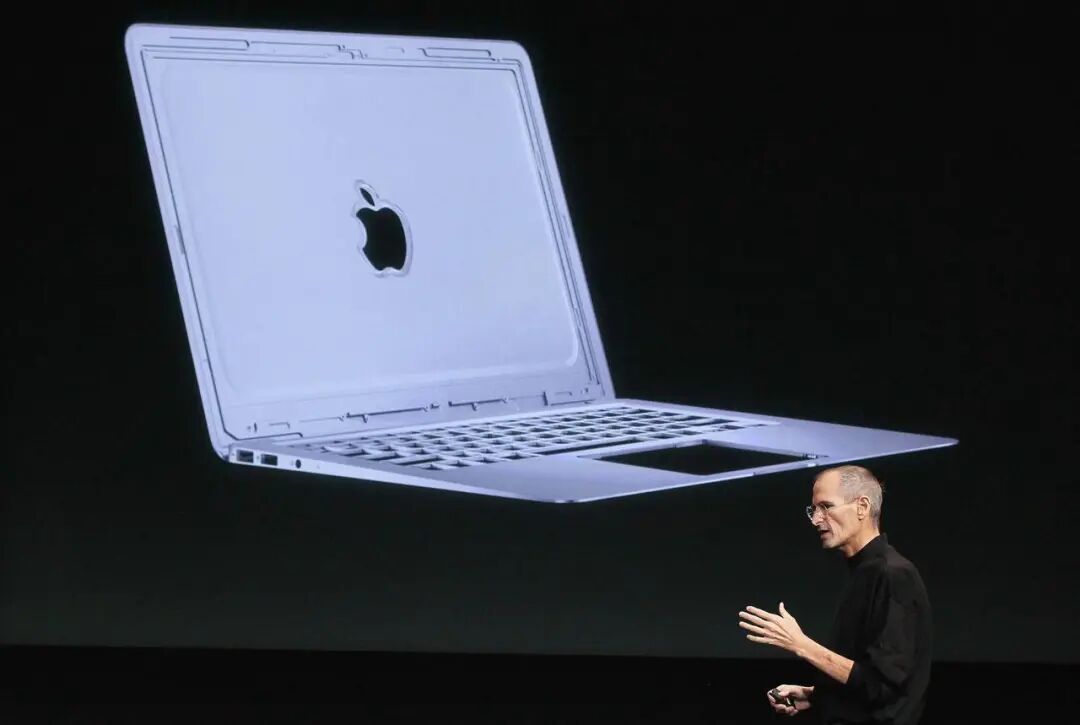
In 2010, Steve Jobs explained why Macs should not use touchscreens | Apple
Apple's new CEO John Ternus also explained in an interview that Apple had finally found a way to implement the feature without increasing the weight and thickness of the computer, which sounded like a bit of a defensive justification.
Over the years, Steve Jobs' coffin lid has almost been pressed into a seesaw. The very company that loves to contradict Steve Jobs is none other than Apple itself. Looking back at Apple's history in the post-Steve-Jobs era, there are quite a few products that completely go against his previous statements.
Apple: I'd rather not — use small tablets, it's better to grind your fingers thinner
In 2010, the first-generation iPad had just hit the market, and many 7-inch small tablets had already appeared on the market. Facing competitors, Steve Jobs did not hold back and directly criticized them on the earnings call.
He believed that 10 inches was the proper size for a tablet computer. The 7-inch tablet is larger than a phone, but too small to provide a good enough tablet experience, "Unless you prepare a piece of sandpaper to grind your fingers down to a quarter of their original thickness."
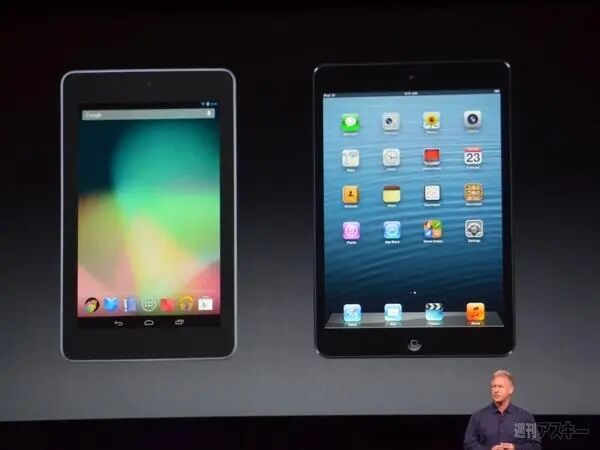
After its launch, the iPad mini emphasized "display area" rather than small size | Weekly ASCII
As soon as one year after Steve Jobs passed away, in October 2012, Apple launched the 7.9-inch iPad mini.
Phil Schiller, who was in charge of product marketing at the time, also emphasized that the actual screen area of the iPad mini was 35% larger than that of competitors' tablets, and it could run all existing iPad apps perfectly. In a sense, this was a way to save some face for his former leader.
Consumers were also very receptive, The iPad mini and the 4th-generation iPad released at the same time sold a total of 3 million units in the first weekend, breaking the then sales record for iPads. Apple even said that the initial demand for the iPad mini exceeded its supply capacity.
Similar things soon happened to the ace product iPhone.
No one will buy a big phone? 10 million units sold in three days
In 2010, the famous "Antenna Gate" incident broke out with the iPhone 4. When Steve Jobs explained the mobile phone signal and antenna design issues at the press conference, he took the opportunity to mock large-sized phones.
He said that making the phone particularly large would of course help solve some antenna problems, but no one would buy a phone that is too big to be held with one hand. After all, Steve Jobs always attached great importance to the one-handed operation experience, and the first-generation iPhone was only 3.5 inches.
But the Android camp obviously had no intention of listening to him.
When the Samsung Galaxy Note was launched in 2011, it was equipped with a 5.3-inch large screen. In the following years, people started to watch videos, browse social media, play games and navigate on their phones, and more and more people felt that a slightly larger screen was much better.
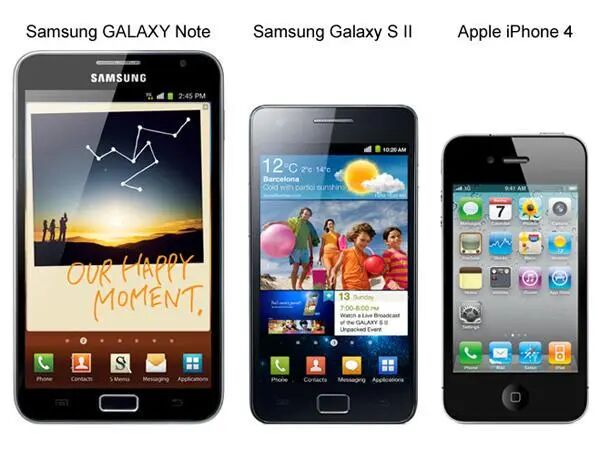
In 2011, the 5.3-inch Galaxy Note and the iPhone 4 with only a 3.5-inch screen | Bodnara
Apple finally could not hold back anymore. In 2014, the iPhone 6 and iPhone 6 Plus were officially released, with screens increased to 4.7 inches and 5.5 inches respectively.
Just three days after its launch, the two phones sold more than 10 million units in total, setting a new sales record for Apple itself.
As for today, large-screen phones with screens over 6 inches have long been the mainstream in the market. The one-handed operation problem that Steve Jobs worried about back then still exists, but users have adapted to it.
The screen size is just the appetizer. The next case is probably the most classic "boomerang" moment in Apple's history.
"Who on earth would want to use a stylus?" Apple Pencil: ???
In 2007, at the launch event of the first-generation iPhone, Steve Jobs suddenly started mocking styluses in front of the audience. He made the same radical statement: "Who would want to use a stylus?"
"Humans are born with ten fingers, why not use them?" Steve Jobs mocked all the phones equipped with styluses at that time, and confidently introduced the multi-touch technology of the iPhone. This speech later became one of the most classic clips in iPhone launch events.
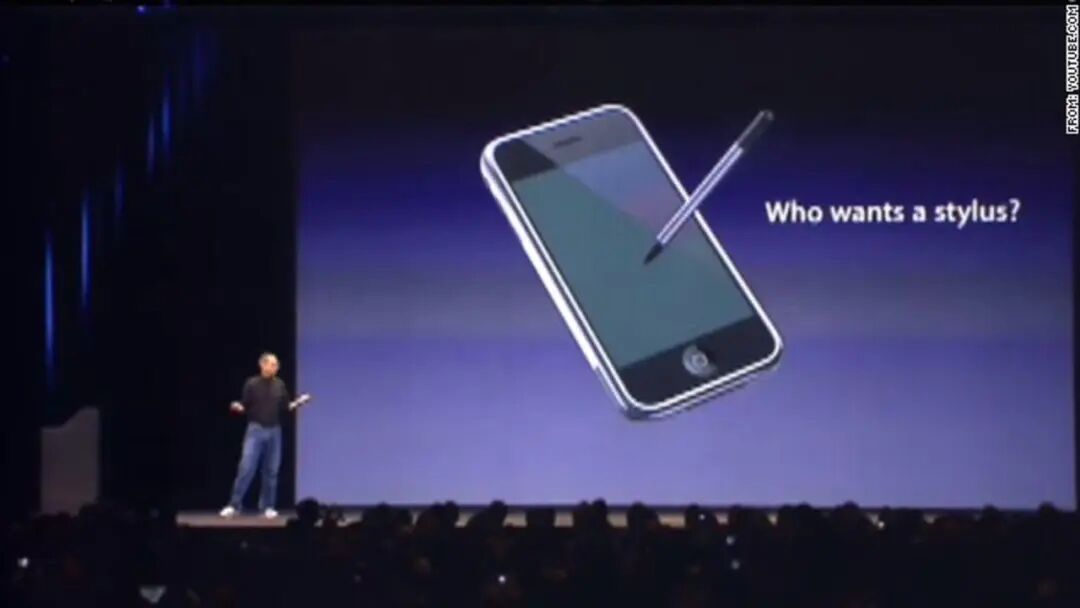
The famous scene of "Who needs a stylus?" | YouTube
Eight years later, Apple launched the iPad Pro. At the same time, an accessory priced at 99 US dollars that needed to be purchased separately made its debut: Apple Pencil.
What Steve Jobs opposed was the experience of pulling out a thin pen from the side of the phone to tap and draw on the screen (a tear of the times). However, Apple Pencil solves the precision problem — it is indeed more convenient to draw, write, and modify fine drawings with a pen than with your fingers.
Later, Apple Pencil gradually became an important part of the professional creation experience of the iPad, and Apple also developed technologies such as pressure and tilt angle detection and low-latency writing for it. Today, Apple Pencil has been updated for several generations and has become one of the most representative accessories of the iPad.
Double Kill: MacBook Neo and touchscreen MacBook Pro
This year's MacBook product line directly stepped on two "red lines" set by Steve Jobs back then.
In 2008, an analyst asked Steve Jobs whether Apple would launch cheaper Mac computers. Steve Jobs answered very bluntly: "We don't know how to make a 500-dollar computer that is not garbage, and Apple's genes do not allow us to sell such things."
As a result, in March 2026, Apple rewrote its DNA and launched the MacBook Neo. The starting price in the US is 599 US dollars, and the education discount price is only 499 US dollars, which perfectly falls into the "500-dollar garbage computer" price range. Neo has also become the cheapest laptop in Apple's history.
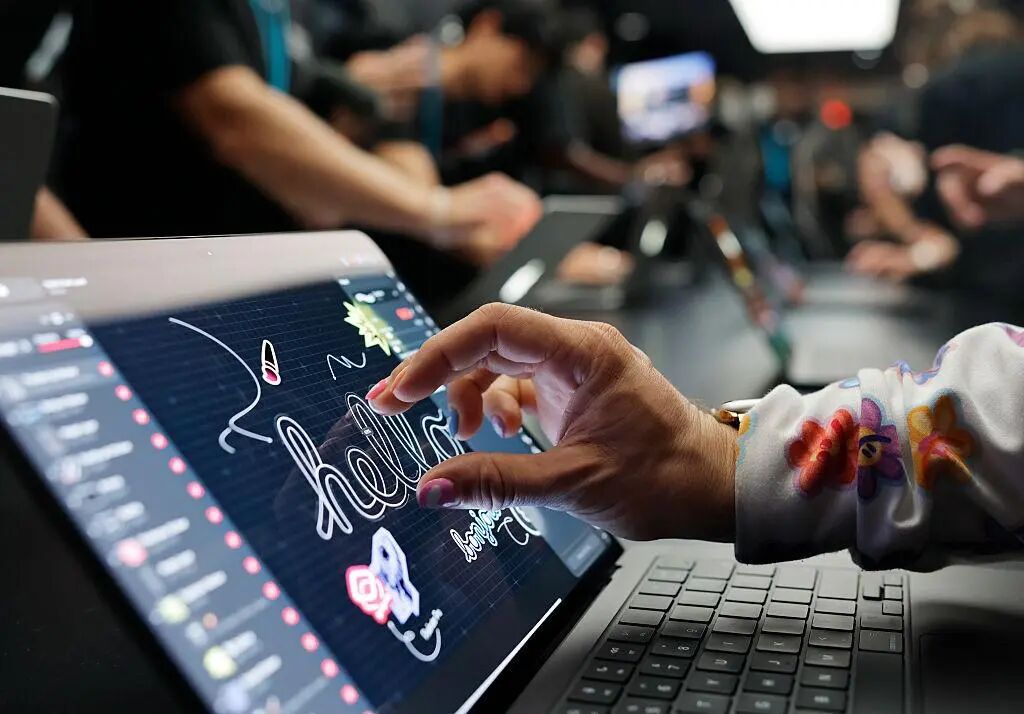
On October 28, Apple released the first MacBook Pro that supports screen touch | Apple
The other red line is the touchscreen MacBook Pro.
One is a test of the price bottom line, and the other overturns Steve Jobs' judgment on the interaction method. Whether these two transformations can achieve commercial success remains to be seen.
What about the promise of not renting music?
Steve Jobs is a famous music lover. In 2001, he personally launched the first-generation iPod, making it a reality to "put 1000 songs in your pocket". Later, the iPod became Apple's star product, and by the end of 2004, its cumulative sales had exceeded 10 million units.
But Steve Jobs also had his own insistence on how people should listen to music.
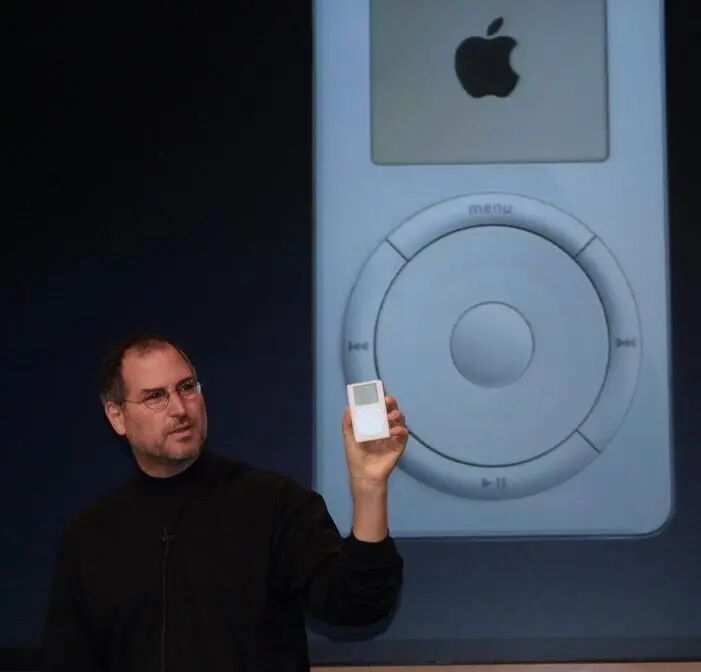
When Steve Jobs showed the first-generation iPod, he mentioned "put 1000 songs in your pocket", and iTunes also focused on the single-selling model | Apple
In 2003, Steve Jobs said in an interview with Rolling Stone: "Consumers love to own music, not rent it." In his opinion, from vinyl records, tapes to CDs, people paid to buy a song or an album, and iTunes just moved this consumption habit to the Internet.
Apple did have enough confidence back then. The iTunes Music Store allowed users to buy a song for 99 cents, then put it into the iPod and listen to it as many times as they wanted. Compared with subscription services, this model was more in line with the habits of consumers at that time.
But by 2015, Apple launched Apple Music. For 9.99 US dollars a month, you can listen to the entire music library, and you can't listen to a single song without a subscription.
Isn't this exactly the "renting music" that Steve Jobs looked down on back then?
But this transformation has achieved quite impressive results. According to Statista's estimate in 2024, the number of global subscribers to Apple Music has reached about 95 million.
It's not a slap in the face, it's just that the "choices" have changed
For other companies, this is called contradicting themselves. For Steve Jobs, this means that even a great product manager will often revise his own judgments.
The most classic example is the first-generation iPhone. When Steve Jobs released the first iPhone in 2007, he was unwilling to allow third-party developers to directly install native apps on the phone. At that time, smartphones were still very immature, and the quality of software was uneven. Steve Jobs was worried that once users were allowed to install software at will, the smooth experience that Apple had worked hard to build would be destroyed.
His solution was to let developers use web technology to make apps, that is, Web Apps that were popular a few years ago.
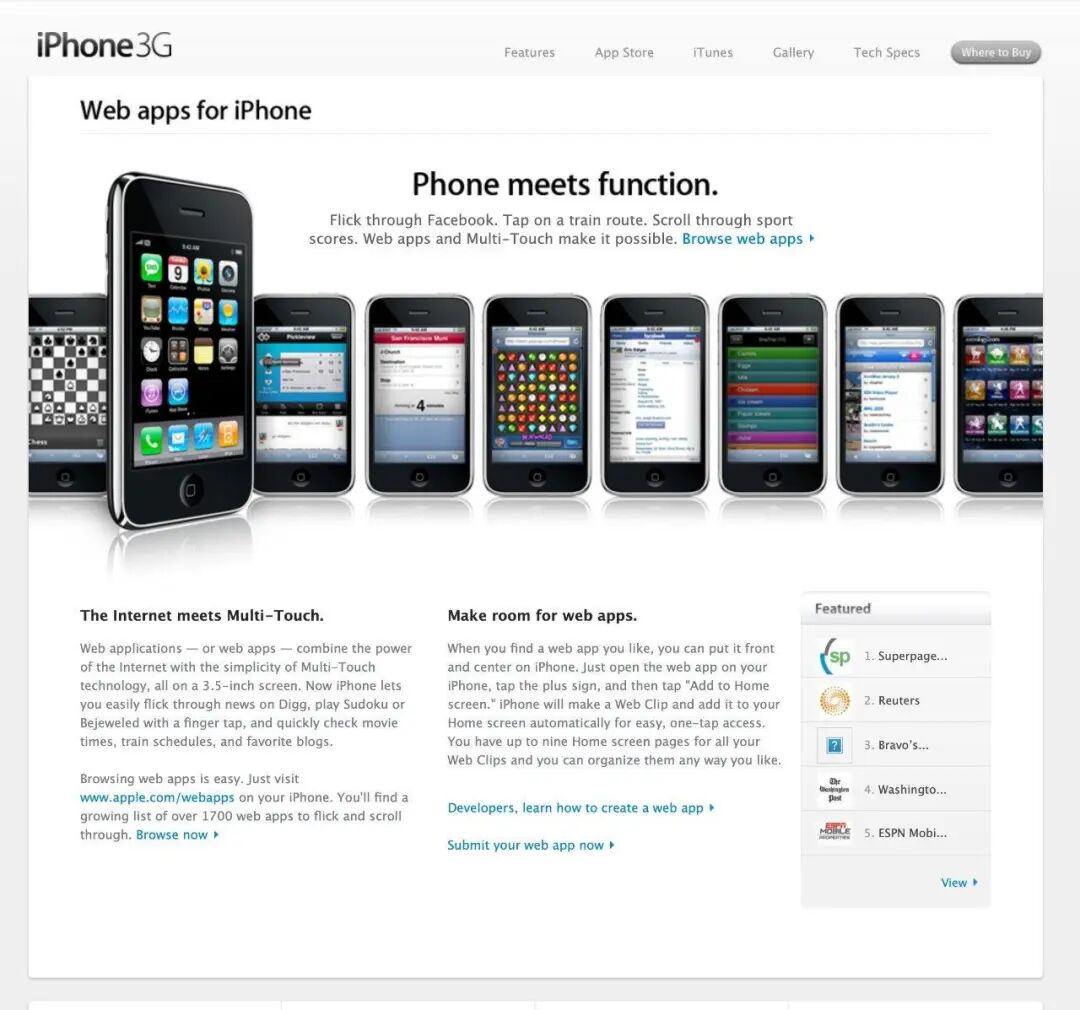
In the iPhone 3G era, the Web Apps section on Apple's official website | AppleInsider
But users and developers did not buy it. Limited by the browser and network conditions at that time, Web Apps could not give full play to the performance of mobile hardware. Users wanted richer software, and developers also hoped to get more complete development permissions.
It only took four months for him to change his mind.
In October, he personally announced that Apple was developing a third-party native app SDK. In March 2008, Apple officially announced the development tools and the App Store solution. In July of the same year, the App Store went online, and the number of app downloads exceeded 10 million in three days after launch; two months later, the cumulative number of App downloads exceeded 100 million.
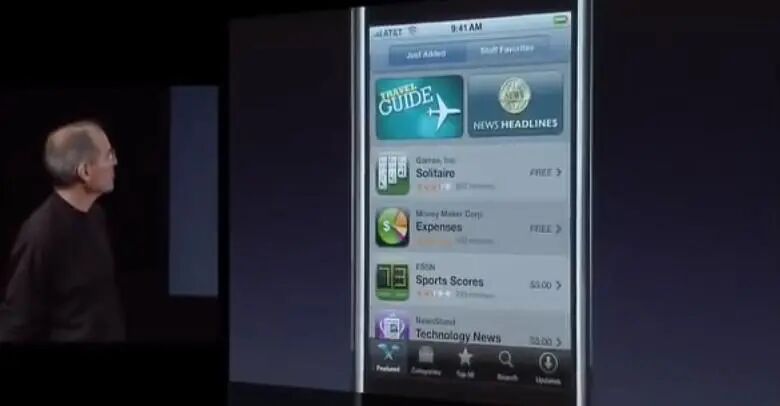
At WWDC 2008, Steve Jobs showed the App Store interface on the iPhone | MacWorld
The impact of this change is far more profound than launching a large-screen phone or a small-sized tablet. The iPhone directly led the mobile Internet era.
At Steve Jobs' last WWDC keynote speech in his life, he personally overturned a very important product strategy of Apple.
In 2001, Steve Jobs put forward the concept of "digital hub", taking the Mac as the center of people's digital life. Music, photos and videos are all stored in the computer, and then synced to devices such as the iPod via data cables. This set of solutions supported Apple's product design for ten years.
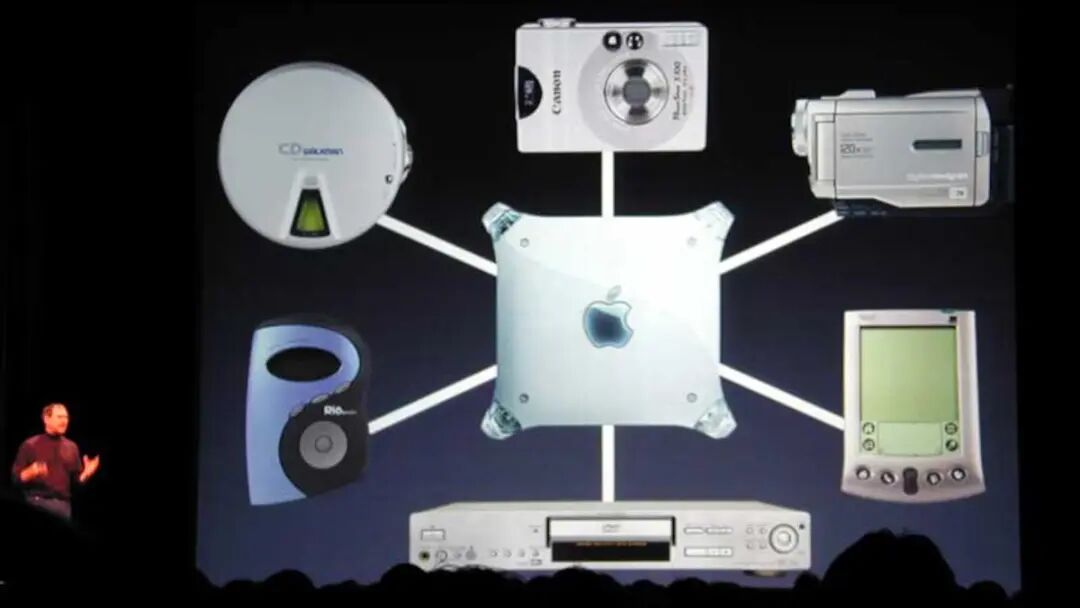
In 2001, Steve Jobs explained the "digital hub" positioning of the Mac | Cybercultural
But by 2011, if people bought a song on their iPhone and wanted to listen to it on their iPad, they still had to transfer it through a computer. Steve Jobs even complained at the launch event: "Just keeping all these devices in sync is driving us crazy!"
So he released iCloud, and announced that he would "downgrade" PCs and Macs to ordinary devices, and move the center of digital life to the cloud.
Steve Jobs once left many famous judgments, but they are not all unshakable. Most of the time, they are just product choices made based on the technical conditions, user needs and competitive environment at that time.
Steve Jobs knew very well what "choice" meant.
In 1997, Steve Jobs returned to Apple, when the company was facing operating difficulties, the product line was chaotic, and resources were scattered by