The vanished "Golden September and Silver October"
Dropping by more than 10%, with transaction volume slumping by 30%. It is not that no one wants to change cars in the peak season, but everyone is tightening their belts.
"If you ask how business is going... I can only say, it's a bit better than in June, July and August!"
The person who answered me was the on-duty store manager at a full-vehicle brand dealership on Jiangyang South Road, Shanghai. Frankly speaking, I have heard similar answers so many times during my visits to multiple dealerships in the past week that I am already tired of them. Whenever I ask about recent business or the deal closing situation in this "Golden September and Silver October", the answers I get can generally be summed up in this way.
One thing is beyond doubt: "Golden September", which was once regarded by the industry as the last hope for the market to turn around this year, has clearly turned cold. Although the subsequent "Silver October" has not yet ended, the result is more or less the same.
Sales consultants at dealerships have the most personal experience of the ups and downs of the automotive market. During my visits to dozens of stores over the past week or more, I can roughly summarize the basic trend of this round of "peak season" through the accounts of various consultants.
After entering September, before the 20th, the business performance of most stores was generally "tolerable". However, the market declined very significantly after September 20. The business picked up again until the National Day holiday, but turned cold immediately after the long holiday ended. To quote a sales consultant, this year's "Golden September and Silver October" has actually become "Copper September and Iron October".
Let's compare last year and this year from the data level.
According to statistics from the China Passenger Car Association (CPCA), retail sales of narrow-sense passenger vehicles in China reached 2.244 million units in September last year, a year-on-year increase of 6.4% and a month-on-month increase of 11.2%. That was the highest monthly sales volume in the past five years (2021 to 2025). But a year later, the retail data for September this year was only 1.618 million units, 626,000 units less than last year, with a year-on-year decline of 28%.
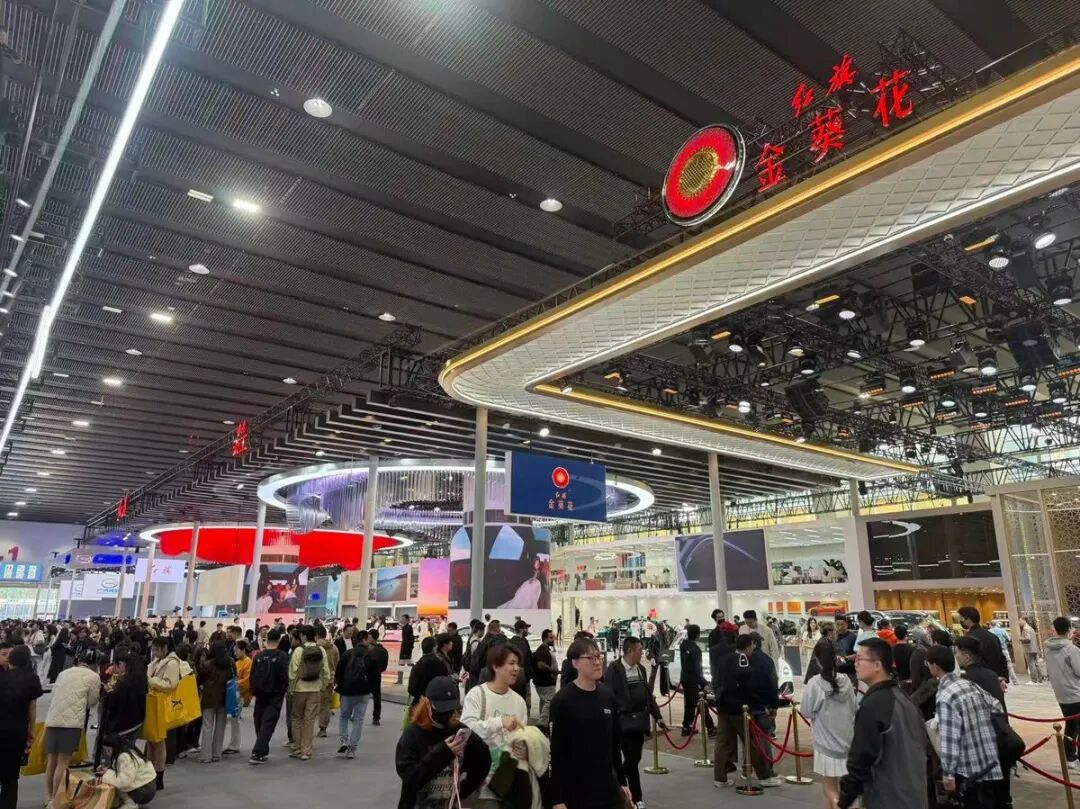
Figure丨Although the auto market was hot last year, many people actually had a clear understanding. Many industry leaders, including Mr. Wei, editor-in-chief of Auto Community, predicted and analyzed the decline of the overall market this year at the end of last year.
Using another statistical caliber, according to data from the China Association of Automobile Manufacturers (CAAM), domestic auto sales in September reached 1.904 million units, with a year-on-year decline of as high as 26%. If we extend the time to the first three quarters, the cumulative retail sales of passenger vehicles reached 13.334 million units, down 21.7% year-on-year. For October, which has not yet ended, the CPCA already has data for the first ten days. The average daily retail sales in the first week of October was 33,000 units, down 25% year-on-year. The situation in the second week was slightly better, rebounding to an average of 58,000 units per day, but still down 22% year-on-year.
Back to the beginning of the article, after expressing the meaning of "a little better than in June, July and August" to me, that store manager actually had the second half of the sentence.
"Let me tell you an interesting thing. According to the statistics of our store, from the beginning of September to now, the actual number of people entering the store and the customer acquisition information obtained by sales consultants have dropped significantly compared with last year, but the decline is only a little over 10%."
In short, the number of people who have the intention to buy a car and come to the store to see the car has not decreased too much. What is missing now is actually people who are willing to pay immediately. As for why prospective car owners only look but do not buy, that is the really intriguing part...
01
Bought Too Early
"I'm an old car owner, just browsing casually."
Last Wednesday afternoon, as soon as I stepped into the store of a self-owned luxury brand dealership on Jiangyang South Road, Baoshan District, I heard a customer who entered the store one step ahead of me say this to the sales consultant who greeted him with a smile and a bottle of bottled water.
As soon as this gentleman entered the store, he went straight to a hybrid station wagon displayed in the hall that was launched at the end of June this year. Through subsequent conversation, I roughly learned about his situation.
This gentleman bought a B-class hybrid sedan under this brand, placed the order in September last year in the form of a replacement subsidy. His original car was a compact joint-venture sedan, and the reason why he placed the order in a hurry last year was that near the end of September, there was news that the replacement subsidy was about to end. According to his own statement, he had always wanted to get a station wagon.
But no one could have imagined that the brand he liked would have news of a new energy station wagon the next year, and it would be launched at the end of June. In response to my joke of "why not replace it again", this friend waved his hand with a big laugh, as if to cut off troubles and meaningless thoughts, "I have to drive it for at least three or four years before I consider changing. Does money fall from the sky?"
Situations where people have the intention to buy (replace) a car, but have not yet found a fully satisfactory model, and end up advancing their plans due to factors such as subsidies and promotions, are not uncommon within my perception. In addition to the friend above, when I was wandering around a commercial center in Minhang District with my child on Sunday, I met a family of three who also "bought too early" in the in-mall store of a sub-brand under a new power automaker. They also immediately bought the 2025 model at that time because of the rumor of the national subsidy withdrawal between September and October last year.
As a result, not only did the subsequent national subsidy continue, but more than half a year later, the 2026 model was launched. The driving assistance system added lidar from the pure vision solution, and there were also many hardware upgrades and so on.
"Our kid has grown up, so our previous compact SUV looks too small for the family." While complaining to me, the couple's son was crawling in and out of every sample car in the store. "We originally planned to change cars this year, but we saw all kinds of rumors on the Internet and couldn't hold our breath."
In short, these car owners who changed their cars in a hurry last year originally had their own plans and preferences. However, affected by the dual impact of the white-hot price war and official stimulus policies last year, they advanced their car purchase or replacement plans.
Such situations are not isolated cases. In my circle of friends, there are several examples of people who advanced their car purchase plans due to various stimulus and preferential policies last year. I also believe that everyone reading this article has more or less such friends around them.
02
The Wait-and-See Group
The opposite of "bought too early" is the "wait-and-see group". They also have clear car purchase intentions, but due to various changes since this year, they choose to hold their money at this juncture.
Take an example around me. I know a post-95s generation who has been clamoring to buy a car since the end of last year. From December last year to now, this gentleman has almost studied all newly released models on the market in 11 months, and goes to the dealership for test drives every few days. He is so diligent in learning that his knowledge about cars quickly matches that of senior automotive media editors, and he knows all the old scores, interesting anecdotes and famous memes of various brands by heart.
But after learning, seeing and comparing so many models, he still hasn't decided what to buy from the end of last year to now, and the target models have changed five times during this period. He counted on his fingers and told me that the first car he liked was launched at more than 230,000 yuan at the end of last year. This year, the mid-term facelift added configurations, but the guide price was reduced by 12,000 yuan, and local subsidies were superimposed at the terminal. When I asked him why he didn't place an order, his reason was also sufficient: almost every new car now is cheaper than the old one, but the configuration and craftsmanship seem to have been shrinking. His exact words were: What I'm afraid of is not the high price, but the price drop right after I buy it. So I would rather take a taxi or subway every day than suffer the "backstab" of price cuts.
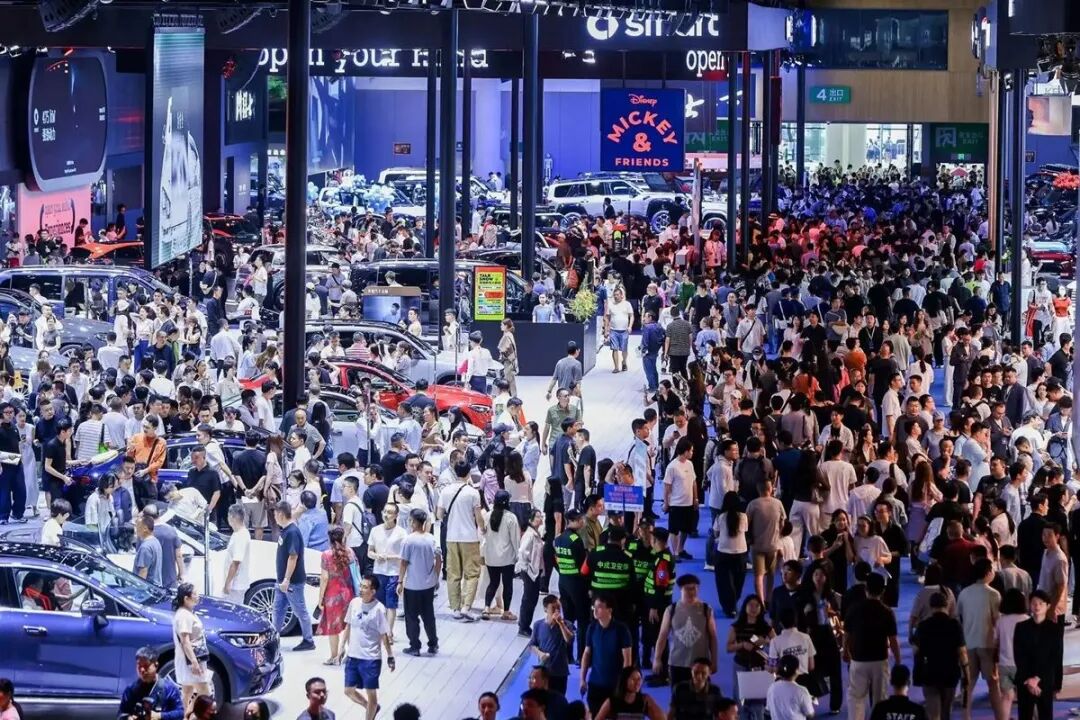
Figure丨When you can't keep up with the market rhythm at all, tightening your pocket is the instinct of most people.
Such customers are not isolated cases. The store manager mentioned earlier, as well as sales consultants I talked to in other stores, almost all mentioned that they have several customers with clear intentions who refuse to place an order no matter what.
In a joint-venture brand store in Putuo District, a sales consultant who has been in the industry for six years smiled bitterly at me and said that current customers know more about cars than he does. He stores the configuration comparison tables of various models in his mobile phone, and directly asks how many nanometers the chip is, which supplier provides the battery, and whether the intelligent driving is end-to-end when entering the store, and he is more familiar with these parameters than the training materials. According to him, such customers have increased visibly this year. They have budgets and clear demands, but they will never place an order until they find a satisfactory one.
In a store of a certain brand on a road in Zhabei District, a sales consultant talked to me that a potential customer already has 5 test drive records under his name. He has been following up since October last year and added the WeChat accounts of three salespeople. But every time he is asked whether he will place an order, the answer is always "let me see more" or "we'll talk about it at the end of the year". According to his understanding, the customer has been driving his current car for nine years.
"Even if I use 'the oil price is so high now' to provoke him, this guy just frowns and says 'it's okay, I don't drive much on weekdays'..." When telling me these details, the young sales consultant had a speechless expression on his face.
It's not that there is no demand, it's just that the demand is frozen. The reasons for freezing are not all the same. Because there is another type of car owner who is stuck on their sunk cost.
Earlier last month, I saw a group friend complaining in a WeChat group that his 6-year-old B-class joint-venture sedan could get a replacement deduction of nearly 60,000 yuan at this time last year. In September, he took a fancy to a mid-to-large new energy SUV of a self-owned brand and wanted to replace his car, but after re-evaluation of the same car condition, the price was less than 50,000 yuan.
After figuring out the used car price, he was completely frustrated, angrily said he would not change the car anymore, and decided to drive his current car "until it breaks down, and then I will directly apply for the scrap subsidy!"
Such car owners do not want to change new cars, but cannot accept the excessive depreciation of their assets. Such people seem to be overly sensitive, but there are exceptionally many of them this year. The China Automobile Dealers Association clearly stated in the first-half residual value report that the average 3-year residual value of fuel vehicles has dropped to just over 46%. In 2022, this figure was still 67.6%.
03
The Bitter Consequence of Overdrawn Demand
If you ask why this year's peak season is so completely cold, the root cause is not in this year.
Last year, the scale of trade-in across the country exceeded 11.5 million units. In other words, more than half of the transactions at the retail end were related to subsidies. Coupled with the chaotic price war that year and the last rush before the new energy vehicle purchase tax exemption expired at the end of the year, a large number of demands that should have been fulfilled in 2026 or even 2027 were forcibly locked into the 2025 sales figures in advance.
The historical peak of 2.244 million units in September last year was driven in this way. But if you eat the food that belongs to the next year this year, you will have to pay it back sooner or later.
This year, subsidies are calculated proportionally with a cap, and the purchase tax has changed from full exemption to half reduction. Under the dual pressure, the demands that were stimulated last year have collectively entered the digestion period this year. The cumulative retail sales of passenger vehicles in the first three quarters was 13.334 million units, down 21.7% year-on-year. This is not an occasional fluctuation in a certain month, but a full-year demand pressure. The CPCA's full-year forecast is 18.5 million units, which is not only far from the 23.74 million peak in 2025, but even falls below the historical trough of 19.29 million units in 2020.
However, overdraft only explains the decline, not why no one buys even after such a big drop.
More and more models are launched, facelifts are getting faster and faster, and prices are getting lower and lower. Public official price cuts, hidden benefits, local subsidies, financial interest discounts, there is no month without promotions all year round. Once price reduction becomes the norm, it is no longer a stimulus, but noise. There is a striking number in McKinsey's 2026 China Auto Consumer Insight: 22.2% of consumers hold a negative attitude towards the price war, which is higher than the 16.5% who hold a positive attitude. Repeated price cuts did not bring orders, but only a response that "waiting a little longer will make it cheaper".
Chasing the rising trend and avoiding the falling trend is never the patent of the stock market and real estate market. In the real estate market, the higher the housing price, the more people rush to buy, and the lower the price, the fewer people take it. The auto market is the same. When the expectation that "prices will always fall" is written into consumers' minds, rigid demand will also tighten their wallets. It is human nature to buy when prices rise and not buy when prices fall, which has nothing to do with a specific industry. The Chinese auto market has just fully demonstrated this logic for the first time.
Speaking of "Golden September and Silver October" itself, it is not that sacred at all. This term is not an unbreakable rule that has existed since ancient times. It was originally just a consumption inertia after the autumn harvest in the agricultural society. At the beginning of this century, it was first used as a marketing term for autumn offensive in real estate, home appliances, IT and other industries. It was not until 2004, when the auto market suddenly turned cold and the "winter is coming" theory spread widely, that it was hyped up by manufacturers and media as a popular term in the auto market.
In essence, it is similar to "Double 11", an annual promotion schedule that is jointly agreed and maintained. Creating a shopping festival relies on consensus. When the consensus is diluted by the non-stop price war all year round, the festival naturally ceases to be a festival.
Therefore, when China's automotive industry moves from the popularization period to the stock period, from a seller's market to a buyer's market, and from fuel vehicle dominance to new energy dominance, the old rules exit the stage, which is not a huge upheaval at all. The era when a single time node could leverage the whole year has already come to an end.
04
Epilogue: Is There Still Hope?
However, in this autumn full of wailing, there is no lack of bright spots. At least two joint ventures seem to have found the stepping stone to help them cross the river.