500 billion yuan was wiped out in a single day, AI technology stocks have suffered a brutal slump, and even leading large AI companies have unexpectedly started to face a capital shortage.
Over the past two days, global AI tech stocks have suffered another sharp slump. Google plunged 12.64%, marking its largest single-day drop since listing, wiping out nearly 500 billion USD in market value in one day; Intel fell more than 20% after hours, while the Nasdaq and Philadelphia Semiconductor Index weakened simultaneously. Under the same cloud of gloom, the root causes differ: Google's drop stems from its free cash flow turning negative to -9.07 billion USD for two consecutive quarters, while Intel's slump is driven by its Q4 guidance and supply shortages. But both point to the same shift: after stock prices have risen to a sufficient level, the market no longer pays solely for AI narratives, and has begun to verify delivery capabilities item by item.
The most striking part of this correction is that demand has not disappeared. Orders remain, and profits are still rising: Nanya New Material's net profit for the first three quarters surged eightfold year on year, and CoreWeave's backlog of orders reaches as high as 103.7 billion USD. Yet capital is increasingly tight: payments for A-share manufacturers are tied up in customers' payment terms, CoreWeave's bond yield has spiked to 16%, and Google and Meta have started issuing shares and bonds to fill funding gaps. At the other end of the chain, NVIDIA uses advance payments to lock in production capacity, while six suppliers are selecting orders — on the same industrial chain, some are picking orders, while others are being picked by orders, and there is only one dividing line: how customers make payments.
In the past two years, the market asked "how fast can you grow"; now it asks "how much capital do you need to advance for growth, what is the return on capital, and is the cash flow sufficient to cover interest and depreciation". The AI industrial chain has entered a full accounting period. Profits are on paper, and cash is what keeps operations alive. This article will do the math for this.
A Rare and Striking Contrast
In the first half of 2026, Nanya New Material delivered an explosive performance: as a copper clad laminate (CCL) manufacturer, it recorded revenue of 3.54 billion RMB in Q3, up 160.62% year on year; its attributable net profit for the single quarter hit 990 million RMB, up 1295.94% year on year; its attributable net profit for the first three quarters reached 1.451 billion RMB, up 817.72% year on year.
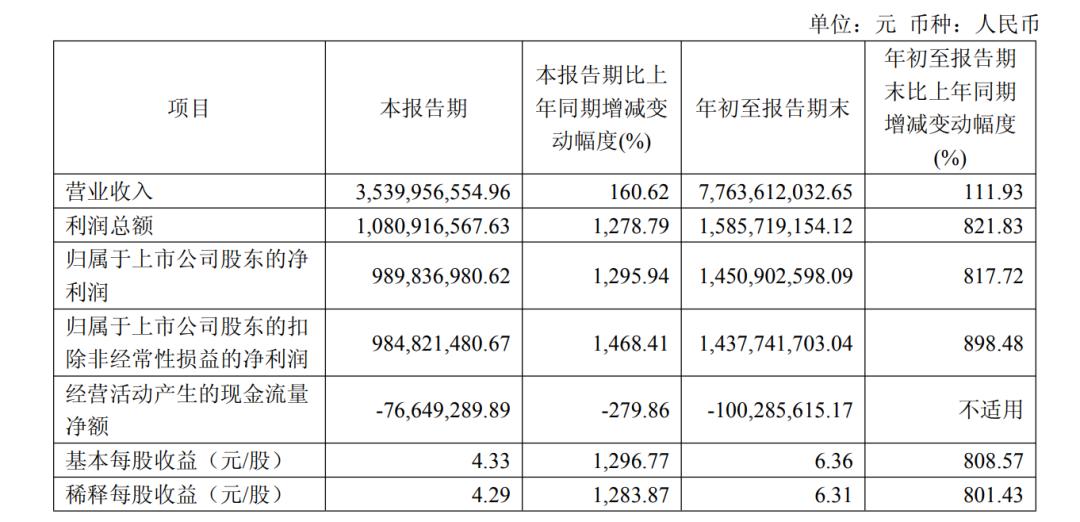
Source: Nanya New Material
If you only look at the income statement, this is exactly what a company riding the AI boom should look like: AI servers drive up both volume and price of high-speed CCL, and gross margin has recovered all the way from 4.24% in 2023 to 18.87%, making a perfect story.
But when you turn to the cash flow statement, the picture changes completely: its net operating cash flow for the first three quarters is about -100 million RMB. The company itself explained that with customer credit periods plus settlement methods dominated by acceptance bills, the actual collection cycle is about 4 months. Goods are sold, revenue is recognized, but the money is still tied up in customers' payment terms.
Profits have multiplied, but no actual cash has been collected. This is not the misfortune of a single company, but a common phenomenon across this round of the AI industrial chain. You can no longer understand today's AI industrial chain by only looking at the income statement.
Coincidentally, CoreWeave, the "No.1 AI computing power stock" on the other side of the Pacific, is staging the same play. GPU rentals are getting more and more expensive: the H200 rental price index has more than doubled since the start of the year, and even the A100 released in 2020 has not depreciated as the traditional hardware script predicted; the company recorded revenue of 2.575 billion USD in Q2 2026, doubling year on year, and its remaining performance obligations (RPO) reached as high as 103.7 billion USD.
Source: Internet
Then what happened? Its stock price has fallen by about 30% since October, the 5-year CDS spread has surged to a record high of about 1195 basis points, some of its bonds have fallen to 79% of face value, with a yield to maturity exceeding 16%.
Nanya New Material's negative cash flow, at first glance, is an accounting issue, but on closer inspection it is a business model issue.
The company's own explanation is very frank: it offers customers a credit period of about 4 months, and settlements are dominated by acceptance bills. In other words, customers take the goods first, and pay later.
This leads to a scenario on the balance sheet: at the end of the first half of the year, accounts receivable stood at 3.554 billion RMB, and the sum of notes receivable and accounts receivable reached 4.43 billion RMB, roughly equivalent to hanging the full year's revenue on the books. Correspondingly, the cash received from selling goods in the first half of the year was only 1.338 billion RMB, and the cash collection rate was less than 30%.
The position of CCL manufacturers in the industrial chain determines that they have to advance capital for the entire chain: for upstream electronic copper foil, fiberglass fabric and resin, they mostly purchase with cash on delivery or short payment terms; for downstream large PCB manufacturers, they adopt long payment terms plus bill settlement. Upstream parties demand urgent payment, while downstream parties pay slowly. The more prosperous the business is for the links caught in the middle, the more capital they need to advance. From 2023 to 2025, for every 1 RMB of revenue Nanya New Material generates, the working capital it needs to advance rose from 0.41 RMB to 0.51 RMB.
Source: Internet
But when accounts receivable reaches 14.8 times the annual net profit, the nature changes: this is no longer just a settlement habit issue, but a problem of insufficient bargaining power. High growth is achieved at the expense of the balance sheet: short-term borrowings jumped from 350 million RMB at the start of the year to 950 million RMB, and total assets expanded by 32% in half a year. The ROE (return on equity) looks impressive, but it is boosted by leverage.
CoreWeave: Same Disease, More Expensive Cure
If Nanya New Material is a "mild case", CoreWeave is a "severe patient" with the same source of illness.
Its dilemma can be summed up in one sentence: AI demand is so strong that it has to keep borrowing money to turn orders into deliverable computing power.
The business model of GPU lessors is counterintuitive. For asset-light SaaS companies, new orders mean more cash flow; for CoreWeave, new orders mean first spending billions of dollars to buy GPUs, sign power contracts, and build data centers. In Q2 2026, the company generated revenue of 2.575 billion USD, of which 640 million USD, a full quarter of the total, was paid to creditors as interest. Its GAAP net loss for the quarter reached 626 million USD.
What is more uncomfortable is the cost of capital: most of its debts carry interest rates between 9% and 11%. UBS estimates that in 2027, CoreWeave will add about 1300MW of capacity, with capital expenditure of about 46.9 billion USD, and will still need to add about 21.4 billion USD of new debt under the baseline scenario. The widening CDS spread means the cost of the next tranche of capital will only be higher. UBS has raised its 2028 interest expenditure forecast from 6.43 billion USD to 8.3 billion USD.
Source: Internet
There is an easily overlooked detail here: the CDS first jumped in June 2026, corresponding to discussions about "return on enterprise AI spending"; it spiked again in October, corresponding to concerns about "large model revenue growth". In other words, the credit market has never worried about demand disappearing, but about the return on capital of this business.
AI computing power revenue has a distribution order: chip manufacturers take GPU sales proceeds first, power and transformer manufacturers take infrastructure payments (US electrical equipment prices have risen 69% since 2019, while production capacity has dropped 9%, making transformers even scarcer than GPUs), data center landlords take rent, creditors take 9%-11% interest, and large customers push for favorable terms by virtue of their procurement scale. At the very end, it is the turn of common shareholders. Revenue can double, but if most of the value of new projects is taken away by the preceding parties, what shareholders get is just a numbers game.
Risk Contagion: From Fringe Players to Giants
CoreWeave's stock price crash and CDS hitting a record high can still be dismissed as "individual risk of a highly leveraged fringe player". But when Alphabet and Meta also start worrying about the payment methods for AI construction, the nature changes.
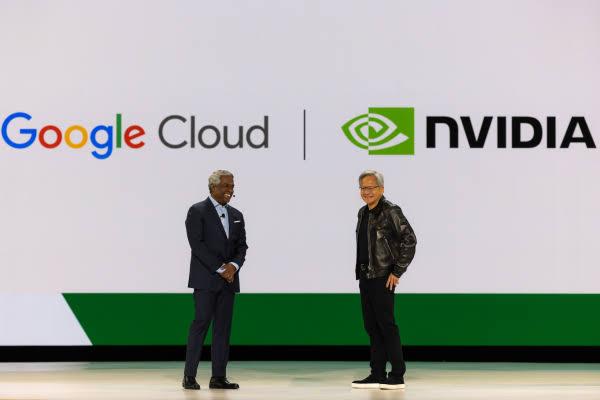
Alphabet's Q2 2026 is a landmark sample: revenue beat expectations, Google Cloud revenue grew 82% year on year, operating profit tripled, but the stock price fell 5% after hours. The market did not sell off because of poor performance, but because of two abnormal events: the full-year capital expenditure guidance was raised to 195-205 billion USD; more strikingly, this company that has been self-sufficient through operating cash flow and bought back shares for 20 years recorded negative free cash flow of -5.9 billion USD in the quarter, for which it issued 49.6 billion USD in shares and 20.3 billion USD in senior bonds. For the first time, the market realized that Google needs external capital to expand its AI business.
Source: Internet
Meta went even further. In Q3 2026, its free cash flow turned to -2.12 billion USD, down from +10.6 billion USD in the same period last year. The company still raised the lower limit of its full-year capital expenditure guidance to 135 billion USD, and plans to issue non-voting shares to finance AI construction. The money-spending machine has grown so large that its own cash flow can no longer feed it.
The giants' predicament has in turn spread back to the hardware layer. On October 22, Jensen Huang admitted on CNBC that new cloud companies like CoreWeave are facing "capital scarcity". On the same day, the Philadelphia Semiconductor Index plummeted 6.72%; throughout October, NVIDIA fell by nearly 8%, and SK Hynix dropped 27%. Note that the transmission sequence is not that chips are unsellable, but that the market has begun to question who will ultimately pay for all this, and the concern has spread all the way from CoreWeave's bonds to the free cash flow statements of tech giants.
A-share material manufacturers are choked by receivables and bills, while US giants are choked by capital expenditure and financing structure. CoreWeave needs 21.4 billion USD in new debt, Google needs to issue shares and bonds, and Meta wants to create a new share class. "Profits rise while cash flow does not" has gone from being a case at the edge of the industrial chain to being written into the giants' health check reports.
The AI Industrial Chain Enters the "Full Accounting" Period
The past two years were the first half, where narratives determined pricing: whoever seized computing power, had orders, and had fast revenue growth enjoyed valuation premium. Expanding capital expenditure was seen as a virtue, and losses were seen as strategic investment.
Now it is the second half, and accounts need to be recalculated. Revenue is recognized faster and faster, but cash is recovered slower and slower; the income statement looks better and better, while the cash flow statement starts to tell the truth. The market's question has changed from "how fast can you grow" to three more harsh questions:
First, how much working capital needs to be advanced and how much capital expenditure needs to be invested for new revenue? Nanya New Material's answer is: advance 0.51 RMB of working capital for every 1 RMB of revenue, plus leverage to expand production. CoreWeave's answer is: borrow debts at 9%-11% interest rates first.
Second, what is the return on capital for these investments? When CoreWeave reduces new capacity from 1300MW to 800MW, its debt requirement drops from 21.4 billion USD to 1.9 billion USD, indicating that the return on marginal projects is hovering near the capital cost line.
Source: Internet
Third, can the final cash flow cover interest, depreciation and dilution? There is no answer yet, but the credit market has started to vote with 16% bond yields: you have to pay a higher cost.
So the saying "revenue rises while profit does not" is not accurate enough. A more accurate statement is "profit rises while cash flow pressure increases". The profits are real: Nanya New Material's gross margin recovery is real, and CoreWeave's price hikes and orders are also real, but the gold content of profits is being diluted layer by layer by settlement structures, capital expenditure and interest.
Some Are Picking Orders, Others Are Picked by Orders
Reading up to here, some people may ask: since cash flow is so tight, why are there voices saying "the industrial chain has started to pick orders"? Both statements are true, because they refer to different companies.
At the Berlin GTC in October 2026, NVIDIA signed a series of capacity expansion agreements with six suppliers: Amkor, Ibiden, King Yuan Electronics, Samsung Electro-Mechanics, SPIL and Unimicron: it paid King Yuan Electronics 1.1 billion USD in advance for