72 Production Procedures, Dexterous Hands Enter Factories to Tighten Screws: Critical Point Launches Data Collection Gloves to Fill the Gap of Tactile Data | The Frontline
Author | Huang Nan
Editor | Yuan Silai
On October 29, 2026, at the Dexterous Operation Sub-forum of Intelligent Era Innovation Day, AGILINK publicly demonstrated key progress of dexterous hands moving towards real industrial working conditions.
At the POC verification station on the Wolong production line in Shaoxing, the OmniHand dexterous hand completed the factory whole-machine performance test for dexterous hands of the same series, continuously running through 72 processes, from material loading, screw tightening to self-inspection and blanking reset, without real-time manual intervention throughout the whole process. A single round of the whole process takes 8.5 minutes, 30 seconds slower than the 8 minutes of a skilled worker, with a task success rate of 98% and support for 8 hours of continuous operation.
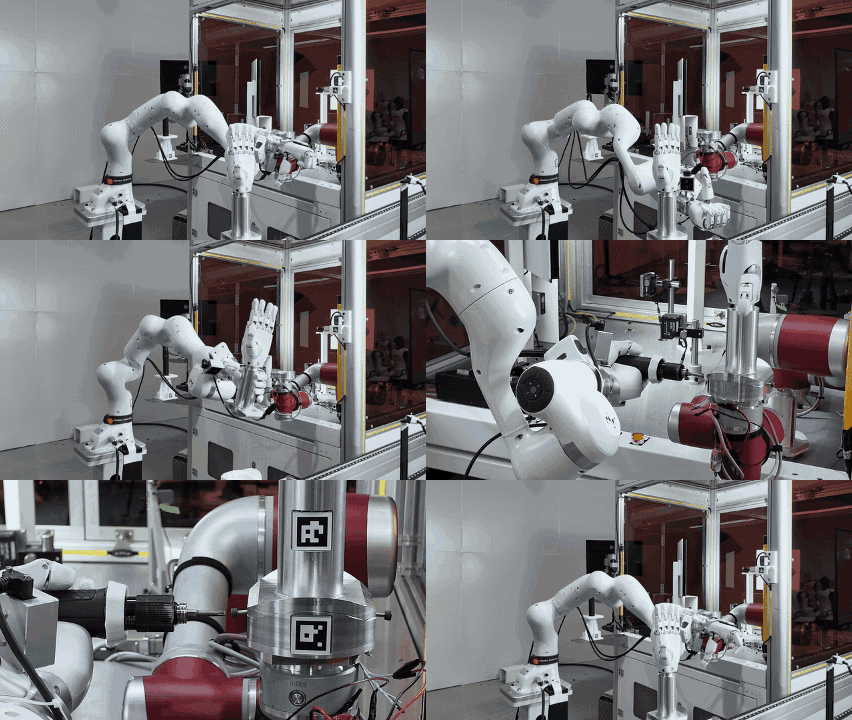
OmniHand dexterous hand performing factory whole-machine performance test for dexterous hands of the same series (Source/Enterprise)
Among them, the screw tightening poses the greatest challenge. The anti-loosening screw itself has a millimeter-level shake, coupled with the recoil brought by the self-weight of the screw gun and the traction of the cable. As long as the hand deviates by 1 mm, the deviation at the end of the gun head will be amplified to 3 to 4 mm. During the test, the team also artificially created interferences such as robotic arm pushing, tooling base offset, and light intensity change. The dexterous hand relies on the linkage of vision and touch to correct deviation in real time, and can automatically retreat and re-align when encountering screwing failure.
The stability of the whole operation comes from the optimization of single-step operation capability through real-machine reinforcement learning and the support of the industrial deployment agent framework. The latter is responsible for process verification, failure rollback and state synchronization between workstations.
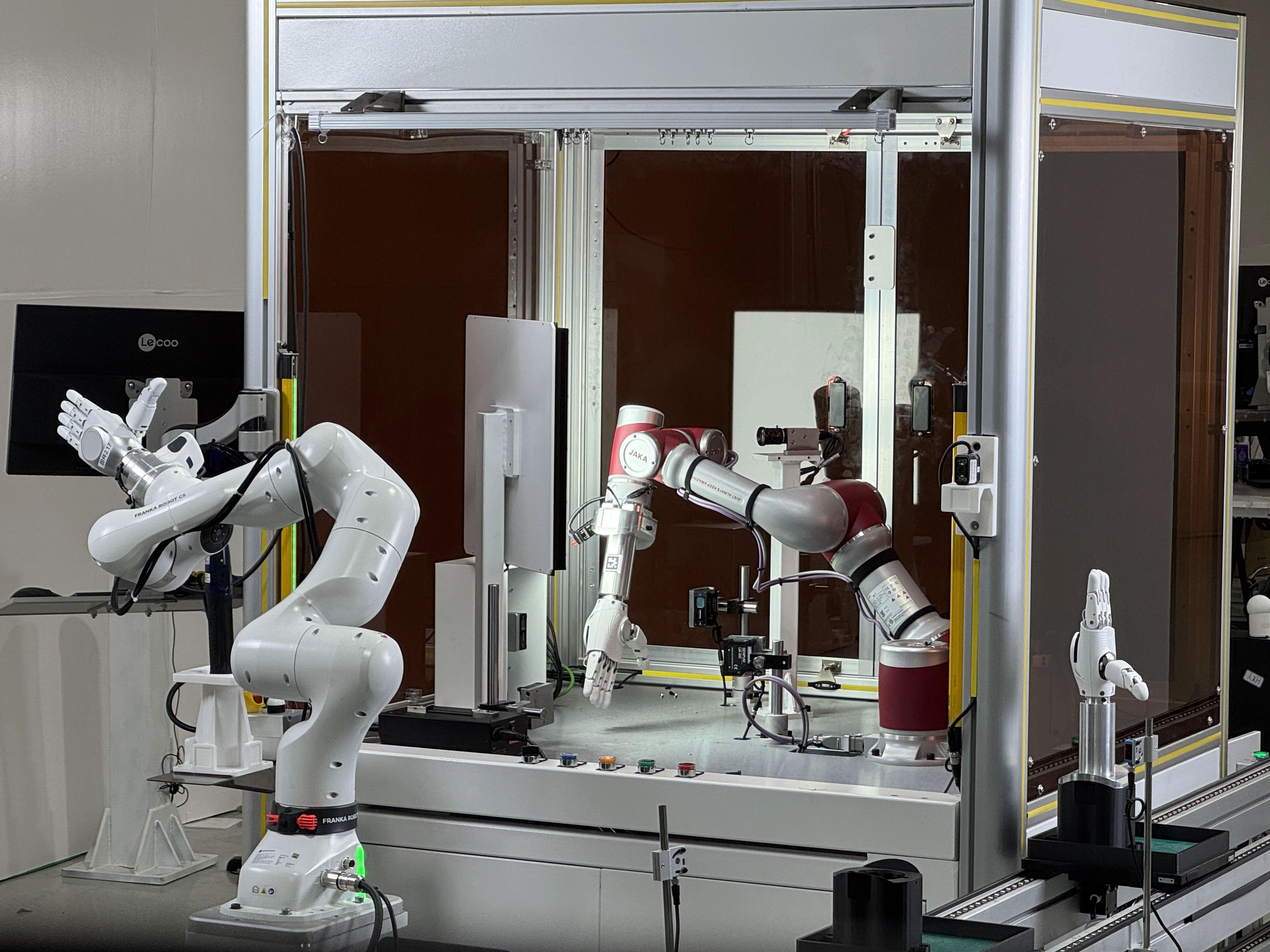
Wolong production line in Shaoxing (Source/Enterprise)
Qiao Tianjie, CEO of AGILINK, defines this production line test as a landmark node for the dexterous hand industry moving from the development state to the deployment state. "The development state focuses on whether the demo is wonderful, while the deployment state assesses the takt, success rate, stability and ROI."
In his view, after decades of iteration, grippers can cover 70% to 80% of deterministic processes in industrial scenarios; the goal of dexterous hands is to overcome the remaining 20% to 30% of complex and fine operations that grippers are difficult to perform. The use of a general dexterous end effector can adapt to multiple types of processes, reducing the transformation cost and scenario limitations caused by special machines dedicated to specific scenarios in traditional production lines.
The production line POC verified the feasibility of the hardware and operation framework on real workstations, and at the same time brought the long-standing data shortboard of the industry to the table.
Huang Bidan, Chief Embodied Scientist of AGILINK, pointed out that most current dexterous operation model training relies on pure visual datasets, lacking real physical interaction information such as force feedback and tactile sliding. The model performs well in simulation, but it is very easy to fail when migrated to the real physical environment; tactile dimensions such as temperature, shear force and contact deformation are difficult to generate by simulation, and must be collected through real physical interaction.
However, the two mainstream data collection paths each have shortcomings: the data collected by real-machine teleoperation has high quality, but it is expensive, extremely dependent on professional operators, and difficult to expand on a large scale; first-person ego human hand perspective data has low acquisition threshold and wide scenario coverage, but relying solely on visual tracking lacks real tactile information, with limited accuracy, which is more suitable for pre-training and not enough to support high-precision fine operation tasks.
In response to the above pain points, AGILINK officially released the OmniGlove Pro data collection glove at the event and started mass production and delivery, trying to establish a new quality evaluation standard from the data source.
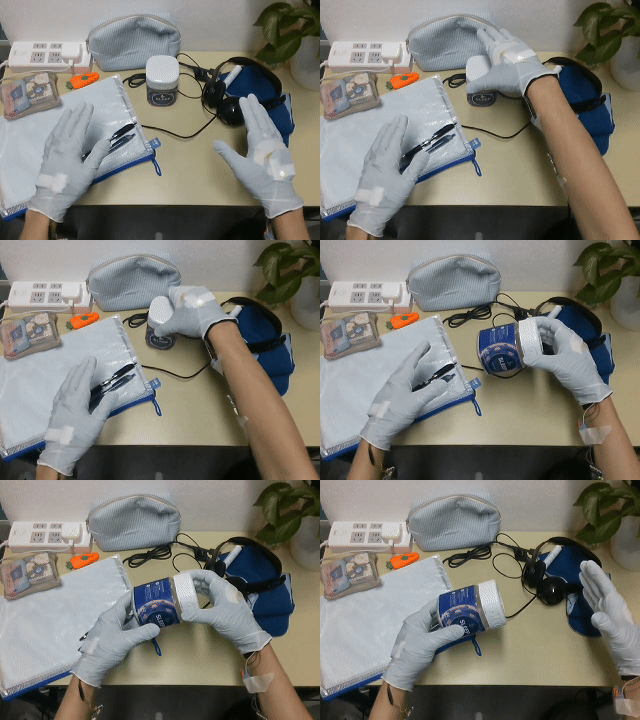
OmniGlove Pro data collection glove (Source/Enterprise)
Traditional data collection mostly takes the similarity of human hand motion reproduction at the visual level as the scale; the core logic of "Real-Machine Ready" is that after the human hand completes the operation in a specific scenario, collected by the glove and processed by the back end, the robot body can reproduce the complete task under the same scenario conditions, which is taken as the core judgment basis for qualified data.
At the hardware level, the fingertip of OmniGlove Pro adopts the fusion scheme of EMF magnetic field positioning and IMU anti-interference, high-density tactile sensing points are arranged on the whole hand, the pose and tactile signals maintain high frame rate output, and the weight of the whole glove is controlled at a relatively light level. In the form of fabric glove, EMF provides the fingertip positioning reference, and the full-hand tactile points are used to compensate the end positioning error caused by flexible deformation.
In terms of form selection, the team chose the fabric glove solution, which is less invasive to daily operations and more suitable for long-term, large-scale continuous collection. At the same time, the OmniHand dexterous hand body self-developed by AGILINK is also equipped with a fabric tactile glove when leaving the factory. The data collection glove and the execution body are aligned as much as possible in the distribution of tactile points and shape, so as to reduce the information loss when mapping from human collected data to the robot execution end.
Official data shows that as of October 2026, the cumulative mass production of AGILINK OmniHand series dexterous hands has exceeded 15,000 units. Qiao Tianjie believes that 10,000-unit mass production is the basic threshold for dexterous hands to move towards commercial deployment. Only by reaching this level can the stability of supply chain delivery, the convergence of whole-machine yield and the cost reduction have realistic conditions.
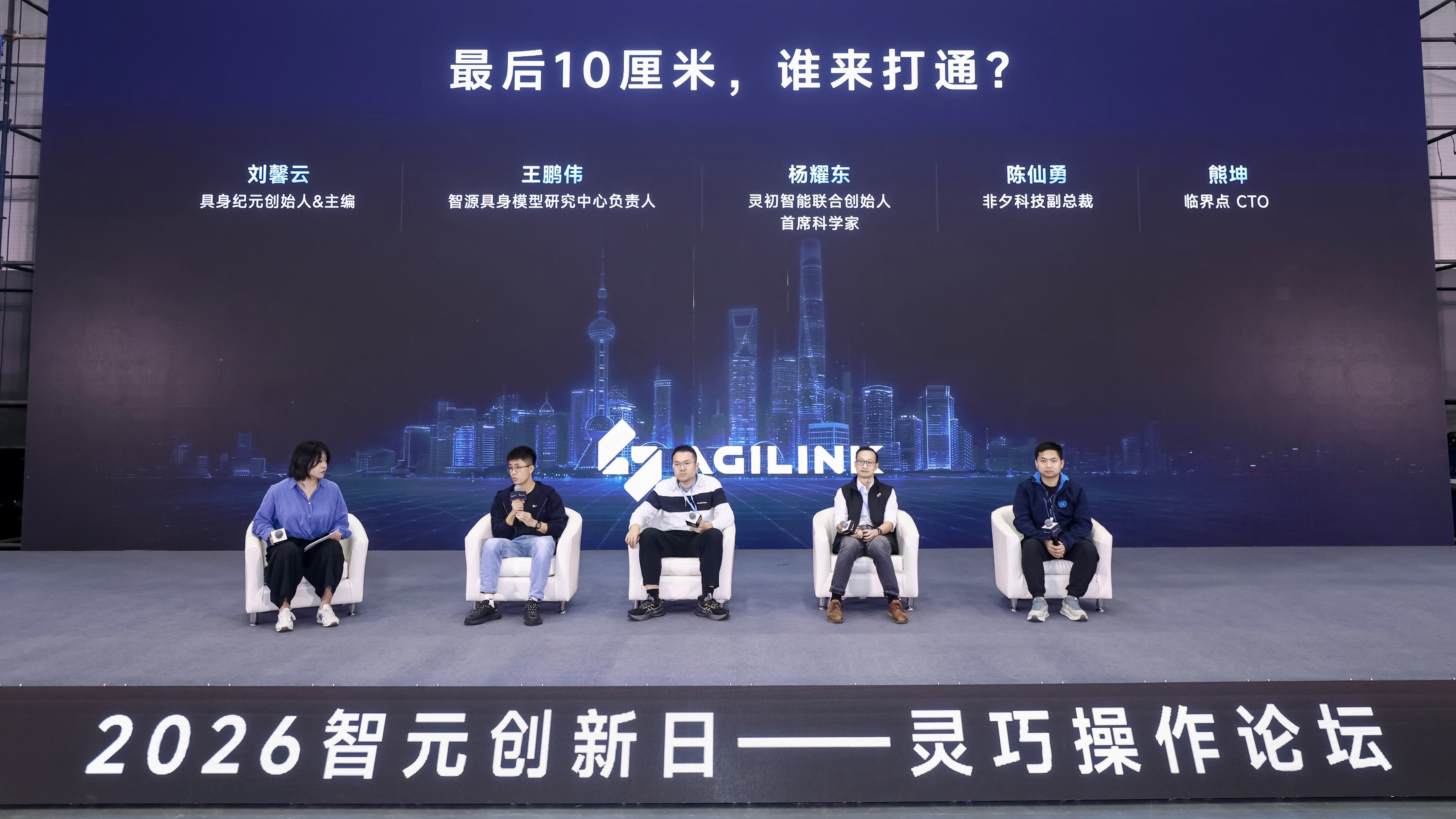
Dexterous Operation Sub-forum of Intelligent Era Innovation Day (Source/Enterprise)
Relying on the continuous iteration of two real deployment lines of industry and commercial services, AGILINK dexterous hands have realized normal operation in the commercial interaction scenario of Chimelong Zhuhai; the dexterous hand workstation of Wolong Electric Drive is expected to complete the formal production line integration within the year.
From the workstation verification of the Wolong production line to the establishment of the "Real-Machine Ready" data collection standard by OmniGlove Pro, AGILINK is trying to run through a closed-loop path: real deployment scenarios generate interactive data, high-quality collected data feeds back model iteration, and the iterated model unlocks more new processes.
At the event site, AGILINK announced to open tactile data, operation models and industrial deployment frameworks to ontology manufacturers, scenario integrators and model R&D teams, so as to expand data supply and scenario coverage through ecological collaboration.