Is nano-texture no more than a matte film? The iPhone Duo has disappointed Apple fans and pulled Apple down from its lofty legendary status.
On October 23, 2026, the iPhone Duo that Apple has spent years perfecting was officially released. Given that Apple has fallen behind the industry for years in the foldable screen track, consumers are extremely curious about how Apple intends to solve the common industry problems that have plagued other foldable smartphones, such as the "crease" issue of foldable displays.
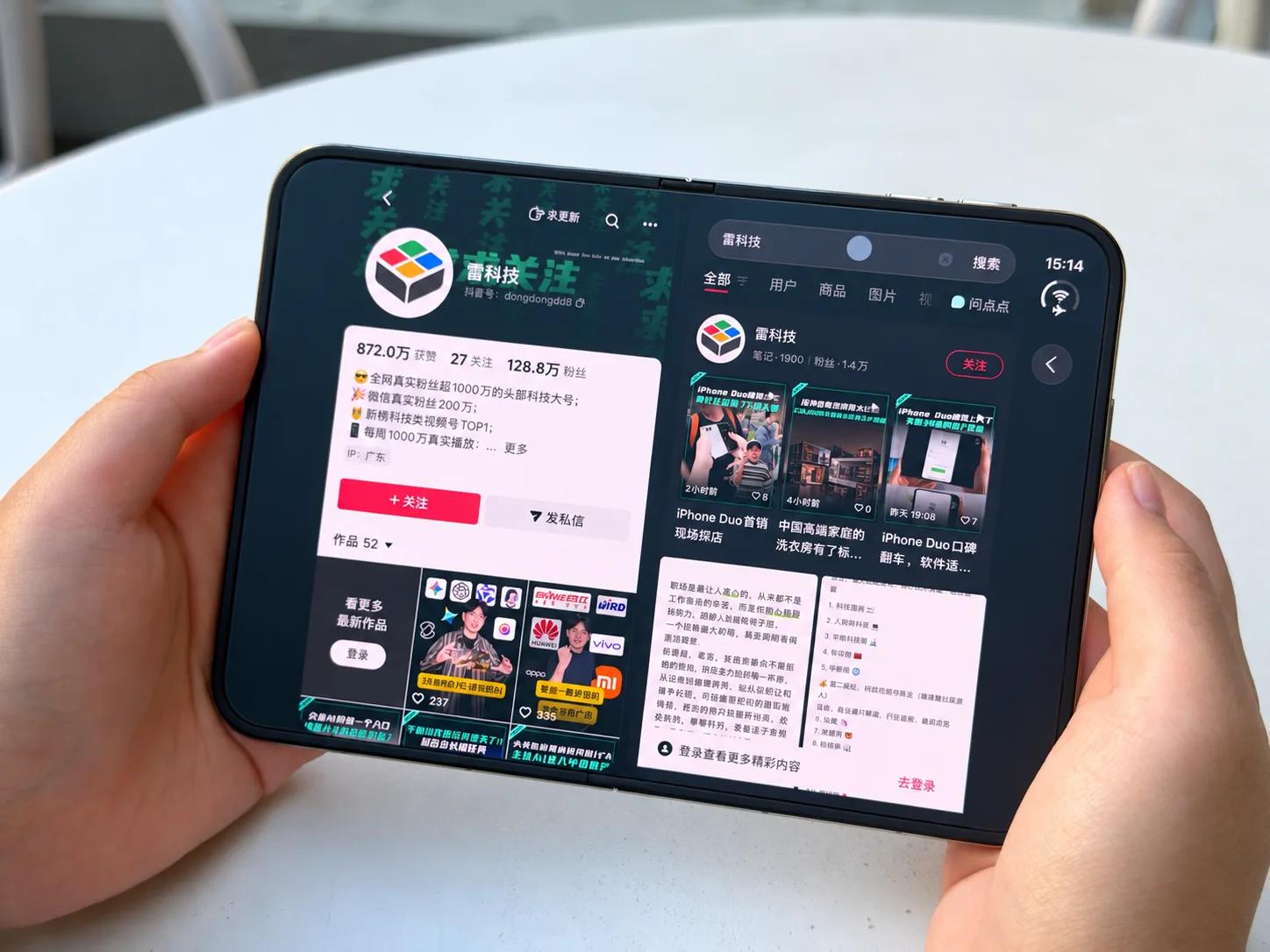
Image source: Leikeji
Judging from the results, Apple's approach has indeed "taught a lesson" to its peers and users. After all, no one before has really used a matte film (referred to as the nanotextured top layer by Apple) to hide screen reflections and creases. But soon, this "innovation" sparked controversy:
Some people believe that Apple's approach is a "shortcut" with little technical content behind it, and some even choose to tear off this matte film directly to restore the iPhone Duo to a mirror-like screen; others argue that this "nanotextured top layer" is not a matte film in the traditional sense, and some even apply a matte film to other foldable screens to demonstrate the superiority of the iPhone Duo's screen through comparison.
Then why did Apple use such an "undignified" method as a matte film to hide creases? Or to rephrase the question, how difficult is it to actually apply the nanotextured display glass used on iPad to the inner foldable screen?
How to achieve high-definition display while being foldable? Apple adopts a matte film
Before introducing the specific display technologies, Leikeji needs to clarify a "technical misunderstanding" first: many people say that the function of Apple's matte film is anti-reflection (AR). Although the matte film does hide harsh reflections in effect, its principle is not to "reduce reflections", but to spread the small area of high-brightness reflection to a larger display area.
For example, if the brightness ratio of "no reflection : reflection" without a film applied is 0:100, the brightness ratio of "no reflection : reflection" areas on the iPhone Duo or other matte films is approximately 40:60. To use another analogy, the matte film solution is essentially like the "Wealth Equalizer Card" in the game Richman, whose function is never to reduce reflections, but to make glare less noticeable. It is more of a "soft light" effect than "anti-reflection".
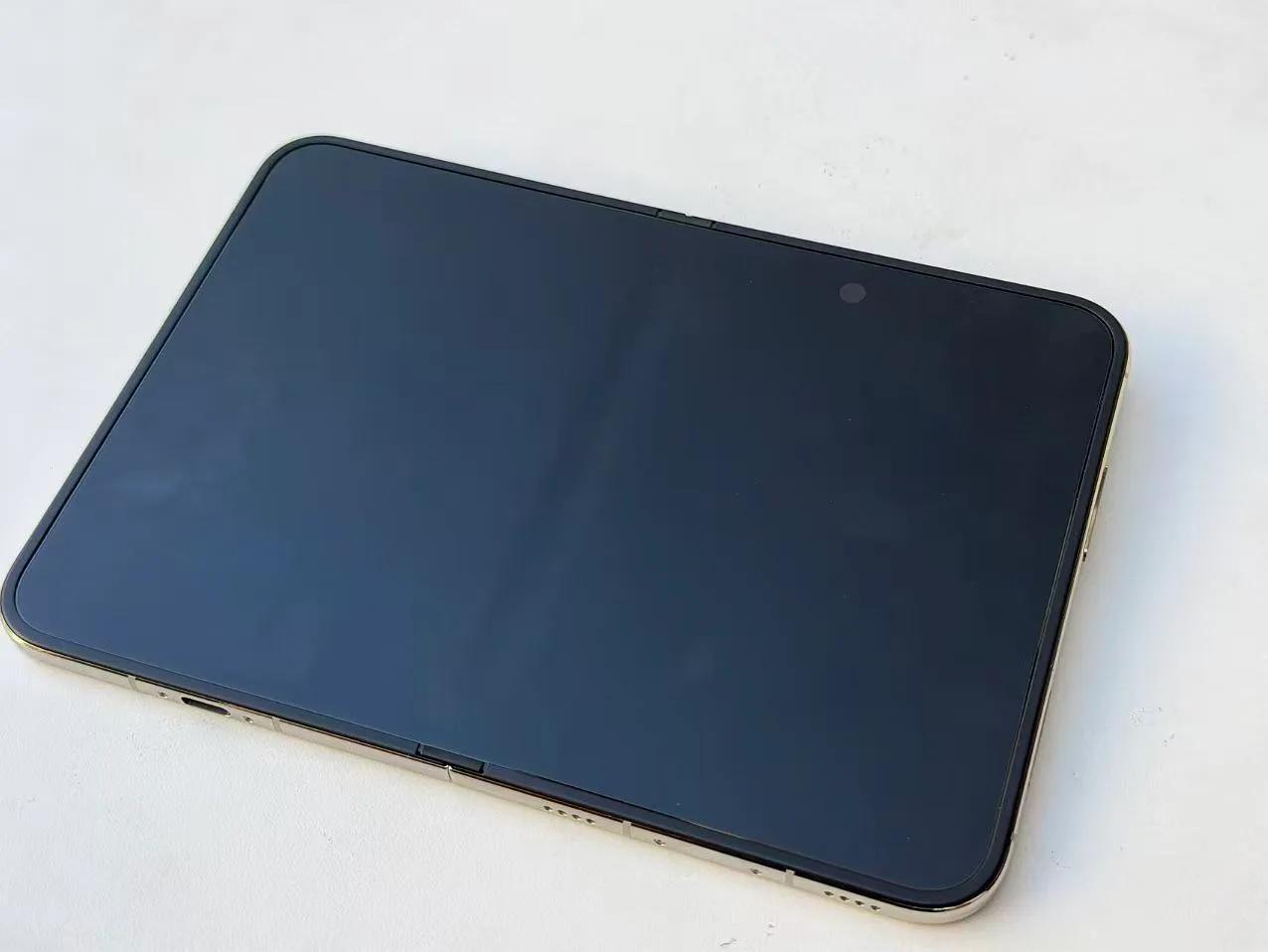
Image source: Leikeji
From a horizontal perspective, the common "reflection reduction" solutions currently on the market can be roughly divided into four categories:
The first category is surface processing, which simply means making the outermost layer a rough surface directly. AG etching is the most mainstream approach, which uses chemical potions or sandblasting to roughen the glass surface. Compared with other technologies, the AG etching process is mature and low-cost, but since the surface process will inevitably damage the flatness of the display surface, this process not only produces the "soft light" effect we just mentioned, but also reduces the fineness of the picture and brings a stronger "grainy feel".

Image source: Apple
The second category is screen coating process. The coating solution deposits multiple layers of dielectric films on the outer side of the glass, and cancels out reflections by the interference of light. The common AR coatings on the market belong to this category. Compared with the surface process solution, the coating solution does not sacrifice clarity and can significantly eliminate screen reflections, but different from the "semi-permanent" surface process solution, the anti-reflection effect of the coating solution will deteriorate as the coating wears.
The third anti-reflection technology is panel structure processing. As the name suggests, this solution tests the technical capabilities of screen manufacturers, so it is more commonly used in the TV category. Simply put, this solution requires screen manufacturers to arrange liquid crystal particles in a specific way, and use the structure of the panel itself to control strong light reflection at a specific angle that does not affect viewing experience. Since this technology can be used in conjunction with other technologies such as coatings, domestic panel manufacturers have now reduced the reflectivity of large-size products to less than 1%.
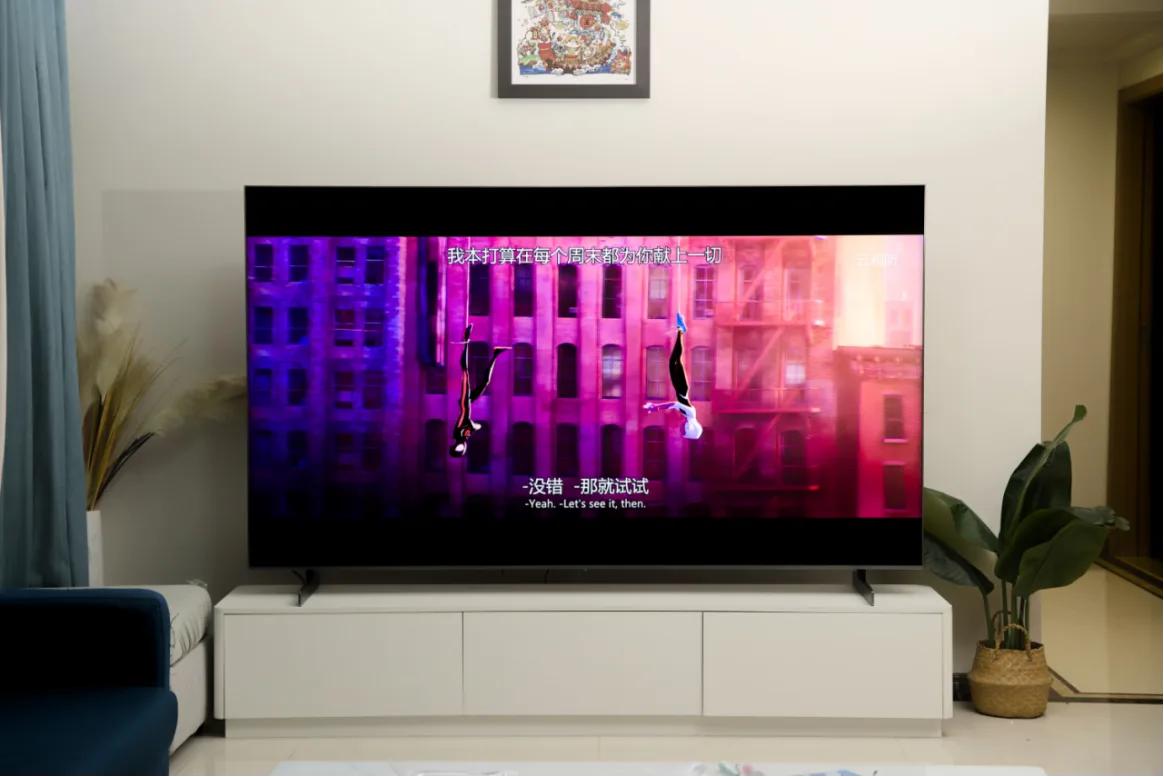
Image source: Leikeji
The fourth solution is the film application solution used by the iPhone Duo — directly apply a layer of AG matte film on the screen surface to achieve a soft light effect similar to the "surface processing" solution at a lower cost. Since its structure is on the film rather than the screen surface, this "soft light" effect can be applied to almost all display surfaces, ranging from plastic screens to UTG, without worrying about the impact of the film surface structure on the strength of UTG glass and the stacking during folding.
But as a trade-off, the "plastic-based" film solution is difficult to process a delicate, uniform, low-variance surface texture similar to glass-based AG etching (except for glass AG films), which will not only significantly affect display clarity, but also make the texture more prone to scratches. In addition, the film solution cannot do without the adhesive layer, and the "haze" of the adhesive itself will also affect the final display effect.
Looking back at the "nanotextured top layer" of the iPhone Duo now, considering that there is no large-scale solution of folded UTG + AG etching or anti-reflection for folding structures on the market, and the coating process cannot cover up Apple's shortcomings in the field of hinge flatness, it is "reasonable" for Apple to choose a matte film to cover up the flaws: it is undeniable that this solution has many shortcomings, but in front of the hard indicator of hiding creases, Apple actually has no other choice.
The non-stick pan coating must not fall off, and the iPhone Duo's matte film must not be scratched
To put it further, in Leikeji's view, the iPhone Duo's choice of the matte film solution, although a bit "embarrassing", is by no means unacceptable. Dai Hongtao, editor-in-chief of ZEALER, put forward a very vivid "non-stick pan" theory on Weibo a few days ago. In Leikeji's view, this metaphor can indeed well explain the controversy over the iPhone Duo's matte film.

Image source: Weibo
Like coated non-stick pans, the iPhone Duo's matte film solution is not an industry first, and it has very distinct advantages and disadvantages. But just like the Teflon coating used on non-stick pans, the iPhone Duo's matte film is also an "unconventional" solution adopted to solve specific problems under technical constraints:
The Teflon coating of non-stick pans cannot be used with metal kitchenware, nor can it be used for high-temperature stir-frying; the iPhone Duo's matte film is not scratch-resistant and significantly affects the display effect, but both have solved the "core problem" during product development: non-stick pans solve the problem that novice cooks find it difficult to control temperature and the pan is easy to burn food, and the iPhone Duo's matte film also well solves the hinge reflection problem of Apple.
What's more, the iPhone Duo's film itself has some merits: many bloggers in the film industry have given extremely high praise to the adhesive layer of the iPhone Duo's matte film, and the film solution also means that we can "repair" the soft light effect of the iPhone Duo's inner screen at a lower cost.
If Apple really developed a solution of folded UTG + AG nano-etching on the iPhone Duo, once we clean the phone's inner screen in an "incorrect" way, the extremely high maintenance cost will only lead to more negative reviews.
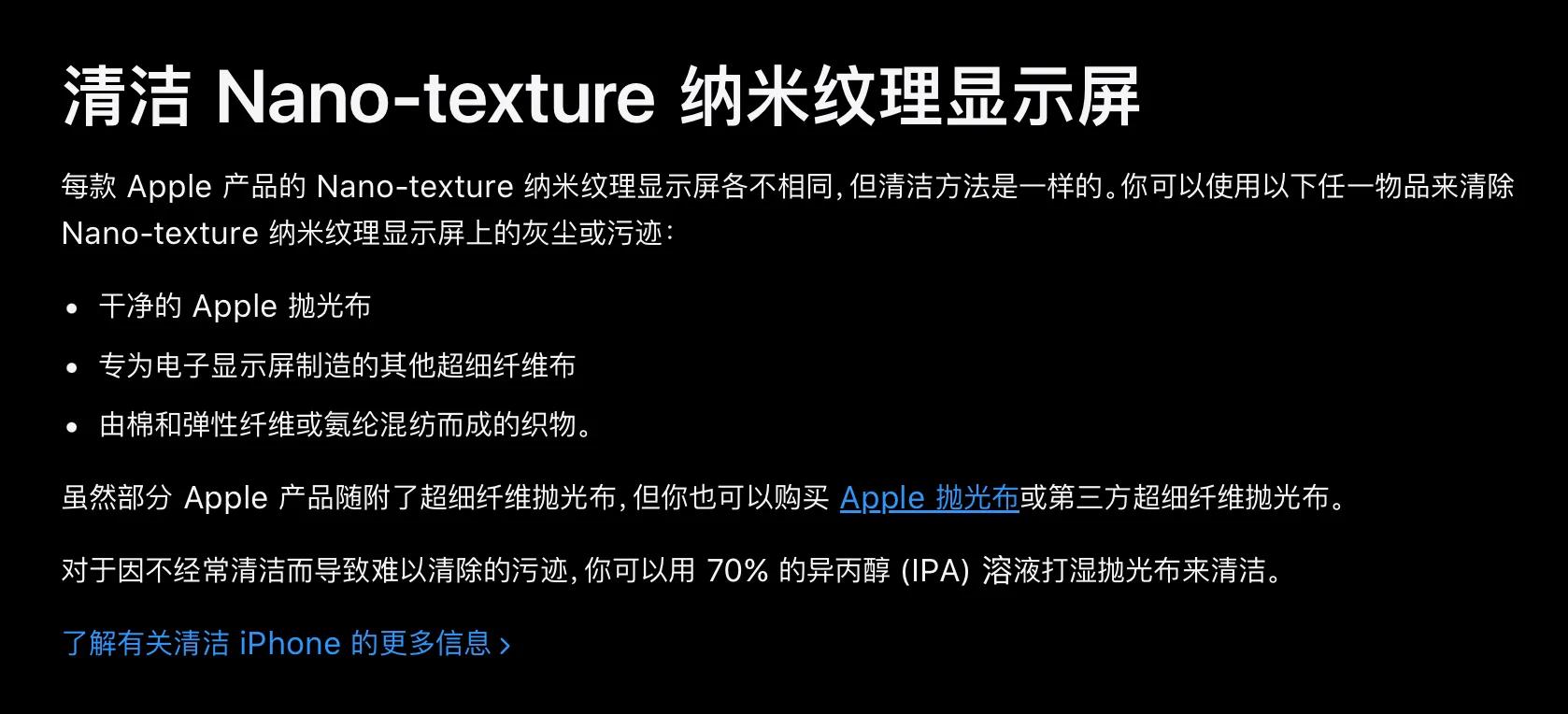
Image source: Apple
That's why, instead of denouncing Apple for using a film to hide the hinge, in Leikeji's view, the real problem of the iPhone Duo is that "it does not provide consumers with enough choices". Obviously, Apple is aware of the difference in display effect between the iPhone Duo's matte film and the real "nanotextured display glass", and it also understands that not all users like this "frosted soft light" display feature.
But in order to cover up the "shortcomings" of its hinge design, Apple decided to apply a matte film to every iPhone Duo. This practice of "making choices for users without providing a sufficiently good fallback solution" is the real problem of the iPhone Duo.
Taking shortcuts, has the iPhone Duo set a bad precedent for the industry?
Even beyond the scope of "Apple's foldable screens", from the perspective of the development of the entire foldable smartphone market, Leikeji believes that although the "shortcut" taken by the iPhone Duo makes sense, it has indeed set a "bad precedent" for the foldable screen market.
Foldable screens have been developed for seven years, and the Android camp has used down-to-earth methods to deal with creases: modifying the hinge structure, adding titanium plate support, replacing flexible layer materials, adjusting the thickness of UTG glass, investing all money and time in structural parts, with only one goal — to make the screen truly flat. It is undeniable that Apple has put no less effort into the hinge than anyone else, but the final solution it came up with to deal with creases is to apply a matte film to the inner screen.
We might as well put it more bluntly: other brands have gone to great lengths to make the foldable screen "flat", while Apple is "taking a shortcut" and trying to make people "not notice that it is not flat".
If this "lazy" approach of the iPhone Duo does not arouse strong opposition from consumers, it is almost certain that the "shortcut" approach will not stop at the foldable screen field. Categories such as mobile phones, watches, laptops, tablets and even TVs are likely to join the "matte film" camp. Once this practice becomes the norm, it will not only lower the lower limit of the display effect of foldable screens.

Image source: Apple
In the final analysis, the value of foldable screens is reflected in "small size, large screen", and a large screen itself should be matched with good image quality. Whether it is AR coating or matte film application, the right to choose should ultimately be given to consumers. After all, for the foldable screen category that is not young but has not yet been finalized, every purchase made by consumers will determine the future development of this category.
Only when there are enough choices can consumers' "voting with their feet" make sense.