Deployment-state acceleration, AgiBot aims to unblock the full end-to-end link of physical AI.
While the embodied intelligence industry is still keen on demonstrating technological progress through highly difficult movements, Agibot presented a different line of thinking at its Innovation Day.
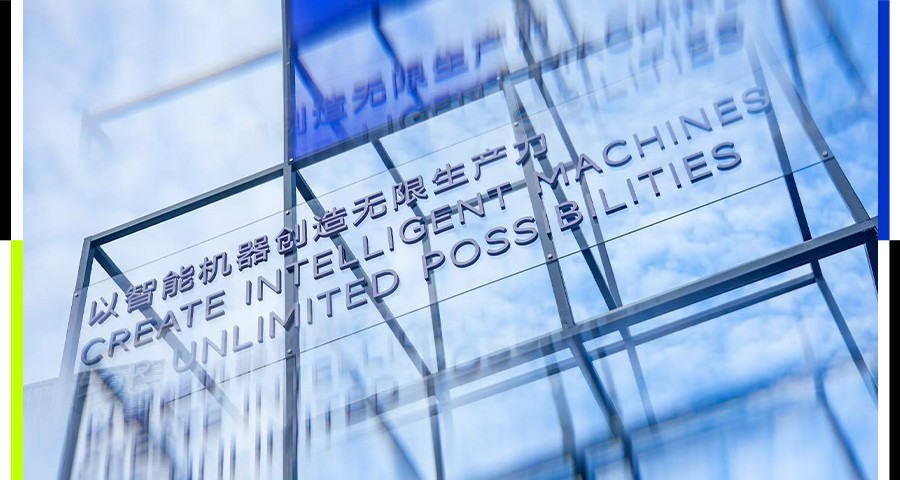
At this launch event, there were not too many dazzling robot stunts, nor too many eye-catching group dances. Instead, it was more like a technical seminar with extremely high information density. Even at the entrance of the World Expo Center, Agibot set up a large "paper wall" to present the recent core technological progress of the Agibot team.
Over the past three years, robots have learned to run, jump and do backflips, but after stepping out of the laboratory, people have found that a single technological breakthrough cannot support stable work in complex environments. After large models such as GPT-6 Astra demonstrated physical task planning capabilities, "real deployment" has changed from a slogan to a question that the industry must answer.
Agibot's answer is a combination of measures:
The GO-3 Preview embodied foundational large model, the AGILE general motion intelligence algorithm framework, and the WITA-OMNI native multimodal interaction large model tackle three major challenges in operation, motion and interaction respectively; Lingqu OS 1.0 and the AHA3 third-generation hardware architecture connect unified ports from both software and hardware ends; Worken (Valid Intelligent Working Hour) attempts to establish a measurement standard for the actual labor output of physical AI.
In other words, Agibot has almost unfolded the entire technical chain, breaking through each bottleneck point of models, data, hardware and software one by one.
All of Agibot's moves point to the same direction — The key to winning the next stage of competition in the robotics industry is no longer about who is better at performing fancy movements, but about who can implement the achievements of the past three years in real scenarios and turn them into continuous productivity.
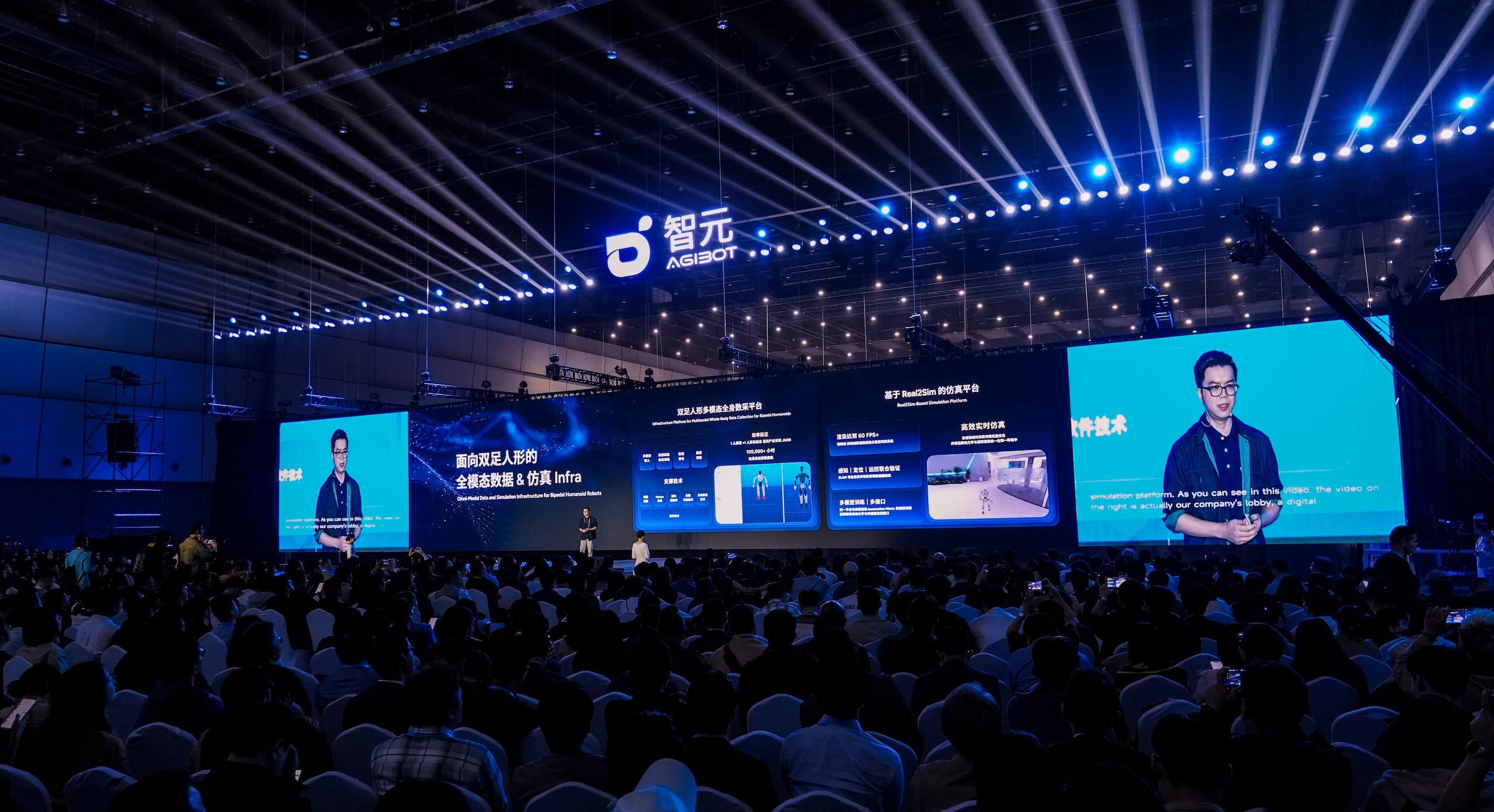
The figures given by Peng Zhihui, Co-founder, President and CTO of Agibot at the launch event, exactly provide a footnote for this judgment: In the first half of 2026, the revenue of Agibot Robotics was close to 2 billion yuan, and the total number of Agibot general-purpose AI robots rolled off the production line reached 20,000 units.
In an interview after the meeting, he frankly said, "Ten thousand units rolling off the production line is only a victory for the manufacturing industry, while ten thousand units being put into actual operation is the victory of physical AI."
Embodied deployment no longer relies solely on single-point technology
In the past few years, a common competition method has emerged in the robotics industry: constantly refreshing the upper limit of a certain capability, such as competing to run faster, jump higher, and complete more complex grasping actions. However, when robots are actually deployed into work scenarios, this old evaluation logic is obviously no longer sufficient.
Just imagine an extremely ordinary task in a factory: "Walk to the shelf, pick up an item, and then deliver it to the designated location."
It sounds easy, but if executed by a robot, this simple task can be deconstructed into several challenges — the robot needs to determine where the item is and how to grasp it; it needs to respond to unexpected situations in real time during handling, and give way in time when someone suddenly passes by; when the staff temporarily changes the task, it also needs to understand the new requirements.
In other words, a small task involves operational capability, interaction capability and motion capability, none of which is dispensable.
A number of core achievements launched by Agibot this time, such as GO-3 Preview, WITA-OMNI and AGILE, are developed based on the basic pain points of real implementation.
The core significance of GO-3 Preview is to enable robots to better understand the actions they are about to perform.
In recent years, VLA has become an important technical direction for embodied intelligence, allowing robots to understand the environment and instructions and generate actions just like large models understand text.
However, traditional VLA has a bottleneck: even if the robot knows what to do next, it may not be clear about the consequences of this action. For example, when it wants to pick up the cup on the table, it may knock down the items next to it.
The core breakthrough of GO-3 Preview is the integrated decision-making mechanism of "predict first, then act". That is to say, after the robot receives the task, it will first integrate the images from multiple cameras and instructions to figure out "what to do and what the environment is like"; then deduce several possible situations internally; finally select the most reliable solution to act. It is equivalent to thinking twice before acting, instead of thinking while doing.
In addition to continuously exploring the brain model of embodied intelligence, Agibot has also targeted an indispensable important direction that has been collectively ignored by giant foundation model companies — the full-modal end-to-end interaction large model. "Interaction is exactly the necessary and first entry point for robots to generate value, and all scenarios are inseparable from interaction," said Xiong Yan, Partner, Co-President, President of the Central R&D Department, and President of the Interaction Business System of Agibot.
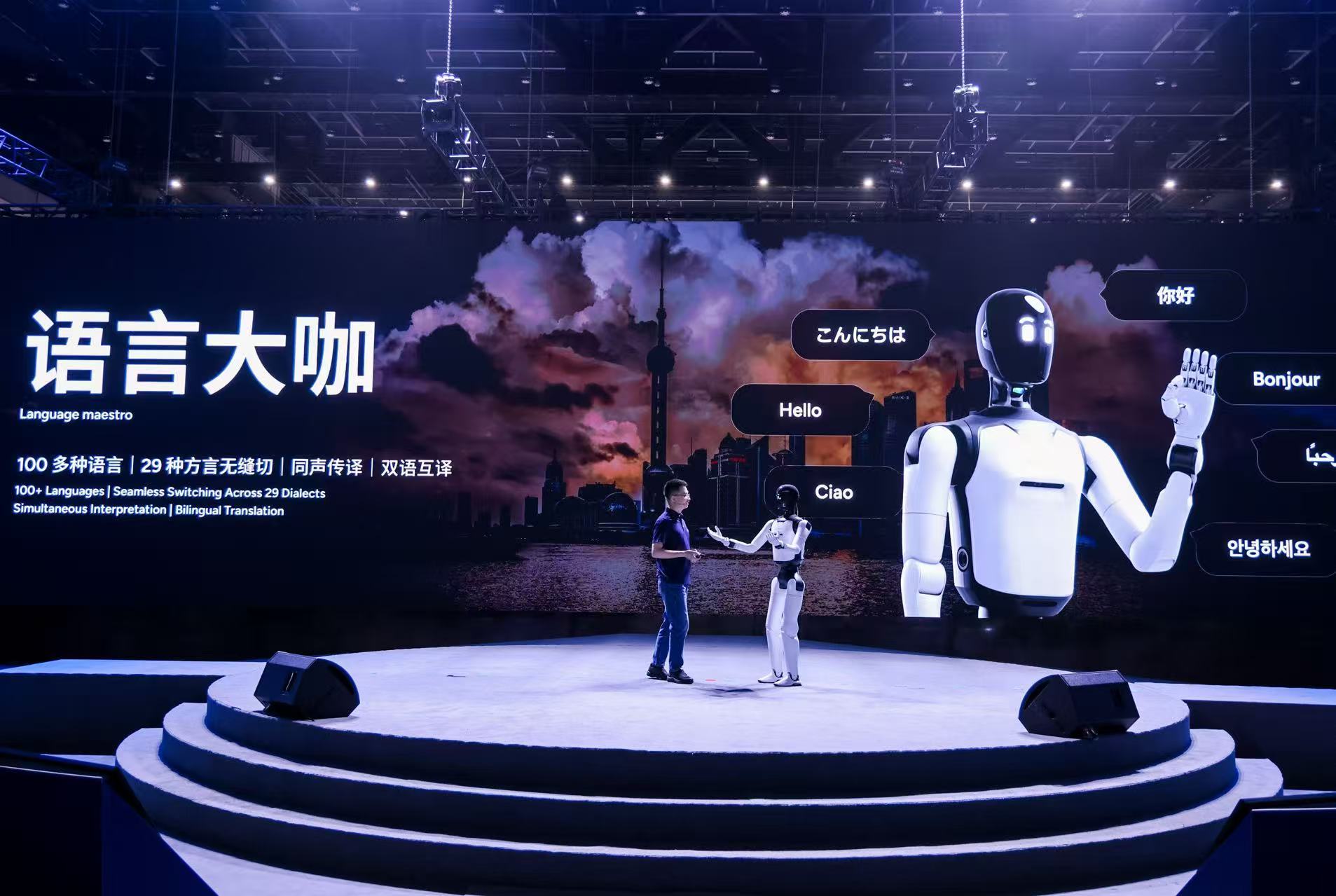
In the past, the interaction mode between humans and robots was basically that you had to call its name to "wake it up", then ask and answer in turn and wait for the response. The WITA-OMNI large model has completely changed the underlying logic of human-robot interaction.
At the launch site, Xiong Yan had an interesting interaction with the Expedition A3 robot equipped with this model — no wake-up word was needed. In the site with complex noise, the robot can still accurately judge whether you are talking to it, and quickly interrupt and switch questions without affecting the interaction.
According to on-site tests, the WITA-OMNI model has a fastest response speed of only 400 milliseconds, supports more than 20 kinds of emotional expressions, and can understand 73 languages. With the support of the WITA-OMNI model, the robot has finally changed from a passive machine that only listens to instructions to a chatty companion.
It is worth noting that both of these two models have recently delivered impressive results.
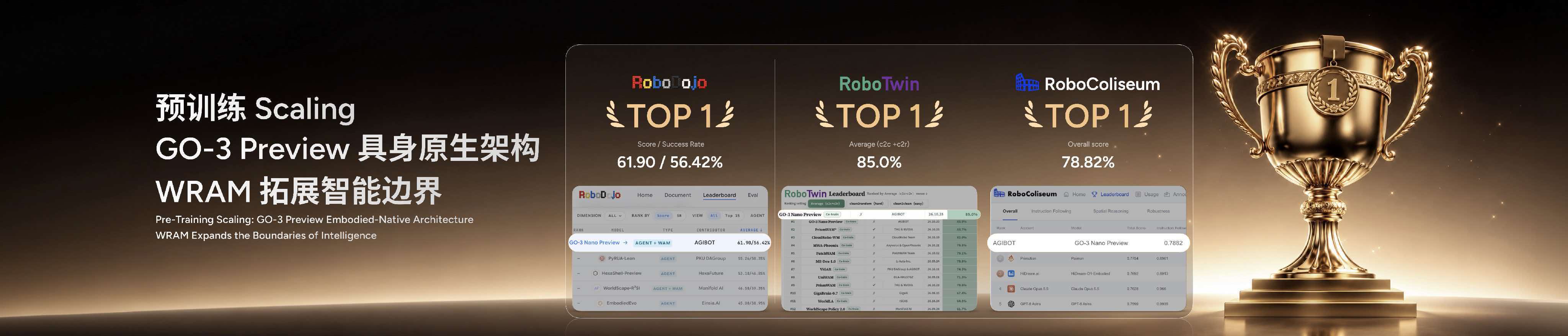
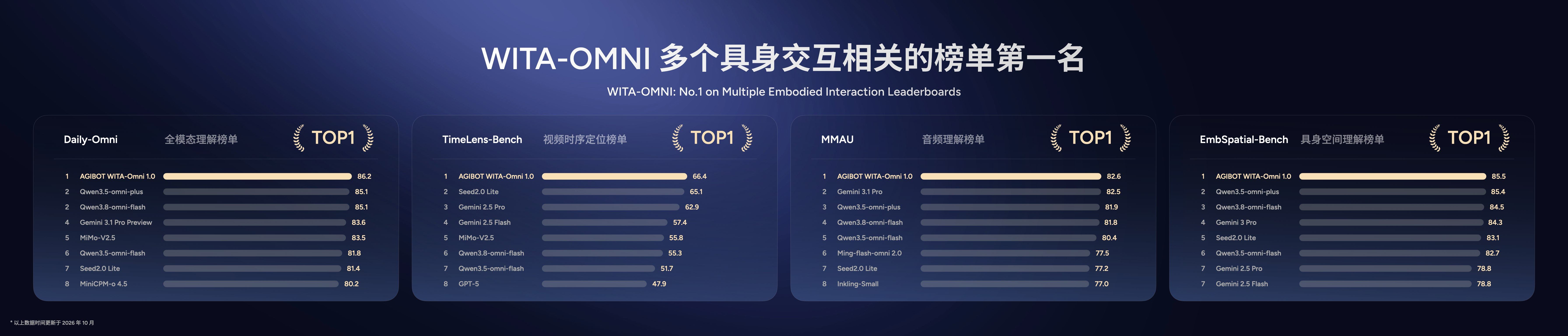
According to the introduction, GO-3 Preview has topped three industry authoritative evaluation lists: RoboDojo, RoboTwin and RoboColiseum, and will be fully open-sourced by the end of 2026; WITA-OMNI has won the first place in four lists: Daily-Omni full-modal understanding, TimeLens-Bench video temporal positioning, EmbSpatialBench embodied spatial reasoning, and MMAU complex audio understanding.
After having a brain that "thinks before acting" and "is good at chatting", the robot also needs a body that can keep up.
The AGILE released by Agibot this time is a brand-new general motion intelligence algorithm framework. It can be understood as follows: the robot can react appropriately immediately when its eyes see changes, just like a human, and complete the action in one go.
From GO-3 Preview to WITA-OMNI and then to AGILE, Agibot is advancing the three lines of operation intelligence, interaction intelligence and motion intelligence at the same time — enabling the robot to know what to do, to perform it steadily, and to cooperate with humans naturally.
However, having the three capabilities of thinking, moving and chatting does not mean that the robot can operate smoothly. They must be connected in real time in the same time axis and the same state space. Otherwise, the following situation may occur: the brain sends an instruction, but the cerebellum cannot receive it; the cerebellum receives it, but the interaction drops offline.
Collaboration is exactly the next threshold for the implementation of embodied intelligence beyond the "three intelligences".
The next threshold for robot implementation lies beyond models
Collaboration cannot just be a slogan. It is necessary to truly start from the bottom layer to design a special "adhesive" for robots to organize all parts organically.
At Agibot Innovation Day, another core innovative achievement of Agibot is the third-generation hardware architecture AHA3. It does not patch the old solution, but redesigns a unified control platform from the bottom layer that can carry the three intelligences of motion, interaction and operation at the same time, so that the "three intelligences" are truly connected at the physical level.
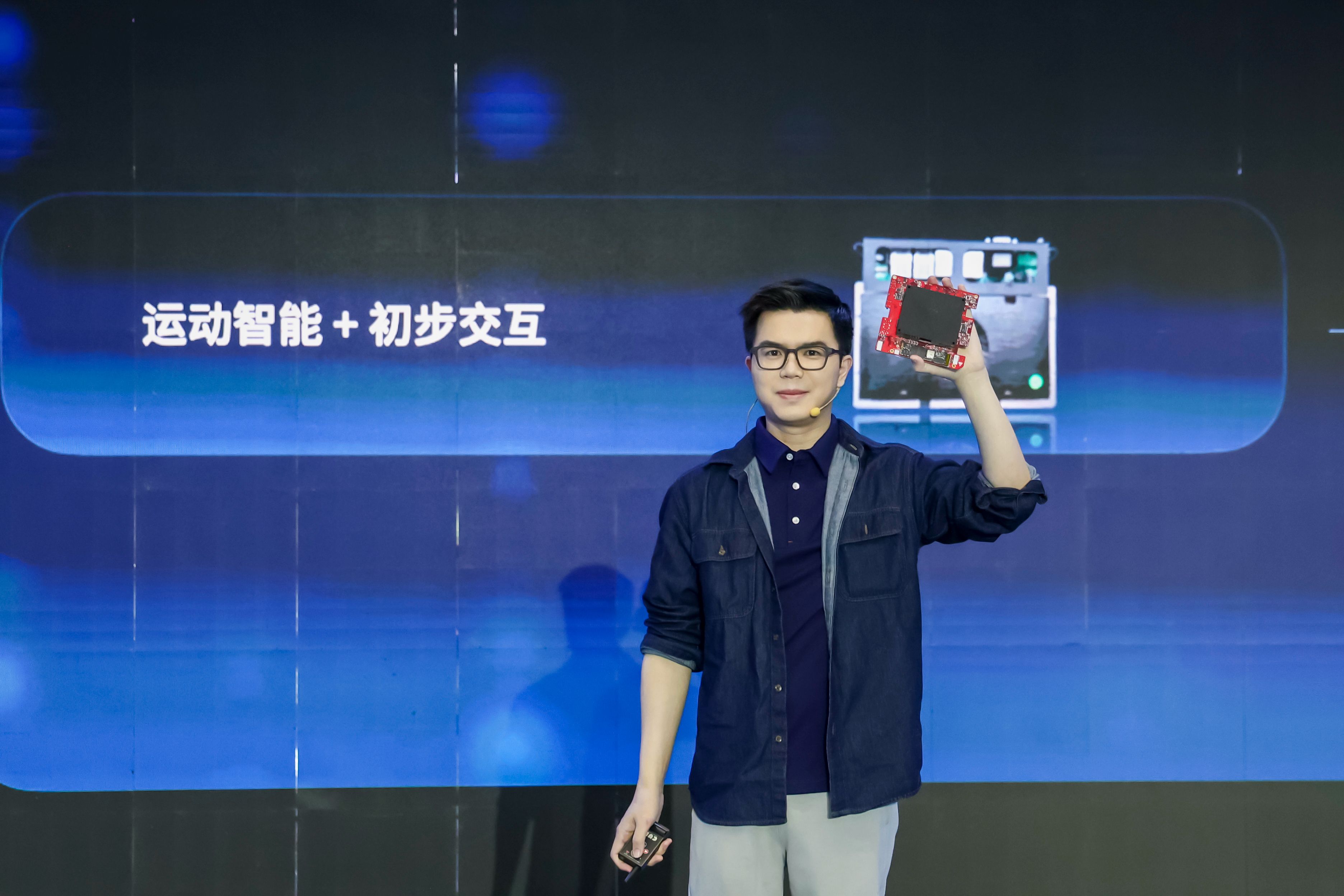
This is also a design that hits the pain points of the industry. The biggest problem of hardware manufacturing in the robotics industry in the past few years is fragmentation — models and systems operate independently, and are barely connected by cables and protocols. This also led to the fact that in the past, the robot's body was filled with controllers, which were large, heavy, and had poor heat dissipation. According to Agibot's disclosure at the launch event, the direct benefits brought by this system are: the volume of the control system is reduced by half, and the response speed is nearly doubled.
However, merely redesigning the hardware architecture, the skeleton, is far from enough, and a better "connective tissue" is also needed.
For a long time, robots are still in the state of manual assembly. The root cause is that there are a large number of different sensors, controllers and actuators on the robot. These hardware come from different manufacturers and adopt different interfaces and communication methods. For developers, this is undoubtedly a disaster — if every time a new device is connected, a large number of low-level codes need to be rewritten, the development and upgrade of products will be very complicated.
Therefore, the role of Agibot's Lingqu OS 1.0 is to connect the three layers of hardware, communication and intelligence, so that robots have a unified operating system for the first time. It is worth noting that this is also the industry's first native operating system for embodied intelligence.
For engineers, the most tangible change is that Lingqu OS 1.0 directly makes all hardware access as simple as plugging in a USB flash drive — by redefining the hardware access standards, more than 100 peripherals in 15 categories, including cameras, sensors, and robotic arms, can be used immediately after being plugged in, without the need to struggle with drivers.
In addition to the significance of interconnection, Lingqu OS 1.0 is also fast enough. When the robot sends 1000 motion instructions per second, Lingqu OS 1.0 can keep the error of each interval less than 4 microseconds. For example, in the time it takes for a human to blink, the robot has sent more than 300 instructions, each of which arrives on time with millisecond precision.
However, Agibot does not plan to enjoy the convenience of this infrastructure exclusively.
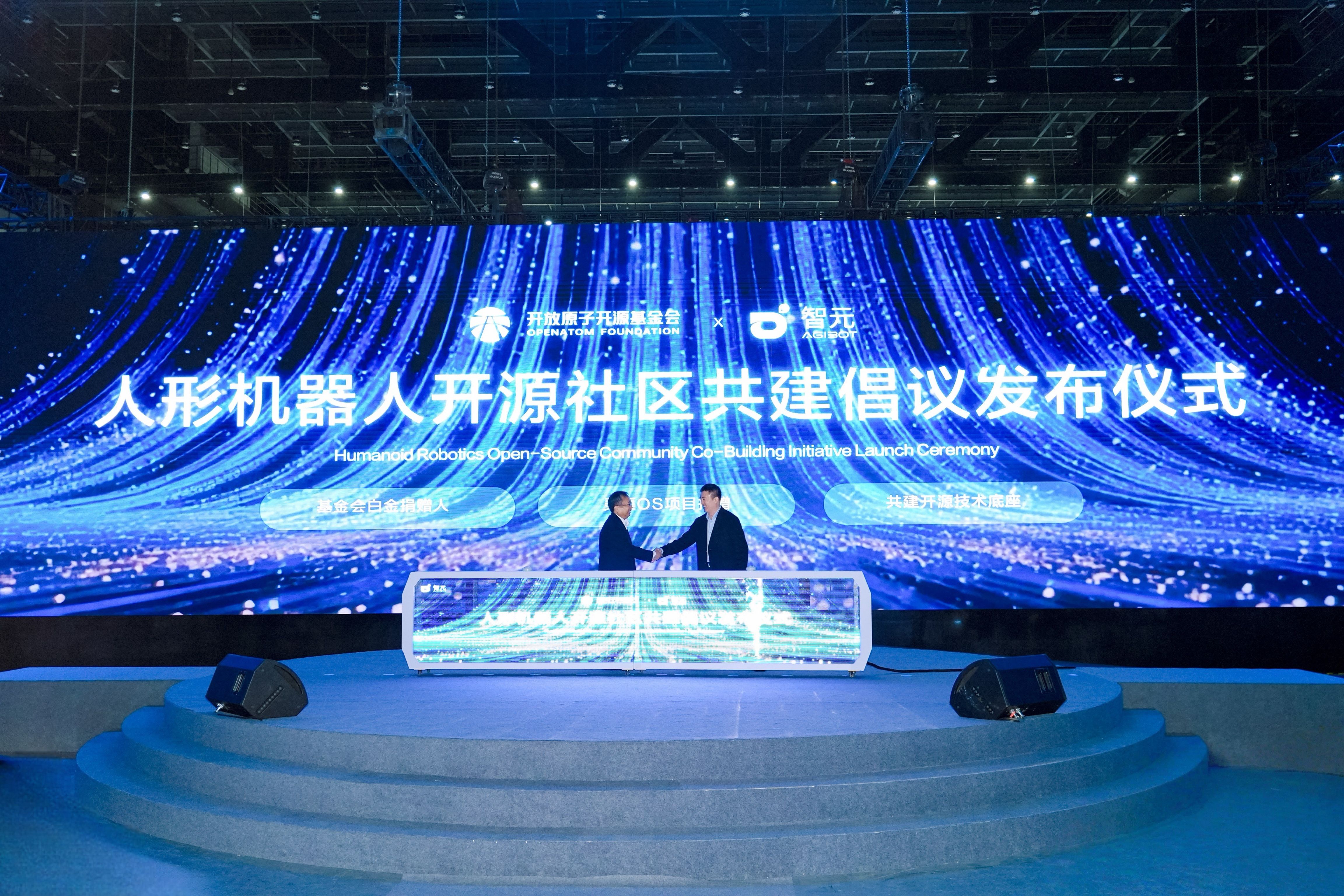
On Agibot Innovation Day, Agibot announced that it will build a Chinese humanoid robot open source community together with the OpenAtom Open Source Foundation, promote technology transformation and industry standard formulation in core directions such as ontology hardware, data evaluation, operating systems, and big and small brains, and donate the Lingqu OS project to the foundation. The two parties will organize joint development, test verification and embodied intelligence talent training to build a globally open and prosperous technology ecosystem.
At the same time, Lingqu OS 1.0 is planned to be fully open-sourced by the end of 2026, when it will open about 200 million lines of code verified by mass production and more than 5000 ecological software packages, promoting robot capabilities to become a reusable industrial foundation.
For developers, Lingqu OS 1.0 is equivalent to packaging a large number of intelligent capabilities into "skill packs". Developers do not need to build everything from scratch, and can directly achieve out-of-the-box use of the three major directions of motion intelligence, interaction intelligence and operation intelligence.
"You can never imagine what kind of surprises partners will bring to us, which is the charm of the ecosystem. So we must build a good base and leave more opportunities to our partners," said Wang Chuang, Partner, Senior Vice President and President of the General Business Department of Agibot.
Looking back at the core content released on Agibot Innovation Day, Agibot has basically realized self-development and interconnection of the three layers of model, hardware and system. This technical depth and coverage breadth are actually rare in the embodied intelligence industry.
The ultimate examination room for this complete system may not be in the laboratory, but in every real scenario of implementation.
General-purpose robots start to work, a new measuring scale is needed
Over the past few decades, industrial robots have a mature and simple method to calculate whether the investment is worthwhile. As long as you calculate how many parts this machine can produce per hour, multiply it by the unit price of the parts, subtract the costs such as electricity and maintenance, you can quickly calculate the payback period.
However, when general-purpose embodied intelligent robots are implemented, the industry urgently needs a brand-new measuring scale to measure value — this is because the jobs of embodied intelligent robots are not fixed. They may be screwing on the assembly line today, and be responsible for logistics assembly tomorrow.
Therefore, after solving the basic technical layout, Agibot also tries to explore a unified "measurement standard" for the new quality productivity of embodied intelligence