After second-hand home transactions account for more than half of the total market, the five key financial accounts of the home furnishing business need to be recalculated.
According to the press conference of the State Council Information Office and public industry data, two sets of figures are worth careful consideration. In the first 8 months, second-hand housing transactions accounted for 52%, continuing to rise from 27% in 2020 and 46% in 2025. During the 15th Five-Year Plan period, 115,000 old residential areas will be newly started for construction, 5,000 communities will undergo renovation, and 575,000 residential elevators will be updated or newly installed.
Combined, these two sets of figures do not necessarily mean a short-term order boom, but they indicate that the focus of housing demand is shifting from new development to stock renewal. With simultaneous changes in transaction structure, project payment collection, and old renovation products, the accounting for home furnishing business will need a new calculation logic in the future.
The transaction structure has changed: stock housing has become the main battlefield
Over the past two decades, many home furnishing merchants relied on the cycles of new property launches, centralized house handovers, and unified decoration to make profits. A single residential complex has thousands of households, all receiving their keys on the same day and having their homes renovated by the same group of people, making orders predictable and replicable in batches.
This inherent logic is now loosening. The demand for second-hand housing renovation is more scattered, with huge differences in unit area, building age, and original decoration status. After signing the contract, property owners may contact real estate agents, designers, construction foremen, and renovation service providers, or they may get recommendations from old customers, and do not necessarily go to home furnishing malls first.
A second-hand housing agent in Suzhou told us that 30% of buyers will carry out partial renovation within three months after the transfer of property rights — replacing door panels, redoing waterproofing, and adding storage space. The unit value of such orders is not high, but the leads are stable. This kind of scattered demand is replacing centralized house handover, becoming a more stable customer source in stock cities.
Customer acquisition entry points have expanded from "waiting for house handover" to "following property transactions, entering communities, and maintaining relationships with old customers". In cities where the proportion of stock housing is high, touchpoints such as referrals from second-hand housing agents, on-site measurement in communities, and repurchases from old customers are becoming more stable sources of customers than natural foot traffic in home furnishing malls. Unlike new properties where "all households receive keys and start renovation on the same day", the second-hand housing market is more like dozens of households in thousands of old residential areas wanting to renovate their kitchens or replace cabinets every month. The leads are fragmented but last for a very long time.
As channel entry points change, the calculation logic for project orders is also evolving.
The calculation logic for project orders: shifting from scale to credit management
The owner of an engineering customization enterprise in Anhui received a centralized procurement order from the regional company of a top 100 real estate enterprise the year before last. He arranged production and delivered goods according to past experience, but after the goods arrived at the construction site, the progress payment was delayed for half a year. Later he learned that the funds of the project company had been siphoned off by the group headquarters to fill other funding gaps, and there was little money left in the pre-sale capital supervision account of this project.
This is not an isolated case. The basic real estate systems focusing on the project company system, lead bank system, and existing house sales system are being implemented, which has very specific implications for home furnishing suppliers.
The project company system means that one project corresponds to one project company. When evaluating payment collection, we cannot only look at the reputation of the group, but also check the specific project company and the pre-sale or existing house status of the corresponding housing units.
The lead bank system requires one project to designate a single bank or banking syndicate, where all funds for development, construction, and sales are deposited. Suppliers can pay attention to the closed management of project funds, the nodes of project progress payments, and the completeness of acceptance documents.
The existing house sales system makes the payment collection nodes completely different from the pre-sale model. For project orders, production cannot be arranged only based on the annual order value, and the payment collection cycle, quality guarantee deposit, and delivery nodes must all be included in the capital occupation calculation.
In the past, when taking project orders, people often paid attention to "how many billions of revenue this real estate enterprise makes a year", but in the future, it is more appropriate to focus on "when this project will be delivered, in which account the funds are deposited, and at what nodes the progress payment will be made". Scale is still important, but capital safety needs to be accounted for separately.
Old renovation is not a policy dividend, but product restructuring
During the 15th Five-Year Plan period, the country plans to start the renovation of 115,000 old urban residential areas, carry out complete community construction and transformation in 5,000 communities, and update and install 575,000 residential elevators. This is the total volume of the five-year plan, and enterprises should decompose it by year and implement it by city when making production scheduling and channel measurement.
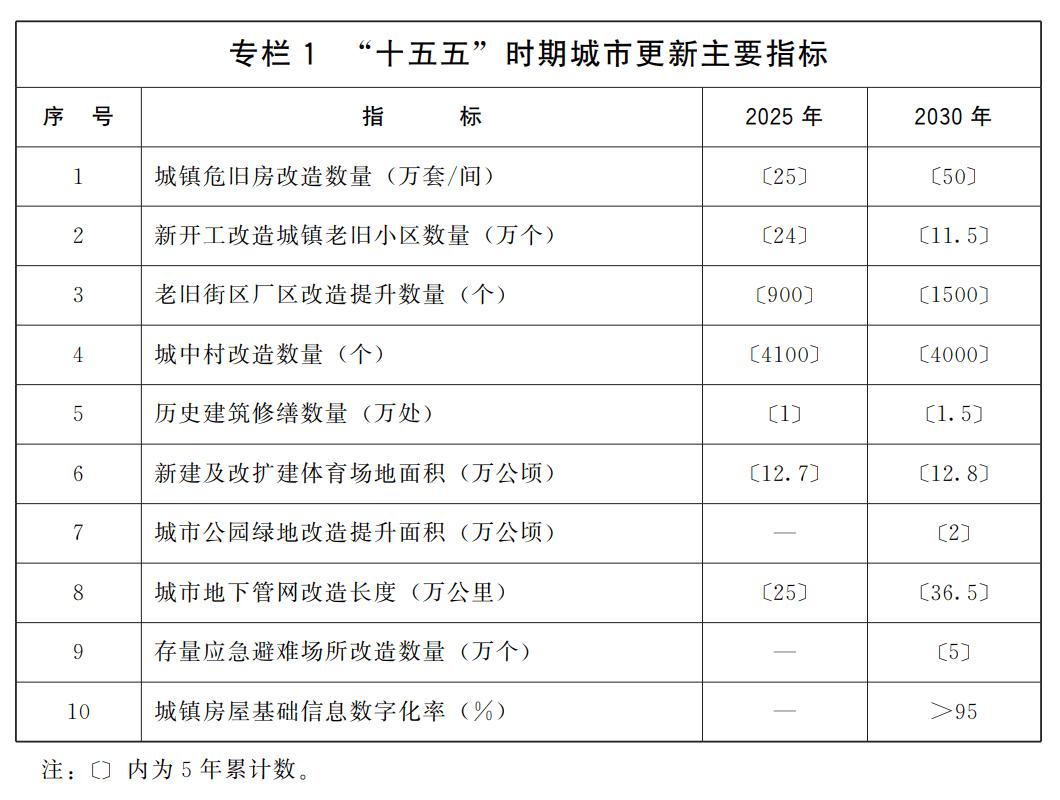
Website of the Government of the People's Republic of China
The demand for home furnishing brought by old renovation is different from that of full new house decoration. According to regional market research, data self-reported by enterprises in a certain area of Chengdu shows that the proportion of old house renovation and partial transformation orders rose from about 35% in 2023 to about 58% in the first half of 2026. More common indoor renewal projects for residents are modular items such as partial kitchen renovation, bathroom renovation, replacement of door panels or storage units for cabinets and wardrobes, age-friendly handrails and low-position cabinets, silent doors, smart locks, and smart lighting.
The unit value of such orders may be lower than that of full new house decoration, with more complex house types and non-standard requirements. Most dealers who can undertake such orders split the demand into standard modules, including kitchen renovation packages, bathroom renovation packages, cabinet replacement packages, age-friendly packages, and silent packages, and use unified color boards and measurement systems to reduce error rates.
Old renovation does not mean "there will be large orders as soon as a policy is issued", but to turn the frequently broken parts in old houses such as kitchens, bathrooms, and old cabinets into small packages that support fast measurement, fast quotation, and fast installation. The more detailed you split the modules, the easier it is to get orders.
Different regions have explored different ways to enter households.
A dealer who has been running home appliance business in Yuhang, Hangzhou for nearly 20 years started to send his team to old residential areas last year. Instead of distributing flyers, they provided free services for owners to clean range hoods and air conditioners. When disassembling and cleaning the machines, they took the opportunity to measure the size of the kitchen, and chatted with the owners about how many years the cabinets had been used and whether the door panels were deformed. Even if no deal is closed after cleaning one household, two or three out of ten households will have the intention to carry out partial renovation.
Another model has been proven successful in shopping malls. A dealer recently surveyed by *New Home Furnishing Paradigm* in Shenzhen moved her store from the building materials market to the comprehensive shopping mall in the core business district, embedding it into the traffic flow where people walk their kids, dine, and watch movies on weekends. She judges that fewer and fewer people in Shenzhen are willing to travel a long distance and spend a whole day selecting furniture, but they will finalize their home furnishing plans casually when shopping in malls.
There is another lighter entry point. HIGOLD, a listed functional hardware enterprise, named its stores "Whole-house Storage Old Renovation Stores", which do not knock down walls or replace cabinets, but only replace kitchen pull baskets, hinges, and storage systems, targeting orders from old houses that "only modify hardware without large-scale construction". As of October 2026, the Pudong store in Shanghai has been opened, and multiple stores have been launched in Shanghai.
The three models are different, but the bottleneck is not the product itself, but the household entry channel and trust accumulation. The acquisition of old renovation orders does not only rely on product modularization, and community channel cooperation and property management collaboration are another important variable. Some regional dealers feedback that whether they can get the list of property owners through property management or owners' committees is often more critical than product package design. Some regional dealers have tried to establish household entry channels through profit-sharing cooperation with property management, community convenience service days and other methods, and the effects vary from city to city.
The standard of good houses forces the transformation of the supply chain
When the "good house" concept is implemented in the construction link, several points are repeatedly emphasized: pipeline separation, which means separating the water, heating and electricity pipelines from the main structure of the building, so that less walls need to be knocked down for later maintenance; flexible and adjustable rooms, which reserve space for storage and renovation according to family structure; modular buildings and green building materials are widely promoted in new construction projects.
For the actual implication on home furnishing components, a dealer who has been making cabinets for 12 years has a very straightforward understanding: "In the past, when owners renovated their whole house, it was no problem to embed the cabinets into the wall. Now for partial renovation of old houses, owners require that the door panels of cabinets can be replaced separately without damaging the original wall. If your connection structure does not support individual part replacement, you cannot take this order."
So the key point is not that "all products need to be remade", but to clarify: whether the connection structure is convenient for partial disassembly and individual part replacement; whether the color boards and materials support the integrated replacement of doors, walls and cabinets to ensure the consistent color of new and old parts in partial renovation of old houses.
New houses focus on convenient maintenance and renovation in the future, while partial renovation of old houses focuses on replacing the broken parts without large-scale construction. If home furnishing products are only designed as "one finished set after leaving the factory", it will be more troublesome to replace a door panel or add an age-friendly cabinet later.
It is time to change the accounting method
In the traditional new house cycle, enterprises often estimate revenue according to the number of new housing units, number of stores, customer unit value, and inventory depth. After the proportion of stock housing increases, another set of observation indicators is more practical: the total number of old residential areas and second-hand houses in the city or within the service radius of the store; the annual actual proportion of households that carry out kitchen, bathroom, cabinet, and age-friendly renewal, calibrated according to the pilot data of the city; the frequency of subsequent additional purchases of door panels, storage units, and smart hardware by the same customer; the number of effective leads brought by referrals from real estate agents, property management, owners' committees, and old customers; the payment nodes of retail installment, project progress payment, old renovation fiscal funds, or community procurement.
Behind the module repurchase rate is a trust chain of "assessment - renovation - return visit". In the survey interview with *New Home Furnishing Paradigm*, Bo Yu, General Manager of Suzhou Yifukang Health Industry Technology Co., Ltd. (Fumantang), shared their practice:
They use a four-dimensional assessment form to score the spatial environment, comprehensive ability of the elderly, living habits and safety risks, and comprehensive payment and decision-making ability separately, prioritize the renovation of high-risk items, and arrange medium and low-risk items in stages. If the initial assessment is not accurate, all subsequent repurchases are empty talk. This logic applies to the entire old renovation track. The first entry fee is only the first account, and the customer's lifetime value depends on your continuous service capability.
The two sets of indicators do not need to replace each other. New properties still have a market, and old renovation and partial second-hand house renovation also need time to cultivate. A more prudent approach is to calculate by city and by category: regions with a high proportion of new houses continue to focus on the house delivery rhythm, and regions with a high proportion of stock housing focus on partial renovation modules and repurchases. The penetration rate of partial renovation varies significantly with the city tier, with top-tier cities developing faster and low-tier cities remaining at a low level. Many dealers try with low values according to their own city tier first.
Do not apply one formula to the whole country. First, figure out how many old residential areas are around you, how many kitchens have been used for more than ten years, and how many cabinet door panels have started to peel, then decide what model to adopt and what personnel to deploy. Enterprises of different categories have different accounting priorities: customized enterprises rely more on partial renovation module repurchase and measurement systems, while soft furnishing enterprises can pay attention to the partial renewal frequency of stock housing.
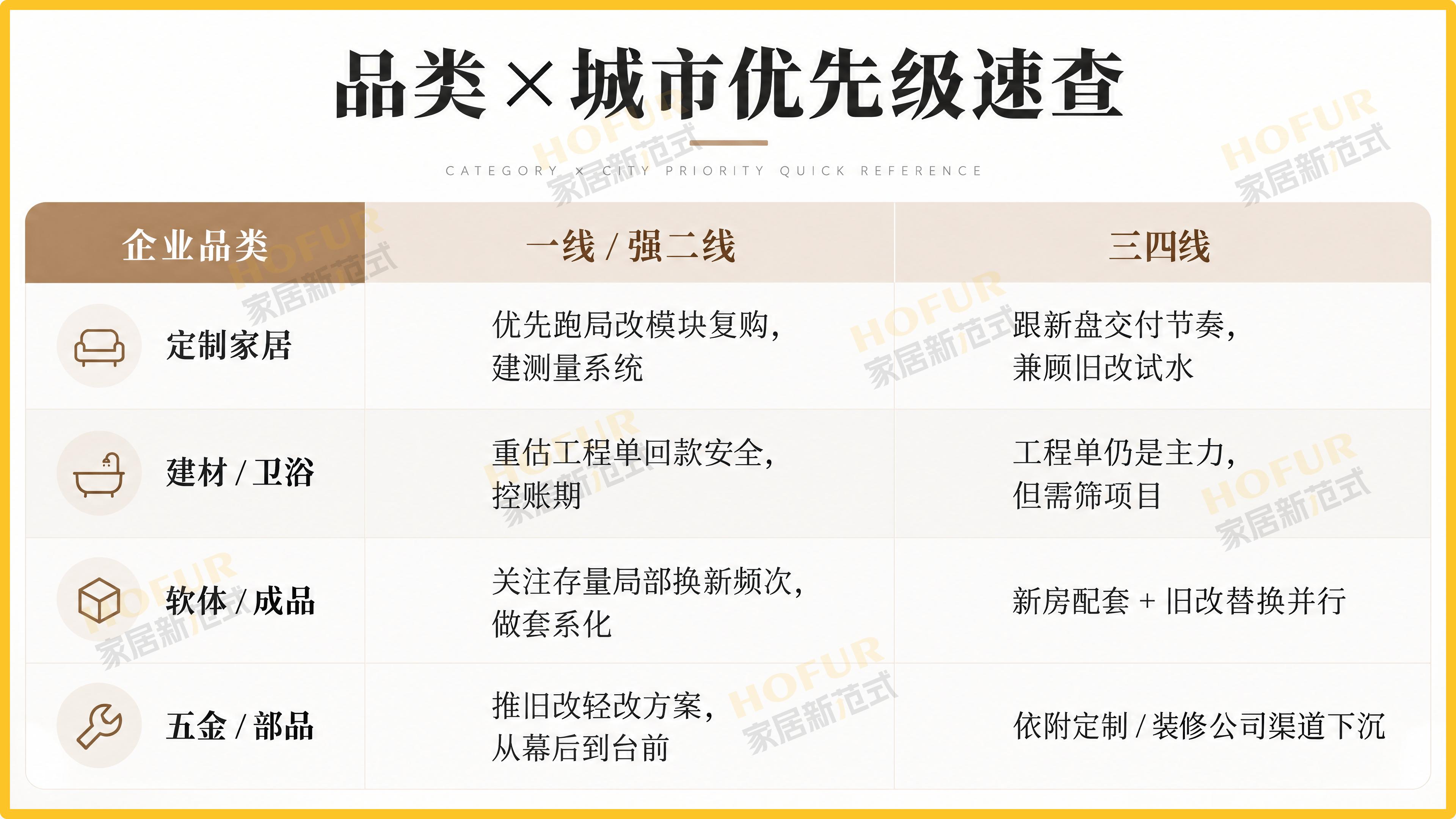
There is no single unique answer for any account. Figure out the stock structure of the city you are in, then decide which part to prioritize first.
In a market where stock demand accounts for more than half, demand is not necessarily in short supply, but the demand form will become more fragmented, longer-lasting, and more localized. The accounting for old renovation is not only about materials and working hours, but also about people's real usage habits of their homes. Public data can provide direction, but what really turns the page of the account book are those who are willing to enter households, stay on site, and hand the tape measure to the elderly to see how they walk to the bathroom leaning against the wall.
Some people are willing to clean a range hood for free, and take the opportunity to measure the size of the old kitchen. Others move their stores into the weekend traffic flow, so that people who change houses can get all their home furnishing items done while shopping in malls. A lighter entry point is to only replace a set of pull baskets, making owners feel that their kitchen is completely new.
The page of the account book does not turn overnight, but those who see the data clearly will at least not look for new roads on an old map.