The watershed of AI office applications no longer lies in the "intelligence level" of the model.
"Workplace Bonus" (ID: ZhiChangHongLi)
Nowadays, almost no CEO does not feel anxious about the implementation speed of AI in their company.
This anxiety condensed into an absurd scene in the first half of this year: Before leaving work on Friday, employees swarm to ask a bunch of meaningless questions to the company's AI — just to meet the KPI of Token consumption. An HR at a technology company confirmed to *Workplace Bonus* the existence of this "Friday Token Rush": under this KPI assessment, many employees use invalid questions to make up the numbers.
McKinsey released a global survey *The State of AI 2026: Road to ROI* in August, which quantified the gap between "individual efficiency improvement" and "organizational efficiency improvement": 80% of respondents said AI had improved their personal productivity, but only 37% of respondents recognized that AI contributed to the operating profit (EBIT) of their enterprises — this proportion is basically the same as a year ago. At the same time, nearly 30% of organizations have spent more than 10% of their corporate technology and communications budget on AI.
Individuals are faster, why hasn't the organization become lighter and faster together?
According to Alibaba's official disclosure, on August 3, Alibaba integrated three products QoderWork, Wukong and MuleRun, and launched the public beta of the AI office platform "Qianwen Office", whose users exceeded 30 million one month after launch, with enterprise users accounting for more than half. At the Yunqi Conference on September 22, Chen Yusen, Vice President of Alibaba Group and CEO of Qianwen Office, released the "Enterprise Context" and digital employees, with the speech theme named "Context is All You Need".
In Chen Yusen's view, the crux of this gap is that Agents cannot access the unique "context" of the enterprise: "No matter how smart the model is, it cannot infer the unique business rules and working methods of an enterprise out of thin air."
Where does the context come from? *Workplace Bonus* has interviewed multiple key people who are promoting the implementation of AI office, and selected three company cases: they vary greatly in size, and some even have completely opposite strategies. One has bet on assessment, one has bet on the skills of senior experienced employees, and the last one is the most cautious, only willing to bet on permissions first.
In their stories, the watershed of AI office has long been no longer purely dependent on the intelligence level of the model.
Songxianxian: Betting on Assessment
"Everyone in our company is working with AI except the cleaning aunt."
People who often cook at home are no strangers to "Songxianxian" — as a cutting-edge condiment company with more than 500 employees, the team of Songxianxian is mainly composed of post-2000s generation. This year, giants entered the condiment track and price wars intensified, so the company needed a more agile team to cope with the market environment. In March, the IT team of Songxianxian launched the AI office transformation, and the CEO personally promoted the AI office not long after, completing full staff coverage within two months. During the *Workplace Bonus* interview, the management of some companies even handed over the ruler for giving employees pay rises to AI — Songxianxian can be said to be one of the farthest-reaching teams in this regard.
Regarding the starting point of the company's AI transformation, CEO Zhu Suwanjun traced it back to a visit at the beginning of the year. At that time, the management of Songxianxian visited a well-known technology enterprise with the event, and saw the form of AI-native organization for the first time intuitively. "If you can't use AI, you will definitely be left behind by the trend." In March, the AI organizational transformation of Songxianxian was fully launched.
The first wave of promotion did not go smoothly. The transformation task was first handed over to the IT department, and the result was "The IT team developed products that they thought the business department might need, but the business department did not need them at all".
Some senior offline salespeople thought, "This is another thing the company learned from nowhere, and it is forced to be pushed down." In April, Zhu Suwanjun personally stepped in to promote the work. Zhu Suwanjun noticed that a regional manager once privately complained: "Can we not write weekly reports?" So he started with the weekly report that he also had a headache about, and after running through the personal process, he copied and promoted it downward — the weekly report scenario accurately grasped the "pain of writing weekly reports" of many colleagues. At a subsequent review meeting, the people present witnessed the weekly report being generated on the spot. The convenience brought by AI began to stimulate everyone.
For the selection of the main AI tool, Zhu Suwanjun will consider three points: first, permission isolation, second, the degree of integration with domestic models, and third, economy. "There are not many options that meet all these conditions at the same time." (Wukong was originally an AI product released by DingTalk in March this year, and was merged into Qianwen Office since August.) This August, Songxianxian fully migrated all original Wukong accounts to Qianwen Office.
The first to be officially transformed is the "black box" of the offline sales end. In the past, more than 100 company salespeople had no office, and completed reports through watermark camera check-in and phone calls, and the management could not figure out whether they were working effectively outside the company. To this end, the company purchased more than 300 sets of DingTalk voice recording devices, so that each visit recording is sent to the group, and AI Skill will automatically analyze the visit content and to-dos, and directly connect to DingTalk schedules. According to Songxianxian, the order information return cycle has been shortened from 3 days to 1 day.
"The originally uncontrollable black box information can now be returned immediately as soon as it is over." Zhu Suwanjun told *Workplace Bonus*.
The second thing is early warning: if a packaging complaint (loose bottle cap) is reported layer by layer along the old link, the cycle may be dragged to half a month or even a month; now, AI patrol inspection is graded according to P0/P1/P2, and multi-store signals in the same region are aggregated. According to Songxianxian, the company can now "complete the early warning one month in advance before public opinion or fines actually occur".
For many companies that have bet on assessment and incentives, the most easily misread point is that AI has entered the assessment system.
"AI provides procedural feedback and gap prompts, and pay rises and promotions are still determined by people and systems." Zhu Suwanjun clarified the boundary first: the "personal development special group" is only open to employees who voluntarily choose the PM sequence, to ensure that this is the employee's own will and choice; the group includes the employee's direct supervisor, HRBP, and the employee's digital avatar. AI will evaluate from four dimensions: pattern, thinking, ability and habits every week, and tell employees "how many points are still short of the next pay rise target and where the gap is". In addition, the company will also hold AI skill competitions, and the first place will get a Token reward worth 5000 yuan.
AI has not replaced the people at Songxianxian. At present, the pre-sales customer service of Songxianxian has been undertaken by AI plus corpus. "What 100 of us used to do, now 30 people can do it. But for the 70 people released, we will not choose to 'optimize' the employees, but let them work on new projects and take on new responsibilities with the help of AI."
There are still many unsolved challenges. For example, in terms of Token consumption, the executive team once accounted for 60% of the total share of the whole company, and it is currently being adjusted to the average level of all employees; dialect recognition is still in iteration, Zhu Suwanjun joked that the development team is always on the way of "under development", which makes everyone "complain" about them every day.
After the assessment system is handed over, if employees' methods only stay in the minds of individuals, they cannot maximize the efficiency value for the organization — this is also the priority problem that Pisen is solving.
Pisen: Precipitating Personal Methods into Organizational Assets
Why does a well-established 3C enterprise with an annual shipment of over 10 million power banks and thousands of stores need to set up a new AI product center?
Pisen, a 3C enterprise with 23 years of history integrating R&D, production and sales, has established an AI product center responsible for defining and developing AI hardware. The person in charge Cong Zelong, born in 2001, is the "No. 0 employee" of this department, and every member of the team is interviewed by him personally.
In the past, Pisen's hardware R&D cycle often took 6 to 8 months, while the evolution speed of AI requires weekly iterations. "If you define a product in January and mass produce it in August, consumers' expectations for AI have already changed to a new paradigm." Faced with this speed difference, Cong Zelong and his team first went into the business department to observe the most time-consuming and repetitive links in actual work, and then polished the tools together with business colleagues. After specific problems were solved, colleagues' understanding and acceptance of AI also began to change.
The team started with developing a 100W smart screen display charger, and the process explored by Cong Zelong and his team is: let the Agent extract demand keywords, perform vector retrieval in the component library, then calculate BOM (Bill of Materials) in real time, automatically find replaceable components when exceeding the standard and give cost reduction plans, then access PLM (Product Lifecycle Management) historical data to evaluate development risks, reviewed by the adversarial Agent, and finally ruled by the engineer... In this way, according to Cong Zelong, in the above scheme generation and preliminary evaluation link, the work that originally required about 3 man-days can be compressed to about half a man-day, and the final scheme is still reviewed and confirmed by engineers.
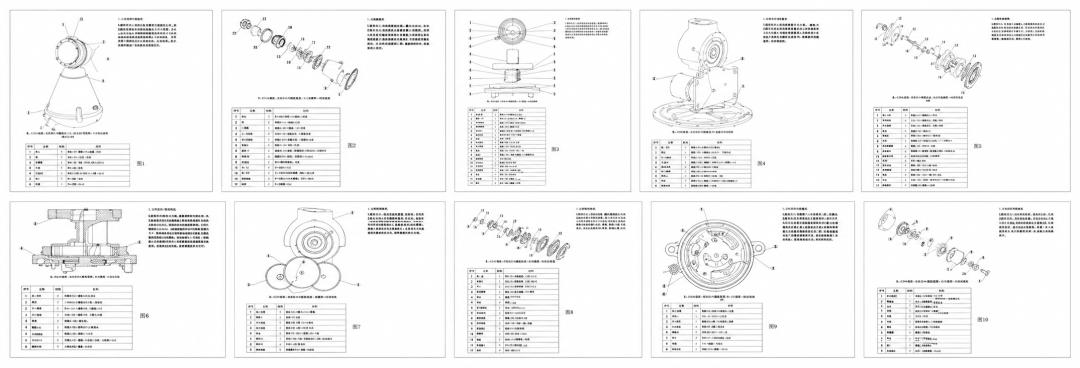
Pisen's open source 3D model directly generates patent drawings
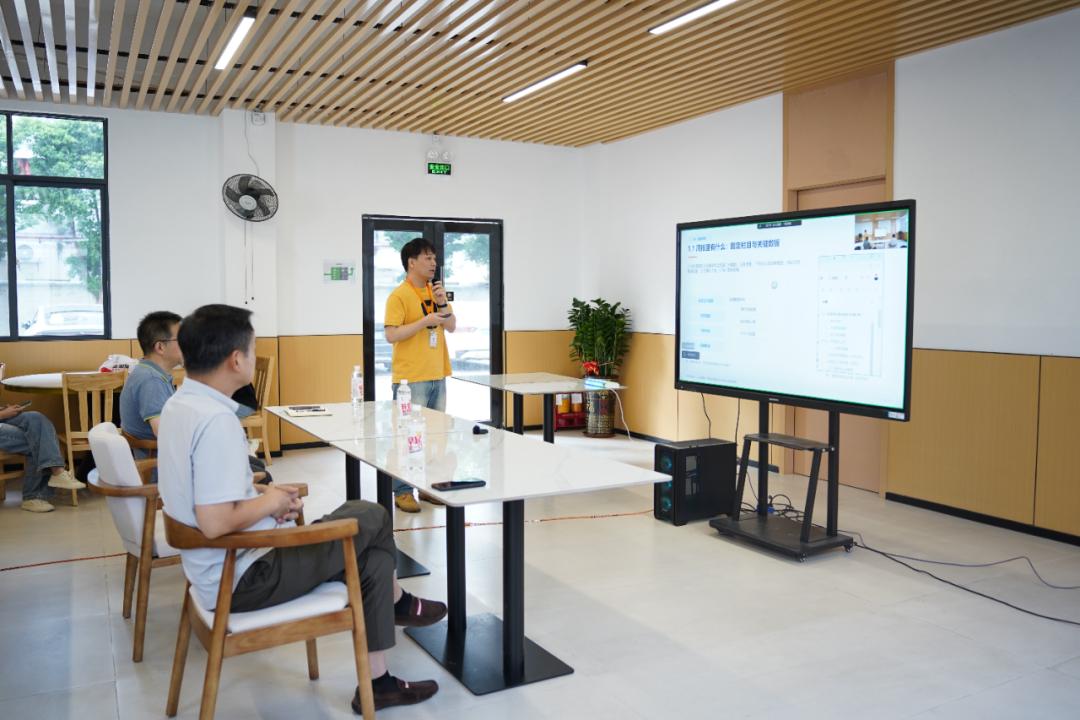
Pisen's internal AI sharing session
In the patent link, Pisen's engineers originally needed to manually correspond hundreds of part numbers in three places: drawings, part number tables, and description of drawings; now, they only need to provide a 3D model of the whole machine, and the system will directly generate drawings that meet the application specifications — the three places of part numbers, part number tables, and description of drawings are generated from the same data source, which are naturally consistent. "Patent engineers no longer need to bother drawing later, they just need to make judgments." At present, Cong Zelong and his team are still continuing to improve the verification and feedback mechanism.
Compared with single-point efficiency improvement, what Cong Zelong and his team ultimately want to achieve is to precipitate personal methods into organizational assets.
Pisen's SkillHub undertakes this mission: verified workflows will be encapsulated as Skills for release, and the dashboard will display in real time who in the company contributes more and whose Skills are reused more; the relevant performance evaluation is not based on quantity, but on "whether it helps the business department reconstruct the workflow". Similar to Songxianxian mentioned above, "the Skill we use the most is also the weekly report Skill," Cong Zelong laughed, "We will make every piece of data traceable, can ask 'who submitted this data and what is the basis', and directly access the meeting minutes at that time." This idea was later fed back to the product R&D team of Qianwen Office, which subsequently launched the relevant function of company-level "Team Skills".
Regarding the decision distinction between "self-developed AI" and "outsourced AI", Cong Zelong believes that industry-exclusive capabilities must be developed by themselves, such as the ability to generate patent drawings from 3D (which cannot be purchased externally), but general enterprise management tools such as meeting minutes, report sorting, and legal contract analysis should reuse outsourced tools as soon as possible. "Using Qianwen Office, there is no need to reimburse for APIs, which are directly purchased by the enterprise uniformly — this sentence may sound a little funny, but in fact it solves a very practical pain point."
Cong Zelong does not deny that in the process of promoting organizational AI transformation, special consideration needs to be given to colleagues' acceptance, "The company will not force senior R&D engineers to change. They will be invited to participate in the polishing of AI products first, and take on tasks together — instead of changing the workflow as soon as they come up."
"Our team is a group of people who grew up with AI." The cognition of AI is the most critical indicator for Cong Zelong when building the AI product center team. "We have a candidate with a college degree who got the offer, and you can see from his resume that he has followed up from the early models all the way to the latest Agent workflow. This experience of continuous learning and hands-on problem solving left a deep impression on me."
"Such AI-native talents will regard the newly released AI as a handy tool, rather than worrying that it will replace themselves — this is the most critical talent standard in the new era." He also reminded his peers, "A large and comprehensive Agent platform is not the final answer, changing everyone's AI cognition in the company is the top priority." For most companies, this transformation requires the top leader's personal support and promotion.
After the methods are precipitated, the next question that follows is: what is AI allowed to touch and what is not allowed to touch? GAC's answer forms the thinking on permission system design.
GAC: Putting Agents into the Permission System
Wang Qijun, head of infrastructure of GAC Group, is relatively concerned not about "whether AI can write PPT", but about whether the Agent will have problems running in the permission system.
At the beginning of this year, GAC first selected DingTalk to carry process management. With the release of Wukong in March, AI capabilities were naturally built on the process. "We are relatively lucky." Wang Qijun judged that this form tightly coupled with office systems and processes is at least the ultimate form of office intelligence in the near future.
As a large group with nearly 300 holding and participating enterprises, GAC has purchased a large number of Qianwen Office Licenses, but only opened "less than 1200 people" on an application basis. Halfway through the interview, he called up the background on the spot: There are 1222 use applications in total, and the most frequent scenarios are document writing, data analysis, knowledge management and development assistance. The applicants are not only in the R&D line, but also include strategic insight from the strategy department, experimental code from the thermal management laboratory, market insight from the intelligent driving team, etc.
"I need everyone to write the usage scenario clearly when filling in the application, which is double-approved by the business leader and the digital department. Many people only wrote two words: 'work', and I rejected and sent them back — if you don't even know what you want to use it for, why should I approve it?" Wang Qijun has a serious attitude towards cost accounting, "One account costs 200 yuan, and it also consumes Tokens. If you don't even want to use it seriously, how can you use it well?"
Approval solves the problem of "