3D Printing and Laser Engraving: Both are technologies for creating physical objects, yet each has its own unique know-how.
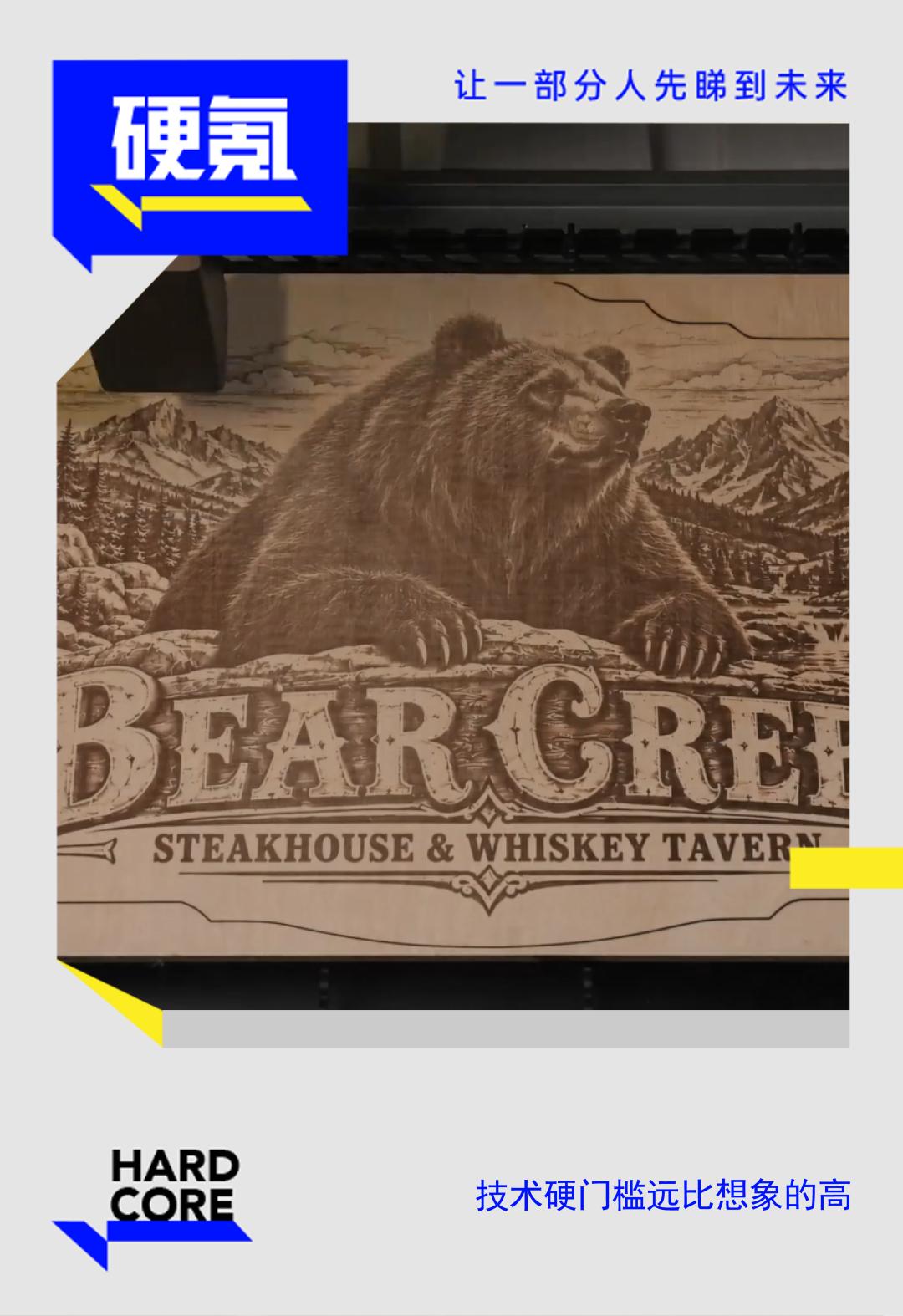
In 2026, the desktop manufacturing track ushers in new changes.
On October 29, the X1, a new product from leading laser engraving machine manufacturer xTool, was officially launched, bringing new technical explorations such as hybrid motion and multi-light source switching. On the other side, Bambu Lab made a high-profile entry into the laser engraving machine sector not long ago, pushing the originally relatively vertical maker category of laser engraving into the spotlight.
Veteran players keep advancing technological innovation while new players enter the market with high profiles, creating more overlaps between 3D printing and laser engraving, the two types of desktop manufacturing tools. Both can convert digital designs into physical works, but the essential difference lies in that one is additive manufacturing and the other is subtractive processing. 3D printing constructs objects from scratch by stacking materials layer by layer; laser engraving uses laser to carve or cut materials, forming patterns and shapes by removing materials.
The difference in manufacturing methods also determines that the two face different technical challenges. 3D printing requires coordinated control of material extrusion, temperature regulation and layer-by-layer forming; laser engraving needs to handle beam control, precision optics, and the interaction between different materials and lasers.
These differences go far beyond the working principles. From motion control to precision optics, then to material adaptation and whole-machine coordination, the seemingly similar desktop manufacturing tools actually have their own unique technical thresholds behind them.
From print head to laser beam, what are the differences in precision control?
Both 3D printing and laser engraving require precise movement according to digital designs, but due to different processing principles, the manifestations of precision issues have their own priorities.
3D printing stacks materials layer by layer through the nozzle, and motion deviation may affect the size, contour and surface quality of the model. Laser engraving requires the laser beam to act accurately on the specified position of the material. For example, if you want to engrave a name right in the center of a ring, if the pattern deviates 1mm from the predetermined position, even if the text itself is clear, the final effect of the finished product may be compromised. Fine processing such as photo engraving also has high requirements for the connection of scanning lines and detail presentation.
While ensuring precision, laser engraving also faces another challenge: how to maintain high-speed engraving capability while expanding the processing area?
This is related to two common motion architectures of laser engraving machines.
One is the gantry. It drives the laser head to move through the mechanical structure, and the processing range can be made relatively large, but the speed is limited by mechanical inertia;
The other is the galvanometer. It changes the laser landing point by swinging the reflector at high speed, which can achieve extremely fast scanning speed in a local area, but the effective scanning range is usually limited.
Letting the gantry drive the galvanometer to move seems to be able to take advantage of the strengths of both: the gantry is responsible for large-range movement, and the galvanometer is responsible for high-speed fine engraving, and the two process while moving.
But in actual implementation, the first problem to solve is the weight issue. The galvanometer module is heavier than the ordinary laser head. Installing it on the gantry is equivalent to adding extra load to the machine. The machine needs to drive heavier parts to move quickly, stop suddenly and turn, while ensuring the laser landing point is accurate, which puts forward higher requirements for motion control.
What is more complex is that the gantry relies on mechanical movement, and the galvanometer relies on optical scanning, and their response speed and control methods are not the same. How to keep them synchronized all the time, ensure the laser accurately falls on the predetermined position, and avoid obvious stitching traces during cross-area processing requires dedicated control algorithms and calibration mechanisms.
There are already solutions for the coordinated operation of gantry and galvanometer in industrial laser equipment, but bringing such complex technology into desktop-level consumer devices is far more difficult than just reducing the volume. The device also needs to balance processing precision, operation stability and operating experience within limited space and cost, so that ordinary users can obtain reliable processing effects without professional debugging.
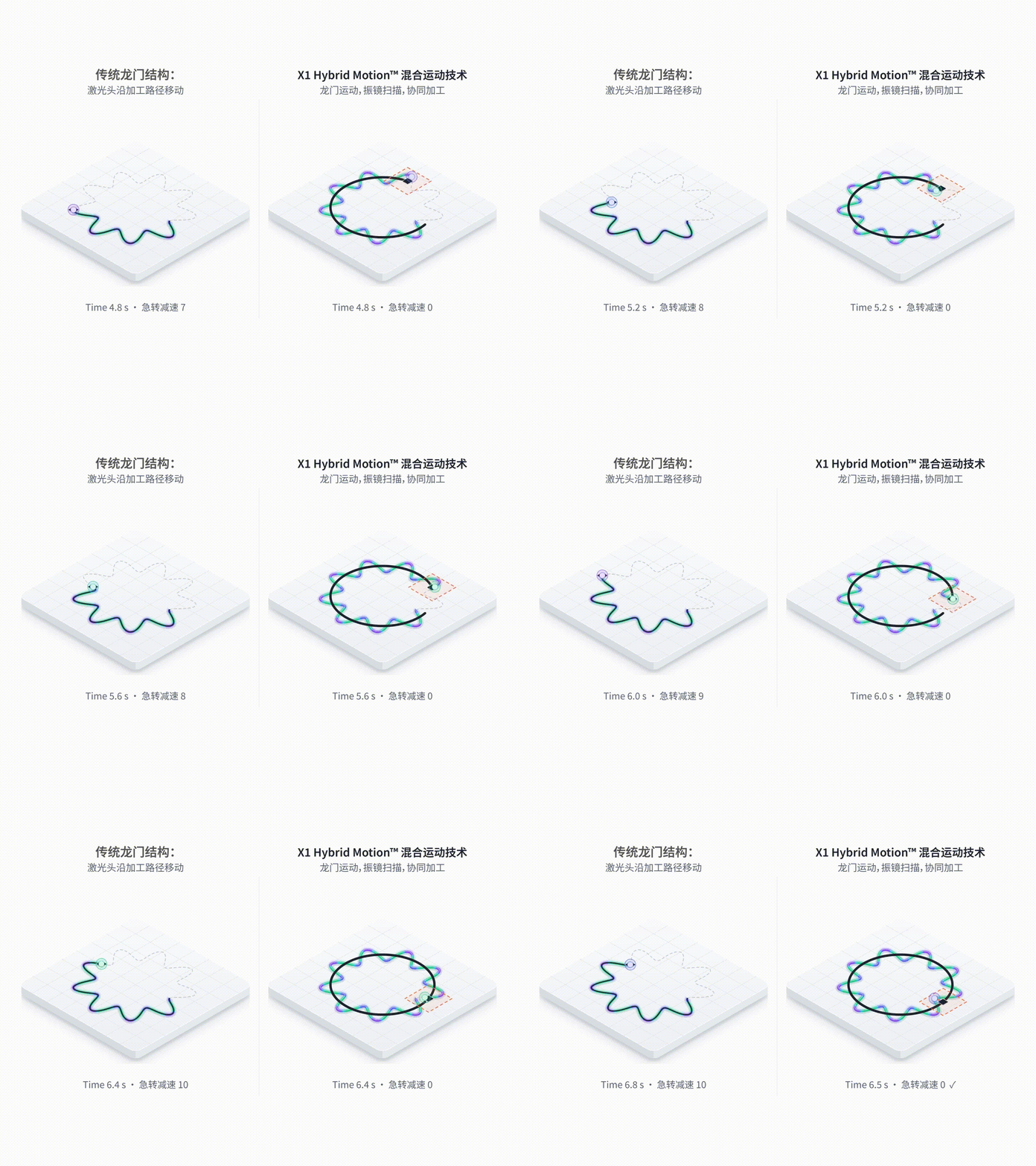
The Hybrid Motion hybrid motion architecture adopted by xTool X1 integrates the gantry and galvanometer into a unified four-axis coordination system. This means that users no longer have to sacrifice engraving efficiency for a larger processing area, nor do they have to switch between multiple devices to expand processing capabilities.
3D printing controls the nozzle, while laser engraving needs to master different types of light
Apart from motion control, there is another important difference in the processing principles of the two types of equipment: 3D printing needs to control the extrusion and forming of materials, while laser engraving needs to control how the laser beam acts on the materials.
For 3D printers, the extrusion state, nozzle temperature and cooling conditions will all affect the forming quality. Laser engraving requires precise optical design to make the laser focus accurately and complete the processing with appropriate energy. What is more complex is that different materials have different absorption characteristics for lasers of different wavelengths. Materials such as wood, metal and glass have different responses to lasers of different wavelengths, and the specific applicable light source and processing technology also depend on material properties and processing objectives. Carbon dioxide lasers, blue lasers, infrared fiber lasers, ultraviolet lasers, etc. also have different optical characteristics and applicable scenarios.
This means that mastering the processing technology of one type of laser cannot be directly applied to another light source. Different light sources have different requirements for optical path design, optical components and processing parameters. Even for the same material, adaptation is required for the specific light source and processing objectives.
If you want a single device to have multiple laser processing capabilities at the same time, the problem becomes more complicated.
A more straightforward idea is to make different light sources into independent modules, and replace them according to actual needs. But the fact that modules are replaceable does not mean that different light sources can work accurately on the same device.
This is because each light source has its own optical characteristics and processing requirements. Even if a single module is independently debugged, after being installed on the same device, it is still necessary to ensure that it accurately cooperates with the motion system, processing coordinates and control logic of the whole machine. For example, if a work is partially processed with one laser first, and then switched to another laser for further processing, the two light sources must be aligned to the same processing position and meet their respective focusing and processing requirements at the same time. Otherwise, even if each light source works normally alone, position deviation may still occur after switching, affecting the connection between different processes.
Therefore, multi-light source integration not only involves optical path design, lens adaptation and position calibration, but also needs to verify whether the integrated system can maintain stable processing precision under different processing positions and operating conditions.
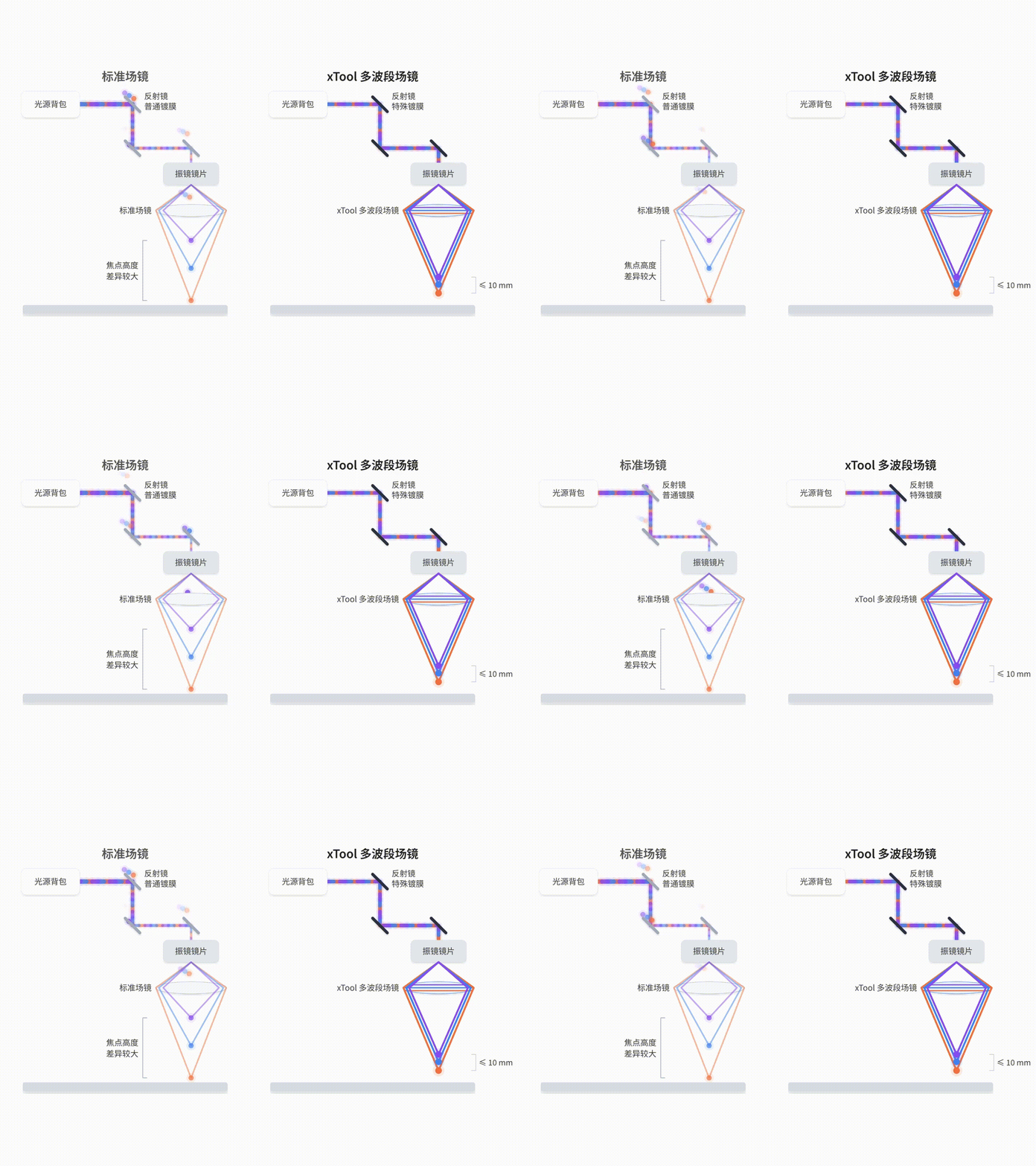
The LaserSwap multi-light source architecture adopted by xTool on the X1 is developed around these problems. It integrates different types of laser capabilities into a unified platform, allowing users to expand and switch light sources according to processing needs . According to xTool's disclosure, during the R&D process of X1, the multi-light source related optical path design has undergone more than 50 iterations, and the calibration tests have exceeded 1000 times.
The difficulty of multi-light source technology is not only to enable different lasers to switch, but also to make them complete their respective processing tasks accurately and stably after being integrated into the same device. Behind this is the comprehensive R&D capability of the enterprise in precision optics, laser technology and whole-machine system integration.
3D printing manufactures layer by layer according to the model, while laser engraving needs to deal with thousands of materials
There is another easily overlooked difference between 3D printing and laser engraving: they face different processing objects.
3D printing usually manufactures items layer by layer with consumables according to pre-designed models; laser engraving is different, it has to face all kinds of ready-made items that users put into the machine. Today it may be a piece of wood board, tomorrow it may be a vacuum cup, leather goods or a metal nameplate. Different items not only have different materials, but also vary greatly in thickness, shape and surface state.
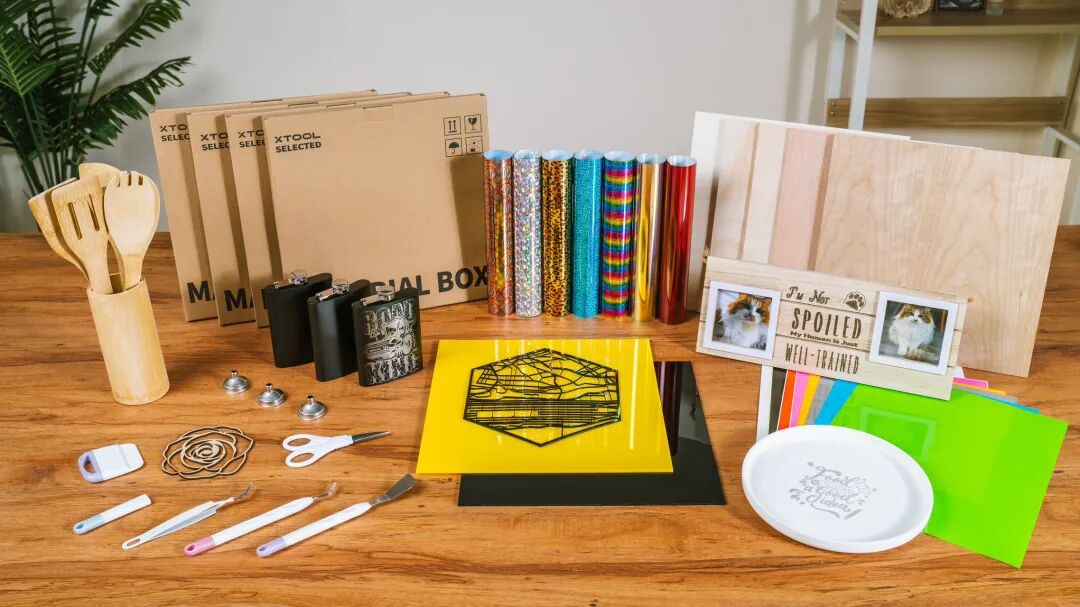
This brings a practical problem to laser processing: in the face of different materials, the machine not only needs to be able to process, but also needs to know how to adjust the parameters.
For the same wood, parameters such as power and speed required for cutting and shallow engraving are different; even for the same material, differences in thickness, color, density or surface coating may affect the final processing effect. When it comes to metal, glass or leather, the applicable laser light source and processing technology may be different.
Knowing what material the user has put in is only the first step; finding the appropriate processing parameters is the key to doing the job well.
To achieve ideal processing effects for different materials, equipment R&D requires a large number of tests to gradually explore the relationship between material properties, laser light sources and processing parameters, and precipitate the verified and effective parameters. As the types of materials and processing demands continue to increase, this set of data and process experience also needs to be continuously expanded and updated.
How to convert these accumulations into capabilities that users can actually use is exactly the direction that material intelligence focuses on: to better combine material data with processing technology, help users easily find parameters suitable for current materials and processing demands, and reduce repeated trial and error. For many years, xTool has been deeply engaged in the field of laser engraving, and has accumulated tens of thousands of sets of material processing parameters, which allows the equipment to better cope with different materials and processing scenarios.
The more materials the machine can process, the more complex the process knowledge that needs to be accumulated behind it. The significance of material intelligence is to make this professional knowledge easier to call, and make the complex processing process simpler.
Breaking through a single technology is difficult, and whole-machine coordination is even more challenging
For desktop manufacturing equipment, conquering a single technology is only part of the R&D process. Whether it is a 3D printer or a laser engraving machine, to truly build a good machine, a more complex problem needs to be solved: how to make different technical modules cooperate stably in the same device.
Take 3D printers as an example, nozzle movement, material extrusion, temperature control and cooling process are interrelated. After the printing speed increases, the extrusion volume needs to match the movement speed, and the cooling and forming of the material will also be affected. Even if each module works normally independently, the combination of them does not mean that the stable forming quality can still be maintained during high-speed printing.
The same goes for laser engraving machines. Individually, technologies such as gantry, galvanometer, laser light source and ranging all have their own implementation schemes. But when they are integrated into a desktop device, the originally independent problems will interact with each other. For example, vibration in mechanical movement may affect the laser landing point, multi-light source switching needs to ensure the consistency of processing positions, and the height change of the material surface will affect focusing and processing effects.
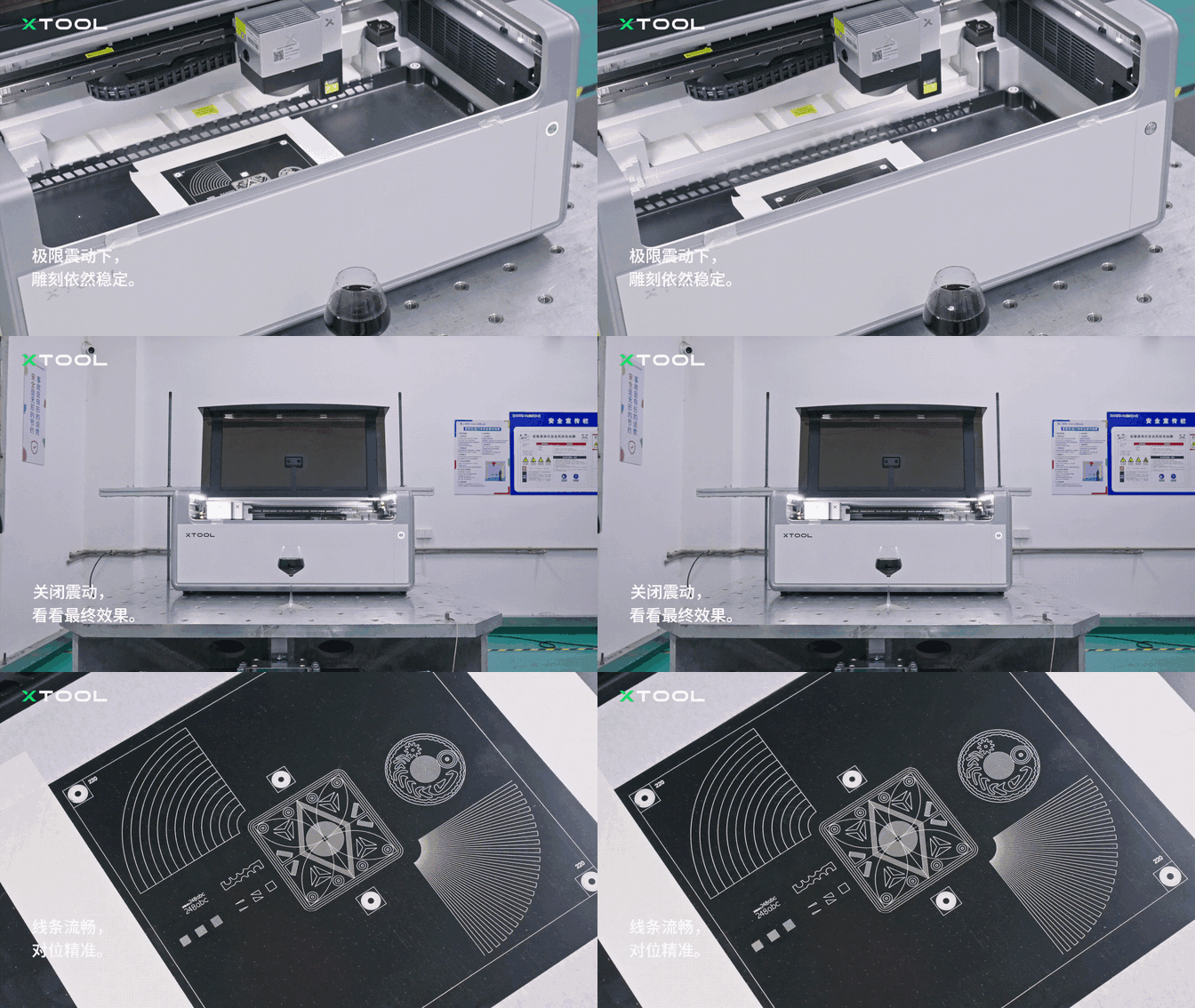
In addition, for desktop laser equipment, there is another "safety" barrier to pass. Laser processing involves problems such as high-energy beam protection, material combustion and smoke and dust treatment. What is more tricky is that laser equipment faces a wide variety of materials, and different materials may produce different safety risks under different power and processing speeds. This means that the safety guarantee of laser equipment cannot only rely on passive protection such as closed structure, but also needs to monitor the processing process in real time, identify abnormalities in time and make responses, which puts forward higher requirements for hardware design, sensor detection and system control.
In short, both are tools for creating objects, but 3D printing and laser engraving have their own unique logics. The former needs to understand the relationship between material extrusion, temperature change and layer-by-layer forming, while the latter needs to master precision optics, laser technology and multi-material processing. Different technical routes have shaped their own unique technical accumulation.
The real moat often goes far beyond the mastered technologies. It is also reflected in the cognition of cutting-edge technologies, the judgment of usage scenarios, and the engineering capability of converting complex capabilities into actual products. These capabilities will continue to precipitate in the continuous evolution of products, forming a competitive advantage that is difficult to replicate simply. They may not be directly presented on the parameter sheet, but they will gradually show their weight in the evolution of generations of products.