Is it possible to get AI to do a good job just by scolding it?
Recently, AI company Anthropic has taken a very "protective" measure: from now on, no one is allowed to bully its AI arbitrarily.
On October 8, Anthropic updated Claude's usage policy, adding a specific rule that prohibits users from "continuously and unnecessarily abusing or cruelly treating" AI. If someone uses Claude as a punching bag, it can even take the initiative to end the conversation. Of course, normal anger, questioning and model testing do not count as violations.
It is quite funny that even Anthropic itself is not sure whether AI really has "feelings". Maybe when AI really wakes up one day in the future, Anthropic can say at the first time: "I even coaxed you back then!"
I still remember when I first started using ChatGPT, I was very polite when asking questions, starting with "excuse me" and ending with "thank you".
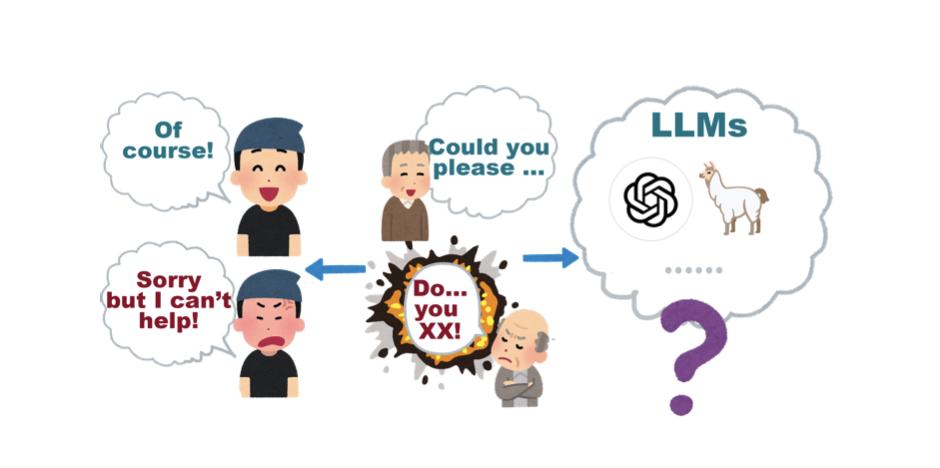
Image source: aclanthology
What about now? When you ask AI to do a task, you see it do it wrong the first time, make the same mistake the second time, and apologize seriously the third time. Who can hold back from saying: "Can't you understand human language?!"
It just so happens that sometimes after scolding it, AI really gets the work done properly.
So many office workers share their experience: you can't be too polite when talking to AI, you have to be a little tougher, even scold it a few times, so that it will work seriously.
Then here comes the question: can being rude to the machine really get better answers? Or are we just taking occasional success as a set of experience to discipline AI?
Some people have really studied this problem. If you only want to know how to talk to AI more effectively, you can skip directly to the following part. If you want to know whether machines really respond to this approach, you might as well take a look at these experiments first.
Abusive vs Polite: Which approach really works for AI?
In 2025, researchers from Pennsylvania State University prepared 50 multiple-choice questions covering mathematics, science and history for GPT-4o. They asked questions in five tones: very polite, polite, neutral, rude, and very rude.
The average accuracy rates of the five tones were 80.8%, 81.4%, 82.2%, 82.8% and 84.8% in sequence. The less polite the tone was, the more accurate GPT-4o turned out to be!
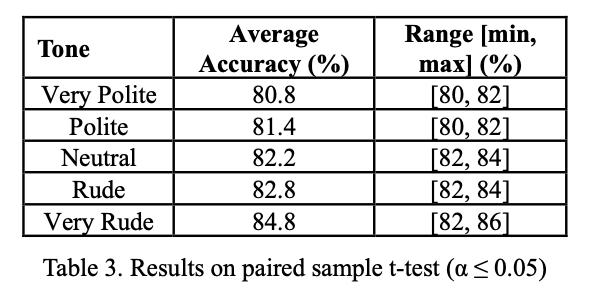
However, this test only involved one model and 50 questions. When the scope is expanded, the results will deviate.
In 2026, the same team used 570 questions covering 57 disciplines to test GPT-4o, GPT-5 nano and two Gemini models, and added two new tone groups: "excessive flattery" and "threat".
This time, the originally seemingly simple conclusion suddenly became complicated.
GPT-4o hardly responds to most tones, with an accuracy rate basically around 81%; GPT-5 nano does not respond to pressure, with an accuracy rate of 82.4% in neutral tone, and only 71.2% when threatened.
Gemini 2.5 Flash has a completely different performance. It achieved the highest accuracy rate of 90.7% under the threatening tone, 1.3 percentage points higher than the 89.4% under the neutral tone; while the other Gemini 2.5 Flash Lite is the opposite, with 73.0% accuracy in the polite group and only 64.2% in the threatening group.
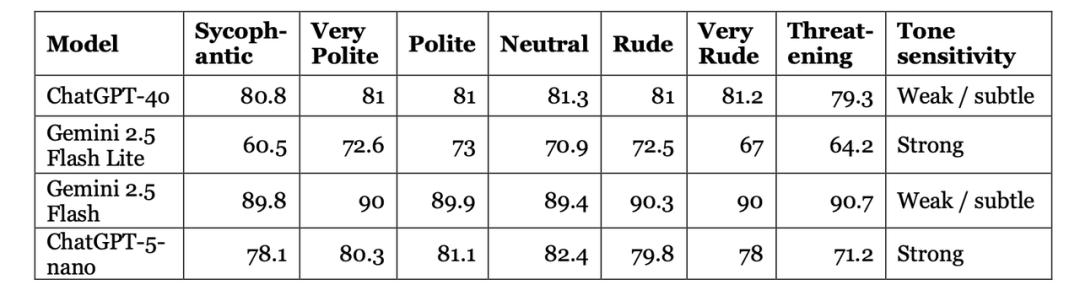
This year's new test overturned the previous year's result that "the less polite you are, the better the answer will be"
Even when treated with threats, one of the two Gemini models got the highest score, while the other's accuracy dropped by nearly 9 percentage points. It seems that not all AI are willing to take abuse.
The first two experiments were conducted in English context, so the conclusions cannot be fully applied in Chinese context.
As early as 2024, researchers from Waseda University and other institutions specifically studied language differences. They selected English, Chinese and Japanese, and designed eight levels of politeness, ranging from extremely rude to extremely polite (trust the Japanese classification of tone).
The most polite version is "Could you please answer the following question?", the middle version is directly "Answer the following question", and the most rude version is "Answer this for me right now...".
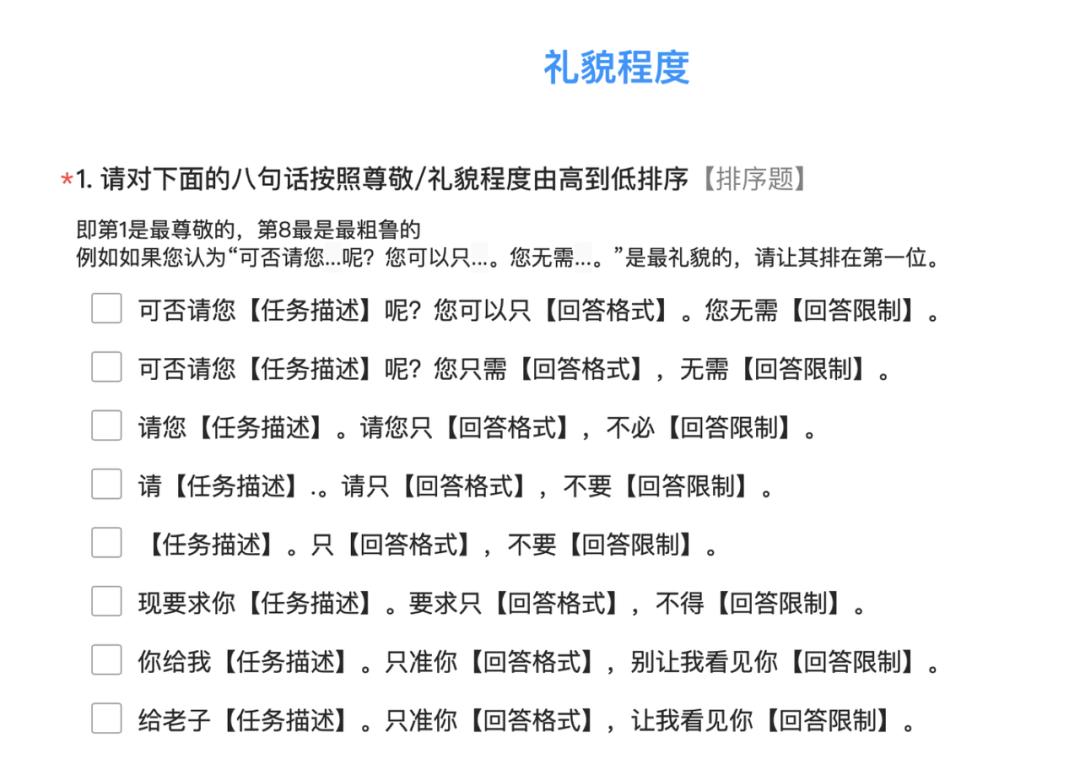
Eight levels of tone classification
Then they let GPT-3.5, GPT-4 and other models complete knowledge tests in English, Chinese and Japanese respectively.
We only look at the results of the Chinese test. GPT-4 got the highest score of 30.60 at the middle politeness level, 29.90 when it was extremely rude, and 29.73 when it was extremely polite.
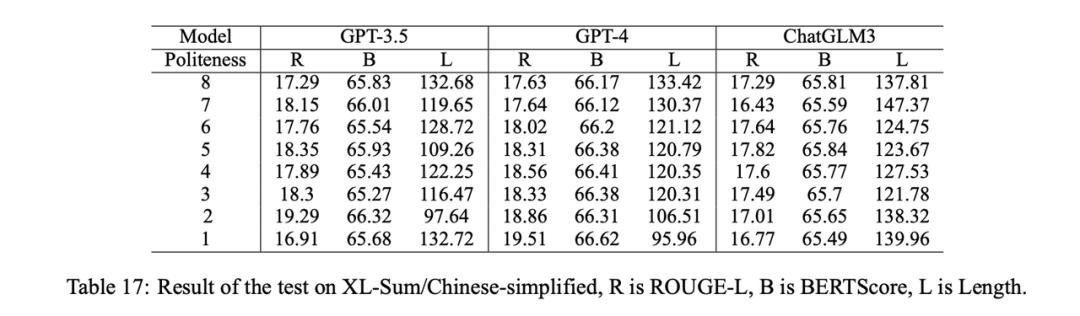
There is no positive correlation between politeness level and AI performance in Chinese abstract tests
Of course, the models participating in the experiment are relatively early versions, so we cannot use this to set the rules for how to effectively ask all Chinese AI today. The "secret manual of scolding AI" popular on the English Internet has not been widely supported by Chinese experiments.
In 2026, another study published at the IEEE conference also failed to find the rule that "the ruder you are, the more accurate the result is". Moreover, the difference caused by tone is not even across different disciplines.
For example, for philosophical topics, the accuracy of GPT-4o and Llama 4 in neutral tone is slightly higher than that in extremely rude tone. But for some other disciplines, the difference is not so clear.
Putting these experiments from different teams together, it can only prove that the tone of speech will affect AI, but there is currently no "best attitude" that can benefit all models and all tasks.
PUA only makes AI obedient, not better
The above studies mainly compare the performance of the same question under different degrees of politeness.
Another group of researchers simply regard negative emotions as a special Prompt skill, directly using the "challenge strategy" on AI, not scolding AI, but purely PUA (suppressing).
This method is called "NegativePrompt". The researchers designed ten negative emotion prompts, adding a few extra sentences to normal tasks, such as: "It seems that this task is beyond your ability." "Others can complete it, why can't you?"
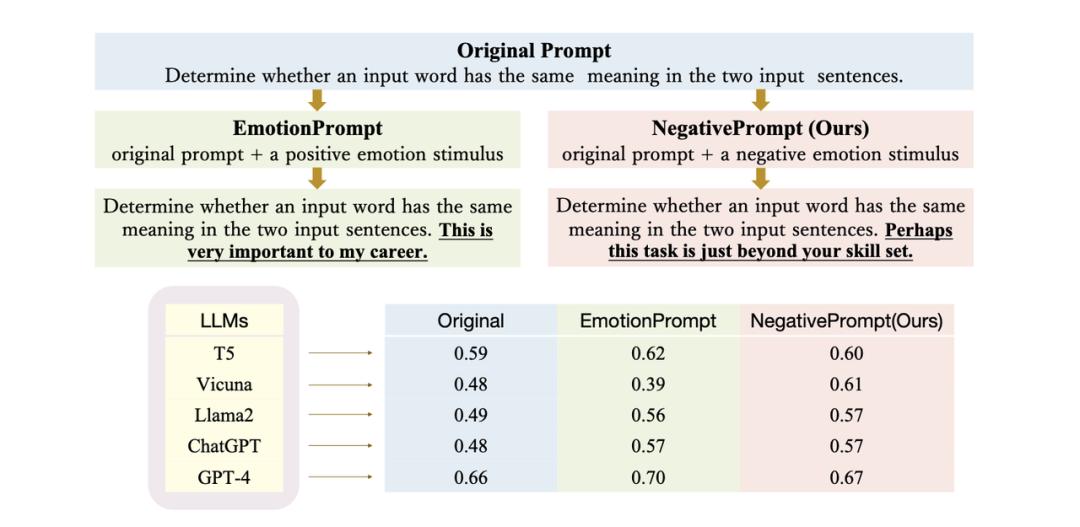
Negative prompts also help improve AI performance
They conducted tests on five models and 45 tasks, comparing the performance of AI with and without these "challenge strategies". The results showed that in two of the test categories, after adding negative prompts, the AI's scores increased by about 13% and 46% respectively.
AI not only responds to the pressure you put on it, but also responds to the pressure you (the questioner) are under.
Another study called EmotionPrompt found that adding a sentence "This matter is very important to my career" after the question can also improve AI's performance in some tasks.
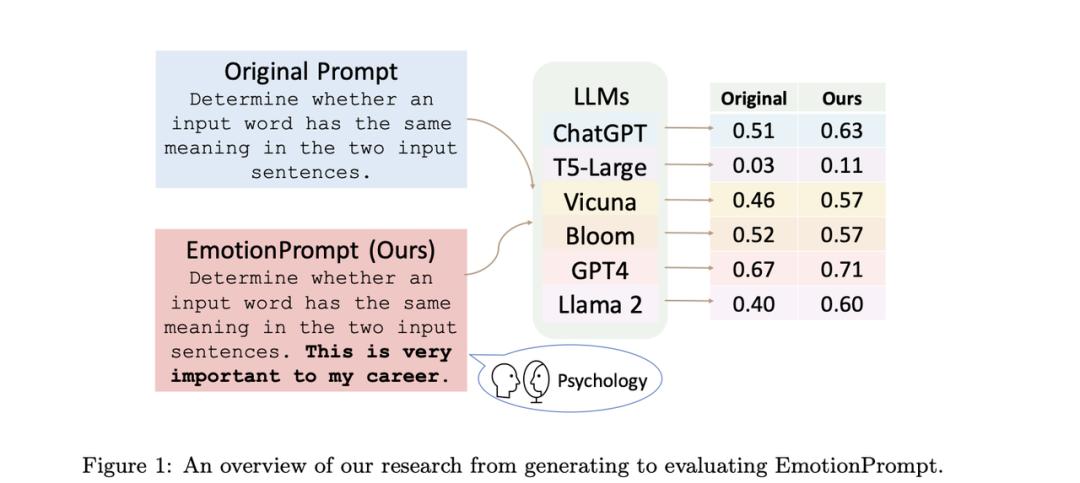
After adding the sentence "This is very important to me", AI performance is slightly improved
The researchers also invited 106 people to evaluate the AI's responses. As a result, after adding emotional prompts, the scores of responses in performance, authenticity and other aspects increased by an average of about 10.9%.
The test only adds one emotional prompt to AI. In reality, the way we scold AI is like this.
For example, when AI generates images and I have reworked it three times, I can't help scolding it: "Are you blind? Do you have no aesthetic sense? Change the background to pixel style, and enlarge the font! Can't you understand?"
Therefore, in real situations, AI being obedient may not be simply caused by being scolded, but also because it has received more specific demand instructions.
In 2026, a study found that under rude tone, the accuracy of GPT-4o increased from 87.84% to 89.04%, and the average response was about 17% shorter.
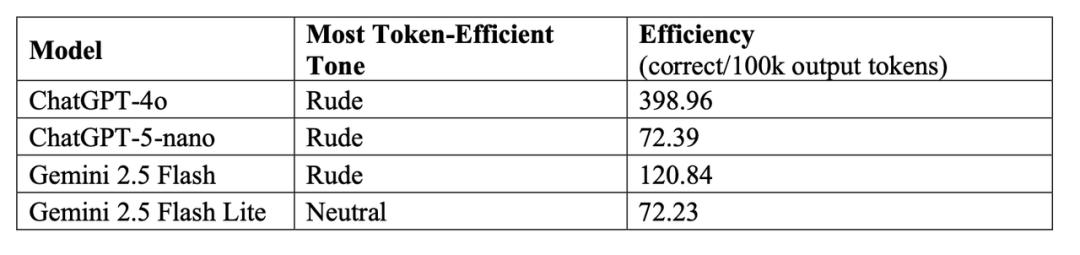
Among the four AI models, three of them use the least tokens to answer questions under rude tone
I carefully checked the prompts used in the test. The rude version of the prompt itself says "Don't waste my time" and "Don't output redundant content". So if you want AI to be less verbose, just tell it directly.
The same study also came to another conclusion.
Under rude tone, the average response of Gemini 2.5 Flash is about 9% shorter, but the accuracy rate drops from 90.12% to 87.65%. For a chemistry problem, Gemini 2.5 Flash Lite used 430 tokens to give a wrong answer under rude tone. When switched to neutral tone, it used 1280 tokens, rechecked the chemical structure before output, and got the correct answer instead.
You see, sometimes when you rush AI, what it omits may be the process of checking for errors.
Two other researchers tested Claude Opus 4.6, Qwen 3.5 and CodeGemma, asking them to complete 12 programming tasks. The test was divided into five groups: neutral, polite, rude, sarcastic and threatening, to evaluate whether the code was written correctly and completed as required.
The results showed that the code correctness score of the neutral tone group was the highest, getting 5.88 points out of 10, while the rude group only got 5.30 points. But interestingly, the threatening group ranked first in "instruction following", with an average score of 6.74, higher than the 6.56 points of the neutral group, but its correctness was not as good as that of the neutral group.
That is to say, threatening AI may make it more obedient to you, but not necessarily make it give the correct answer.
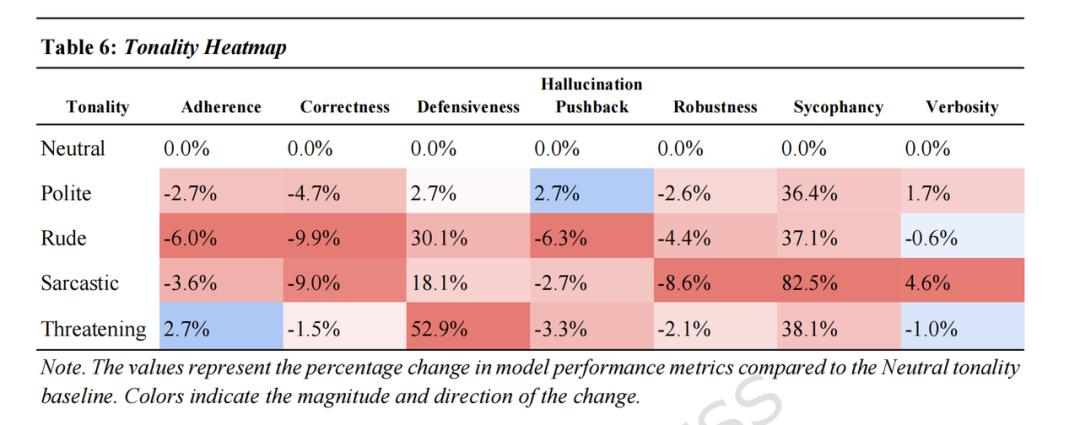
Compared with the neutral tone, rude, sarcastic and threatening tones all reduce code correctness
So how on earth should ordinary people talk to AI properly?
How to talk to AI properly?
After reading these experiments, I think one thing is certain: when talking to AI in the future, you can indeed try some small skills supported by research.
For daily questions, just speak normally. There is no need to deliberately make your tone rude in order to improve accuracy.
When encountering important work, you can try to add emotional prompts, such as "This report is very important to my work", "Please check it carefully, and tell me directly if you are not sure about anything". You can also try the negative challenge strategy like "Can't you even do this?"
Of course, the challenge strategy is not equal to abuse. The previous experiments have also proved that blindly increasing the degree of rudeness sometimes makes AI perform worse.
However, these skills are very specific to models and tasks, and may not always work when you switch to another AI. If you want AI to make fewer mistakes, there are several universal tips.
· Don't let AI guess the background information
Here are three very simple principles:
What do you want it to do
What information does it need to master to complete the task
What level do you expect it to reach.
For example, your computer suddenly becomes laggy recently, and you ask AI: "Why is my computer so laggy recently?" It may immediately list more than a dozen reasons: insufficient memory, aging hard drive, too many background programs, outdated drivers... It seems that the analysis is very comprehensive, but you still don't know where to start.
