Firmly occupying the top position in the global market, Fuyao Glass brings four key inspirations to Chinese enterprises
One of the key inspirations Fuyao Glass brings to us is that the global leading position does not necessarily come from occupying advantages at the very beginning, but gradually grows out of a series of "difficult but correct choices".
The True Value of Being "No.1"
China is no shortage of large enterprises with huge scale, but there are only a handful of them that can achieve absolute leading global share in a single product category. If the long-term main battlefield of a category is not located in China, and China does not have any inherent factor advantages, such a global top position will have far higher gold content.
Automotive glass is exactly such a category. The global automotive industry has long been centered in Europe, America, Japan and South Korea. Glass is a typical component with heavy weight, fragility, strict certification requirements and strong supporting attributes, which is naturally laid out around vehicle manufacturers whose headquarters are not located in China. Fuyao Glass, which grew up in such an environment, can steadily rank first in the whole industry across the globe, and its development path is worthy of in-depth analysis.
In 2025, Fuyao achieved an operating revenue of 45.787 billion yuan, a year-on-year increase of 16.65%; the net profit attributable to shareholders reached 9.312 billion yuan, up 24.20% year on year; the weighted average return on equity stood at 25.56%. The revenue from automotive glass reached 41.889 billion yuan, with a gross profit margin of 31.32%; the revenue from float glass hit 6.480 billion yuan, with a gross profit margin of 39.64%; the comprehensive gross profit margin of main businesses was 36.81%, up 1.19 percentage points from the previous year. The overseas main business revenue was 20.857 billion yuan, accounting for 46.25% of the total; the net cash flow from operating activities reached 12.055 billion yuan, a year-on-year increase of 40.79%.
In the first three quarters of 2026, the growth obviously shifted gears, with the operating revenue reaching 34.123 billion yuan, a year-on-year increase of 2.46%; the net profit attributable to shareholders was 6.006 billion yuan, down 14.97% year on year. The main cause of the profit decline is the exchange rate, with exchange losses of 1.067 billion yuan in the first three quarters, compared with exchange gains of 481 million yuan in the same period of the previous year. After deducting this impact, the total profit increased by 1.18% year on year; the gross profit margin on sales was 38.56%, still higher than that in the same period of the previous year. Only by looking at the two sets of data together can we get a complete picture: Fuyao is not always advancing triumphantly, and it has encountered real resistance in 2026.
Then look at the market share. According to the company's caliber, Fuyao's global market share is about 35%, which means that one out of every three pieces of automotive glass in the world is produced by Fuyao; its domestic market share is about 70% (about 68% according to the company's disclosed caliber). The estimation of third-party research institutions is slightly higher, at about 37%, and they give the ranking of the top five players in the world: Fuyao accounts for about 37%, AGC about 16%, Saint-Gobain about 14.5%, Nippon Sheet Glass about 14%, and Xinyi Glass about 8%. The four leading enterprises have long occupied more than 80% of the global market share, which is a typical oligopolistic industry.
More convincing than the static share is the changing trend. According to the collation of third-party research, ten years ago, the top player on this list was Japan's AGC with a share of about 27.5%, followed by Fuyao at about 21.9%, Nippon Sheet Glass at about 21.1%, and Saint-Gobain at about 17.6%. Ten years later, the share of almost all major competitors is shrinking, only Fuyao is expanding.
There are two more figures that can illustrate the quality of this leading position. One is the customer structure: Bentley, Mercedes-Benz, BMW, Audi, General Motors, Toyota, Volkswagen, Ford, Chrysler, Tesla, BYD, almost all mainstream global vehicle manufacturers are on the list. The other is the return to shareholders: according to the company's disclosed caliber, from 1987 to 2025, Fuyao has accumulated more than 36.776 billion yuan in tax payments and 40.22 billion yuan in cumulative dividend distribution.
A Starting Point Without Inherent Advantages
In 1976, Cao Dewang promoted the establishment of Gaoshan Special-shaped Glass Factory in his hometown Gaoshan Town, Fuqing, which produced water meter glass and suffered consecutive years of losses. After the policy allowed the contracted operation of township enterprises in 1983, he volunteered to take over the contract, implemented performance-based wages, and achieved a profit of about 220,000 yuan that year, while the total investment of the factory was only more than 100,000 yuan. The real turning point came around 1985.
According to the record of People's Daily, around 1984, Cao Dewang traveled to Wuyi Mountain, bought a walking stick for his mother, and when he carried it on his shoulder, he was reminded by a driver driving a Japanese car: "Don't break my glass, it costs thousands of yuan a piece." He was engaged in water meter glass production and knew clearly about the cost of glass. The manufacturing cost of a piece of automotive glass was only more than 100 yuan, so he wondered why it was worth thousands of yuan. After investigation, he found that at that time, China's automotive glass was almost entirely dependent on imports, and the price was completely determined by the seller, because there were no Chinese enterprises among the suppliers.
In 1985, the factory shifted its business to automotive glass, focusing on the after-sales maintenance market, and the business made a profit of more than 700,000 yuan the next year. In 1987, he joined more than ten shareholders to raise 6.27 million yuan to establish Fuyao Glass Co., Ltd., and spent more than 1 million US dollars to introduce the then internationally advanced automatic forming tempering furnace from Finland. In 1991, the company was approved to publicly issue stocks, and in 1993, "Fuyao Glass" was listed on the Shanghai Stock Exchange, becoming one of the earliest private enterprises to be listed in Fujian.
There is an easily overlooked time background here: in 1990, China's annual automobile output was 509,000 units; it was not until 2009 that China's automobile production and sales volume exceeded 10 million units, becoming the world's largest automobile producer and consumer market; by 2025, the production and sales volume reached 34.531 million units and 34.4 million units respectively. In other words, in the first two decades when Fuyao started and accumulated capabilities, China's automotive industry was almost negligible in the global landscape. Its first market was not local vehicle manufacturers, but the spare parts market for imported cars for maintenance.
This time difference is very important. The success narrative of many Chinese enterprises is based on the favorable wind brought by the rise of the mother country's industry, but Fuyao is different. It was in a position with almost no industrial dividends, and first built up the capabilities to embrace such dividends.
The excess profit in the early stage essentially came from the market structure, not from its own capabilities. The same dividend in front of another enterprise may only bring a round of consumption. There is only one criterion to judge the subsequent quality of Fuyao: when the window of import substitution closes and the price returns to normal, whether it has unique capabilities in its hands.
Three Times of Self-discipline and One Active Offensive
The first time, self-separation around 1994.
Around 1993, in addition to its main automotive glass business, Fuyao also dabbled in real estate, decoration engineering, securities and other fields. From the management to the employees, the general view was that the company should move towards collectivization and diversification. Cao Dewang sent the company's operating reports to overseas markets for professional evaluation in accordance with international standards, and the conclusion was that "the main business is not prominent". After that, he overruled all dissenting opinions, transferred the investment in Fuyao Industrial Village and Decoration Company in 1994, recovered the investment in Southern Securities in 1995, and invested all the funds in the construction of Fujian Wanda Automotive Glass Co., Ltd.
The difficulty of focusing does not lie in knowing the principle, but in the fact that the businesses to be cut off during implementation are often those that are still making profits on the books. Giving up loss-making business is called stop-loss, while giving up profitable business is called strategy. Fuyao has not deviated from the main line of automotive glass for more than 30 years since then. The decision of "what not to do" is more difficult than "what to do".
The second time, from 1996 to 1999, being a peer with the strongest competitor rather than a vassal.
In early 1996, Fuyao signed a contract with Saint-Gobain, the leading international automotive glass enterprise from France. The former contributed 14.7 million US dollars, and the latter contributed 15.3 million US dollars, to establish a joint venture Wanda Automotive Glass Co., Ltd., with the French side holding 51% of the shares, and Cao Dewang served as the general manager. The three-year cooperation brought extremely rich gains: Fuyao's employees were trained in batches on the front-line production lines of Saint-Gobain in France, saw the industry blueprint at that time and participated in practice in terms of production process, design ideas and process routes, and at the same time learned the management mode and financial management concept of multinational enterprises. The cost was equally huge: during the cooperation, Fuyao's operating performance declined significantly, and the differences between the two sides gradually emerged. Saint-Gobain hoped that Fuyao would become one of its branches in China, while Fuyao aimed to become a global automotive glass supplier. In 1999, the two sides ended their cooperation, Fuyao repurchased all the shares held by Saint-Gobain at a premium, and agreed that Saint-Gobain would not re-enter the Chinese market before July 1, 2004.
This experience is often summarized as "paying tuition fees", but what is really valuable is not the technologies that have been learned, but two things: first, it knew what the world-class standard looks like, and once the standard is raised, it will never go back; second, at the stage when it was most short of capital and technology, it still refused to become a Chinese branch of others. The purpose of learning is not to attach to others, but to achieve more thorough independence.
The third time, from 2001 to 2005, regaining the "legitimacy".
At the end of February 2001, Fuyao learned that PPG of the United States, together with two other American glass enterprises, filed a lawsuit with the US Department of Commerce, accusing Chinese automotive windshield products of dumping. At the meeting the next morning, two opinions emerged: one thought it didn't matter, because domestic products were in short supply and the profit of domestic sales was higher than that of export; the other thought that they must respond to the lawsuit, otherwise it would mean giving up the international market. Cao Dewang later recalled the judgment at that time, with three reasons: the automotive industry has a high degree of globalization, giving up the international market means eventually exiting the Chinese market as well; the other party rules by law, and Fuyao's accounting documents are complete and credible; what is abandoned is not just the four words "international market", but also the due responsibility of the enterprise.
Then came the long battle on two fronts. On the Canadian battlefield, on December 18, 2001, PPG Canada filed a complaint against four Chinese automotive glass enterprises. The Canadian side once made a preliminary ruling that Fuyao had high dumping margins (the dumping tax rates recorded in different sources were 24.09% and 57% respectively). During the response process, the team found a key clue: the automotive glass sold by PPG in Canada was actually produced in the United States, which meant that it, like Fuyao, was an exporter to Canada and had no qualification to accuse Fuyao of dumping. On August 30, 2002, the Canadian International Trade Tribunal made a final ruling that no infringement was constituted, which was the first successful anti-dumping response case after China's accession to the World Trade Organization.
On the US front, on February 12, 2002, the US Department of Commerce made a final ruling that Fuyao's dumping margin was 11.8%, and the other five Chinese enterprises were 8.22%. In April of the same year, Fuyao sued the US Department of Commerce to the US Court of International Trade, pointing out from multiple aspects that its ruling lacked legal basis. In December 2003, the US Court of International Trade supported Fuyao's multiple allegations and required a retrial. On October 15, 2004, the US Department of Commerce made a final ruling in the administrative review, Fuyao's dumping rate dropped to 0.13% (less than 0.5% is regarded as zero dumping tax rate), and the previously prepaid anti-dumping duties were refunded, amounting to about 3.9 million US dollars (some reports say 4 million US dollars).
The cost of the lawsuit was very high. It was reported that the lawsuit lasted for three to four years, and the litigation costs ranged from several million US dollars to about 100 million yuan. The response documents sorted out by the team accumulated to tons. But the benefits far exceeded the lawsuit itself: on the one hand, this victory was a very rare public case at that time, which made global vehicle manufacturers re-recognize this Chinese supplier; on the other hand, the international reputation established thereby was directly converted into financing capacity. Since then, Fuyao could obtain unsecured loans from Citibank, Credit Lyonnais and Mitsubishi Bank.
This is the most transferable lesson in the whole story: the cost of going global inevitably includes the cost of complying with rules. The accounts that can be placed on the table and the pricing logic that can stand cross-examination are not compliance burdens in the international market, but assets that can be directly realized.
The key active offensive was to build factories around customers after 2014.
Automotive glass is not suitable for long-distance transportation, and vehicle manufacturers require timely supporting delivery. The globalization of this industry naturally requires local production capacity rather than long-distance supply. In 2014, Fuyao bought the abandoned plant of General Motors in Dayton, Ohio, the United States, and transformed it into a single automotive glass plant of about 180,000 square meters, which was put into operation in 2016. It also successively built the Illinois base equipped with two automotive-grade float glass production lines. According to the disclosure caliber in different periods, Fuyao's total investment in the United States ranges from about 500 million US dollars to more than 700 million US dollars. In 2022, it increased capital by 650 million US dollars to its US subsidiary, and in March 2025, it added another 400 million US dollars to build the third automotive-grade float glass production line. This practice of matching raw sheet production with deep processing construction essentially moves the vertically integrated model verified in China to the door of customers.
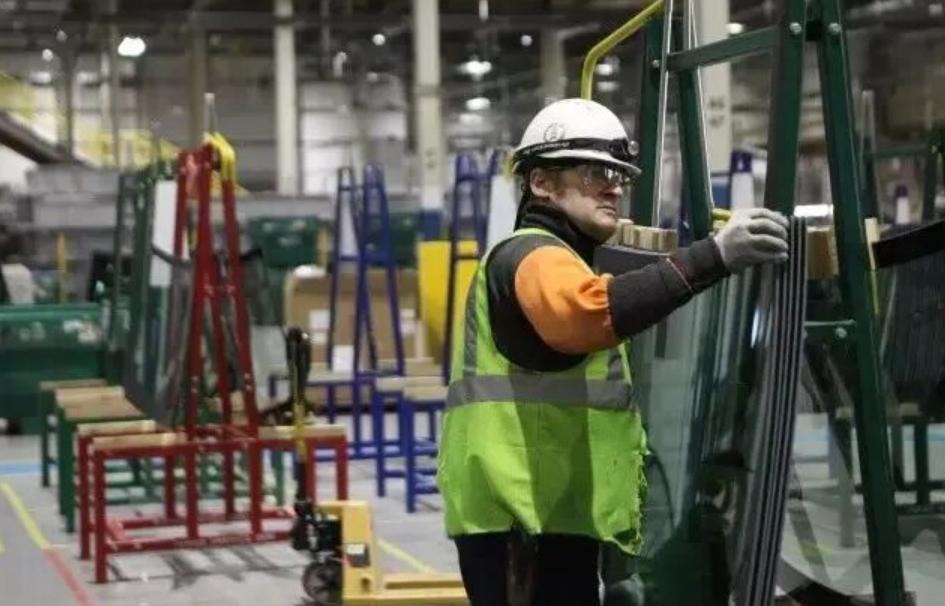
This path is not all applause. The documentary American Factory, released in 2019, co-produced by the Obamas and winning the 92nd Academy Award for Best Documentary Feature, truly recorded the head-on collision between two management cultures; in July 2024