How can AI create "patients" when clinical trials fail to recruit enough participants?
Imagine one day, an AI model can replicate almost all information about your body — your genes, your past medical history, your medication records, where you grew up, your ethnicity, gender, your daily routines and more — to generate a model that represents "you". This model can predict the effects of your medications and treatments, future diseases, and even your expected lifespan.
This is not just imagination, but a reality that is very likely to be arriving.
In the past year, Li Youcheng, a PhD candidate at the School of Intelligence of Peking University, has been conducting research and development on "AI virtual patients". Together with his team, he combines compliant data from tens of millions of real patients on medical visits, physical conditions, living environments and other dimensions, uses a dedicated AI model, and after multiple rounds of debugging, has created a "virtual patient" model that increasingly resembles a real human.
In the business world, this type of "patient" model is now increasingly recognized by pharmaceutical companies as a viable technical direction.
At the moment, pharmaceutical companies are stuck with the same problem: they cannot recruit enough people for clinical trials. This problem is particularly prominent in the fields of rare diseases, pediatrics, and severe illnesses. The number of patients who meet the inclusion criteria is inherently scarce, and strict exclusion criteria filter out another group. Many trials cannot gather enough participants for the control group even after their budgets are exhausted.
The virtual patient model precisely fills this gap — it generates digital avatars from real patient data, runs trials on computers first, predicts drug efficacy, filters out doomed-to-fail solutions, and even replaces part of the real control group.
Furthermore, clinical trials are the segment where pharmaceutical companies spend the most money. Once virtual data is recognized by regulators, the saved recruitment costs and time will be "immeasurable".
Policy signals are equally clear. In June this year, four departments including the National Medical Products Administration issued a document encouraging the application of model technologies such as virtual patients. In the industry, Shandong Qilu Hospital has posted a procurement project for "digital twin virtual clinical trials" with a budget of 2.625 million yuan, and the requirements are very specific: virtual population modeling, virtual efficacy prediction.
By September this year, the "virtual patient model" was included in the list of high-value AI pharmaceutical scenarios in the "15th Five-Year Plan for the Development of the Pharmaceutical Industry" issued by ten departments. From the regulatory level to industrial planning, this path is being paved step by step.
Globally, "virtual patients" have entered the R&D vision of multinational pharmaceutical companies. Companies including AstraZeneca, Roche, and Sanofi are exploring simulating disease progression in computers, predicting patient responses, and assisting clinical trial design through model R&D, technical cooperation and strategic investment.
In early 2025, Li Youcheng decided to start his own business and established a company to develop AI patient models. Today, his company has reached cooperation with 30 pharmaceutical enterprises and CRO companies (professional organizations that provide outsourced drug R&D services for pharmaceutical enterprises, medical institutions and R&D institutions), and is trying to establish cooperation with international pharmaceutical companies such as AstraZeneca and Johnson & Johnson.
A commercialization route is being validated. The company's financing has entered the second round and is in the delivery stage, with a valuation close to 1 billion yuan. A patient model under the company that covers more than ten types of cancers is being verified in cooperation with partner pharmaceutical companies.
Pharmaceutical companies are the customers he is currently looking for, but they are not his full vision for this technology. In his envisioned future, everyone may have their own "health avatar". Through this avatar, individuals can better understand their own bodies, and even see their future health status; at a larger level, the collection of multiple avatars can also be used to rehearse and predict public health events, "just like forecasting wildfires and weather."
But at the moment, the first question the team needs to answer is: to what extent can the changes predicted by the model be consistent with real patients? We talked to Li Youcheng about the process of creating a "virtual patient", how to scientifically verify it after it is built, how a medical AI technology finds paying customers, and how it may affect our lives.
The following is the conversation between Mirror Studio and Li Youcheng:
Creating a "Virtual Patient" Model
Mirror Studio: From undergraduate to direct PhD, your major has been artificial intelligence. There are actually more popular entrepreneurial directions in this field. Why did you choose to start a business in the medical field?
Li Youcheng: When I was in high school, a friend around me suffered from a very serious disease. It happened to be detected through early screening with medical devices, and after treatment, he recovered very well. This incident had a great impact on me, and it has always been a knot in my heart in the early days.
One night in 2019, when I was a freshman, I thought that since this matter had troubled me for so long, I might as well devote myself to this direction and face the fear in my heart directly. No matter what a person's family background and origin are, everyone has to face birth, aging, sickness and death. If I make a little effort forward, maybe some families will have a better life because of my work.
At that time, I thought that being a doctor can save one person, but doing medical-related things through technology may affect the entire population or society.
At that time, I thought medical devices were particularly promising. I taught myself analog circuits and digital circuits for nearly half a year. In the summer vacation of my sophomore year, I participated in electronic design competitions with some seniors majoring in electrical engineering, and then interned at a medical device company to work on control circuits and other related tasks. After finishing this work, I found that technology is not necessarily the top priority, and business models and sales are also very important. I still wanted to find a direction with more cutting-edge technology.
For a period of time in my junior year, I applied to go abroad to conduct bioinformatics research, and found that it was still far from practical problems such as actual diagnosis, treatment and pharmaceutical development. By chance, I noticed medical imaging AI, and I was very shocked at that time. AI can identify tiny lung nodules that are easily ignored by the human eye, while radiologists need many years of training and read a large number of films to be able to identify them.
I saw the potential of AI from these cases. It is very likely to exceed the diagnostic accuracy of humans, or discover phenomena and laws in life sciences that humans cannot discover. On the other hand, this field had many landing cases at home and abroad at that time, and the technology had reached a relatively mature stage.
After that, I began to study imaging AI diagnosis, and the first project I worked on was breast ultrasound. But as I worked on it, I found that to judge whether a patient has breast cancer, we cannot only look at ultrasound, but also need to look at magnetic resonance imaging, electronic medical records, understand her family history, medical history, and even conduct multiple examinations. At that time, I came up with a patient-centered research idea.
In addition to my school supervisor, I also communicated with many industry experts, who are front-line doctors. When I was doing imaging AI diagnosis at that time, I went to the ultrasound department of Peking University Cancer Hospital every few days to communicate with the doctors and learn their diagnostic ideas. Until my own film reading ability was close to that of doctors, I found that my idea of training the model became very clear, and I knew what to do.
Imaging is actually just a projection of a patient's health status at a certain time and under a certain examination method. I want to collect these projections from different times and different examination methods to portray a more complete patient. Later, I felt that diagnosis alone was not enough. We also need to know what medicine the patient took, what reaction he had after taking the medicine, and how his physical state changed over time.
So for me, shifting from imaging AI to patient model is not a sudden change of direction, but an extension of previous research. We don't just want to know the current state of the patient, we want to go a step further to see what may happen to him in the future under different treatment conditions.
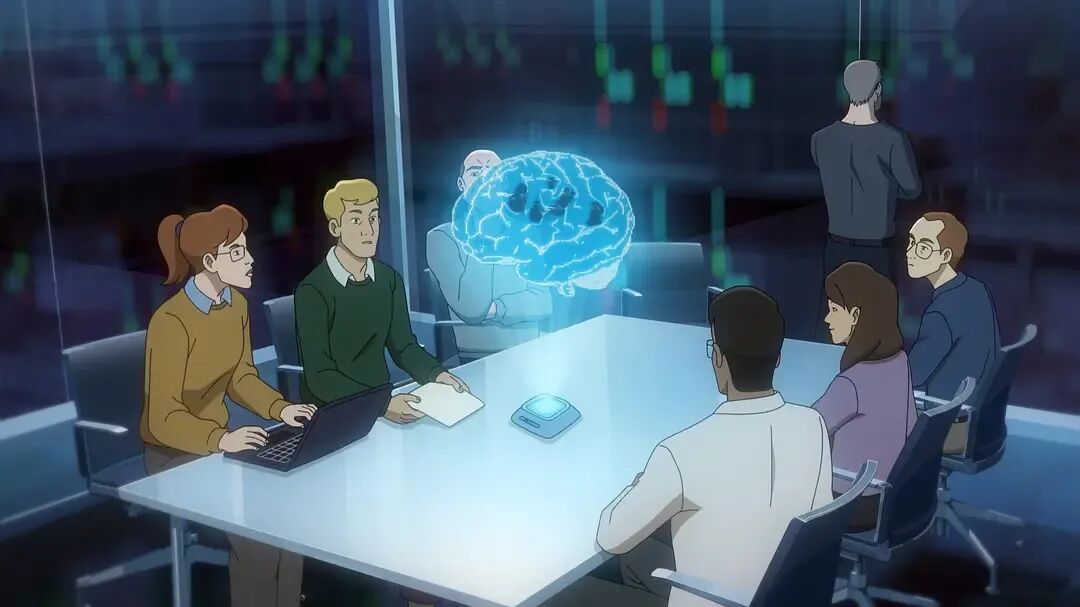
● Image source: Pantheon
Mirror Studio: You said you want to piece together the "projections" from different times and different examinations to see a more complete patient. Specifically, what information do you give to the model, and what can it finally tell us?
Li Youcheng: We will use the patient's years of medical records, imaging records, and medication records to model him. In addition to these, we will also collect various information such as the PM2.5 level in the patient's living area, whether local residents burn straw, diet structure, economic status and other information. At the beginning of data collection, we must have a sufficiently in-depth understanding of the disease to know what needs to be recorded.
It does not simply fit the patient's data and output a value. Our goal is to simulate the changes in the patient's physical health status in the next few years based on his past records, and see how his health status will change under a specific treatment or medication condition.
Take pharmaceutical companies as an example. In the early research stage, a drug component may have very good data indicators, but the R&D team still needs to judge in which population it is more likely to be effective, and whether there are safety risks worthy of early investigation. If these problems are not exposed until the later stage of human trials, the sunk costs invested in the early stage will be difficult to recover.
We hope to connect the patient's longitudinal records with evidence at the molecular and cellular levels, to help pharmaceutical teams verify earlier, and judge which pipeline (referring to all the R&D project lines of a pharmaceutical company) to advance, and which patients to include in the group. Our positioning is not just to make a clinical diagnosis model, but to apply the model to drug trials and clinical trial decision-making. Our model plays a supplementary and auxiliary role here, and will not completely replace real clinical drug trials. Real human trials still need to be carried out.
● Image source: pexels
Mirror Studio: To understand the changes of a patient over so many years, first of all, you must have sufficiently complete records. Which diseases are you starting with now? Where does this data come from, and can it be used directly after you get it?
Li Youcheng: We are now focusing on three main cohorts: respiratory, oncology, and cardiovascular. We collect data for these three types of diseases. At present, we have obtained compliant data on medical visits, physical conditions, living environments and other dimensions of tens of millions of real patients.
For us, the most difficult part of developing patient models is collecting and processing data. Various medical data are scattered in different databases. It is very difficult to align, process, deduplicate, and eliminate conflicting records. The data is not organized in a form that can be used to train AI from the very beginning. They may be scattered tables, and we need to turn them into a complete database that can be mapped to a specific patient, or even a specific lesion.
Mirror Studio: Will AI be responsible for this data sorting work?
Li Youcheng: AI can do preliminary screening, preliminary processing and cleaning, and manual participation is required in the later stage. The most important thing is to set standards in advance, such as which biomarkers to focus on, which variables to track, how to define diseases, what data to include, and what data to exclude. This requires a very deep understanding of the disease behind it.
We need to understand the complete problem first, and then ask medical experts about the parts we don't understand. Experts provide experience in disease aspects, and we incorporate these experiences into the research plan. It is not possible to invite an expert to tell you how to build the entire model.
Mirror Studio: At what stage is your model now?
Li Youcheng: At present, we are conducting verification in cooperation with partner pharmaceutical companies, and multiple verifications are being carried out in parallel.
How to Prove That a "Patient" Is Credible After It Is Built
Mirror Studio: How do you verify a patient model during its R&D process?
Li Youcheng: We have been conducting various evaluations from the very beginning of training. One type is retrospective verification, which is equivalent to predicting the occurrence of a disease using data before the disease occurs, since we already know what disease the patient had in the past. We already have these data, we cut off the data at a certain time node, let the model predict the data after this node, and then check whether it is consistent with the real records. We will conduct corresponding evaluations after each training session.
For this part of verification, hospitals have records of patients' medication and treatment, which can to a certain extent test whether the model's prediction of the patient's changes after treatment and medication under specific treatment conditions is accurate. Verification also relies on pharmaceutical companies, who have their own test data. They can use our model to generate new test data, and then compare where the model is inaccurate.
There is also a type of verification that we are also working on, which is prospective verification. We use the model to predict the patient's future situation.
Mirror Studio: Are there any successful examples of prospective verification?
Li Youcheng: Yes, it happened recently on our cancer model. At that time, we used a patient cohort of an external team (referring to the research population, and the longitudinal observation and analysis based on this population constitutes a cohort study) for verification. The result showed that the model judged that one patient in the cohort might have cancer. At that time, when looking at the previous images and examinations alone, all doctors thought there was no problem. But the model's prediction was later verified by surgical biopsy.
We were surprised by this result. We are still studying what information the model used to make this judgment, which may be some finer information that no one has paid attention to. We have retained the deduction process, and are supplementing other verifications to find out the reasons and mechanisms.
● Image source: The Pittsburgh Medical Frontline Season 2
Mirror Studio: If this prediction result is proven to be correct, why is it important to know the process by which the model reaches the result?
Li Youcheng: The general approach is to first make the data good and the accuracy high, and then consider interpretation. The accuracy can be verified through retrospective and prospective evaluations to see the results and effects. On the basis of being credible and usable, we then explain the mechanism.
But interpretation is really important. If a model is effective in many evaluations but it is still a black box, when encountering a completely new situation, to what extent should we adopt its prediction? That is why interpretation is needed. If the prediction and interpretation are consistent with the existing theories and mechanisms, the results it gives will be more referable in a situation that none of us have seen or whose mechanism we do not understand.
Therefore, only by doing solid work in experiments and evaluations can we convince users. There may be a consensus now that modeling patients is valuable; but there is no consensus on whether patient models can be built, can make health predictions, and can be used in drug trials. This is a scientific problem that needs to be verified by data, and we need to advance it step by step.
Mirror Studio: In this process, are there any failed examples in model construction?
Li Youcheng: Failure is the norm. There was a failure just this month. At that time, the architecture I proposed was too idealistic, and I found that the model could not be trained no matter how hard we tried, and we spent a lot of effort troubleshooting the problem. It sounds easy to say now, but it tortured us for nearly a month and a half.
That was