A long queue formed in front of a Chinese company's booth at New York Comic Con, which attracts 250,000 attendees.
From October 21 to 23 that just passed, the 24th Shanghai Toy Show was held as scheduled.
In the 230,000-square-meter exhibition hall, more than 2,700 exhibitors and over 5,400 brands lined up, with over 10,000 overseas buyers dragging sample boxes.
At this toy show, there was also a Scottish My Little Pony fan who made a special trip here — he has collected almost all My Little Pony trading cards and is planning to apply for the Guinness World Record. Such a scene would have been hard to imagine ten years ago. Chinese trading cards are now appearing on the booths and shelves of more and more overseas exhibitions.
The Shanghai Toy Show is so bustling. Then what about the New York Comic Con (NYCC) that just concluded almost at the same time on the other side of the ocean, the heartland of global pop culture?
Long queues at US comic conventions
From October 8 to 11, the weather in Manhattan had turned cool, but thanks to New York Comic Con (NYCC), the Javits Center was filled with a different kind of heat.
This year marks the 20th anniversary of NYCC, and the organizer set the theme as New Yorkers' own playground — Coney Island. Tickets from Friday to Sunday were sold out in advance. In four days, about 250,000 people poured into this glass exhibition hall, and audiences dressed as various characters became the most eye-catching scenery on the streets of West Manhattan.
Twenty years ago, in 2006, the audience of the first NYCC was only 30,000. In twenty years, the number has increased eight times. But it's not just the number of people that has grown. This year's guest lineup is extremely luxurious: film stars such as Nicolas Cage and Hayden Christensen took the stage, Junko Takeuchi and Noriaki Sugiyama, the voice actors of *Naruto*, appeared at the Saturday event, and the new work of *Dragon Ball Super* chose to hold its global premiere here.
How to explain this popularity? Fallon Prinzivalli, marketing director of organizer ReedPop, gave a very "anti-internet" answer: "In this digital age, we instead need to gather face to face — no matter how much you swipe online, it can't compare to the energy of the scene."
However, when you walk into the exhibition hall, you will find another change. Between the booths of superheroes and Jedi knights, the concentration of Asian IPs, trading cards and collectible toys is visibly increasing. In the past, this was the absolute home ground of Hollywood and American comics.
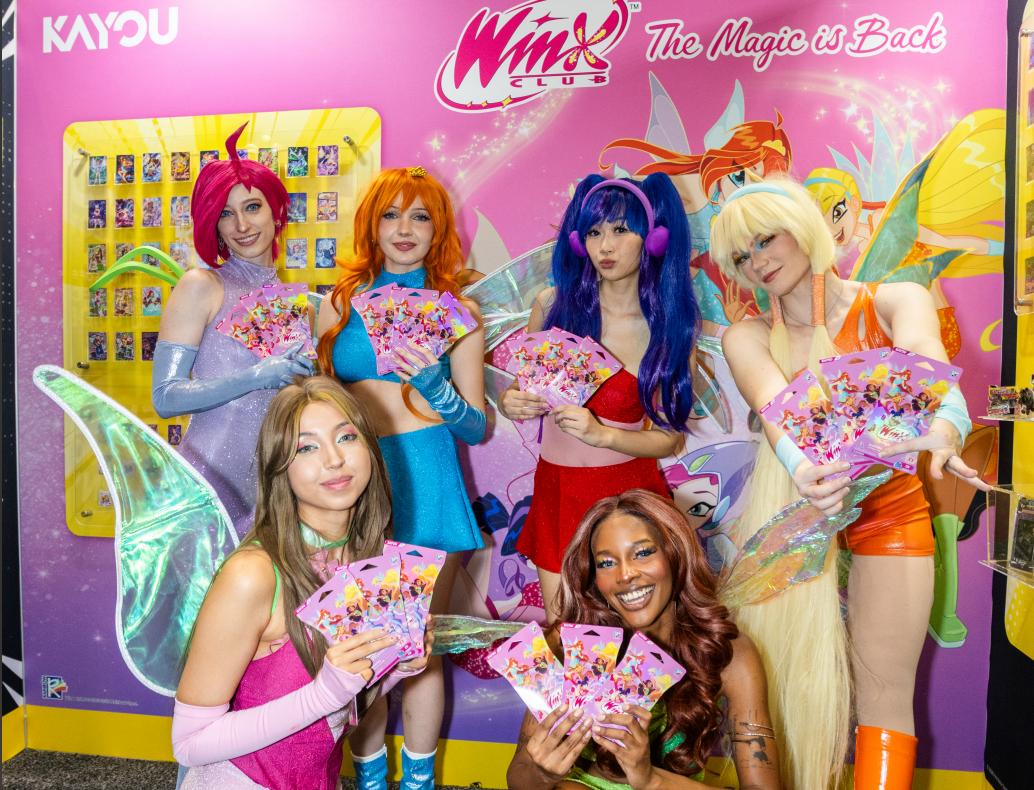
Behind this lies a larger industrial fact: in 2024, China overtook the United States and Japan to become the world's largest trading card market. In a sense, the two major Chinese and American markets met head-on in the exhibition hall of NYCC.
The most specific place where this encounter happened is Booth 1143. The queue in front of this booth is no shorter than that of any Hollywood booth. But the people in the line are not waiting for stars or autographs — they are waiting for a "tutorial", given by a Chinese company called KAYOU.
At the later Shanghai Toy Show, the Scottish fan who made a special trip there also wanted to collect all the My Little Pony cards produced by KAYOU. Up to now, from New York to Shanghai, KAYOU's booths have gathered the same group of people from all over the world — they are full of love for a certain IP and are willing to devote time and energy to a single card.
Fans are also participants, the ecosystem of trading cards has changed
Then, how should we understand KAYOU as a company?
KAYOU is a leading enterprise in China's trading card industry. According to the prospectus, in 2024, KAYOU's revenue reached 10.057 billion yuan, its adjusted net profit was 4.466 billion yuan, and its domestic market share in the trading card sector was 71.1%.
This year marks the second time that KAYOU has participated in NYCC. If its task when it first landed in New York in 2025 was to "get known", when it came back in 2026, the actions at its booth changed: it was no longer just about displaying, but "teaching American fans how to play".
According to the introduction, KAYOU set up TCG tutorials on site, where fans can directly learn to play the *My Little Pony* trading card game at the booth.
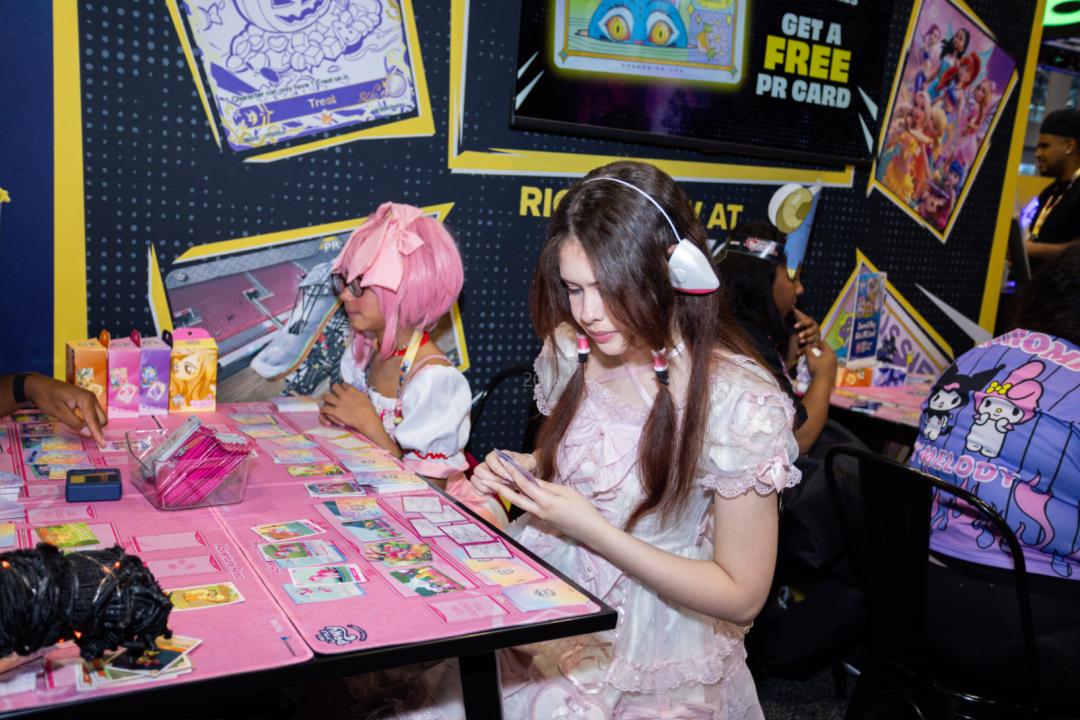
On the first day of the comic con, KAYOU gave a sneak peek at the 6th "Moon Edition" of *My Little Pony* in 2027, the "Shiny Edition" to be sold in January next year, and the mini cards to be launched next year; at the fan culture forum held on the same day, Claire O'Sullivan, Senior Global Consumer Marketing Manager of Hasbro, Andy Price, the official illustrator of *My Little Pony*, and the KAYOU team appeared on stage together.
It is worth noting that the fan co-creation activity "Chase the Magic" launched at the forum is one of the most heartwarming scenes of this NYCC — KAYOU invited a fan to design their own pony through a lottery. The "Banannie Bloom" co-designed by the winner David Abdelmaseih and his daughter was officially adopted and became a real card character.
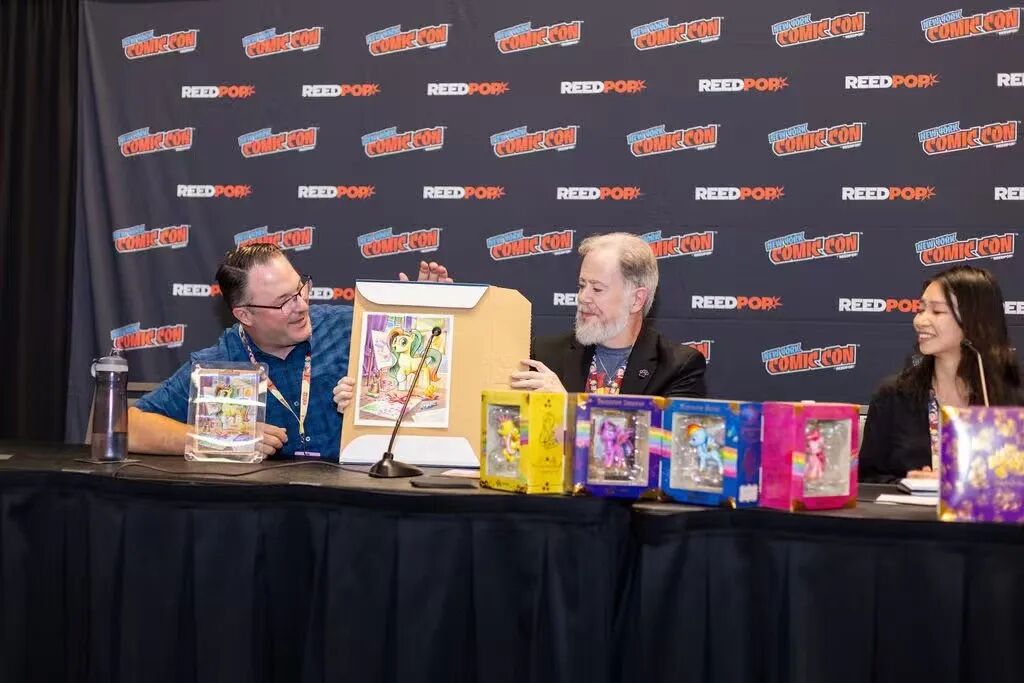
The Abdelmaseihs have been collecting cards since they were teenagers, and now they use cards to get their daughter into the hobby.
"This pony was designed by our whole family. It's an earth pony, because we want to tell kids that you don't need magic to see the beauty of this world — because the world itself is beautiful enough," he said. What kids love most is the kind of thing that "mom and dad had back then, and we have now". "From now on, they will have a pony of their own for the rest of their lives."
For KAYOU, Chase the Magic is not a lottery marketing campaign, but a sample of "experience-oriented operation for core fans", and also a key part of its "collection strategy": fans here are not just consumers, but participants, and even co-creators of the products.
At the Shanghai Toy Show in October this year, the relevant person in charge of KAYOU systematically expounded this strategy: relying on manufacturing technology and design integration capabilities, to enhance the collectible value of individual cards; expand consumption scenarios through the "Collect to Co-create" lifestyle link, starting from collection, gradually moving towards user-participated content co-creation, and the product boundary extends from traditional trading cards to daily life scenarios.
To put it bluntly: trading cards are just the entry point, not the end point. A card that costs a few yuan brings consumers to the first layer — Collect, a low-threshold entry point for collection.
The second layer is "giving collection a place to go", which is the real manifestation of the word "ecosystem".
If you just put the trading cards you bought into a drawer when you get home, it's a one-time transaction. Therefore, KAYOU extends the link backwards, launching product forms such as wearable card accessories, wearable ornaments, display-type card derivatives, and mini cards, so that cards can be worn on the body, placed on the desk, and integrated into fans' daily outfits.
Take *KPop Demon Hunters* as another example: KAYOU uses mini collectible cards, wearable card accessories and wearable ornaments to turn cards from "collectibles" into "displayable fashion accessories". Fans can hang their favorite character cards on their bags or match them with their outfits, and the cards thus become an expression of fan identity that can be shared on social platforms.
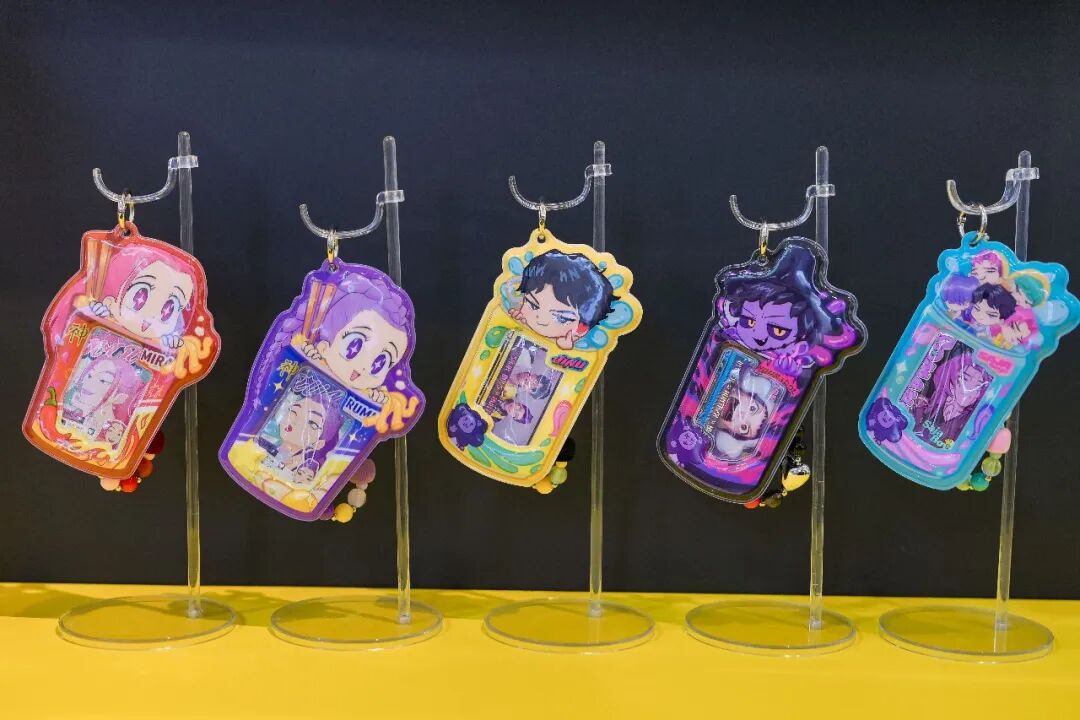
At the Shanghai Toy Show, the relevant person in charge of KAYOU also said that the company is extending from traditional trading cards to innovative categories such as wearable ornaments and display-type card derivatives, so as to integrate the collectible attribute of cards with scenarios such as wearing, viewing and daily use. From the perspective of fans, half of the value of a collectible lies in "being seen", and KAYOU has turned "being seen" into a product.
The third layer is Co-create. The official co-creation in the Chase the Magic style, plus the exchange, card sharing and secondary creation in the community, turns the one-way transaction relationship into a continuous interactive relationship. Once this "Collect to Co-create" link is running smoothly, repurchase and community stickiness will no longer be problems.
One year of breaking into the US market, vision becomes reality
In fact, KAYOU's presence in the US market is by no means limited to the crowds queuing up at comic cons.
At the 2026 Los Angeles Toy Show a month ago, KAYOU set up an exhibition hall at the Toy Building to receive North American distributors, retailers and licensors; the invitation-only industry gathering after the exhibition turned commercial communication into a high-quality industry exchange and market verification scenario.
In terms of products, in May 2026, the *My Little Pony* TCG has been fully launched in North America; the product categories have extended from trading cards to wearable ornaments, display-type card derivatives, stationery and three-dimensional toys.
A more authoritative certification comes from a third party: according to the data report of Circana, a professional data statistics agency, KAYOU's sales volume in the US market has been shortlisted in the top 50 of the US toy market. Counting from the official announcement of entering the US market in September 2025, all this happened within one year.
Of course, the US market is no shortage of strong rivals — Pokémon and Magic: The Gathering have been operating here for decades. While holding sufficient resources, KAYOU is also planning for the future.
According to the introduction, KAYOU has more than 100 domestic licensed IPs and more than a dozen overseas licensed IPs. In 2026, the overseas exclusive licensed *Monster Jam* and *Winx Club* bring new growth expectations; entering 2027, *Invincible*, *Sonic the Hedgehog*, *JoJo's Bizarre Adventure* and *Puella Magi Madoka Magica* will be launched one after another — these IPs reach game players, superhero audiences, anime communities and adult collectors respectively.
The channel layout is also very "American-style". Over the past year, KAYOU has successively entered mainstream retail terminals such as Walmart, Amazon, Target, GameStop, Barnes & Noble, etc. For online channels, it reaches users through TikTok Shop and live e-commerce brand Crossing.
This is the core of KAYOU's overseas expansion path: instead of selling Chinese content overseas, it uses the mature industrial chain and gameplay polished in China to operate IPs all over the world, and then sells this collection lifestyle back to the whole world.
More critically, KAYOU is also making moves in "IP creation". At the Shanghai Toy Show, three original IPs under its own artist brand OYYO were exhibited at the same time: the cool twin stars Hari & Hacci have been extended to plush toys, blind boxes and accessories, and the forest weirdo Weirdolls and the healing little girl Otti will also be launched to the global market in various product forms. From "IP introduction" to "IP creation", KAYOU does not want to be just an operator of licensed IPs.
Focusing on the US market, KAYOU's next moves can be summarized into four things:
First, IP expansion: new 2027 IPs will be launched one after another, and the 6th series of *My Little Pony* and mini cards will be released;
Second, in-depth channel cultivation: continue to expand coverage on the basis of the mainstream retail channels that have been entered, and make TCG tournaments and offline activities systematic;
Third, category expansion: focus on developing wearable and display-type card derivatives;
Fourth, form combination innovation: make trading cards integrate with categories such as wearing, display, stationery and three-dimensional toys, and continuously expand the boundary of the collection ecosystem. The "exhibition hall + invitation-only industry gathering" model represented by the Los Angeles Toy Show will also become a fixed industry communication scenario.
Finally, putting KAYOU into the coordinate system of Chinese toy brands going global, its unique advantages will become clearer.
Lego-style overseas expansion is "adapting to local conditions" — matching local IP stories for each market and adding value to products with IPs; Pop Mart-style overseas expansion is "channel first, hit product spillover" — spreading the domestically verified hit products to stores around the world.
KAYOU has blazed a third path: it does not just distribute goods overseas, but uses China's industrial chain and collection system design capabilities to operate IPs all over the world, and then uses the "Collect to Co-create" collection ecosystem to turn fans from buyers into participants.
For a long time, KAYOU's vision has been to "turn the passion of fans around the world into a collectible, displayable, wearable, social and co-creatable lifestyle". One year after breaking into the US market, relying on KAYOU's original overseas expansion logic and collection ecosystem strategy, this vision is becoming a reality.
How will consumers choose? The queuing crowds at New York Comic Con have already given the answer.