Put aside the "outdated old-school logic", this report tells you what content young people aged 10 to 24 want to watch.
Once you grasp the mindset of the young generation, you will understand the logic of the content industry
Everyone working on narrative content wants to profit from young people, yet the mindset of the younger generation is truly hard to decode.
Recently, the Center for Scholars & Storytellers at the University of California, Los Angeles (abbreviated as CSS) released an annual report titled Teens and Screens, with the theme of "Young People Rewrite Modern Narratives".
To complete this report, CSS surveyed 1537 adolescents aged 10 to 24, asking about their attitudes and thoughts towards various popular media (TV series, films, video games, artificial intelligence, social media) at present.
This report answers one question: What kind of narrative content do American young people like or dislike.
From this starting point, the logic of Hollywood's content industry has also become clear.
Given different national conditions, American teenagers' preferences for narrative content are definitely very different from those of Chinese teenagers, but a careful reading of the report will surprise you at how many similarities there are in the "mindsets" of teenagers in the two countries.
Young people have their own unique logic for perceiving the world. Once you master this set of logic, their mindsets will no longer be hard to guess.
01 Media: Where do young people go to consume "stories"?
The report raises a seemingly simple question to young people: What kind of entertainment media can tell stories?
The "story" here is a very broad concept. The report cites a 15-year-old girl's understanding of "story":
It can be a social media post, a story someone is writing in a book, or a story one person tells to another.
In the ranking of "story-telling media" counted based on respondents' votes, YouTube ranks first with 72.9%, narrowly overtaking television (70.3%) and films (70.2%).
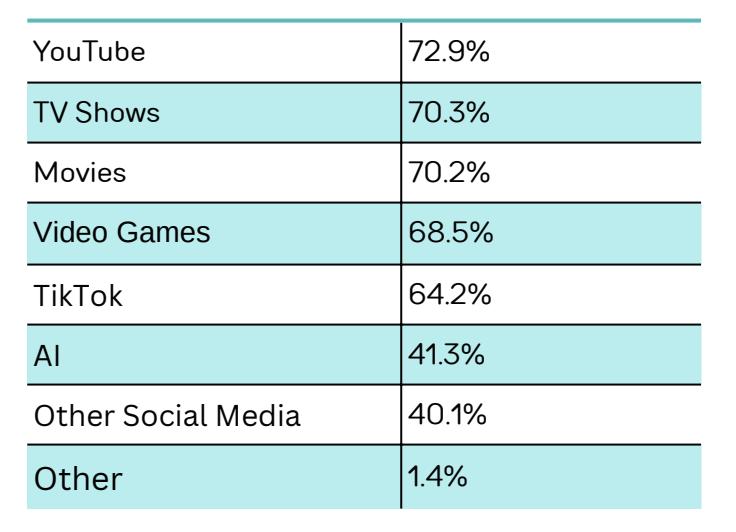
What kind of entertainment media can tell stories? Respondents listed YouTube as the number one entertainment media capable of "telling stories"
At first glance, this survey result seems a bit absurd. As a video platform, YouTube's popularity has surpassed that of two media forms: films and television.
Just like in the ranking of young people's favorite foods, the second and third places are vegetables and fruits, and the first place is KFC.
This is probably the most shocking part of this data: when American teenagers are asked about "storytelling", the first name that pops up in their minds is a video platform. It may not be rigorous, but it comes straight from the heart.
First of all, YouTube is indeed the world's top streaming media platform.
According to statistics, YouTube currently has 2.7 billion monthly active users across the entire platform, about 10 times the number of Netflix subscriptions; YouTube is far ahead on the North American TV end. Its ratings have ranked first since it first overtook Netflix in the summer of 2022. Its market share reached 13.4% in April this year, while that of Netflix was 7.8%.
In addition, YouTube topping the list of "story-telling media" this time shows that in the eyes of teenage audiences, the storytelling ability of YouTube creators has equaled or even exceeded that of traditional Hollywood studios.
This year, films directed by YouTubers, *Obsession*, *The Backrooms* and *Iron Lung*, were huge box office hits, making the idea that "YouTube can tell stories and is good at telling stories" more deeply rooted in people's minds.
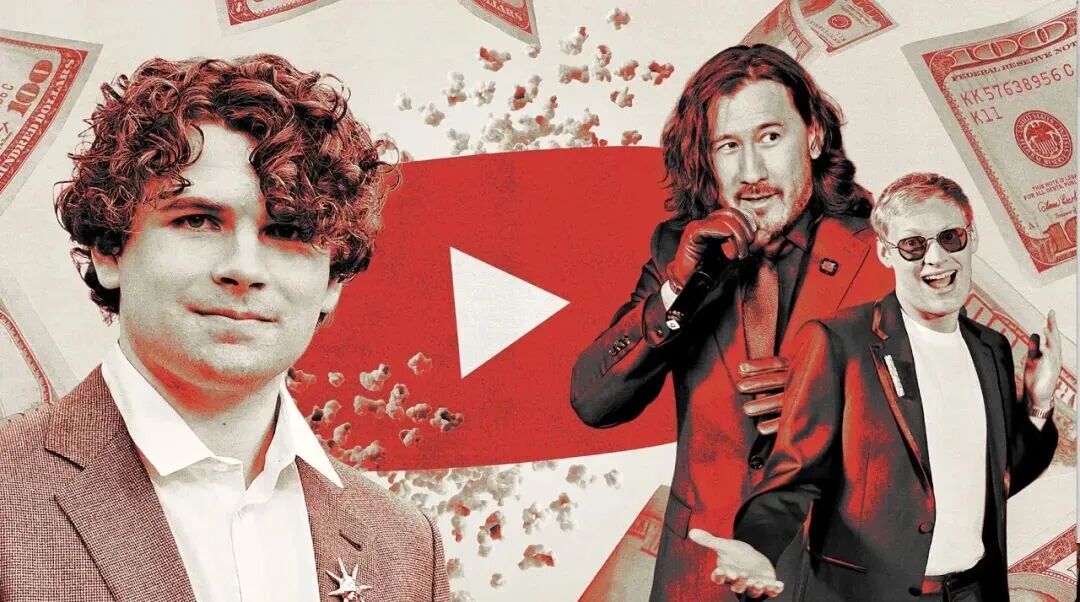
From left to right: Kane Parsons (*The Backrooms*), Mark Fischbach (*Iron Lung*), Curry Barker (*Obsession*)
Recently, Aaron Sorkin (creator of *The Social Network*, *Moneyball*, *The Trial of the Chicago 7*) frankly stated when reviewing the gains and losses of his new film *Social Reckoning* that he may only be suitable for being a screenwriter and can never become a good director. "I found that I have absolutely no sense of visual presentation."
As a gold-medal screenwriter, people always ask him for advice, and his answer has barely changed:
Some important parts of screenwriting can be taught and learned, but some parts cannot; those things that cannot be mastered through learning are usually what we call talent.
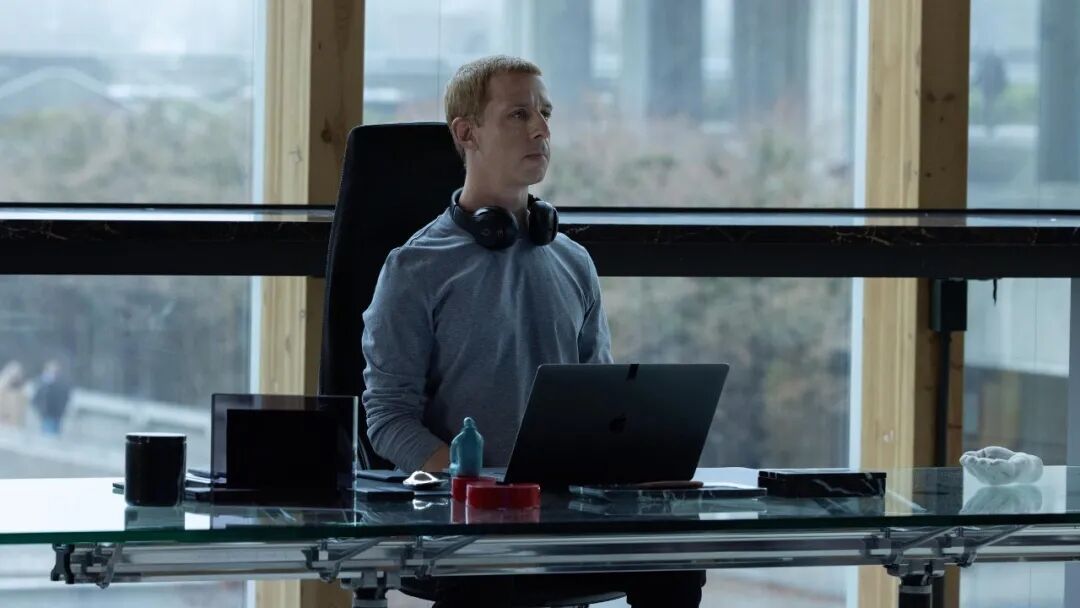
Mark Zuckerberg in *Social Reckoning*
This set of theories may explain why grassroots creators on YouTube can compete with Hollywood's professional teams in the highly technical field of "storytelling" — because YouTube has a large talent pool and plenty of talented creators.
So will the film and television industry be replaced by YouTube?
Not necessarily.
In the survey, the data of "young people's preferred weekend activities" is very favorable to the traditional film industry — going to the cinema to watch new films ranks first among free weekend activities; playing new games ranks second, and watching live music ranks third.
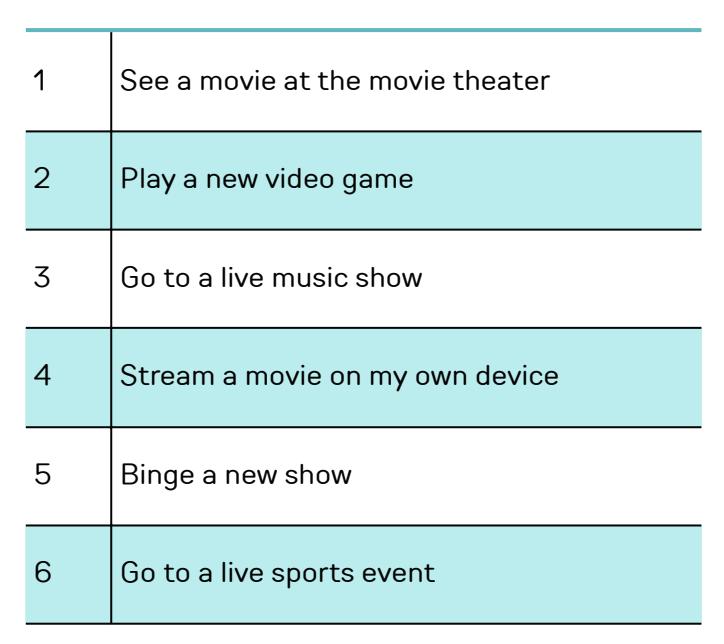
Unexpectedly, watching movies is still teenagers' top choice for weekend activities
This statistical result is a bit counterintuitive: young people have not abandoned cinemas.
This is not a new phenomenon that only appeared this year. According to CSS's survey, going to the cinema to watch new films has ranked first in weekend activities for three consecutive years, directly refuting the stereotype that Generation Z does not like watching movies.
This year's North American summer box office is exceptionally hot, with a large number of teenage audiences pouring into cinemas. When North American media analyzed this phenomenon, some cited the concept of "Third Space".
"Third Space" is a classic concept in urban sociology:
First Space: Home (residence, private domain)
Second Space: Workplace / School (a mandatory domain with rights and responsibilities)
Third Space: Informal public gathering places outside the home and workplace — people come here not for survival or tasks, but purely for relaxation, meeting friends and chatting.
Many teenagers go to the cinema on weekends not just to watch movies, but to gather with friends for a small get-together, which is to create their own "Third Space".
The offline scenario that is in jeopardy in China has precisely become the moat for cinemas in the United States to compete against online content.
In the ranking of "story-telling media", the fourth place is games (68.5%); TikTok ranks fifth with a voting rate of 64.2%, topping the subcategory of social platforms; the sixth place is AI, with a voting rate of only 41.3%, showing a clear gap from the fifth place.
TikTok needs special mention here. It ranks first in the social platform subcategory, but lags far behind YouTube by a large margin.
YouTube creators are good at telling stories, but are TikTok creators less capable of storytelling?
An interesting interpretation is that YouTube, with its combination of long videos, serialized content and in-depth creator ecosystem, is more regarded by young people as a carrier for storytelling than TikTok; TikTok is more positioned by teenagers as fragmented "moments" rather than complete narratives.
Another explanation: YouTube focuses on horizontal-screen videos, with the living room TV as its main landing scenario. Compared with swiping vertical-screen TikTok videos on mobile phones, it is obviously closer to the viewing format of films and television.
In other words, when it comes to "watching stories" alone, the form that teenagers are most keen on is something between traditional film and television and vertical short videos?
Who says young people don't like "moderation".
There are two more sets of data that can be viewed in comparison.
1. When short videos (Reels, YouTube Shorts, TikTok, etc.) are measured separately as a "format", about 79% (nearly 4/5) of respondents believe that they can tell stories.
2. 78.4% of respondents watch film and television content on at least one social media platform.
Media is integrating, and stories can also evolve into any form.
02 Content: What kind of "stories" do young people want to watch?
"What do young people want to see in film and television works?"
This is a very practical question that is most closely related to the film and television industry.
The survey results can partially answer one question: for works that are all aimed at the market, why some are huge hits while others end up in total failure?
The survey report shows that the top three content themes that teenagers want to see in films and television are in order "stories of turning the tide against all odds (full of hope / healing and uplifting)", "friendship and social circles", and "people whose lives are similar to their own", while the superhero genre has dropped to fifth place.
In other words, for content creators, if you want to please young audiences and play it safe, "authenticity, warmth, and a sense of connection" are the first choice. Attracting teenagers with visual effects spectacles is no longer a good idea.
The survey report shows that teenagers' preference for relationship narratives points highly consistently to "desexualization and emphasis on friendship": 63.8% hope that the romantic line "focuses on the friendship between the couple rather than sex"; 57.3% want to see more presentation of pure friendship; 56.8% hope that opposite-sex relationships "start with friendship and do not develop into romance".
The emergence of such a tendency is obviously related to the transformation of social culture, which affects not only traditional romance-themed film and television works, but also the presentation of relationships between men and women in all film and television works.
Simple "couple pairing" can no longer easily impress teenagers, and "desexualized couple pairings" may be what this generation of young people most wants to see.
From this perspective, aren't Nezha and Ao Bing, Zhongli Quan and Lü Dongbin exactly the kind of "desexualized, friendship-focused" couples?

In terms of actors, teenagers' tastes are also a bit unexpected.
Faced with the question of "who should be chosen as the lead actor", 39.8% of people chose "new actors they have never seen before", 38.2% chose "well-known actors", and only 16.8% chose "internet celebrities".
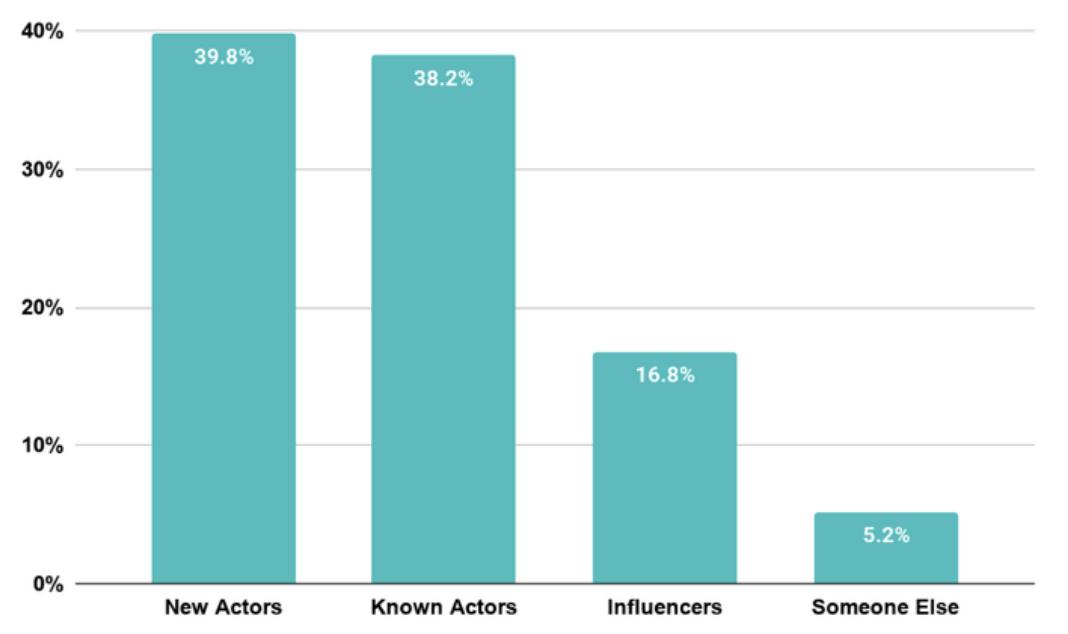
Who to choose as the lead? Only 16.8% of respondents chose "internet celebrities", and new faces and well-known actors still take the lead
YouTube and TikTok are so popular among teenagers, but they don't want to see the internet celebrities they have promoted star in film and television works.
It can be seen that this generation of teenage audiences is sometimes more rational than we imagined. They treat "creator-generated content" and "scripted film and television works" separately, hoping that the latter will remain driven by professional actors.
In addition, this may also be a rebound after internet celebrity culture reaches saturation.
In this survey, the age cross phenomenon is obvious: the 10–13 age group prefers well-known actors (47.1% for well-known actors vs 34.5% for new actors), while the 19–24 age group is the opposite (42.9% for new actors vs 33.4% for well-known actors). The older you are, the more you love "new faces"?
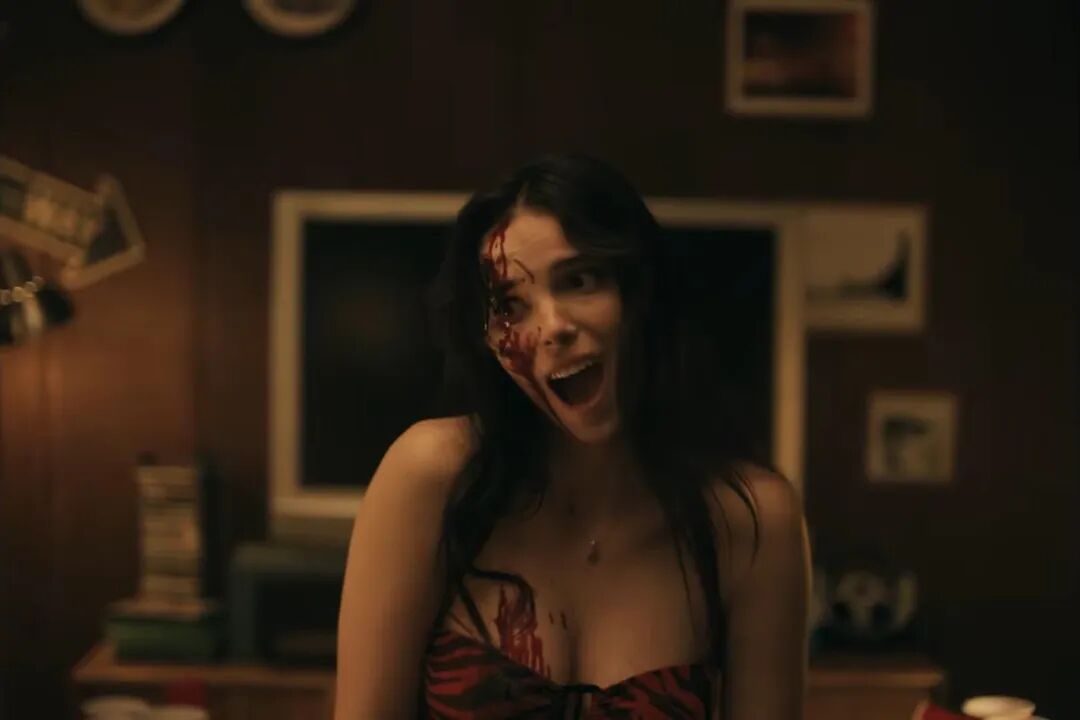
This year, Inda Navarrete, the leading actress in *Obsession*, rose to fame rapidly, and was soon recruited into the X-Men universe shortly after the film was released. This can be regarded as a representative case of young audiences' preference for "new faces".
In addition, from the opposite perspective, the preference for "new faces" is also a kind of resistance to the rigid film and television system, and Hollywood needs to reflect on this.
03 New Variable: Why are young people ambivalent about AI?
AI is one of the most polarizing topics in Hollywood right now, and the situation seems no different among teenagers. The mix of optimism and fear that adults feel is equally common among Generation Z and Generation Alpha.
AI is a newly added "variable" in this year's *Teens and Screens* report. The report even lists it as a separate section with the title "AI? It's complicated."
First of all, AI ranks at the bottom of the "story-telling media" ranking. In the eyes of teenagers, YouTube, television, films, games and TikTok are all better at telling stories than AI.
In the United States, which has not yet experienced the wave of AI short dramas, AI-generated narrative works still lack representative masterpieces. Even if they are recognized in small circles, they have not