Dingdong Maicai, Freshippo and other similar fresh retail players are "distilling" Guoquan Shihui
In the past two weeks, the weather in northern China has gradually turned cold, and it is the hot pot season again.
For all hot pot lovers, this year is a real treat, as hot pot ingredients this year are much "fresher" than in previous years.
With the offline supply chain system becoming increasingly mature, Chinese supermarkets, which have long remained unshakable, have launched a "freshness storm".
According to a survey by NielsenIQ, fresh food accounts for over 55% of grocery expenditure in hypermarkets, the proportion of fresh food in renovated stores has risen from 36% to 42%, and fresh prepared food has increased from 5% to over 20%, among which hot pot ingredients have become the top priority of these fresh products.
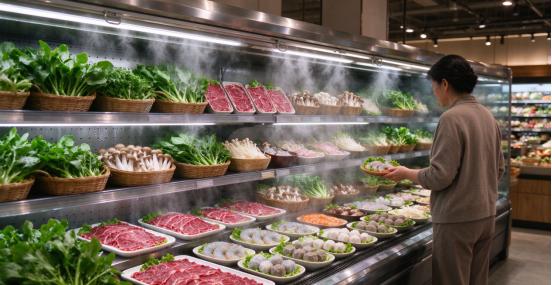
Anyone who has eaten hot pot knows that sufficiently "fresh" ingredients bring an incomparable improvement to the hot pot dining experience.
Therefore, consumers' enthusiasm for "freshness" is visibly high.
In March this year, the year-on-year growth rate of hot pot ingredients reached 25.9%, the growth rate of freshly cut ingredients was significantly faster than that of traditional frozen products;
After the launch of the hot pot season on Dingdong Maicai, the sales of freshly cut beef category increased by nearly 30% year-on-year; during the Mid-Autumn Festival and National Day holidays, hot pot ingredient sales in JD 7FRESH supermarkets increased by nearly 200% year-on-year;
RT-Mart has directly added "in-store stores" dedicated to hot pot in its outlets, providing one-stop services just like Guojuan, and its business is growing rapidly........
Two flowers bloom, each represents a separate branch. While foodies' taste buds have been greatly satisfied, Guojuan Shihui, which has long focused on the at-home hot pot track, obviously does not think the same way.
Faced with so many new competitors all at once, Guojuan is obviously likely to encounter new challenges as well as opportunities.
01 Has Guojuan Shihui Been "Distilled" by Supermarkets?
Guojuan's past moat lies in its discovery of the at-home hot pot scenario, its one-stop shopping offering with complete categories, its more than 10,000 community stores that "eliminate" the physical distance between consumers and ingredients, and its strong supply chain capabilities to fulfill orders.
However, with the intensive entry of supermarkets and the development of the instant retail channel, the once solid moat has begun to show signs of loosening.
The at-home hot pot business near residents' homes is being disrupted by instant retail
In the past, supermarkets could not compete with Guojuan in the at-home hot pot track. The core reason was not poor product competitiveness, but that for consumers, the friction cost of "traveling plus wandering around" just for a hot pot meal was too high.
If consumers wanted to buy ingredients for a hot pot meal, they had to decide to go to the supermarket, queue for parking, walk through a long shopping route, find hot pot base, meat rolls, meatballs, vegetables and dipping sauces scattered in different sections one by one, and then carry all the heavy bags home.
The value of Guojuan is that it compresses the whole set of processes to 10 minutes, or even 5 minutes if you pass by the store on the way.
Now, this part of the moat has been narrowed by instant retail.
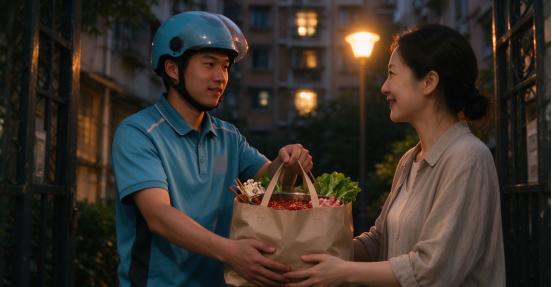
Supermarkets and front warehouses turn their stores into fulfillment nodes: consumers place orders on apps, and the ingredients can be delivered to their homes within 30 minutes. The cost is only 6 to 7 yuan in most cases, and some supermarkets even offer free delivery for their members.
To put it plainly, instant retail monetizes the past friction cost of "half an hour round trip, carrying heavy items and wandering around shelves" into an extremely low price.
Calculated based on a family hot pot meal worth 100 to 150 yuan, the delivery fee only accounts for 3% to 5% of the order value; compared with the saved time, physical effort and decision-making energy, this cost is almost negligible.
After solving the problem of "lazy people" going out and the fulfillment problem of supermarkets, supermarkets have very great advantages in products when facing Guojuan's product structure dominated by frozen and pre-made products.
Dimensionality reduction attack of fresh food on frozen products
The cooking threshold of hot pot is almost zero: you do not need to stir-fry or season, you just need to boil the soup in the pot and rinse the ingredients in it. Therefore, 90% of the quality of a hot pot meal depends on the quality of the ingredients themselves, especially their freshness.
Then can Guojuan keep up with this trend?
Frankly speaking, it is not easy.
Because the fresh food business itself is a mode with extremely high loss. But supermarkets already have a huge full-category SKU portfolio: they purchase fresh food, standard products, cooked food, baked goods and private label products together, with large scale and strong bargaining power, which allows them to carry out direct procurement, customized production and central kitchen processing. The scale effect generated by the huge product matrix makes them able to afford the loss caused by unsold fresh food.
While Guojuan's supply chain genes are not good at fresh food in the first place, and its small store operation model dominated by franchised stores requires it to take into account the profits of franchisees, but fresh food is obviously not a category suitable for all franchised stores.
Of course, some people will say that you get what you pay for: if you want to eat better food, you have to pay more than you do at Guojuan. The cost of product upgrade plus fulfillment service is not a small sum of money, and you cannot treat consumers' wallets as banks.
The statement is blunt but reasonable, but it is easy to go from frugality to luxury, and hard to go from luxury back to frugality. Consumption upgrading is not a unique case in the hot pot industry.
Just like after the rise of fresh snack stores, many people seldom eat traditional bulk snacks anymore; after the popularization of freshly made milk tea, the market for brewed milk tea is shrinking smaller and smaller. The latest data shows that Mixue Bingcheng can earn enough profit for Xiangpiaopiao's 3-month operation in just 2 hours.
Then if consumers can eat fresher and better ingredients at the same cost, it will be very difficult for them to go back to eat products with a certain discount in taste.
3. Under the lipstick effect, consumers are willing to pay for emotional satisfaction
There may still be friends who think: isn't eating hot pot at home just for cheapness? If you want to eat good food, just go to a hot pot restaurant, why bother to go through all the trouble at home?
This statement is very correct, but also not correct.
In the early days, the core demands of people choosing to eat hot pot at home were first to save money: after all, the same sum of money may only be enough for two people to eat in a hot pot restaurant, but you can buy ingredients for three or four people to eat at home, which maximizes cost performance; second, for well-known reasons, people could only eat hot pot at home for two years.
So after so many years, eating hot pot at home has changed from a "money-saving choice" to a living habit for many people.
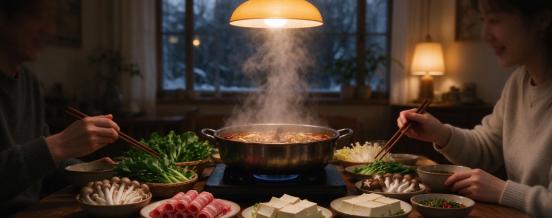
Then when eating at home becomes the norm, consumers' expectation threshold will naturally rise, and they can't help thinking: since I am eating at home anyway, why not eat better? How can I eat better?
This is actually a typical "lipstick effect". Spending a small amount of extra money can make yourself eat more comfortably and happily, and find some comfort for the tired life. This deal is very cost-effective in the eyes of many people.
Moreover, from the perspective of consumer psychology, choosing Guojuan is also a kind of consumption downgrade compared with going to hot pot restaurants like Haidilao.
Now, as long as you spend dozens of extra yuan, you can fill the psychological gap and complete consumption upgrading. Who would not want to do that?
In general, supermarkets and online platforms using instant retail to "distill" Guojuan is essentially using Guojuan's own strategy to attack Guojuan, which is very likely to bring considerable "challenges" to Guojuan in the future.
Of course, the impact of supermarkets is currently limited to first- and second-tier cities. Wang Hui, CFO of Guojuan, also clearly stated that the national township market is an important engine for future growth, and the two parties do not seem to have a high degree of overlap in their target markets.
In terms of specific data, the total number of township stores reached 3,010 by the end of 2025, accounting for 26.0% of the total number of stores (11,566). Moreover, among the 1,416 net new stores added in 2025, 1,004 are located in the township market, accounting for 70.9% of the new stores.
However, the problem is that Guojuan's overall profit is actually not high: its core operating net profit margin in 2025 was only 5.9%, with a year-on-year increase of only 1.1 percentage points. Although the growth rate looks fast, in essence Guojuan is still a supply chain and retail business with small profits but quick turnover. Once its market share in high-tier cities declines, it will easily affect the overall profitability.
More critically, fresh food retail brands like Hema Fresh and JD 7FRESH are still working hard on the new category of "quick-cooked dishes", which is also a kind of "distillation" for Guojuan's new businesses such as Guojuan Home Dishes and community central kitchen projects.
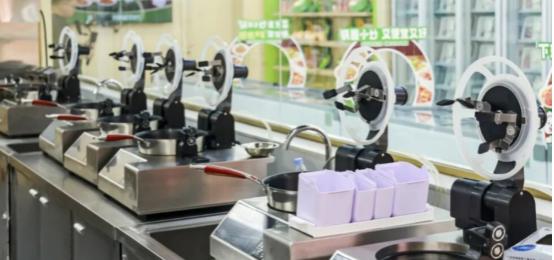
At the same time, it should be noted that these new-era supermarkets and online platforms are not limited to high-tier cities, but are expanding to strong third- and fourth-tier cities, and their supply chains are bound to become more and more complete......
For Guojuan, high-tier cities still account for about 40% of its business structure. If it cannot hold its ground in first- and second-tier cities, Guojuan with very thin profit may still face growth problems.
02 After reaching the 10,000-store scale, how should Guojuan reinforce its moat?
It should be noted that Guojuan's fundamental business is in good condition.
In the first half of this year, Guojuan has indeed achieved good growth: its revenue reached 3.947 billion yuan, a year-on-year increase of 21.8%; its attributable net profit reached 211 million yuan, a year-on-year increase of 12.1%; its core operating profit reached 225 million yuan, a year-on-year increase of 18.3%.
Moreover, the channel network of more than 10,000 stores, the vertical supply chain that has been cultivated for many years, and the solid fundamental market in lower-tier cities are all real solid assets.
Then the question arises: how can Guojuan deepen its existing moat in the changing market, and find new growth anchors at the same time?
Through the experience of peer chain brands, Guojuan may be able to find some new ideas.
Create super single products to build a "second brand mindset"
What is Guojuan's most valuable asset? It is the consumer mindset of "eating hot pot at home" established under the opportunity of the times.
But the current problem is that competitors are getting stronger and more numerous, and this mindset is being diluted by external factors such as supermarkets and instant retail from the delivery end and product end.
Therefore, it is necessary to establish a "second brand mindset" in consumers' minds, and returning from the comprehensive large category strategy to the super single product strategy may be a good choice.
The common feature of super single products is high consumption frequency and strong memory points.
Just like when people mention tripe and mushroom soup, they will think of Banu Hot Pot. Their tripe and mushroom soup did have the highest quality at that time, and they even created the advertising slogan "Service is not Banu's feature, tripe and mushroom soup are" for this, and renamed themselves "Banu Tripe Hot Pot";
Also, when people mention lemonade, they will think of Mixue Bingcheng; when people mention coconut latte, they will directly use the name Luckin Coffee instead of the full description; when people mention large mooncakes now, they will think of Pang Donglai; when people mention durian mille crepe, they will think of Hema.......
After these hit products are formed, they can even be sold at no profit to act as a drainage product. For example, coconut latte was sold at a loss for a very long period of time, but its role in cultivating user habits and driving sales of other products in Luckin Coffee stores is real.
If Guojuan can also have a similar super single product to drive traffic, it can drive the sales of other SKUs, and it is possible to consolidate its "first mindset" of at-home hot pot in high-tier cities.
To put it plainly, Guojuan cannot just be a "porter of hot pot ingredients", it must have its own "exclusive signature dish". When the product forms a new mindset, coupled with the scale of 10,000 stores, it will have the possibility to sound the counterattack horn.
Transform "10,000-store scale" into "10,000-store quality"
After creating the super single product, further promotion and operation are needed, which is also a test for the franchising system. It is very important to make franchisees operate as well as directly-operated stores.
Therefore, Guojuan, whose franchised stores account for more than 99% of its revenue structure, cannot avoid the topic of franchising system upgrading.
How to upgrade? Guming Tea has provided a very good sample.
First of all, the admission rate of Guming's franchisees is only about 1%, and franchisees are required to operate in the store and participate in front-line management in person, rather than acting as a hands-off shopkeeper.
This filters out the "investment-type franchisees" who regard opening stores as an investment and outsource daily operations. The remaining operators have closer interest binding with the brand, and the cost of their behavior deviation is also higher.
The 2026 research report of CICC made a qualitative distinction from the typology perspective: Guming is biased towards "operation-oriented franchising", emphasizing that franchisees participate in actual operation. The early screening and cultivation process is relatively slow, but the operation responsibility is clear and the cooperation stickiness is strong.
Then it uses the supply chain to give profit margins to franchise