Before 2030, we might never be able to buy cheap computers again.
Last night, Apple quietly and without any warning launched new MacBook Pro and iMac models equipped with M6 chips on its official website.
However, compared to how much the new chips have improved in single-core benchmark scores or graphics rendering, what people may care more about is the price —
The starting price of the new 14-inch MacBook Pro has reached 15,999 yuan, and the starting price of the all-in-one iMac has also risen to 12,499 yuan.
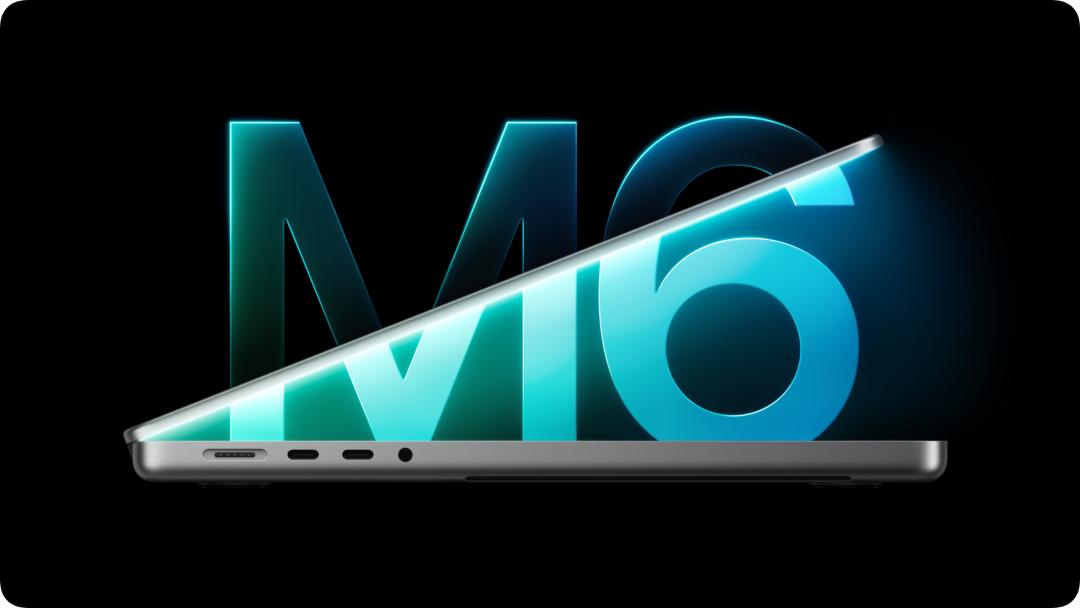
Photo via Apple
Looking back, the iMac equipped with M1 had a starting price of only 9,999 yuan. Even with subsequent minor iterations, its price never exceeded 11,000 yuan; the 14-inch MacBook Pro had long maintained a starting price of 12,999 yuan, but this time its price is almost crossing the 16,000 yuan threshold.
If only Apple raised prices, consumers could just switch to other brands. Unfortunately, across the mainstream laptop and desktop PC markets, those affordable options that used to cost a few thousand yuan and were reliable enough to last for several years are rapidly disappearing across the entire industry.
We may really no longer be able to buy cheap computers.
Cut Entry-level Models, Technology Is Based On "Renaming"
If Apple's price hikes are still obvious, PC manufacturers are somewhat making money quietly.
Whether you want to admit it or not, Apple dares to raise prices openly, which is indeed backed by its brand and ecosystem moat.
Not only has the starting price of the 14-inch MacBook Pro increased by 3,000 yuan at one go, but the iMac has also directly removed the original 8-core entry-level model priced at 10,999 yuan, forcing everyone to buy from the mid-range configuration; not to mention the iPad Pro that crossed the 10,000-yuan mark earlier and the iPad Air with a starting price of five to six thousand yuan.
Can you believe that the top-spec version of iPad mini has also crossed the 10,000-yuan threshold?
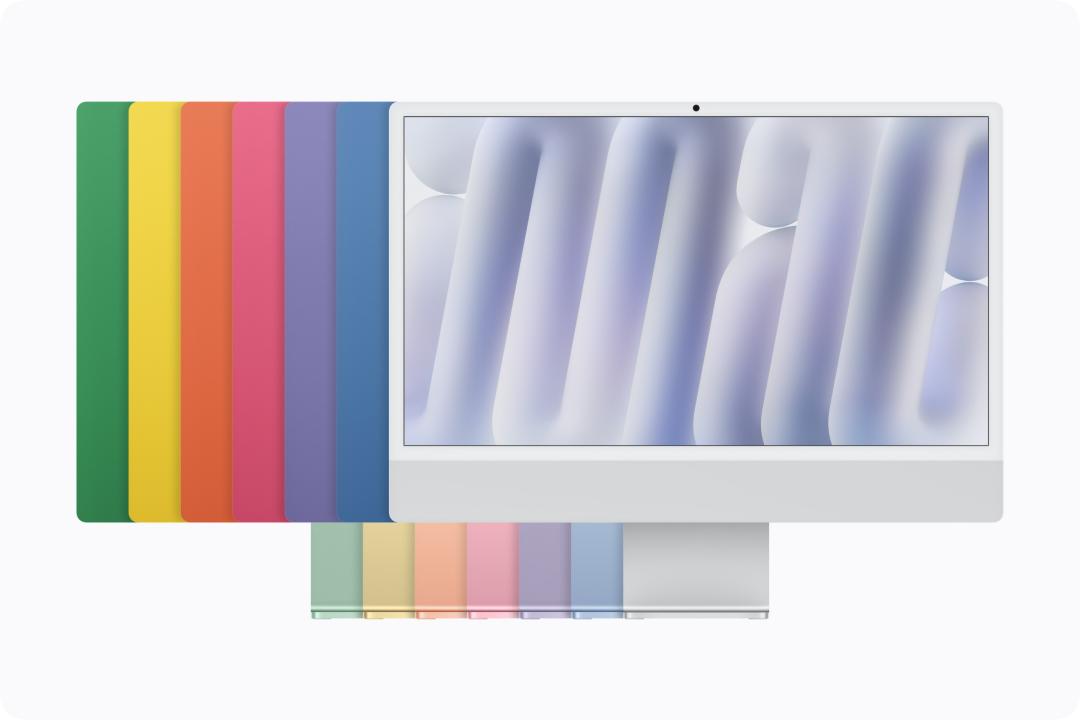
Photo via Apple
But the highly competitive PC manufacturers obviously do not have such confidence. A blatant price increase will directly push users to their competitors. So everyone tacitly adopted a more hidden approach: Technology is based on changing the shell.
Acer Chairman Chen Junsheng said bluntly in a media interview last month: Driven by the cost of upstream components, the average price of PCs in the fourth quarter will generally rise by 5% to 20%.
In order to achieve this 5% to 20% price increase, manufacturers have racked their brains.
Take the representative ThinkPad X14 2026 in the business lightweight laptop category as an example: when it was first released in April this year, the version equipped with Ultra X9 388H, 32GB RAM and 1TB SSD was priced at 13,999 yuan; by August, the newly launched 378H, 32GB RAM with 1TB LTE version was already priced at 16,299 yuan.
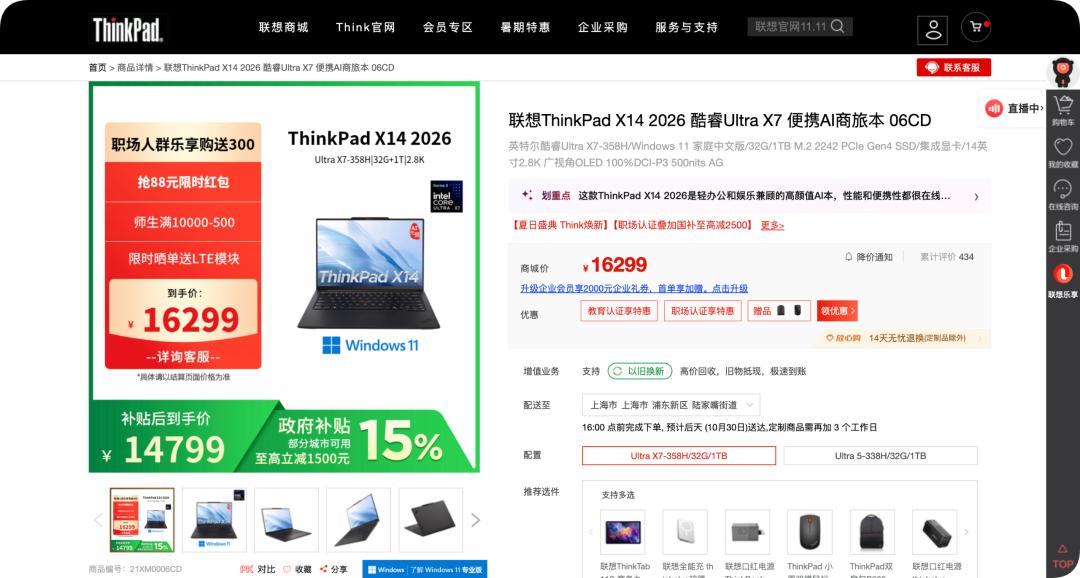
The processor has been slightly adjusted, and it is equipped with a Magic Bay external module. It still bears the X14 name, but the price is 3,000 yuan higher.
Many people who originally planned to "buy the dip" during the Double 11 shopping festival only found that their plans completely failed when they opened their shopping carts.
In a recent interview with Shenzhen Commercial Daily, a consumer sighed that he saw a 7,800-yuan computer during this year's "618" shopping festival but thought it was too expensive to buy. He planned to wait until Double 11 to get a bargain, but now the price has soared all the way to 12,000 yuan;
Another user who bought the Ryzen version of ThinkBook 14+ for more than 5,700 yuan in May also found that the current quotation of the same model on e-commerce platforms has exceeded 9,700 yuan.
This is actually not the old promotional trick of "raising prices first then cutting them" that e-commerce platforms play again, the rigid cost of the supply chain is indeed unsustainable.
Analysis from research firm Omdia points out that the proportion of memory and solid-state drives in the cost of a PC has surged from about 15% in the past to nearly 40%.
The core components have skyrocketed several times, making the hundreds of yuan full reduction coupons on the promotion page look powerless — the promotion season that everyone originally expected has finally become an awkward farce where the longer you wait, the more expensive the product gets.
The Consequence That Even Jensen Huang Did Not Expect
If the hidden configuration adjustment of the whole machine market can still be covered up by promotions and installment payments, then looking at the recent DIY PC assembly market will give you a more tangible feeling.
When Jensen Huang launched the RTX 5090 at the CES in early 2025, he probably did not expect that the development of events would quickly get out of control.
At that time, this flagship card priced at 1999 US dollars with a suggested retail price of more than 15,000 yuan in China was still the "king of gaming cards" for geek players under the spotlight.
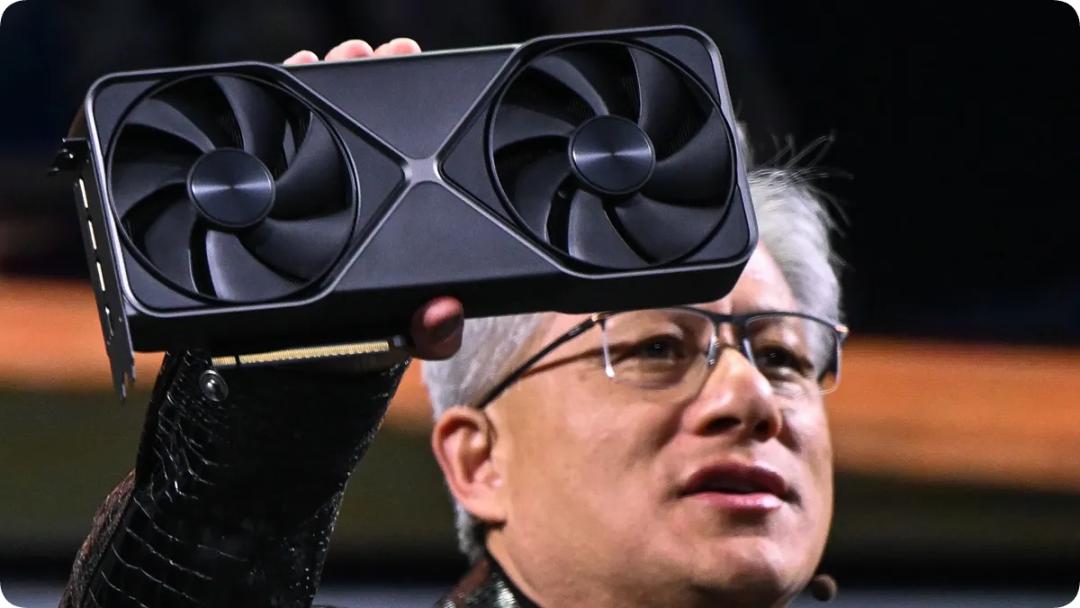
Photo via Tom’s Hardware
Of course, for NVIDIA, whose stock price is now at 217 US dollars and market value exceeds 5.2 trillion US dollars, this little disturbance in the consumer gaming market is already insignificant compared with the hundreds of billions of data center checks.
But today, if you search on mainstream e-commerce platforms, the price curve has completely gone crazy.
The spot price of ordinary ASUS TUF RTX 5090 generally rushed to 53,599 yuan to 54,999 yuan, and some spot products with same-city instant delivery even directly quoted as high as 59,600 yuan.
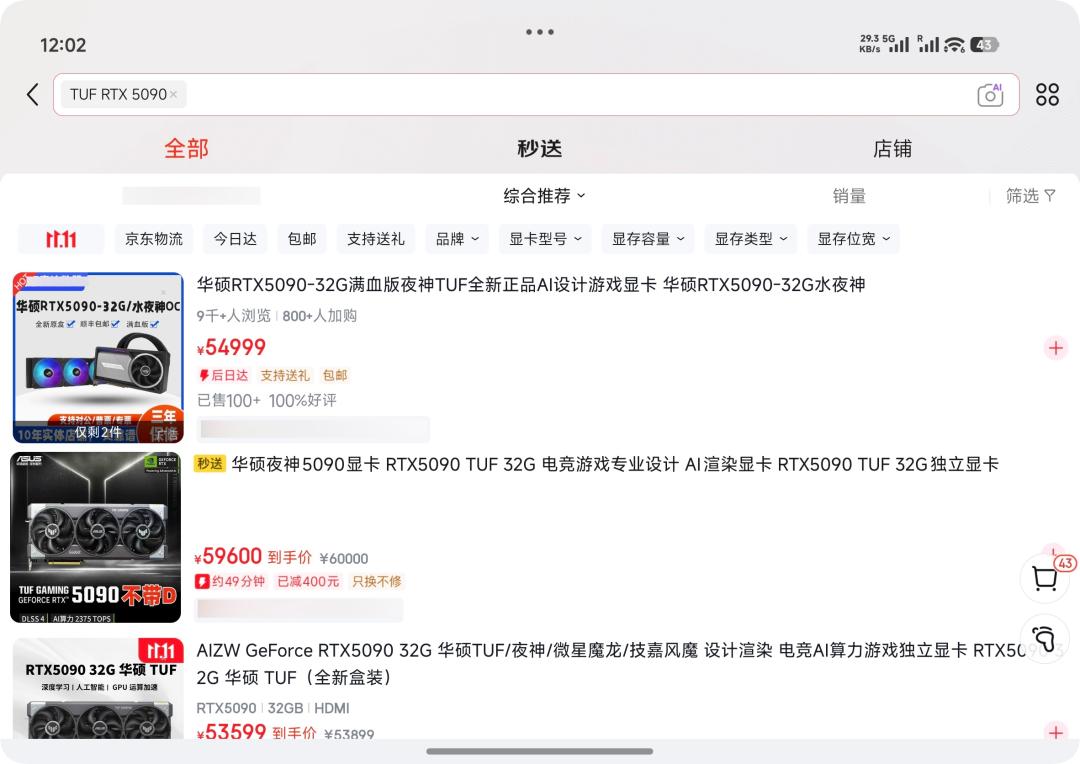
Screenshot from e-commerce platform
Looking closely at the product pages of these high-priced graphics cards, almost all of their titles are filled with "AI design", "AI rendering" and "deep learning computing power" without exception.
As for ordinary game players? In front of the fanatical Token ledger, they have long been left out in the cold.
Because it is equipped with 32GB of large-capacity video memory, the RTX 5090 has become a rigid demand for many small and medium-sized development teams and design studios to run large models and generate images locally. Compared with the expensive monthly cloud computing power, a graphics card costing more than 50,000 yuan has become the most cost-effective productivity investment.
The top graphics cards are emptied by AI demand, and the pressure of price hikes naturally spreads all the way down.
Under the channel hoarding and panic expectation, the price of the entry-level sweet spot card RTX 5060, which used to be more than 2,000 yuan, also rushed to more than 3,000 yuan. You have to spend more than 1,000 yuan extra just to buy a sweet spot graphics card, and the budget for other accessories is even more stretched.
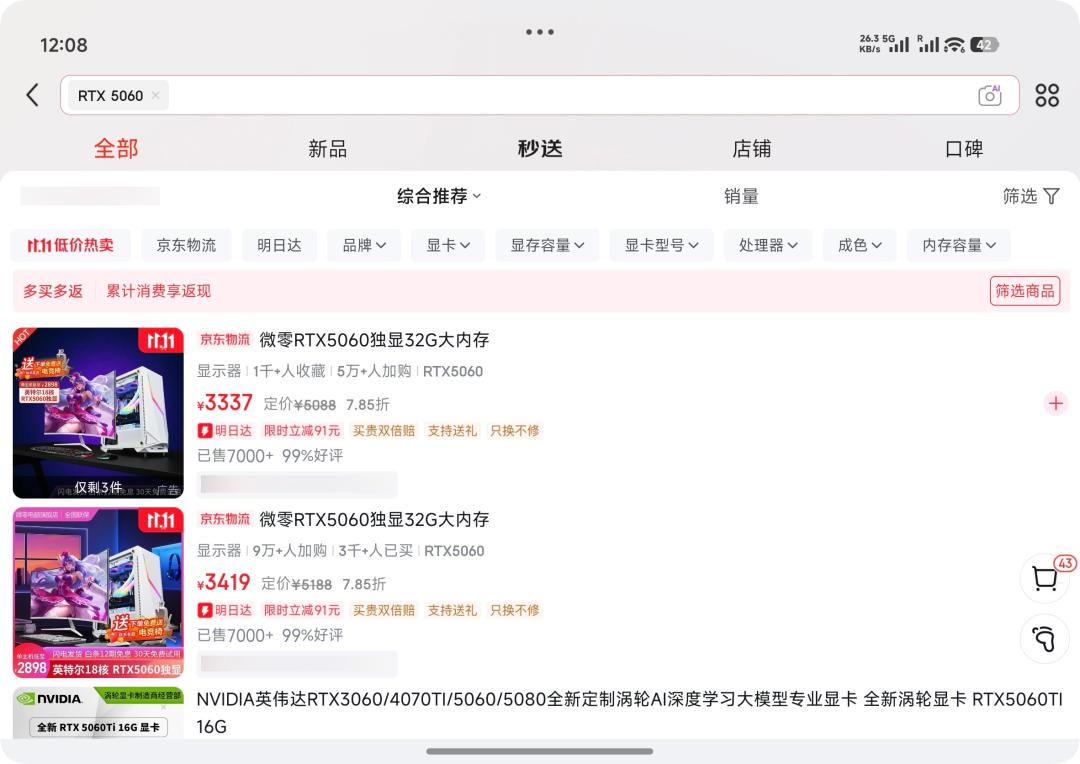
There was a saying circulating on the Internet before: Branded complete machines have long-term agreement purchase prices, and buying a complete machine to remove the graphics card is more cost-effective than buying parts separately.
But as long as you search on the e-commerce platform, you will find that there is no cheap bargain to pick up at all.
Click on the current most mainstream RTX 5060 Ti gaming complete machine, even after enjoying the "official 2000 yuan off" and various full reduction offers, the actual payment for an i5-14600KF host is still as high as 7799 yuan; even if you step back and choose the lower configuration i5-14400F, the final price is 7399 yuan.
The configuration of the older generation i5-12600KF is not only marked at 10199 yuan, but the interface even clearly shows "out of stock".
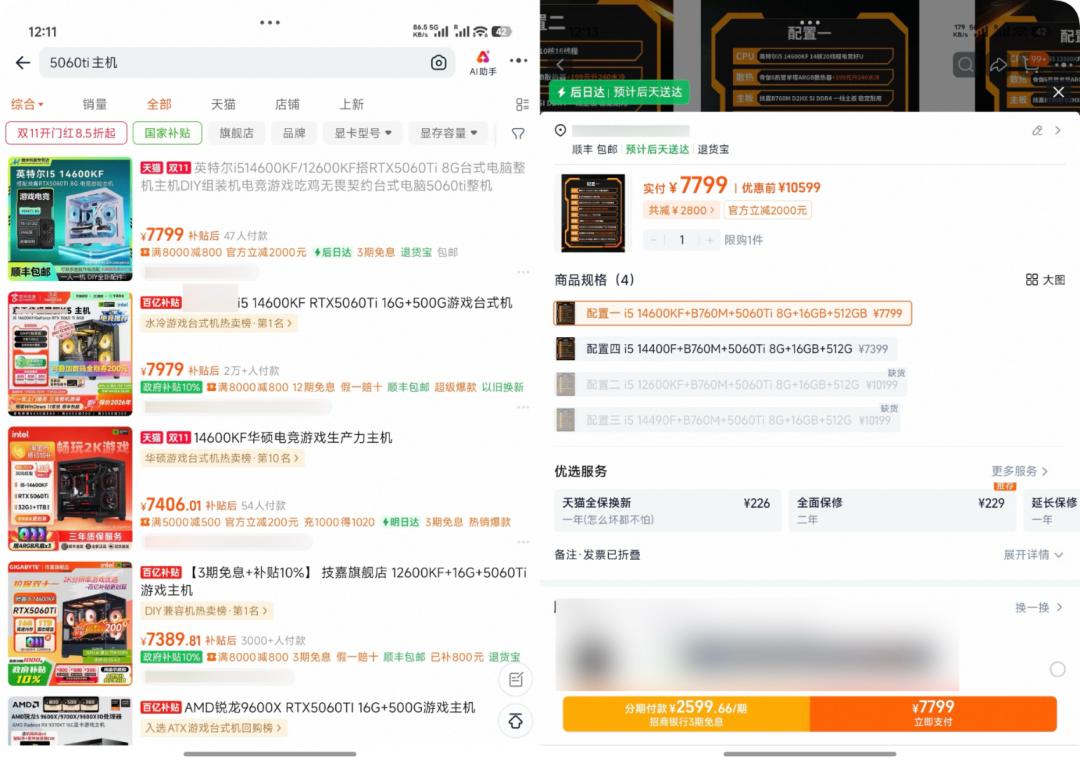
The mainstream gaming host that could be bought steadily for five to six thousand yuan in the past, even with the full support of promotion subsidies, the starting threshold has been forcibly raised to the seven to eight thousand yuan range.
The crazy demand for semiconductor resources from upstream computing power is breaking through the defense line layer by layer from the top-level servers, and finally making every ordinary person who just wants to assemble a computer practically pay the bill.
100% Savings If You Don't Buy
The common driving force behind the rising graphics card prices and higher complete machine threshold is the domineering siphon of data centers on semiconductor production capacity. The limited budget of the consumer market cannot compete with AI customers with stronger payment capacity at all.
TrendForce's forecast at the end of September shows that the contract price of conventional DRAM memory in the fourth quarter will rise by 10% to 15% month-on-month, and NAND flash will rise by 15% to 20%. The cost pressure of upstream wafers is still passing down the supply chain all the way to the end users.
Photo via Apple
As large models move from training acceleration to inference deployment, the demand for high-throughput video memory, high-frequency retrieval and cache is expanding exponentially.
TrendForce predicts that the bit demand for enterprise-level SSDs in 2026 will increase by more than 80% year-on-year. Giants such as Samsung, SK Hynix and Micron have long tilted their most advanced manufacturing processes and production capacity to more profitable HBM and server memory, further compressing the supply left to the consumer market.
For ordinary people, the most intuitive manifestation of this squeeze is that the storage specifications of mainstream laptops have begun to shrink. In order to hold the bottom line of price, many PC brands can only make changes to the factory configuration, quietly reducing the standard solid-state drive capacity. Consumers spend the same budget, but the storage space they can buy has become smaller.
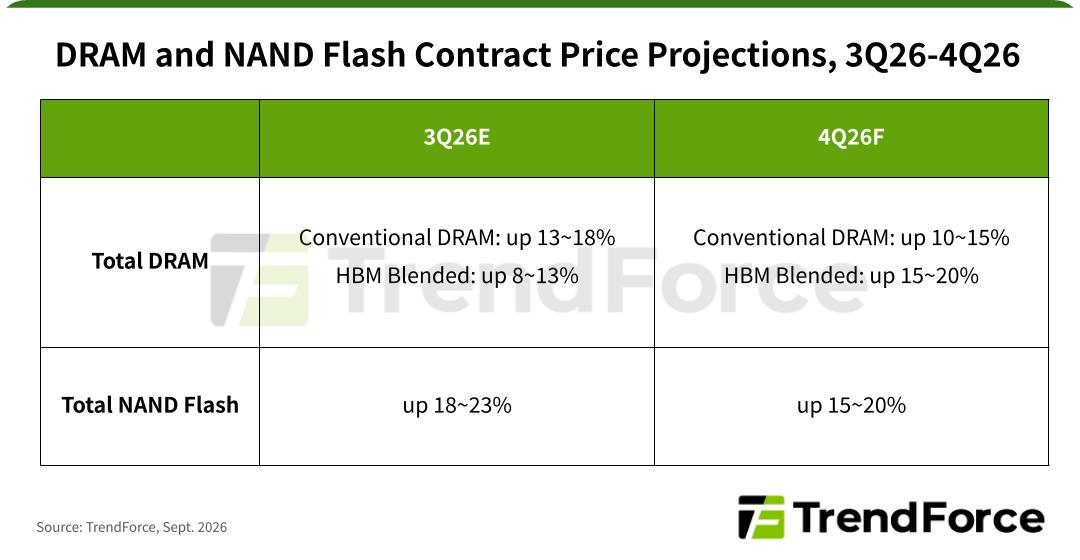
Photo via TrendForce 2026 Q4 DRAM and NAND Flash Contract Price Forecast
In the past, making computers meant picking and choosing on shelves with abundant materials and oversupply; now making computers means fighting for the remaining scraps in the kitchen that has been ransacked by AI giants.
Facing the tacit price hikes across the industry, consumers' choices are helpless but realistic: Not buying.
Preliminary data from Counterpoint Research shows that global PC shipments in the third quarter of this year plummeted by 21% year-on-year, and the decline is expected to expand to 27% in the fourth quarter.
Although the early replacement of machines in the same period last year formed a high base, in the face of the rising replacement cost, the trend of ordinary people tightening their wallets is beyond doubt.
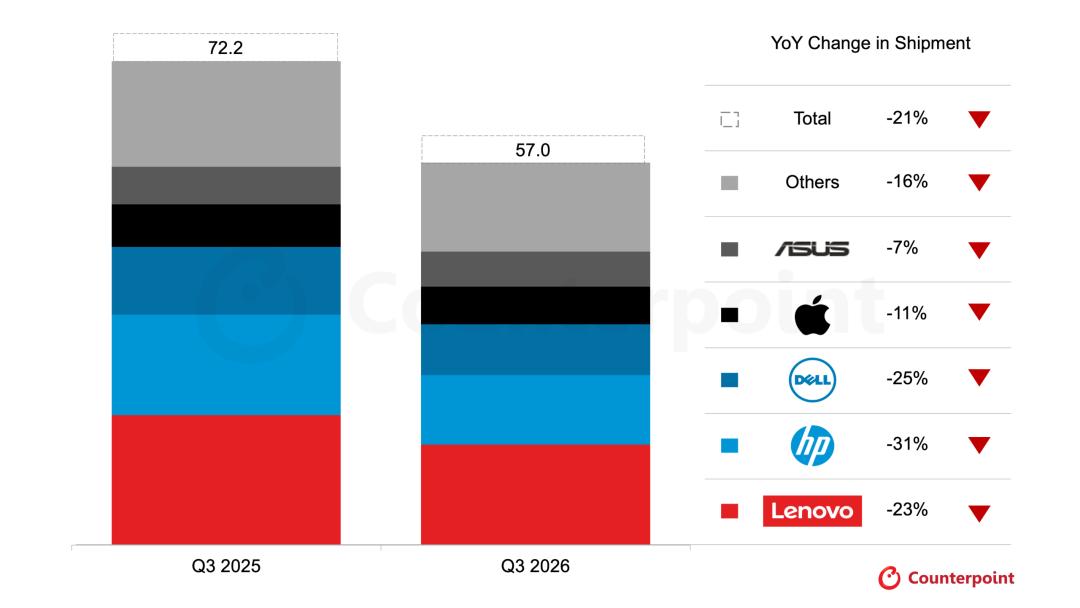
Photo via Counterpoint Research
Faced with a computer that costs tens of thousands of yuan but does not even have full configurations, more and more people choose to hold their horses, or simply stick to the old platform, repair and patch up their old machines to use for a few more years.
The touch-screen version of