90% of companies have got the organizational design of human-machine collaborative teams completely wrong.
When AI agents evolve from "tools" to "team members", the traditional organizational and human resource management theories that take natural persons as default members are facing reconstruction. This article is excerpted from Part 1 of the research report Organization and Human Resource Management of Human-AI Collaborative Teams in the AI Era, which is led by Ms. Lou Jun, Partner of Musheng Consulting and Dean of Musheng Consulting Research Institute: Organizational Design of Human-AI Collaborative Teams.
The first article When AI Employees Arrive, How to Build a Team? analyzes the composition of human-AI collaborative teams; the second article Why Do Organizations Become More Chaotic When AI Gets Stronger? explains the operation mode of human-AI collaborative teams. These contents have clarified that human-AI collaborative teams have fully upgraded their paper strength, but they are unknown teams loaded with heavy weapons. Once no breakthroughs are made at the organizational and related mechanism levels, they will still fall into the mire of bureaucracy, and even bring more severe bureaucracy. In this article, we will first analyze the organizational design adapted to this type of team. The conclusion remains clear: human-AI collaborative teams can only take root, sprout and blossom in a new organizational model. Delusively trying to match AI with a pyramid organization will only bring countless disappointments to enterprises.
Pyramid Organization — Bureaucracy Created by "Humans"
First, clarify a concept — Organization Architecture. This is a concept with rich connotations. Musheng Consulting believes that it includes the business model in the horizontal direction, the business process in the vertical direction, the organizational structure on the whole, and the post system at the individual level. From the above four dimensions from macro to micro, it determines the division of labor logic of "who does what" in the enterprise.
Among them, except that the business model involves the management layer, the rest of the business processes, organizational structure, and post systems can all be influenced by the Organization Development (OD) module within the human resources function. Among these influenceable dimensions, organizational structure has become the top priority because it is "easy to change and has great impact". In other words, a large number of enterprise-level organizational reforms start with the adjustment of organizational structure.
At present, the vast majority of enterprises adopt the Hierarchy (pyramid organization), whose organizational structure forms small "grids" mainly through horizontal division of labor and vertical grading. Theoretically, the incumbents in each grid know their own functional boundaries, and also know what powers their own level has.
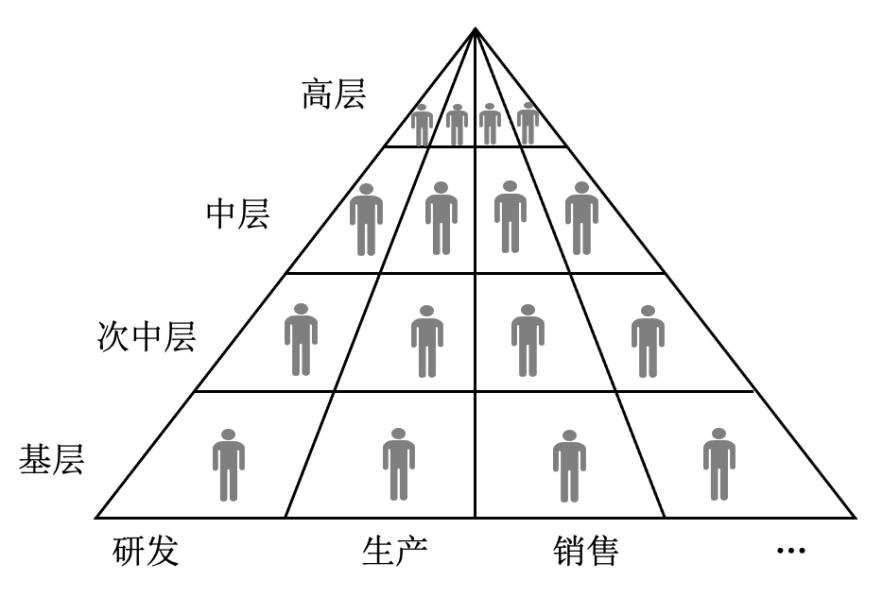
Figure 1-1: Pyramid Organization, Source: Musheng Consulting
Obviously, such an organizational structure will inevitably lead to a series of bureaucratic phenomena, which Musheng Consulting summarizes into four categories:
The "department wall" caused by unclear horizontal division of labor;
The "heat insulation layer" caused by poor vertical authorization;
When trying to use processes to penetrate these two types of obstacles, the processes are likely to become a "process bucket";
When trying to use assessment to stimulate the enthusiasm of employees for horizontal and vertical coordination, the assessment is easily reduced to a "vacuum cover".
The crux of the problem is that pure human teams are all "human-human" collaborative relationships. As long as there are people, there will be selfish desires and ability limitations. As nodes of "information routing", they will definitely cause information attenuation.
In the process of horizontal division of labor, everyone wants to do less work, and pushes the "cross-cutting responsibilities" that seem to be related to both sides to the other side, thus forming a department wall; in the process of vertical authorization, superiors are obsessed with power and are unwilling to delegate, or do not trust their subordinates and dare not delegate, thus forming a heat insulation layer; when setting up processes, everyone wants to have a voice in the process, so there are more and more process nodes, and everyone wants to reflect their own influence by "saying no", so the process efficiency is getting lower and lower; when conducting assessments, everyone hopes to assess the daily work they can complete, and refuses challenging tasks, so the assessment becomes more and more empty. It seems that "human beings" are indeed the root cause of bureaucracy.
Considering this situation, in order to limit the "inherent weaknesses of human beings", most enterprises still regard the pyramid organization as the "relatively most reliable" choice. They believe that the small grids confirm the responsibilities and rights, and with the assistance of processes and assessments, at least the relative stability of the organization can be ensured. In reality, most enterprises are willing to make minor repairs to the pyramid, put forward slogans such as "clarify responsibilities and rights", "optimize processes", and "strict assessment", and take some actions, but they are unwilling to carry out organizational reform or upgrading. The problems created by the pyramid organization are ultimately solved by strengthening the pyramid organization, which is really ironic.
Injecting AI — Technology Drives Organizational Flattening
But if AI agents are added to the organization, forming a state of "a small number of people and a large number of AI", "human-human" collaboration will become rare, and "human-machine" and "machine-machine" collaboration will become the mainstream. At this time, what changes will happen to the organization?
Span of Control is a classic proposition of organizational design. The empirical rule in management academia is that "a manager cannot directly manage more than n people". Different management scholars have measured the value of n, and the results are different, but they all believe that there is a fixed number, because the ability of managers to process information is limited. This proposition is almost the basis for the formation of pyramid organizations. Dr. Mu Sheng believes that it is precisely because the senior management has limited ability to process information that division of labor is formed, and each manages a part; and it is precisely because the senior management still cannot effectively process the complicated information after each manages a part, that it is necessary to establish the middle management to filter information, thus forming the hierarchy.
In the digital intelligence era, technological variables begin to break the quota of management span. When all kinds of work have been standardized and turned into data, the information that managers need to process is greatly simplified, and their ability to process information is also extremely amplified. The management span they can control is naturally getting larger and larger (Mu Sheng, 2025). Once managers can control a larger management span, the management hierarchy will naturally be compressed, and the enterprise will become flatter as a result.
According to Musheng Consulting's 2025 Research Report on Chinese Enterprises' Human Resource Effectiveness, the proportion of enterprises with a flattening index greater than 1 is as high as 83.8%, and the proportion of enterprises with a flattening index greater than 1.5 (that is, showing the characteristics of a platform-based organizational structure) is still as high as 56.4%. Since 2021, these two sets of data have continued to grow steadily.
The main reason why enterprises carry out organizational flattening is that the size of the middle management far exceeds the actual needs, and instead becomes the biggest obstacle to the improvement of organizational effectiveness. In large Chinese Internet companies, some middle managers are jokingly called "PPT summarizers", who are full of Internet buzzwords, engage in formalism at work, cannot produce any actual value at all, and are keen on taking credit, shirking responsibilities and fighting for benefits, which are important causes of bureaucracy. A leading large Internet company once tried to lay off a large number of P8 positions, and found that the efficiency was even higher. The reason was that in the past, P9 put forward ideas, P7 made plans, and the direct connection between the two worked even better.
What is more strange is that the expansion speed of the middle management is particularly exaggerated. In contrast, the increase of grassroots employees is related to the specific workload. The number of grassroots employees should match the number of orders, customer receptions and sales activities. The senior managers are only a few people, and all of them have to be recognized by the boss, so the number cannot be increased much. But for middle managers, their work is not so specific, and they can ask for headcounts for various reasons to expand their own teams. In reality, reasons such as strengthening the management of a certain risk field, enhancing the professionalism of a key field, making advance layout in the innovation field, and expanding the career development channels for subordinates will all become legitimate excuses.
Although there are a large number of driving factors in the process of organizational flattening for enterprises, the technological change brought by AI is undoubtedly one of the most powerful driving factors. In other words, the substitution of AI technology directly shakes the foundation for the survival of the middle management. Many enterprises used to struggle with whether there are bubbles in middle management positions, but now they directly use AI to replace them. A business owner with an annual revenue of about 5 billion yuan said in an interview: "Even if you were useful before, we don't need you now. AI is much cheaper and easier to use. What's more, your position had no value in the past, we just didn't make the move." This is the real mentality of a large number of enterprises, and this mentality will become the mainstream.
A large number of pioneer enterprises directly take "AI substitution" as the reason when promoting organizational flattening, without any concealment. Cloud service company Cloudflare laid off 1,100 people (about 20% of its employees) in May 2026, while its revenue still increased by 34% in that quarter; CEO Matthew Prince said that the vast majority of the laid-off employees were the so-called "measurers" — positions in middle management, finance, legal affairs, internal audit and revenue recognition, on the grounds that AI can measure the organization with unprecedented precision that no human hierarchy can match. Laying off "measurers" while revenue is growing is a signal worth repeated consideration by all organizational designers.
Musheng Consulting has also proposed on many occasions that in the AI era, the most likely positions to be replaced first are the middle management (MOM, manager of manager), whose main function is "reporting up and distributing down", and links such as information collection, comprehensive decision-making, instruction distribution and result supervision can be completely covered by AI. Moreover, the middle management often resists AI reform for the sake of "territorial interests". In order to transfer power to AI, enterprises will inevitably choose to remove most of the middle management. The ongoing trend is that the senior management implements wider and more penetrating management and control through AI tools; the grassroots level achieves a great improvement in delivery level through AI tools — the two ends exert force at the same time to "squeeze out" the redundant middle layer (Mu Sheng, 2025).
A study by Harvard Business School perfectly confirms this trend. A study based on more than 50,000 GitHub Copilot developers found that the proportion of coding activities in total work increased by about 5%, while project management activities decreased by about 10% — AI allows individual contributors to take on more "core work" and reduces the need to be "managed", which directly promotes organizational flattening (HBR/HBS, 2025).
Organizational Structure — From "Small Grids" to "Workflows"
Considering that AI, as a technological variable, enters the organization and leads the organization to the extreme flattening, should we still design the organization according to the traditional logic of horizontal division of labor and vertical authorization?
The answer is no, because the control method of human-AI collaborative teams has undergone a fundamental change. In other words, the role of flattening is not to make the management span larger and the management hierarchy fewer, but to make the organization operate in another way. Traditional control relies on "layer-by-layer approval" — the default is that the more nodes, the safer, commonly known as the "people watching people" mode, at the cost of internal friction and low speed; the control of human-AI collaboration relies on "permission + threshold + audit" — the control points are set in advance as rules, and the whole process can be fully traced afterwards.
Dr. Mu Sheng pointed out that the pyramid organization is a "conservative authorization logic", which results in "being too rigid when controlled and too chaotic when released"; the key to organizational reform is to realize "being controlled but not rigid, released but not chaotic" through structural innovation, which means that enterprises design the "game rules" of the platform, so that people with business acumen can perceive the market while organizing resources under such rules, creating commercial value for the enterprise. The game rules of the platform are actually "permission + threshold + audit", which is the technical expression of "being controlled but not rigid, released but not chaotic" in the AI era. It ensures that low-risk actions can be fully released (released but not chaotic), high-risk actions can be effectively controlled (controlled but not rigid), and the whole process is traceable (responsibility is controllable).
Considering that the organizational design in the AI era needs to break away from the traditional horizontal division of labor and vertical decentralization, and on the basis of clarifying the game rules of the platform, mobilize the autonomy of employees and then promote organizational collaboration, we need to switch to a brand-new perspective.
The first type of question in traditional organizational design is "What is this department in charge of?", and the second type of question is "What level of department is this, where is the superior institution? What are the subordinate departments?" But for the organizational design of human-AI collaborative teams, the first question is "What does this work unit need to deliver? Which human employees and which AI are needed? How is the decision-making power distributed?", and the second question is "Which work units need to be connected together? What business scenarios do the workflows composed of these work units point to, and what operating results do they bring?".
The direct consequence of this transformation is: Team boundaries have changed from "department boundaries" to "task boundaries". The "small grids" representing departments and hierarchies are beginning to be broken, forming one "work unit" after another, which are then connected according to business needs to form "workflows". The figure below clearly depicts this design concept. The work unit has become the most basic design unit, and the connection of work units forms a customer-oriented workflow. In other words, the work of each work unit can be converted into customer value through a certain method, which avoids the embarrassment that many departments in a large number of current enterprises do not create customer value.
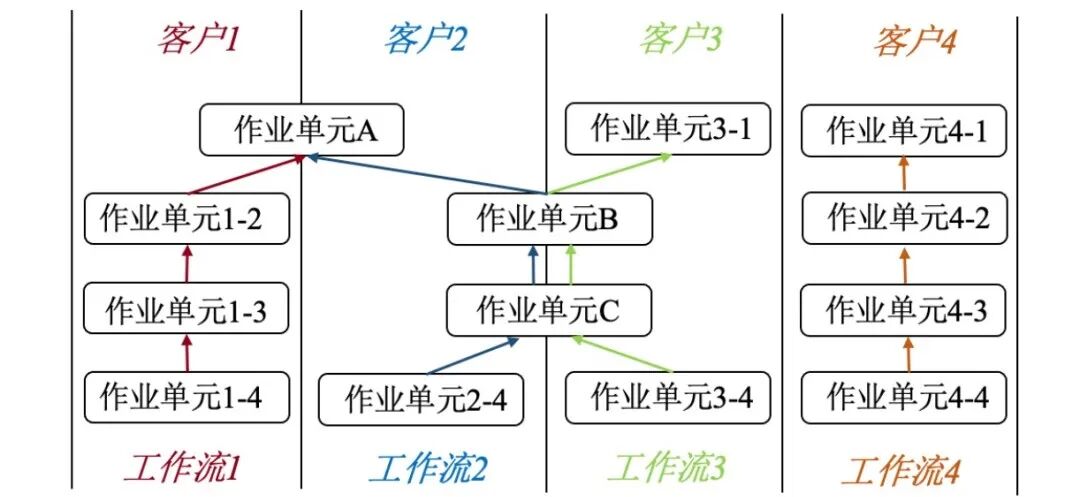
Figure 1-2: Organizational Design Concept of Human-AI Collaborative Teams, Source: Musheng Consulting, Note: Work units A, B and C are public modules that jointly support multiple workflows.
A team can only exist for three months, composed of several human employees and more than ten AI agents, and disband after completing the task; another team may exist for a long time, but its member composition is adjusted every quarter. Musheng Consulting's description of the organizational upgrading trend is consistent with this — the core of the agent organization is the Platform-based Organization, which has the following characteristics:
Customer-centric, where customer demand guides enterprise supply;
According to customer demand, the front, middle and back offices mobilize and match functions to form small business units for docking;
Each business unit is composed of various functional BPs (business partners) or BP teams that can close 80% of the performance;
There is a partnership within the business unit, and an outsourcing relationship established with internal and external suppliers outside;
Small business units map (call) the full resources of the company with the smallest headcount, to realize products, services and solutions.
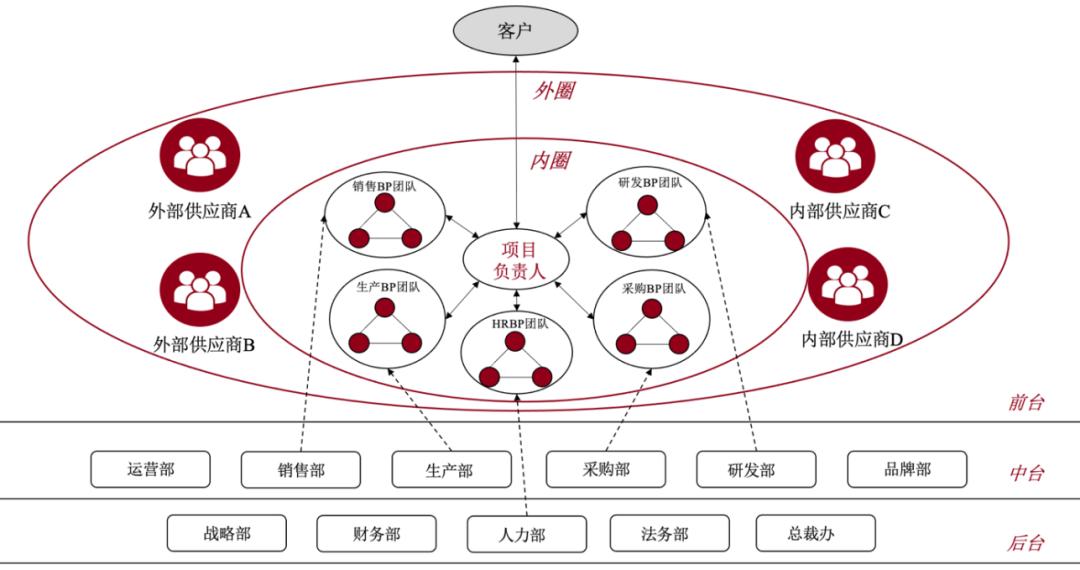
Figure 1-3: Schematic Diagram of the Principle of Platform-based Organization, Source: Musheng Consulting
Obviously, The business unit points to the business scenario and is responsible for running the entire workflow. The functional BP or BP team is the work unit, which is aggregated into a business closed loop in the business unit.
To achieve such an effect, enterprises must build a three-tier architecture: the front office is a number of business units; the business middle office is responsible for turning the enterprise's resources into middleware for the front office to call on demand; the organizational middle office is responsible for understanding the back-office policies and then localizing the policies in the front-office business scenarios to ensure the smooth call of