Just how money-burning is the AI sector? Anthropic has released an $800 billion bill.
The largest IPO in human history is here, or rather, it's here again.
Four months ago, Elon Musk brought his SpaceX to break the IPO record, raising $857 billion at a valuation of $1.77 trillion.
This time Anthropic is even more radical. Although the offering details have not been announced yet, the rumored fundraising target has reached $1 trillion.

What does this concept mean?
To put it simply, in the whole year of 2025 last year, regardless of A-share, Hong Kong stock or US stock markets, a total of 1293 IPOs worldwide raised $1.718 trillion in total. Even combined, they cannot absorb as much capital as these two companies...
Of course, even putting aside the staggering figures, Anthropic's prospectus this time is quite informative. It has disclosed many details of its bills and operating conditions, packed with valuable insights.
After going through the document, you will find that Anthropic has already tried to redefine the AI market, as it is selling a new concept called "knowledge labor".
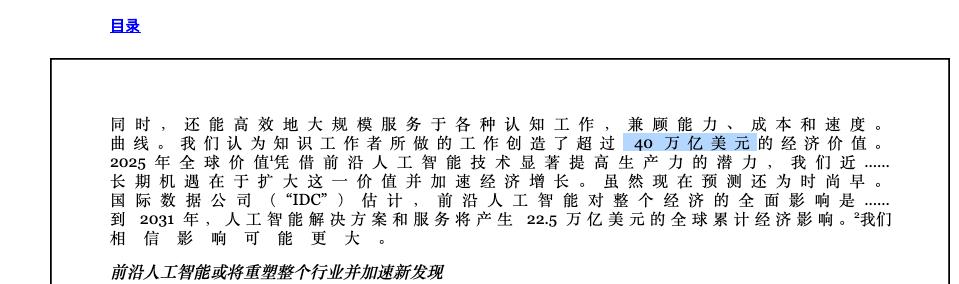
And the size of this market vision is even more imaginative than Elon Musk's previous one, reaching a whopping $40 trillion...
Let's look at the most eye-catching set of data first. In Q1 2026, its revenue reached $47.31 billion, directly exceeding the total revenue of the whole of last year.
Q2 was even more impressive, with revenue hitting $115.6 billion, a year-on-year increase of 1368%, more than 13 times higher. Q3 figures have not been directly announced, but based on clues left in the business section, it is estimated to be around $168 billion, and the growth is still continuing...
Meanwhile, the loss in the first half of the year is also extremely staggering, reaching $807.48 billion directly.
Wait, even if Anthropic burned the money for fun, it could not have lost that much, right?
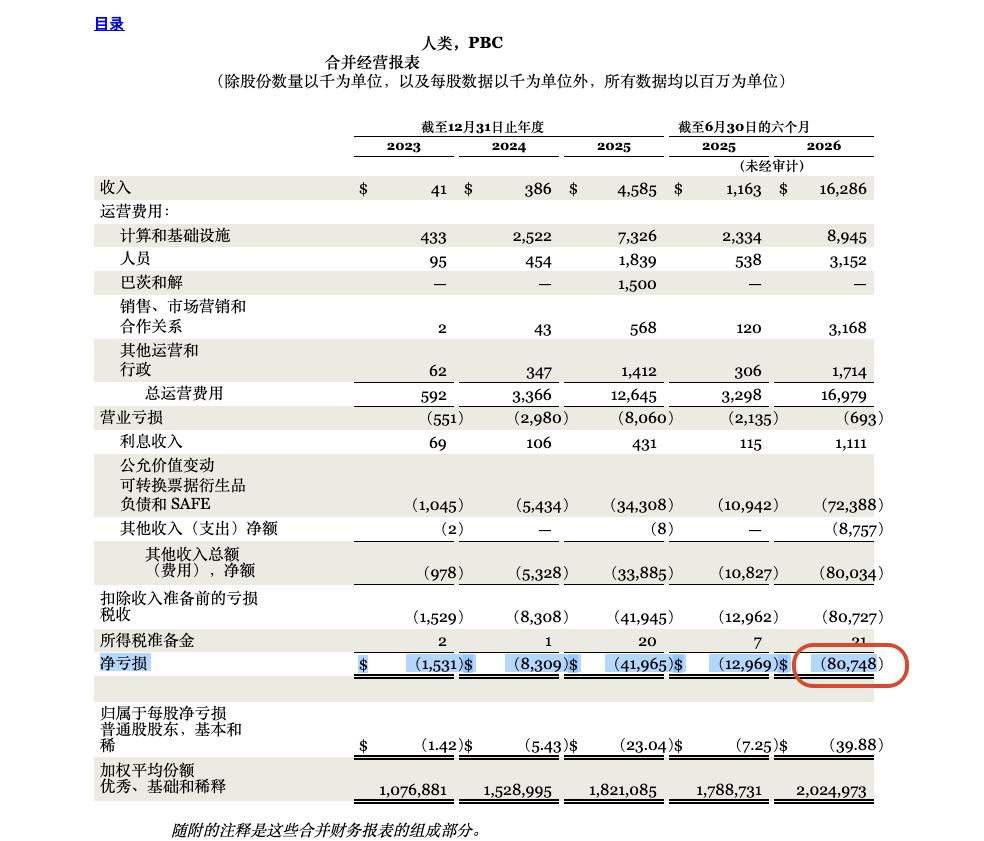
Hey, there is actually a hidden story behind this.
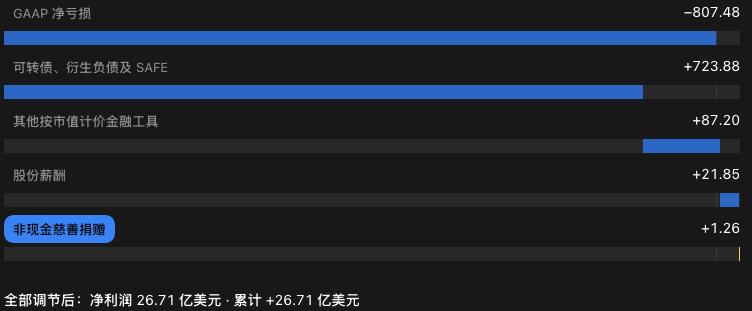
If you go through the financial report carefully, you will find that out of the $807.48 billion loss, $723.88 billion comes from the fair value change of financial instruments such as convertible bonds.
In plain terms, Anthropic raised a large sum of money before, and many of these financing instruments can be converted into the company's stocks under specified conditions in the future.
At the time of financing, the valuation was very low, but as the company's valuation kept rising, these instruments became more and more valuable.
For investors holding these instruments, this is certainly a good thing as they can make money effortlessly, but for Anthropic, it is pure liability, which is recorded as a huge loss on the books.
That's why we have this rather counterintuitive situation: the more valuable the company becomes, the worse its income statement looks.

But to be frank, Anthropic did not actually spend that amount of real money from its bank account, this part only looks bad on paper.
If we exclude these items, according to the non-GAAP standard disclosed by Anthropic itself, the company still had net profit after adjustment in the first half of the year, reaching $26.71 billion.
That's right, its cash flow is actually quite normal...
Moreover, the user data supporting the revenue is also very strong. There is an indicator called Net Revenue Retention (NRR), which is around 900% after excluding subscription users.
In simple terms, this means that old customers from last year spent roughly 9 times more in the same period this year than they did last year.
This level of user stickiness is really impressive. With this level of appeal for paying customers, there is no need to worry about not making money.
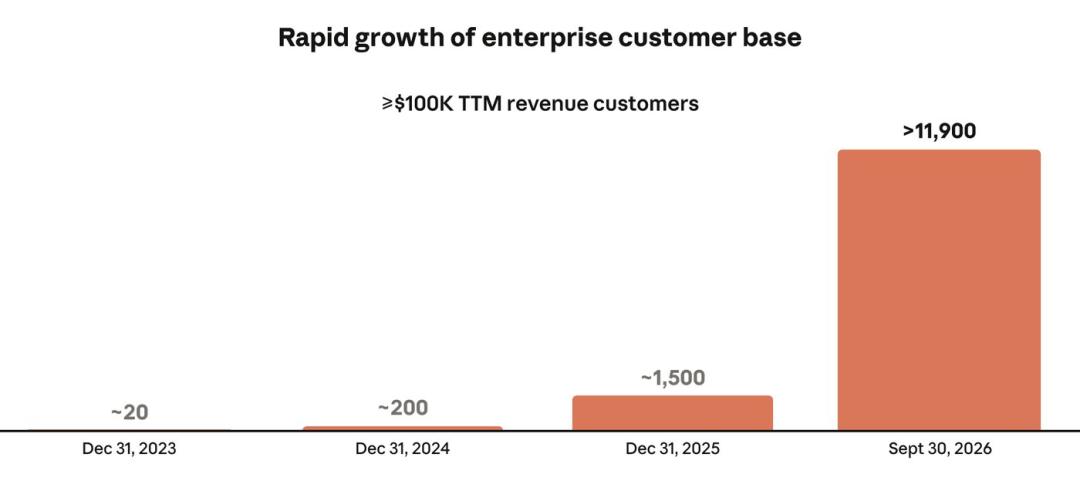
However, this part is not very relevant to us. After all, you can occasionally see a few surviving grasshoppers after autumn, but Claude accounts that have been active for more than a year are extremely rare.
The funniest part is that Anthropic also released a set of data by the way, saying that 5% to 7% of its revenue is recognized as coming from customers who use its services in violation of regulations.
Thinking of the countless popular science short videos produced by Opus 5.5 the other day, this is almost naming names...

With all these data stacked up, according to their estimation, the economic value corresponding to global knowledge labor in 2025 has exceeded $40 trillion.
This means that if AI keeps developing along this path, it will no longer target the tiny profits of traditional software, and the entire knowledge labor market is within its reach.
Of course, this $40 trillion is just a common overambitious market projection, just like Elon Musk's idea of colonizing Mars. We respect and understand such expectations, but for now, it is all about betting on the distant future.
After all, with such a huge pie to bake, how much batter do you need to prepare and how big an oven do you need to build?
Well, Anthropic is very straightforward, and it immediately laid out its expenditure budget for everyone to see.
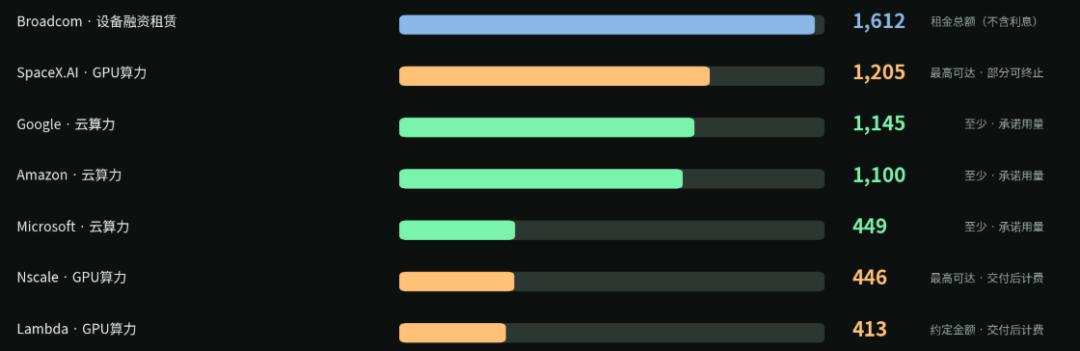
It has signed contracts with almost all computing power suppliers in the market, including Google, Amazon, Microsoft, SpaceX and other 8 suppliers, with the farthest contract delivery date extended to 2045.
Among these orders, the $100 billion level is just an appetizer, and only orders at the $1000 billion level can be considered main courses, adding up to a total of more than $800 billion.
Yes, Anthropic's pre-ordered bill for its future bet is roughly equivalent to the total valuation of Elon Musk's business empire, which shows how badly the company was constrained by insufficient computing power before.

However, these contracts cannot be simply regarded as liabilities. Putting aside the delivery details, most of these suppliers are far more than just creditors.
For example, in May this year, Amazon invested $50 billion in Anthropic, and Google was even more generous, investing $100 billion.
Moreover, if you have used their respective Agent products, such as Amazon's Kiro or Google's Antigravity, you will find that Claude's model is integrated inside them.
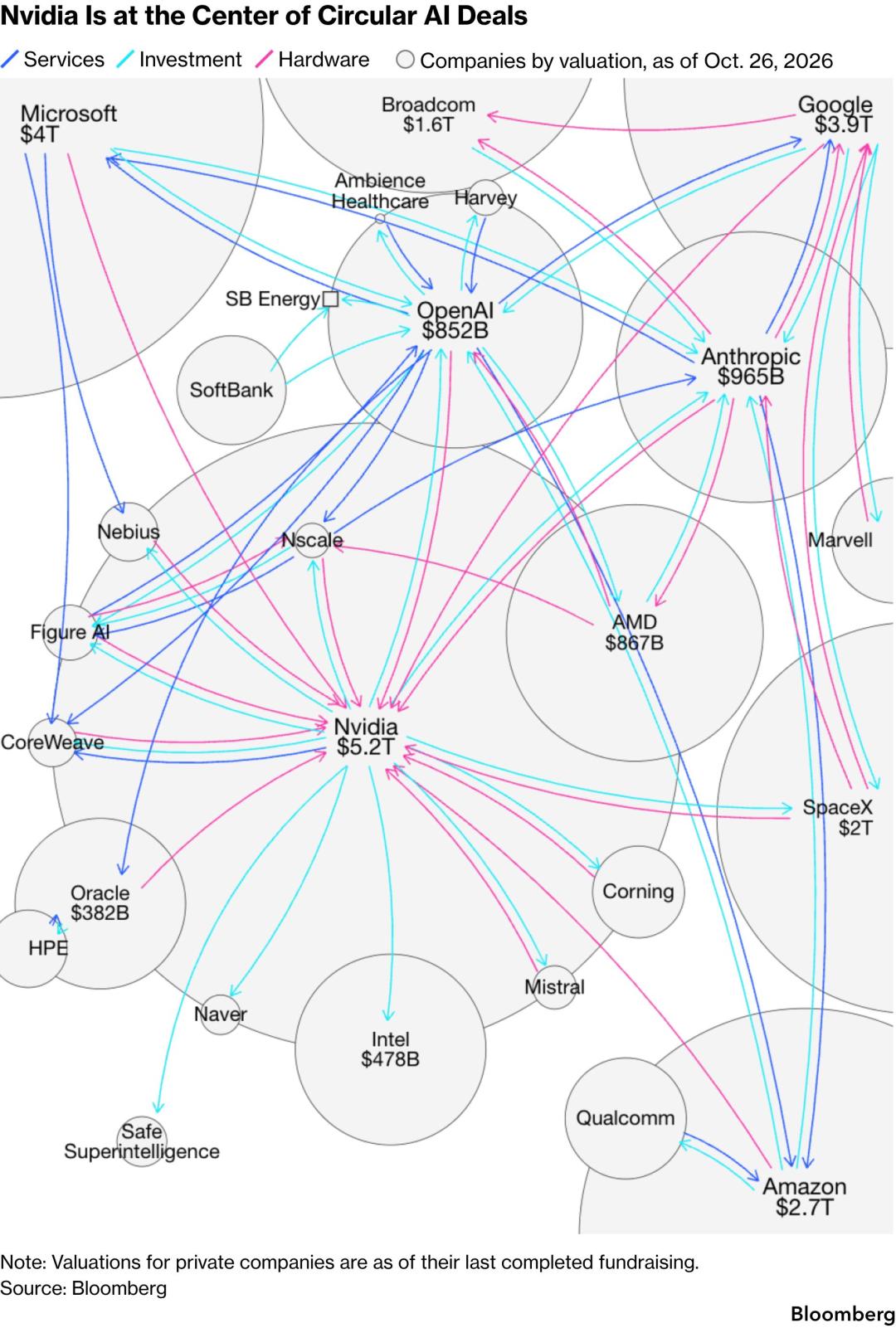
In addition, after the cooperation, they can also deploy Claude on their own servers and sell APIs. In the first half of 2026, 48% of Anthropic's revenue has come from sales through these third-party cloud platforms.
That's right, these tech giants are far shrewder than we think: they earn from the investment, earn from renting out computing power, and earn again by helping sell the services...
Even if they are training top-tier models themselves and competing fiercely at the AI frontier, it does not stop them from sitting down and negotiating practical business deals.
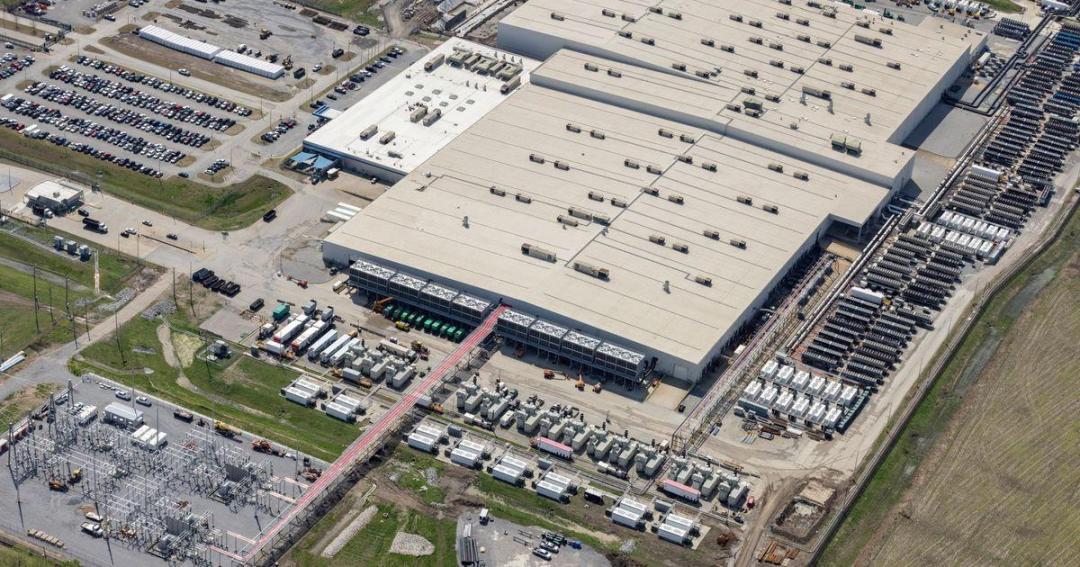
This is also where Anthropic's awkwardness lies. To be honest, its ideal is far too idealistic,
Although it has always held itself in high regard and even chose PBC (Public Benefit Corporation) as its company registration type, tokens will not compromise for any ideals, and no computing power means no outputs can be generated.
Nearly half of your revenue depends on promotion from tech giants, and you have pre-ordered more than $800 billion of orders waiting to be paid back. At this point, how can you expect not to be led by the nose by commercial interests? That will be a real headache.
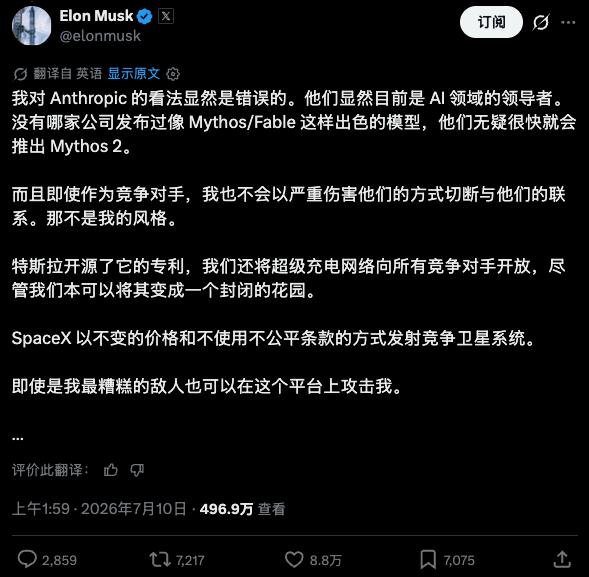
After all, even as headstrong as Elon Musk, who criticized Anthropic earlier, would be happy to cooperate the moment he gets a computing power rental order.
In such a chaotic capital market, when AI safety conflicts with profit-making, can Anthropic still stick to the original intention it set for itself?
In response, they directly designed an extremely complex equity structure.
As we all know, to guarantee their right to speak, founders of listed companies usually separate the rights to dividends and the rights to voting for management decisions.
Well, Anthropic did the same thing, and even went further. It divided its stocks into 5 categories, Class A, N, E, T, F.

Class A shares are regular stocks for ordinary investors, which entitle holders to both profit sharing and voting rights.
Class N shares are mainly reserved for strategic partners like Google and Amazon mentioned before, which entitle holders to share profits but basically do not allow them to participate in company decision-making.
The really interesting parts are the next three categories.
First, Class F shares are specially reserved for the seven co-founders. There is only one such share in total, which does not participate in profit sharing, but holds 50.1% of the company's voting rights.
This means that no matter how many rounds of financing are raised in the future, as long as this mechanism remains in place, the seven co-founders can jointly hold the decisive power over shareholder voting.
But relying solely on the founders is obviously not enough, so they created Class T shares, which are handed over to an independent organization called LTBT (Long Term Benefit Trust).
This arrangement is even more extraordinary: it neither takes dividends nor participates in general shareholder voting, but has the right to decide the candidates for the majority of seats on the company's board of directors.
The members of the trust are usually experts with background in AI safety or public