In the 2026 new energy market, the most firmly established players are the "Xingyuan" cohort.
On a weekend afternoon, at a Geely 4S dealership in Zhengzhou, Wang Lin stands in the vehicle pickup queue, clutching a delivery order for the Xingyuan model in her hand.
There are still more than a dozen people ahead of her. Staff members are trotting back and forth, handing over keys one after another, while new car owners hold up their phones and circle the vehicles to take photos.
Just across the street, in the showrooms of several joint-venture brands, fewer than five customers walked in throughout the entire morning.
A single road divides the two extremes of the automotive market. Only this time, the side that is booming is occupied by a pure electric compact car just over four meters long.
Wang Lin's decision to buy a car is quite straightforward. She has been working for five years, commuting 40 kilometers round trip every day, and the rising oil prices have been a real pain point for her. Her friend advised her: "Buying a car is a major decision, you need to be careful." She nodded seriously, picked a day off, test drove the car, and placed her order immediately. The car costs just over 70,000 yuan, with a down payment of less than 20,000 yuan, and the monthly payment is only around 1,000 yuan.
On Chinese consumers' shopping lists, automobiles have long ranked at the top of the decision-making pyramid, as the second-largest household purchase after real estate. This used to mean saving money, comparing prices, struggling with choices, making compromises, and reaching a final decision only after repeated discussions among the whole family.
But now, the skyrocketing popularity of models like the Xingyuan has made the so-called "major purchase" far less "heavy" than it used to be.
In the first half of 2026, Geely Xingyuan recorded cumulative sales of about 249,000 units (including exports), retaining its title as the best-selling pure electric vehicle across all segments, and ranking first in monthly A0-segment pure electric sales for 16 consecutive months. BYD Seagull sold around 168,000 units including exports, and BYD Dolphin sold about 140,000 units, both also ranking high on the new energy vehicle sales chart.
Against the backdrop of overall pressure on the industry, A0-segment small cars have become the most resilient track. According to data from the China Passenger Car Association, cumulative retail sales of domestic passenger vehicles in the first half of 2026 reached 8.701 million units, down 20.2% year on year; cumulative retail sales of new energy passenger vehicles hit 4.704 million units, down 14% year on year. On the wholesale side, pure electric A0-segment models sold 311,000 units in July alone, accounting for 32% of the pure electric market share, up 8.9% year on year.
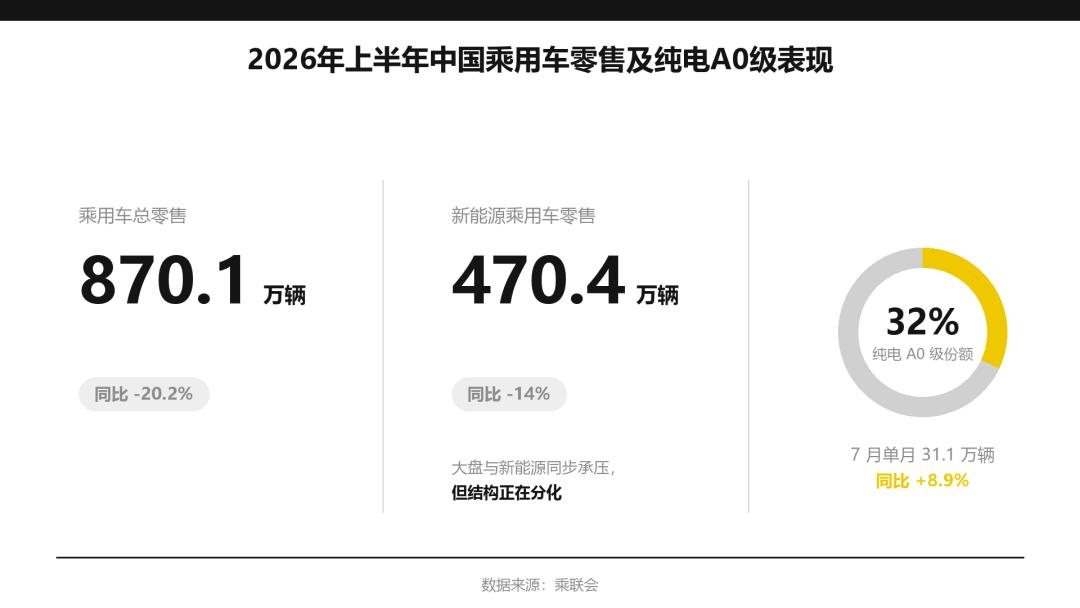
In the overall industry market with negative growth, the A0 segment is one of the few niche tracks that still maintains positive growth.
2025 was the last full year with the new energy vehicle purchase tax exemption, and the year-end sales surge pulled forward part of the 2026 demand. The double-digit drop in the overall market is largely a correction after the policy expired. The A0 segment's ability to maintain positive growth even after the policy subsidy phase-out shows that its growth does not rely on policy dividends, but on changes in the consumption structure itself.
It would have been hard to imagine this five years ago. Back then, small electric vehicles were widely seen as an upgraded version of the low-speed "elderly mobility vehicles", and buying one would make people feel a little awkward to talk about.
Today, small cars of similar sizes have achieved an overwhelmingly leading market position. How did the small cars that were once looked down upon become such a sought-after hit?
A transformation in the logic of automotive consumption is taking place with models like the Xingyuan.
How did small cars "suddenly" rise to prominence?
In the automotive industry, product improvement is linear, but market response is non-linear.
When a car is good enough to score 60 points, the market can remain indifferent for a decade. When it reaches 80 points, demand will be released intensively within one or two quarters. A so-called hit product is exactly the moment the product capability climbs over the critical threshold and makes its mark.
Small electric cars only crossed that critical threshold in the past two years.
In the fuel vehicle era, A0-segment small cars always operated below this threshold. With low price and thin profit margins, carmakers had no incentive to invest, so products were continuously stripped of features, and the less they offered, the fewer people wanted to buy them. Models like the Honda Fit and Volkswagen Polo, as the benchmarks for fuel cars in this segment, were not limited by technical capabilities, but by poor economic returns. At this price point, input and output were never proportional. As a result, this was a market few players were willing to take seriously.
In the early days of electrification, two development paths were verified one after another, but neither managed to bring small cars across the critical threshold.
In 2020, Wuling Hongguang MINIEV was launched with a starting price of 28,800 yuan, with peak monthly sales exceeding 50,000 units, once ranking as the world's best-selling new energy single model by monthly sales. But strictly speaking, the MINIEV is an even smaller A00-segment micro electric vehicle, with 120km range, no fast charging, and no airbags in its first generation. It only verified the existence of low-price demand: consumers bought it mostly for its low price, not for the vehicle itself. Although the MINIEV expanded the market capacity, it also labeled this segment as "cheap equals low quality" and "elderly mobility vehicle".
The other path was tested by ORA. In 2018, Great Wall Motors launched the ORA brand, and in 2021 it positioned itself as "an automotive brand that loves women more", with cat-themed model names and macaron color schemes to maximize differentiation, hitting a peak annual sales of 135,000 units that year. But its ceiling soon became obvious: in 2022, battery raw material prices skyrocketed, and the high-volume ORA Black Cat and White Cat lost money on every unit sold, forcing the brand to stop taking new orders. The brand then shifted its focus to high-end models ORA Ballet Cat and ORA Lightning Cat, but the market did not respond well, with monthly sales staying in three digits for a long time. In 2025, ORA's annual sales dropped to 48,000 units; in March this year, ORA officially announced an adjustment to its brand positioning, no longer emphasizing "exclusive for women". Targeting female consumers helped the brand gain a foothold, but also locked its customer base. The biggest common demand for small cars is commuting, not gender-specific. ORA promoted the idea of "treating yourself well", but what consumers like Wang Lin want is a practical, usable car.
Single-point breakthroughs, whether through low pricing or marketing, cannot cross the critical threshold. Only a platform-based cost structure can do that.
The real turning point came with BYD Dolphin. Launched in August 2021, the Dolphin is the first model built on the e-Platform 3.0, equipped with Blade Battery, 405km range, and a starting price of 93,800 yuan. For the first time, a small car shared platform technologies with the brand's flagship models, redefining the product from a simple mobility tool to the first family car. It achieved monthly sales exceeding 30,000 units for several consecutive months, with cumulative sales exceeding 1 million units, proving the validity of this positioning.
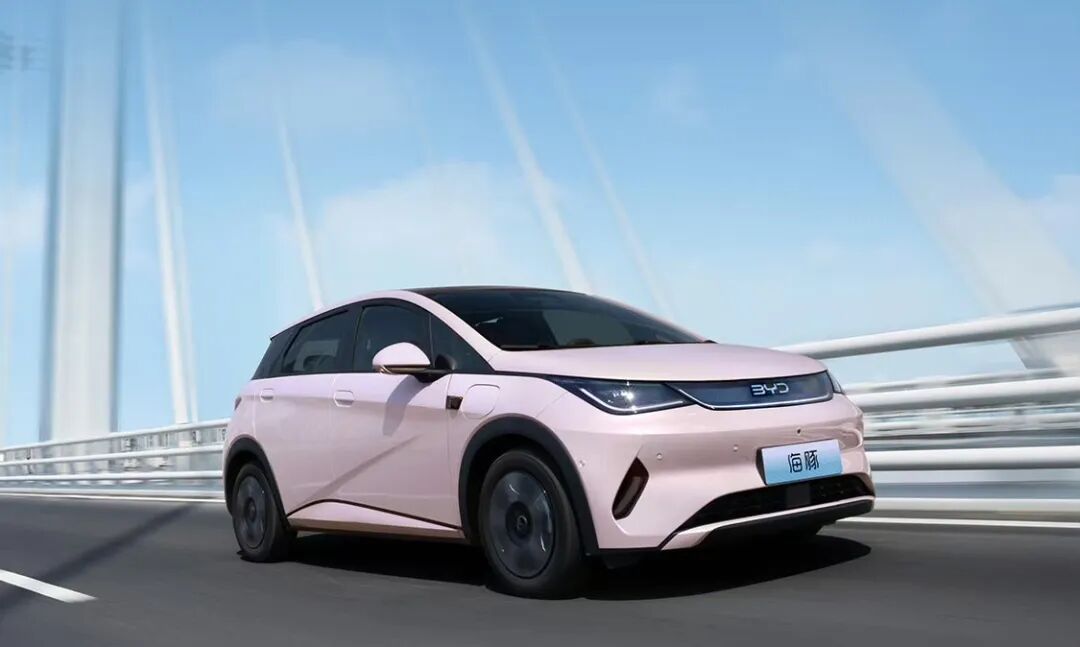
The explosion of the Dolphin has segment enlightenment significance: it tore off the "small car equals low-end" label, and pushed the A0-segment price anchor up to the 100,000-yuan range. But the Dolphin also left a legacy: it strongly linked high-quality small cars to higher price points, and did not solve the problem of delivering high quality at low prices.
BYD was the first to make further progress. In April 2023, the BYD Seagull entered the market with a starting price of 73,800 yuan, equipped with Blade Battery, four airbags and ESP as standard across the entire lineup, bringing the product standard set by the Dolphin down to the 70,000-yuan price bracket. It sold more than 500,000 units in the 16 months after launch, making it the fastest-selling pure electric sedan in China at that time.
The critical threshold was crossed in October 2024, when Geely Xingyuan was launched. Built on the GEA architecture, with rear-engine rear-wheel drive, multi-link independent suspension, CATL liquid-cooled battery, Flyme Auto infotainment system, and C-NCAP five-star safety rating, its limited-time preferential starting price was only 69,800 yuan. A few years ago, this set of configurations would have cost no less than 150,000 yuan. The commercial logic of the Xingyuan is also very clear: instead of forcing consumers to settle for less, it brings flagship configurations down to the 70,000-yuan price bracket, and reconstructs value at the 70,000-yuan price point.
The price range has barely changed, but the vehicles have been fully upgraded. For the same 70,000 yuan, consumers might have bought a stripped-down version of a car in the past, but now they get a product with far higher completeness than before. The core driving force is the rewriting of the cost structure brought by new energy vehicle platformization: R&D costs are spread across the entire brand architecture, and the cost of the three core electric components continues to decline as production scale grows.
The watershed for the small car business is not on the demand side, but on the cost side.
After the products cross the threshold, why does the market explode so fiercely? Because the accumulated potential energy on the demand side is released all at once.
The shift in consumer perception has also quietly taken place amid this series of product iterations.
Five years ago, spending 70,000 yuan on a small electric car implied "limited budget" in social contexts. Today, with the same 70,000 yuan, consumers get a rear-wheel drive chassis, CATL battery, intelligent cockpit and five-star safety rating, and the subtext becomes "it's such a great deal". The shift in perception also comes with the building of trust from large car parc: the Dolphin has had over 1 million users in more than four years since its launch, Wuling Bingo has accumulated more than 750,000 owners, and the Xingyuan sold 800,000 units in just 21 months, becoming the A0-segment pure electric small car that reached this scale the fastest. The large number of existing users allows word-of-mouth to spread and gain credibility among acquaintances.
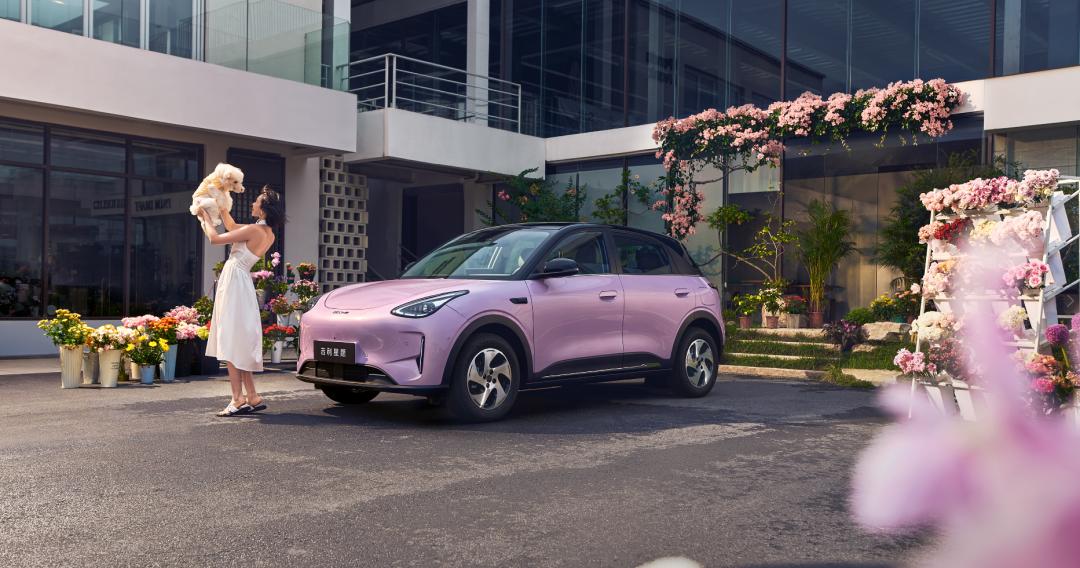
Going deeper, the car purchase decision itself has become much lighter. Automobiles have long been the second-largest household asset after real estate, with high prices, long decision cycles, and far too many additional meanings attached beyond the product itself. A person's income, career, family stage, even aesthetic taste and social identity, all used to be expected to be seen through the car logo, size and price. The first car was expected to be as complete as possible: if the budget could afford a A-segment car, people would not buy an A0-segment one, and if they could afford an SUV, they would not choose a sedan, let alone a small car. The car not only had to serve daily life, but also carry people's imagination of a "better life".
Now, as income expectations become more conservative, the pursuit of "pretending to be exquisite" gives way to rational frugality. Consumers start to pay less for brand premium and social currency, and put more decision weight on hardware configuration, usage efficiency and ownership cost. The car purchase that used to require repeated weighing, even years of loans, has now become, for some families, close to a durable consumer good that can be purchased according to specific needs.
When the price becomes more accessible, the consumption decision also becomes lighter. Young people's first car can first meet their commuting needs, without stopping them from saving budget for their dream car in the future. A family that already owns an SUV can also add a small car to handle school runs, shopping and short city trips. A car no longer needs to cover every scenario in one's life, it only needs to be handy in the scenarios that are used most frequently every day.
This is not consumers settling for less, but consumers finally no longer forcing a single product to meet all their expectations.
Therefore, small cars did not rise "suddenly". With years of steady improvement in product capability, the supply side's usability line and the demand side's trust line were crossed one after another in recent years, and the suppressed demand was fully released, leading to the overwhelmingly leading market position of models like the Xingyuan today.
The lower the price, the more it tests carmakers' capabilities
"Low-priced products" are often misunderstood as having no technical content.
In fact, maintaining a relatively complete user experience at a low selling price tests carmakers' cost control, platform capabilities and supply chain efficiency far more. To balance space, safety, range, cockpit experience and design within a limited budget, every additional experience improvement puts new requirements on the R&D and manufacturing system.
The act of "driving down the price" essentially means rewriting the entire cost structure.
In the past, A0-segment small cars had thin profit margins, no one was willing to take them seriously, and the products could hardly stand out, falling into a vicious circle. Today, the popularity of models like the Xingyuan and Dolphin does not come from "cutting configurations to lower prices", but from investing money in the core components that users perceive the most, while spreading costs through platformization and large-scale production.
The Xingyuan brings configurations that used to be exclusive to 150,000-yuan models, such as rear-engine rear-wheel drive and multi-link independent suspension, down to the 70,000-yuan price bracket. The core logic is that these technologies are not developed separately for a single model, but shared results from Geely's GEA architecture. R&D costs are spread across the entire brand product matrix, the unit price of the three core electric components is lowered through in-house R&D and large-scale procurement, and finally room is released for lower pricing. 21 months after its launch, global sales of the Xingyuan exceeded 800,000 units, and now the 1 millionth Xingyuan has officially rolled off the production line. The snowballing production scale further reduces costs.
The logic of the Seagull and Dolphin relies more on BYD's vertical integration system. From Blade Battery to motors and electronic controls, the vast majority of core components are developed and produced in-house, making battery costs significantly lower than those purchased from external suppliers. This cost advantage is further amplified in the field of intelligent driving. The upfront R&D investment for intelligent driving is extremely high, but BYD spreads it very thinly through large-scale mass production. As of the end of March 2026, its models equipped with assisted driving have exceeded 2.85 million units in total, with monthly sales of nearly 130