AI Reconstructs Cross-Border Payments: Efficiency, Risk Control and the Agent Business Era
The act of "payment" is becoming increasingly convenient. Whether it is online shopping, placing orders online, or offline consumption, consumers only need to click, scan a QR code or tap their device to complete the payment operation. But behind these mere few seconds, a complex payment system is actually running.

Around the globe, millions of such transactions occur every minute, a large number of which involve cross-border capital flows. Consumers and merchants in different regions, as well as diverse payment methods and financial institutions, are connected to finish identification, authorization and risk judgment efficiently. The seemingly simple payment operation actually drives the entire payment link.
Nowadays, AI has also begun to enter this link, helping payment platforms judge in real time which path a transaction should take, whether to approve it, and even whether to complete the transaction directly on behalf of the customer. Payment is gradually transforming from a simple transaction action into an intelligent decision-making system.
So how does the global cross-border payment link operate, and what difficulties does it face? What changes is the integration of AI bringing, and what practices have industry giants carried out? Combining the practices of Ant Group International, this article discusses the operation mechanism of cross-border payments and how they are preparing for the AI era.
Cross-border Payment Link and Its Difficulties
From clicking to pay to final completion, a cross-border payment needs to go through multiple links behind the scene.
The Complexity of Cross-border Payments
Take purchasing an international air ticket as an example: after selecting the ticket and payment method on the airline's website and clicking "Pay", a transaction is initiated.
First, the merchant sends a payment request to the acquirer and transmits transaction information. The acquirer is the entry point for merchants to access the payment network. Payment platforms such as Antom, Stripe and PayPal also provide acquiring or related payment processing services in actual business operations. They are responsible for connecting different payment methods, selecting appropriate payment channels, and identifying and controlling transaction risks.
Subsequently, the transaction information enters the networks of card organizations such as Visa, Mastercard and UnionPay. Card organizations play the role of information transfer, passing transaction information from the merchant side to the card-issuing institution on the consumer side, that is, the bank that issues the consumer's bank card.
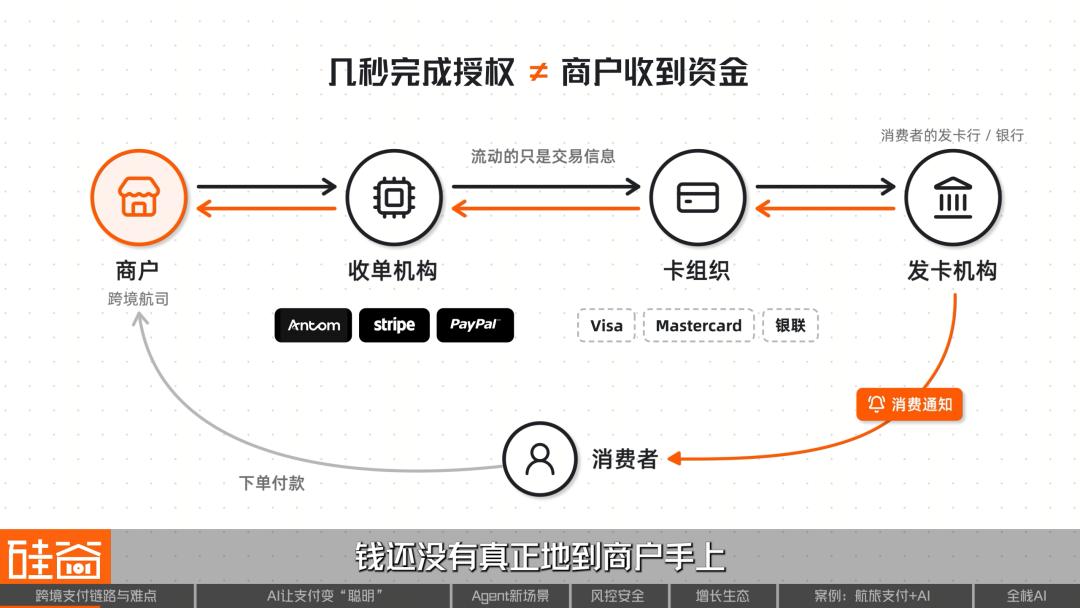
The bank verifies the account and payment information, checks the balance or credit limit, evaluates transaction risks at the same time, decides whether to approve the transaction, and returns the authorization result. The result is then transmitted back to the merchant via the card organization and the acquirer, and this information transmission and authorization process may only take a few seconds.
It should be noted that what is completed at this time is mainly transaction authorization, which transmits transaction information, and the funds have not actually entered the merchant's account yet. The actual fund transfer occurs in the subsequent clearing and settlement link: the funds flow from the issuer side, through the payment network and the acquirer, and are finally settled to the merchant's account. If cross-border transactions are involved, it may also include currency exchange and cross-border capital flows, and the whole process usually takes T+1 to T+3 days, or even longer.
Therefore, behind a simple payment operation, the merchant, acquirer, card organization and issuer have completed complex information transmission and authorization. Among them, the acquirer is the key node connecting the preceding and following links, and it is not easy to ensure that each transaction is completed smoothly.
The Complexity of Cross-border Payments
For merchants who want to develop global business, they are not facing a unified payment market. There are obvious differences in payment habits across different countries and regions: credit cards are dominant in North America, many regions in Asia are more accustomed to using e-wallets, other markets rely more on bank transfers, and some even have independent local payment networks.
These systems are not naturally interoperable, so connecting payment methods, banks and payment networks in different countries is itself a complex infrastructure project.
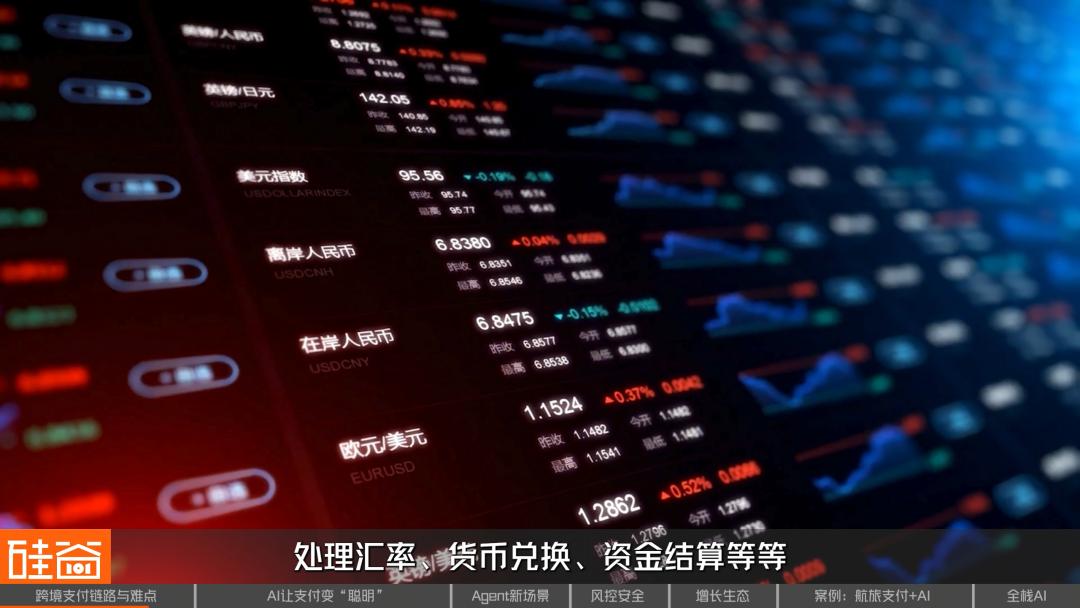
Another difficulty is cross-currency and cross-border settlement. Consumers pay in US dollars, but merchants may finally receive euros or RMB, which requires crossing different financial systems to handle issues such as exchange rates, currency exchange and fund settlement.
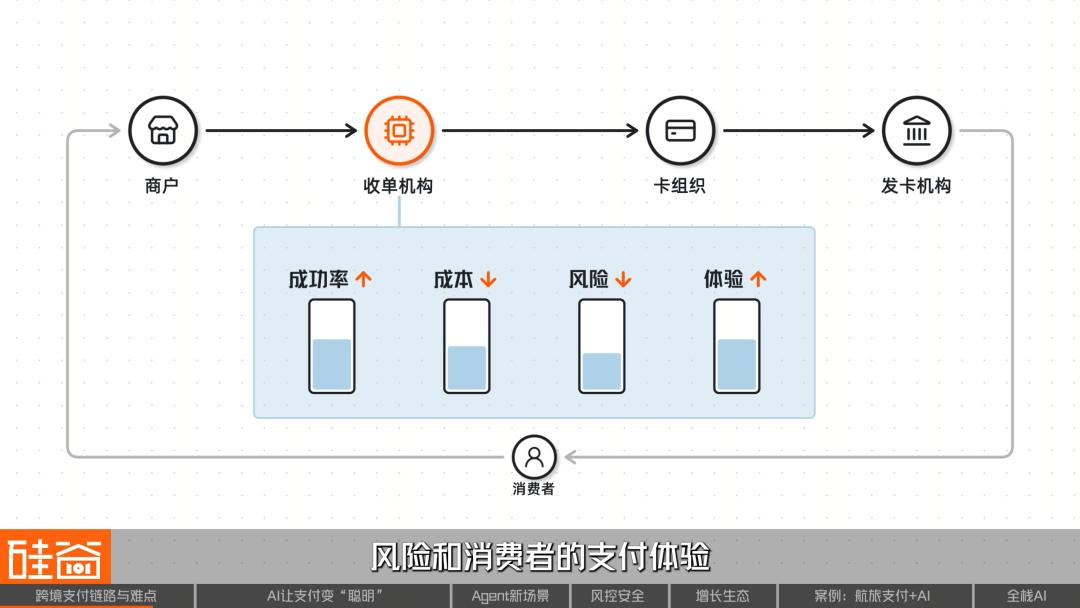
In addition, acquirers not only need to ensure transaction success, but also take into account cost, risk and consumers' payment experience. For example, one payment channel has a higher success rate but higher cost; another channel has a lower cost but is more prone to failure. Risk control also requires trade-offs: overly loose review may let fraudulent transactions pass, while overly strict review may mistakenly affect normal consumers.
Therefore, acquirers face complex real-time decisions: which payment path to choose, whether to approve the transaction, and how to strike a balance between speed, cost and security. When the business expands from one country to dozens or even hundreds of markets, the complexity of these problems will multiply exponentially.
In the past, these problems were mainly solved by relying on the infrastructure, preset rules and manual experience of payment institutions. In recent years, AI has become a new variable in the payment link, and its impact is mainly reflected in two aspects:
On the one hand, AI is optimizing transaction decisions in the original payment link, improving payment efficiency and intelligence level; on the other hand, as Agents participate in product search, order placement and even complete payment independently, new transaction methods and payment scenarios have also brought problems that have never been encountered before.
AI Makes Payments "Smarter"
The highly complex global payment network has long required a large amount of manual work to maintain operation. Before entering a new market, it is necessary to investigate local payment methods and regulatory requirements; when a transaction is abnormal, manual troubleshooting is required; when accounts in different markets are inconsistent, financial personnel need to check them; when a payment channel fails, manual work is also required to discover, locate and decide the handling method.
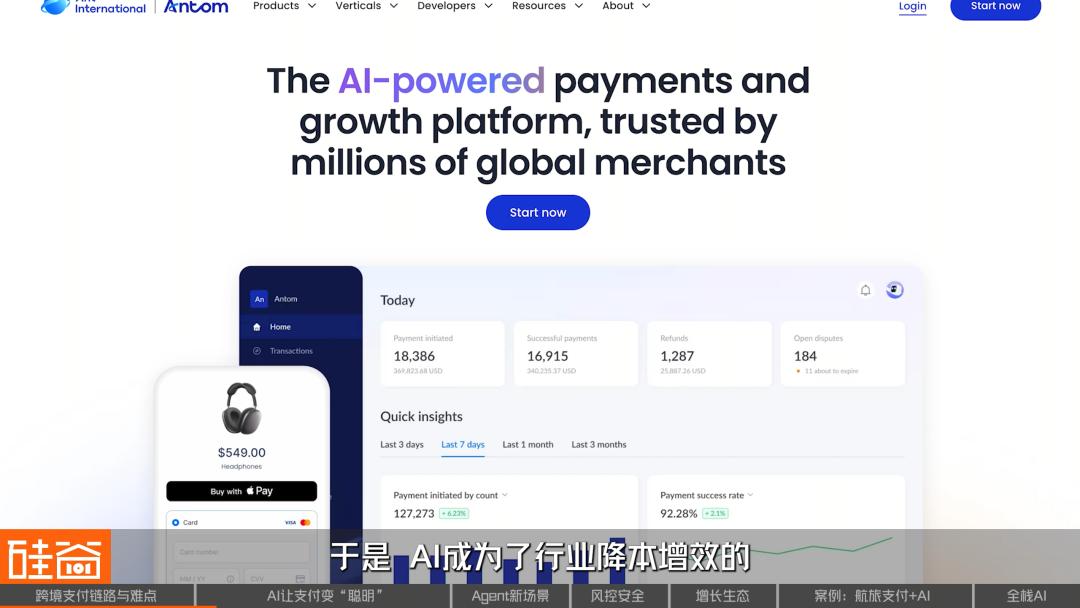
As the scale of cross-border transactions grows, the efficiency pressure of these tasks continues to increase, and the method of relying solely on manpower can no longer meet the demand. Therefore, AI has become a common exploration direction for the payment industry to reduce costs and increase efficiency. Leading payment institutions have begun to apply AI to links such as transaction decision-making, risk control and operation.
At the VOYAGE2026 event held by Ant International in Shanghai, specific practices of the payment industry using AI to solve related problems were also demonstrated.
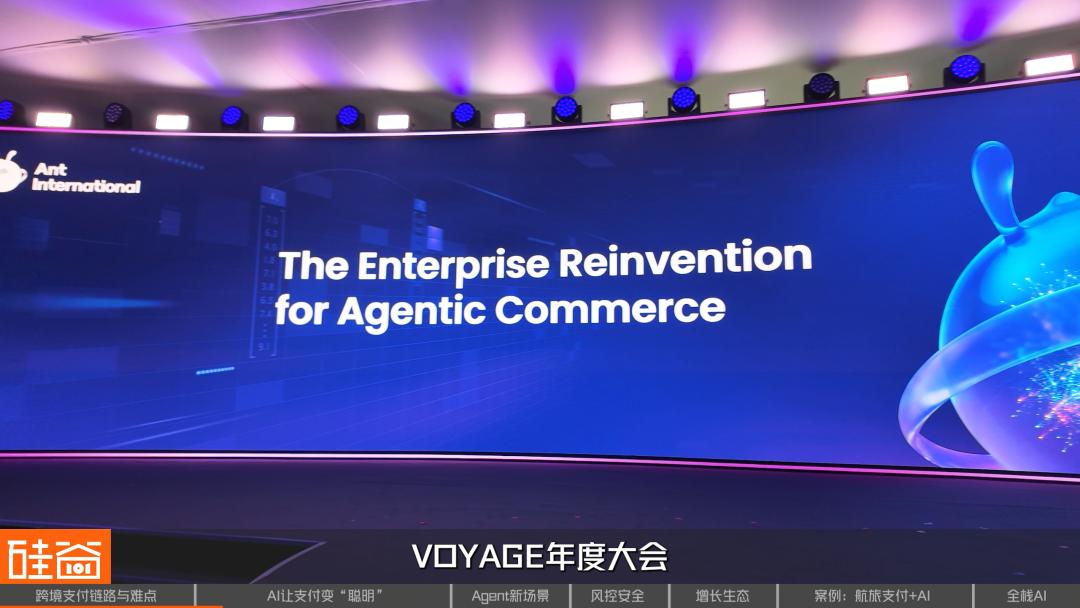
Antom is a platform under Ant International that is mainly responsible for merchants' cross-border payment business, and has been providing payment services for global merchants since 2023. In this Antom demonstration, the Antom Autopilot agent embodies the transformation of AI to the payment service process: from merchant onboarding and system integration, to transaction risk control, chargeback handling, reconciliation and new market expansion, AI has participated in multiple links of payment services.
We will explain the specific operation mode of this agent through several typical scenarios below.
The first is new market research. Before entering a new market, enterprises need to first understand "how locals make payments", for example, learn about whether local consumers prefer credit cards or e-wallets, as well as local regulatory systems. In the past, it might take an enterprise about 6 months to complete such research on its own, and it would take at least 2 to 4 weeks for the acquirer to provide suggestions.
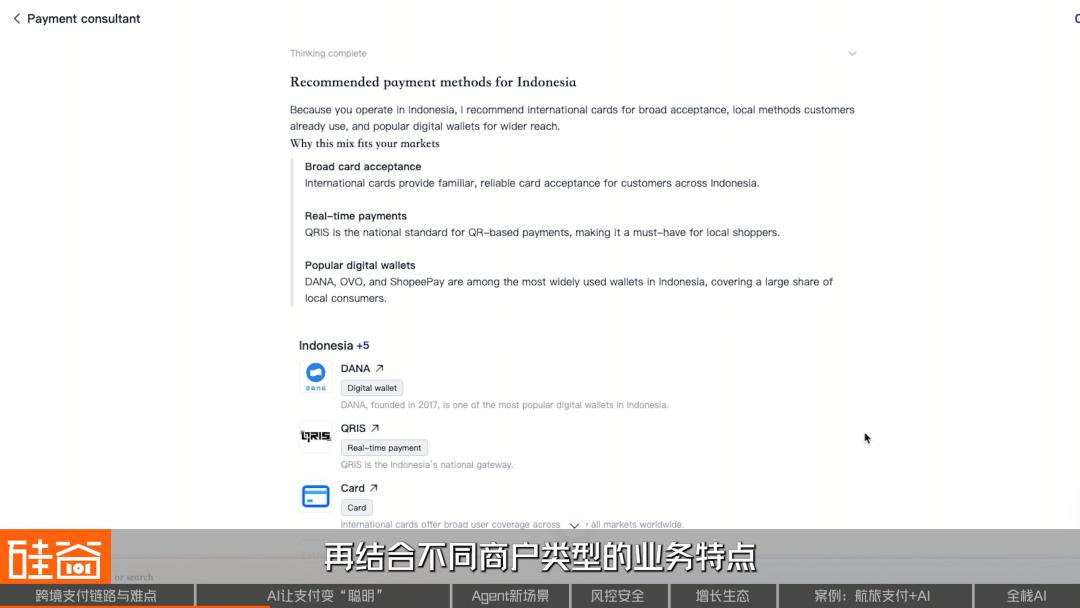
With Antom Autopilot, this process can be shortened to 5 minutes. For example, if an enterprise is preparing to enter the Indonesian market, AI will first analyze the local payment landscape and user habits, and then personally recommend a customized payment combination based on the business characteristics of different merchant types.
In the past, many systems stopped at the "recommendation" step, but Antom Autopilot also adds a simulation link: it can put the recommended payment solution into the checkout page and production environment for testing in advance, observe the possible results of real transactions, and then go online with one click after confirmation.
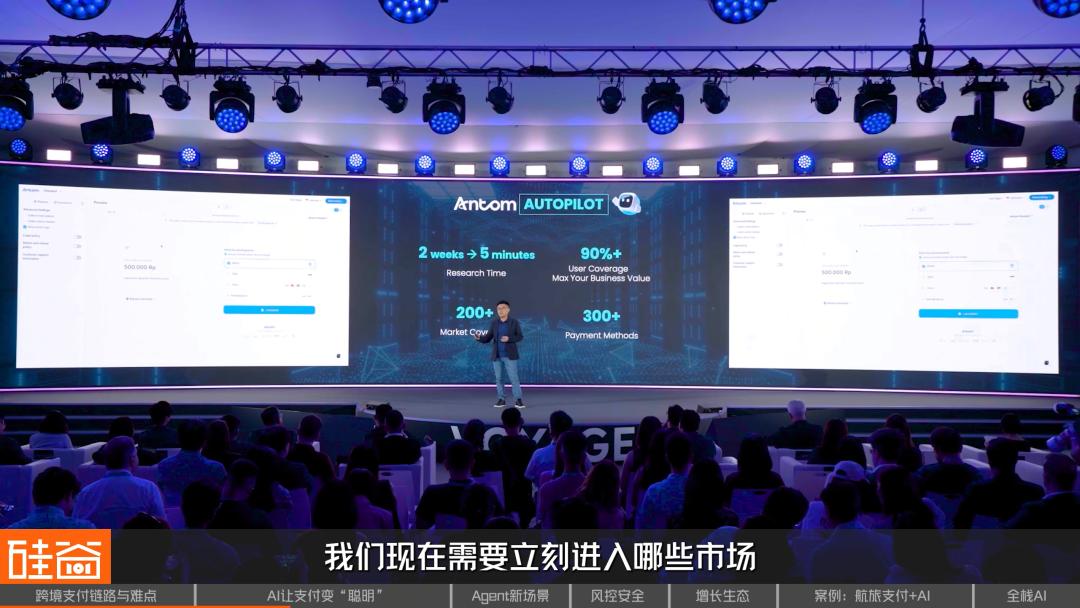
According to Antom, when the market research time is shortened from two weeks to five minutes, the research cost is also greatly reduced, and the focus of enterprise decision-making has changed accordingly. In the past, enterprises needed to consider when they could afford the research cost of a specific market; now, they can put more energy into judging which markets are worth entering immediately.
The second difficulty is security. In many overseas markets, credit cards are still a common payment method, and fraud and chargebacks are also the most troublesome problems for merchants in credit card transactions.
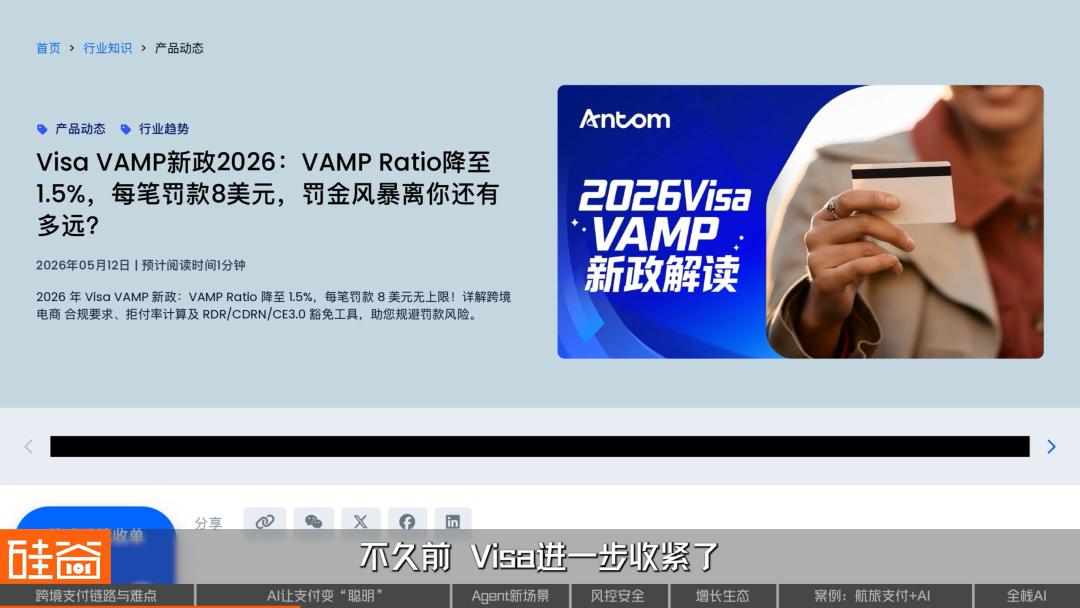
Visa recently further tightened its "Visa Acquirer Monitoring Program (VAMP)": according to the new standards, the threshold for fraudulent and disputed transactions per 1,000 transactions has been reduced from the previous 22 to 15. Once the threshold is exceeded, merchants and acquirers may face fines, and in severe cases, it may even affect payment channels.
At the same time, fraud attack methods are constantly evolving, and the difficulty of identification and interception is also increasing. For example, "stolen card testing" has now become a common problem: attackers use bots with a large number of stolen credit card information to repeatedly try to pay on the merchant platform to confirm which cards can be used, and can initiate tens of thousands of payment operations in a short period of time. After users who encounter card fraud appeal to the bank, the complaint rate of the store rises rapidly, and the chargeback rate may even increase by 50%.
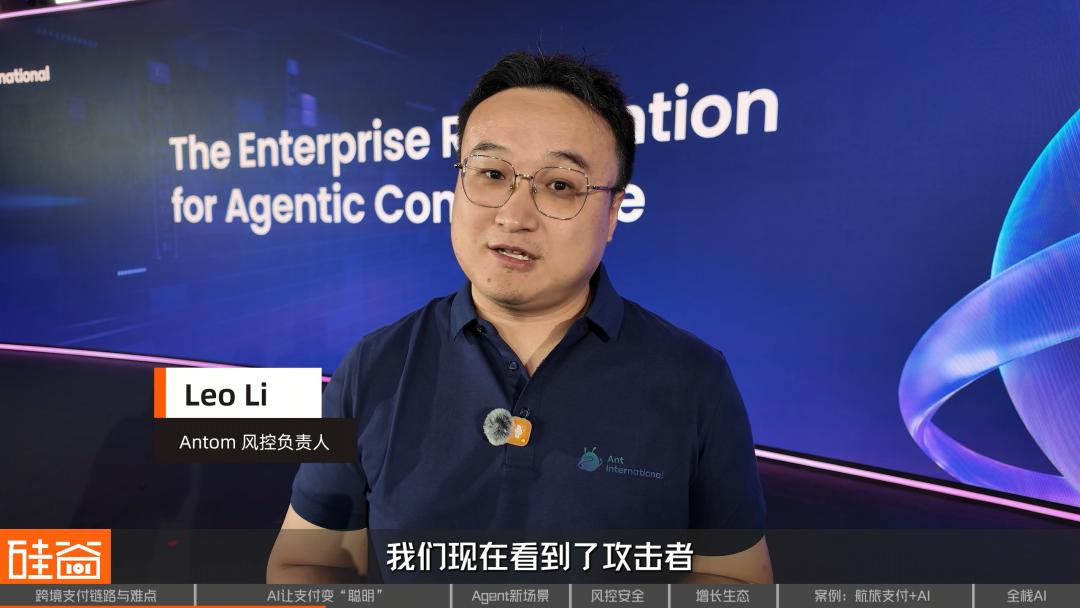
Leo Li
Head of Risk Control at Antom
In addition to traditional fraud and chargeback issues, attackers are constantly shifting to new business scenarios. Taking AI merchants as an example, more and more enterprises launch services such as post-payment and free trial periods to attract users, and many new risk attacks have emerged in such business processes, especially abusive behaviors such as benefit fraud.
Facing such problems, traditional risk control is usually mainly post-processing: waiting for the chargeback report to appear, and then manually locating the cause, the whole process may take 2 weeks to 4 months. After introducing AI, risk control can shift to real-time monitoring and early prediction.
Take Antom Autopilot as an example: AI continuously monitors transactions, automatically analyzes and generates interception rules after detecting anomalies. These rules will not go online immediately, but first "play back" through historical transactions to simulate the transactions that may be intercepted and their impact on payment success rate. After the rules go online, the system automatically evaluates the risk control effect and generates a report every 7 days, forming a closed loop of "real-time monitoring - simulation verification - launch - continuous review".
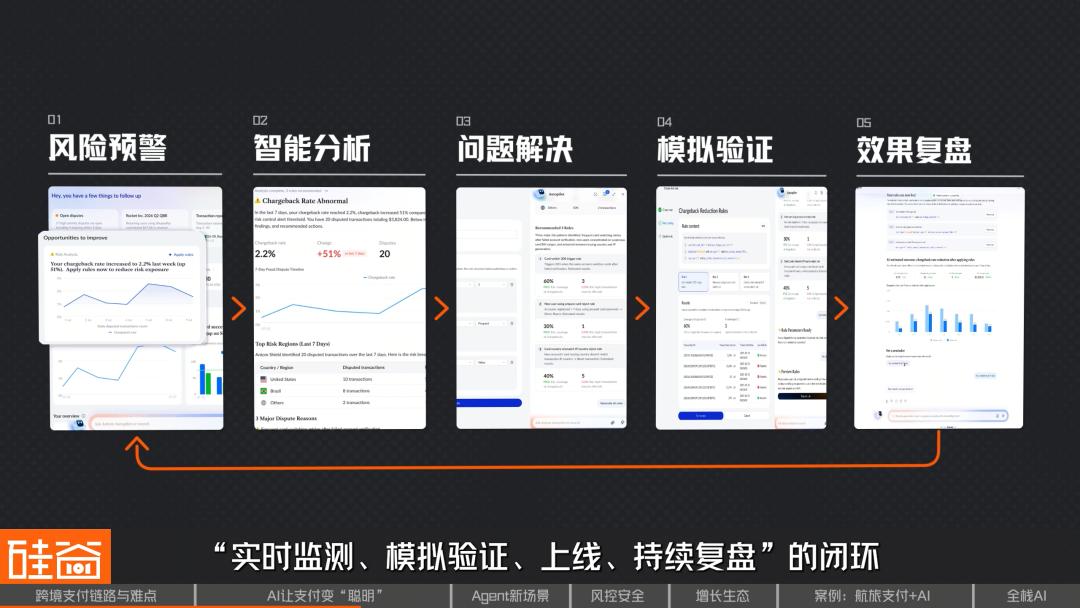
The effect of this system is also very significant. Antom said that the fraud chargeback rate of one customer dropped from 1.18% to 0.02%, and from the overall situation of Antom's merchants, fraud decreased by an average of about 55%.
Even if the chargeback has already occurred, AI can still participate in subsequent dispute handling. For example, Antom SmartDispute will provide appeal suggestions, increasing the average dispute success rate from 24.5% to 41.8%. Antom AutoDispute can automatically organize materials and assist in submitting appeals, reducing manual workload.
After the