Volkswagen is shifting to Chinese software solutions, and XPeng's architecture is expected to be exported to Europe in reverse, simply because it is much cheaper.
XPeng Motors' priority has been raised once again.
On October 27 Beijing time, citing a report by German magazine Manager Magazin, Reuters said Volkswagen is considering a radical plan that could reshape its global software strategy: introduce the electrical and electronic architecture currently only used in the Chinese market to mass-market Volkswagen models in Europe. If this plan is implemented, the role of Rivian, Volkswagen's US partner that the group previously bet heavily on, in the next-generation models of its core brands will be greatly reduced, and it will even face the risk of being marginalized.
The report states that the "China EEA" (CEA) jointly developed by Volkswagen and XPeng Motors is expected to become the technical foundation for about three-quarters of the next-generation models of the three core brands of Volkswagen, Skoda and CUPRA in the future. All three brands are currently expanding their electric vehicle product lineups in the European market.
Volkswagen declined to comment on the report.
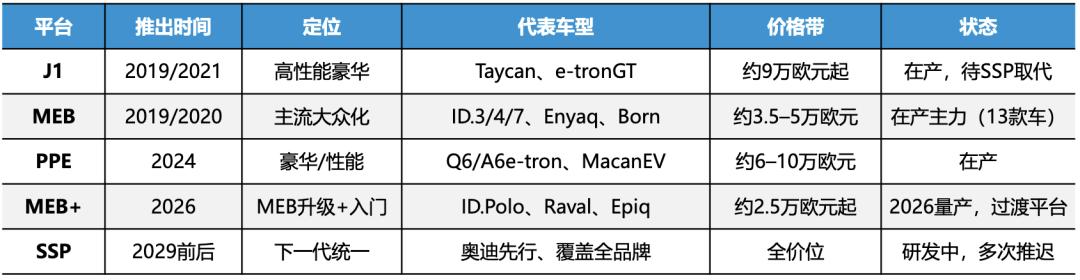
Sorting out the situation of Volkswagen's pure electric platforms. Source: Soochow Securities
Previously, repeated delays of its software subsidiary Cariad dragged down the iteration of Volkswagen's electric platforms to a certain extent. The SSP platform has been postponed from 2026 to around 2029. Volkswagen has turned to Rivian and XPeng for supplementary support, and relies on MEB+ during the transition period.
If this news is accurate, it means that the "dual-track system" carefully designed by Volkswagen before, which relies on XPeng for the Chinese market and Rivian for the Western market, is facing the most direct challenge from the brand side.
The Cost Calculation: Why the Group Prefers the "China Solution"
According to people familiar with the matter cited by Manager Magazin, Thomas Schäfer, head of the Volkswagen brand, is expected to submit this proposal to the group's management on Tuesday local time.
The core content is that Volkswagen is considering taking the CEA architecture jointly developed with XPeng Motors as the technical basis for future models of the three core brands under the group: Volkswagen, Skoda and Cupra.
The scope of this proposal is quite extensive. The report says this architecture may apply to about three-quarters of the next-generation models of the three aforementioned brands, specifically involving follow-up models of the ID. Golf and ID. Passat, as well as high-volume products such as the Skoda Enyaq. These three brands are the main force for Volkswagen to promote its electrification offensive in Europe, undertaking the scale task of diluting platform costs and maintaining market share.
Reuters also pointed out that Volkswagen has long struggled to keep up with the industry pace in software development. The group has a large number of models, covering both mass-market brands and high-end brands such as Audi and Porsche, which makes it difficult for software to be widely promoted across different models. Cariad, the group's internal software division, also faces similar difficulties.
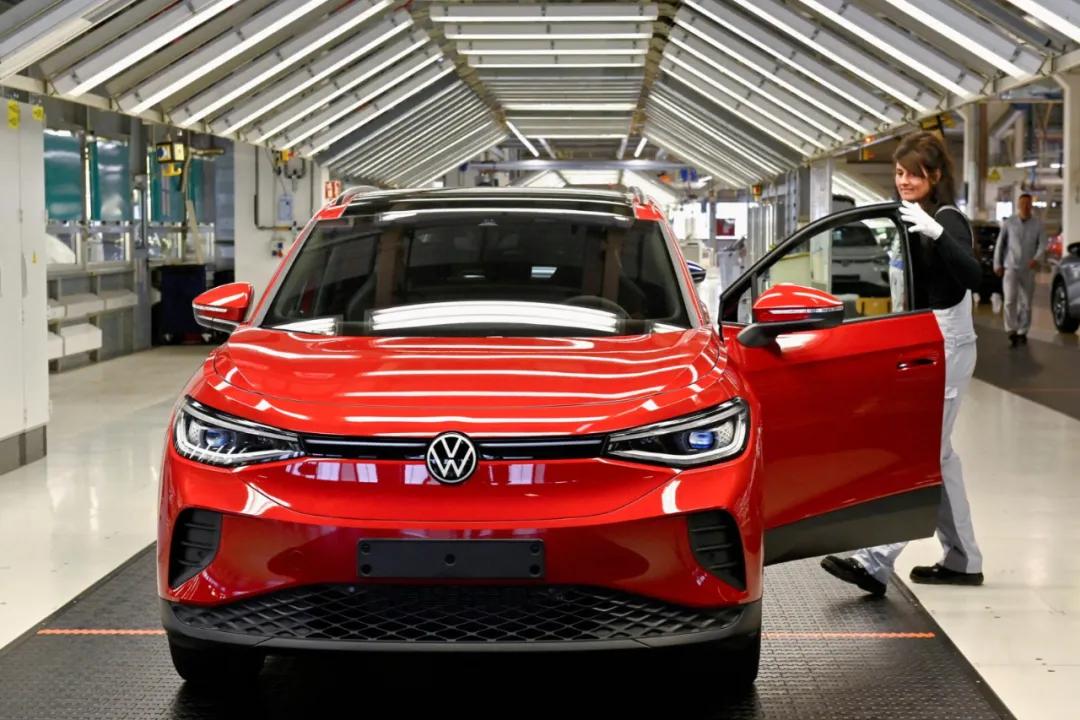
Up to now, Volkswagen's software strategy has been geographically distinct: in China, it relies on cooperation with XPeng to develop localized architecture; in Western markets, it pins its hopes on cooperation with US new EV maker Rivian. If Schäfer's proposal is approved, it means that Volkswagen will no longer give priority to relying on Rivian's technology for its high-volume models in Western markets.
Financial data is the most direct driving force for this shift.
According to Manager Magazin, the development man-hour cost of Rivian and Volkswagen's joint venture RVT in Palo Alto is about 174 euros per hour, while the man-hour cost of Volkswagen's Chinese technology company (VCTC) in Hefei is only about 60 euros, and that in Germany is 120 euros.
It is estimated that if high-volume models are switched to the CEA architecture, Volkswagen's core brand group can save 4 billion to 5 billion euros in development expenditure; even if it continues to share the fixed costs of Rivian's joint venture, the net savings can still reach about 3 billion euros.
Another set of comparisons is more intuitive: for a next-generation electric Tiguan-class model, if Rivian's software is adopted, the development cost will be about 8,000 euros higher than the China solution. For Volkswagen, whose profit margin has fallen to 2.8% and is advancing a plan to cut 20 billion euros in costs by 2030, the priority of this calculation is self-evident.
Two Sides of Cooperation, Different Contents
Volkswagen's earlier cooperation on automotive software in the automotive field is with XPeng Motors.
In July 2023, Volkswagen announced plans to invest 700 million US dollars in XPeng Motors.
At that time, XPeng Motors and Volkswagen announced that based on their respective core competitiveness, XPeng Motors' G9 model platform, intelligent cockpit and advanced assisted driving system software, they would jointly develop two B-segment pure electric vehicle models to be sold under the Volkswagen brand in the Chinese market.
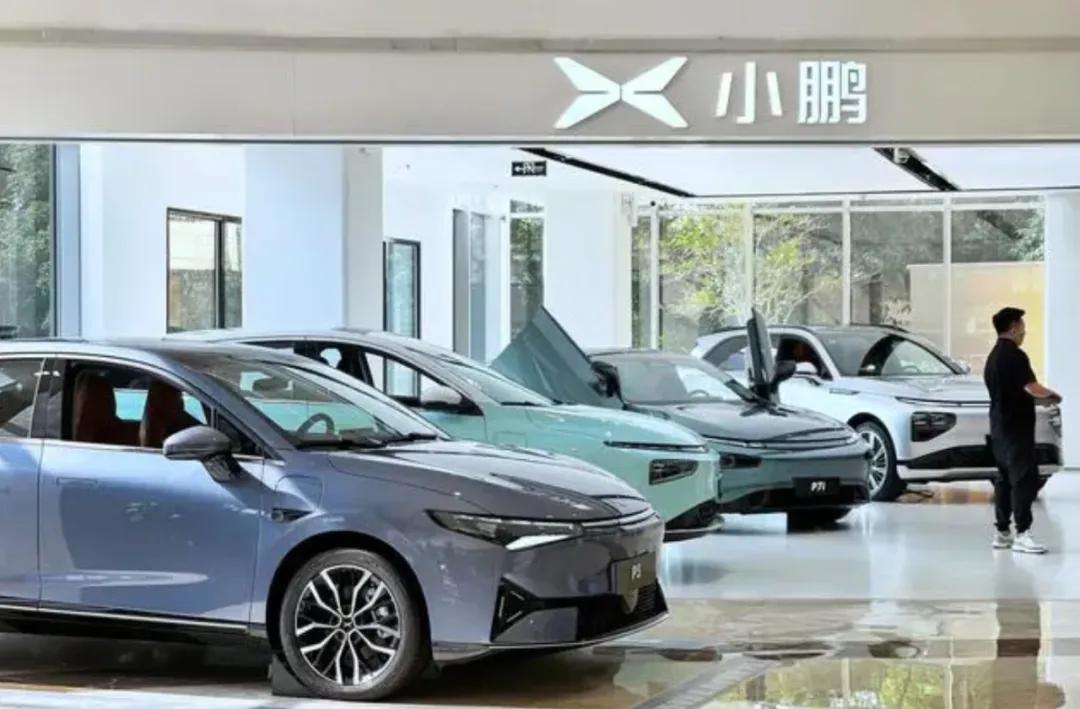
In June of the following year, possibly for the need of "risk reduction", Volkswagen Group announced that it would invest 5 billion US dollars (about 36.3 billion yuan) in US new EV maker Rivian Automotive, which is regarded as a strong rival of Tesla.
At that time, a Volkswagen spokesperson said that the software jointly developed with XPeng Motors was only for use in China, while the software jointly developed with Rivian could technically be used anywhere, but no exact decision had been made yet.
In addition, this deal also strengthened Volkswagen's ties with the US. Volkswagen plans to double its US market share by 2030 to balance China, its largest single market.
In terms of cooperation methods, the two are also slightly different. Volkswagen will not develop joint models with Rivian.
Broadly speaking, the cooperation between Volkswagen and Rivian mainly includes two parts.
First, Volkswagen and Rivian plan to set up a 50:50 joint venture to develop electric vehicle software. Volkswagen will invest 2 billion euros in the joint venture, half of which will be in place by the end of 2024, and the other half by the end of 2026. The investment will be made through direct equity and loan agreements.
Second, Volkswagen will directly invest 3 billion US dollars in Rivian, which will be evenly distributed between 2024 and 2026. The first investment will be made in 2024 through mandatory convertible notes, while the other two investments are linked to undisclosed financial and technical implementation situations in subsequent years.
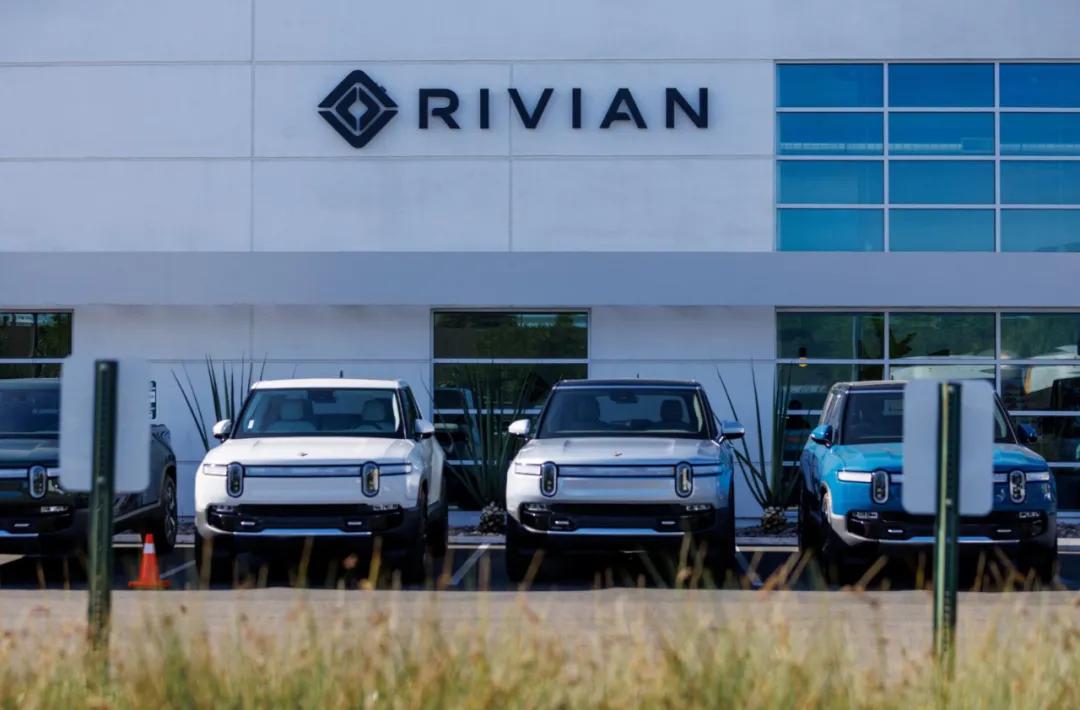
After Volkswagen's large-scale capital investment, Rivian will be able to develop more models and reduce operating costs by leveraging production volume.
Rivian also brings its intellectual property in software, which will be licensed to the joint venture for use in Rivian vehicles such as the R2, and later in the series of brands under the Volkswagen Group, including Audi, Porsche and the revived Scout brand.
According to Rivian, the cooperation between the two parties aims to focus on the design and development of software, electronic control units and related network architectures. According to the original plan, Rivian's technology will first be installed on the ID.Every1 to be launched in 2027.
Volkswagen's Software Road Is Extremely Arduous
From XPeng to Rivian, and even once rumored to cooperate with Huawei, behind it is Volkswagen's "software crisis".
Volkswagen is one of the companies that recognized the importance of software earlier, but unfortunately, the results are not significant, and software capability has always been a short board of the Volkswagen Group.
In 2020, the delivery of ID.3, the first pure electric model of the Volkswagen Group, was delayed because the software was not in place for a long time; later, due to the widespread black screen and crash of the infotainment system in severe cold, the models encountered collective complaints from car owners and frequently hit the hot search list.
There is a classic "story": after the delivery of its electric car ID.3 was delayed due to software problems in 2020, Volkswagen's engineers had to work three shifts in a "tent workshop" to perform "wired OTA" on about 12,000 new cars with laptops to fix software bugs.
After learning a painful lesson.
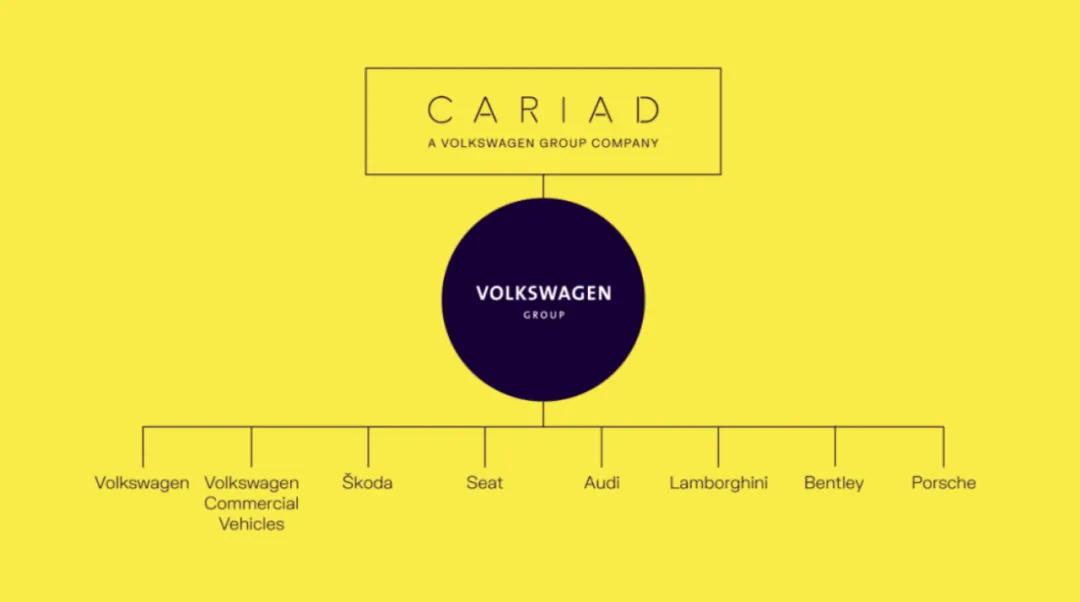
The Volkswagen Group established automotive software company CARIAD in 2020 and made it operate independently in early 2021.
In July of the same year, the Volkswagen Group released the "2030 NEW AUTO" strategy, proposing to accelerate the transformation into a software-driven mobility service provider.
Among them, CARIAD will play an important role in Volkswagen's transformation from an automaker to an intelligent mobility service provider through software. Its main work includes: developing a new vehicle electrical and electronic architecture, the Volkswagen operating system VW.OS and the Volkswagen Automotive Cloud VW.AC. In terms of autonomous driving, CARIAD plans to develop assisted driving and advanced autonomous driving systems together with partners.
As the main architecture for all the group's vehicle products, CARIAD is working on three software platforms:
The E³ 1.1 version has been launched, which can upgrade and remotely update products on the MEB platform, and has been applied to models such as the Volkswagen ID.4, Skoda Enyaq and CUPRA Born;
In 2023, CARIAD will release the high-end software platform E³ 1.2. This platform will realize multiple functions, including a new unified infotainment stack and remote over-the-air updates for Audi and Porsche vehicles;
In 2025, CARIAD plans to launch a brand new, unified, scalable software platform and end-to-end electronic architecture: the software stack 2.0 version will include a general operating system suitable for all brand models of the group, and more importantly, it will support L4 level autonomous driving.
According to this plan, the software platform 2.0, together with the SSP (Scalable Systems Platform), will become the "soul and body" of all models under the Volkswagen Group. That is: in 2025, the Volkswagen Group will be completely reborn, and it will not only open up a brand new ecosystem, but also open up new business models.
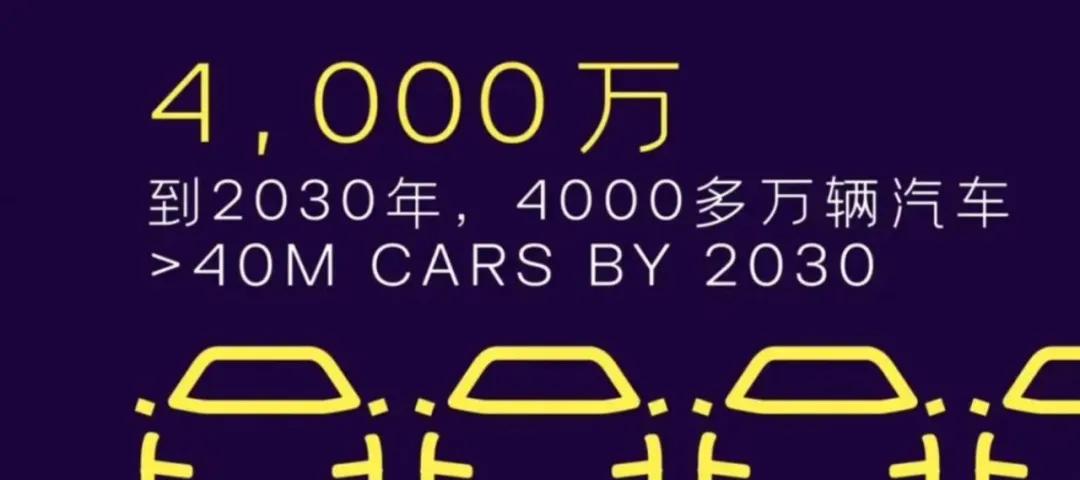
At present, CARIAD's R&D speed is far behind the schedule, which has repeatedly delayed the launch time of new cars.
In May 2022, Volkswagen's supervisory board pointed out at a meeting that it was CARIAD's delay in the E³ architecture that led to the delays of projects such as the Audi Artemis and the all-electric version of the Porsche Macan.
In May 2023, Arno Antlitz, CFO of Volkswagen, publicly stated that CARIAD may be able to bring its next-generation 2.0 platform to the market in 2027 or 2028, further postponing the release of new software.
At the same time, foreign media reported that the launch time of Trinity, the first electric vehicle project built by Volkswagen based on the SSP platform, will also be postponed to 2030.
In October of the same year, there was even news that Cariad would lay off 2,000 people.
In March 2024, Oliver Blume, CEO of the Volkswagen Group, announced the "Ten-Point Action Plan" for 2024, in which digitalization and software upgrading were taken as independent strategies, and stated that Volkswagen would also launch a platform strategy in the software field. He specially emphasized that Cariad will continue to develop its own projects, including autonomous driving software.
Most of these plans failed to be fulfilled as scheduled later: the implementation of E³ 1.2 was repeatedly delayed, and the combination of software stack 2.0 and the SSP platform was postponed to around 2029.
Obviously, as a top global automaker with leading sales for a long time, the Volkswagen Group still wants to maintain its global advantages in the next automotive era. But it is not easy.
If Volkswagen's management meeting on Tuesday finally approves the latest plan, it means that the German giant, after betting billions of dollars in the US, has finally chosen a Chinese technical solution for the core products in its home market.
For Rivian, losing the high-volume models of Volkswagen's core brands as carriers will lead to a reassessment of the commercial prospects and strategic weight of its joint venture with Volkswagen.
Of course, obstacles still exist. Chinese software needs to adapt to Europe's cybersecurity and approval standards, and geopolitical factors also mean that this solution can hardly enter the US market. The final decision rests with Oliver Blume.
Volkswagen has taken many detours on its software road. This time, it is not known whether it can make the right choice.