Anthropic has found a solution to the Kimi quota issue
After the release of K3.1 Pro, in response to multiple user reports that the quota was being consumed far too quickly, Moonshot AI issued an urgent announcement stating that "the problem lies with us, and we should have fixed it much earlier". While compensating users with additional quota, Moonshot AI also stated that it would "reduce unnecessary sub-Agent calls and output length".
Just two days before the model was launched, Anthropic published an article titled Building agents: When to fold subagents into your main agent loop, which focuses exactly on the topic of sub-Agents.
Anthropic's conclusion is that after comparing the Claude deployments of multiple enterprises, it found that an Agent equipped with dedicated skills outperforms the "division of labor among a group of sub-Agents", and the cost and latency for a single task are usually lower. Most critically, the token consumption of this single Agent is far lower than that of a group of sub-Agents.
The concept of sub-Agent is essentially a "patch" developed by manufacturers during the period when model capabilities were insufficient, to enable models to complete more tasks.
In terms of task completion rate, multiple sub-Agents did far outperform the single Agent of that era. The tradeoff was that token consumption surged, making the model far more expensive to run.
Anthropic states that as models grow more powerful and their context windows become longer, this "patch" can no longer improve capabilities, and instead has become a "burden".
What Did Anthropic's Article Cover
Anthropic argues that for the vast majority of tasks, you do not need that many sub-Agents at all: all you need is a single Agent, a single model, a single conversation history, and a single loop.
The model works repeatedly in one loop, and can issue a batch of tool calls in each round. The results are directly returned to this model, which then decides what to do next.
For example, to cook a dish in a restaurant kitchen, you need to go through the full process: preparing ingredients, washing vegetables, cutting vegetables, cooking, and finally plating and serving the dish.
In the old division of labor model, you would assign separate people to wash vegetables, cut vegetables, cook, and plate the dish, each with their own task list. The problem is that each person's task list is passed down from the previous person: for example, the person cutting vegetables receives their task list from the person who washed the vegetables.
If the dish turns out too salty when served at the table, it is very difficult to pinpoint which step went wrong: it could be that the chef added too much salt, or that the vegetables were not cleaned properly.
The advantage of a single Agent is that it does not need to explain "what flavor I want" to anyone at the start of each round. It handles the entire process of making the dish itself, and has tasted the food to adjust the salt level.
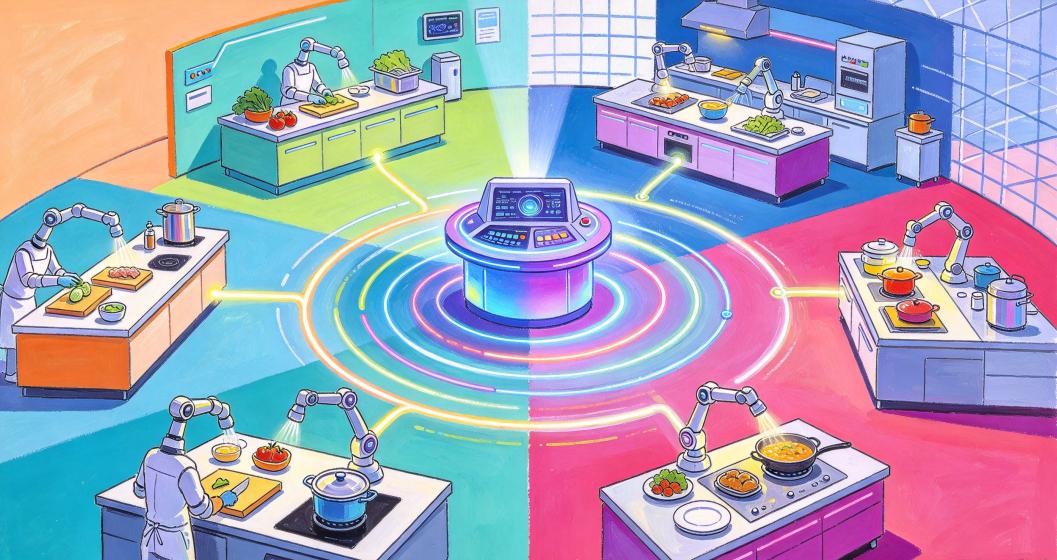
The article outlines three downsides of sub-Agents.
The first is token compounding.
Every additional sub-Agent in a task adds an extra layer of branching, which increases total costs. The token consumption of a multi-Agent system is approximately 15 times that of a regular conversation.
Crucially, this 15x increase is not spent on "thinking", but on "remembering".
Each sub-Agent has to re-establish its own identity, rules, tool list and relevant context, then compress all its outputs into a summary to pass back to the main Agent. This causes the main Agent to read the same set of materials over and over again.
The second downside is information attenuation.
Every time information is passed between different sub-Agents, its fidelity drops by one level. By the time it reaches the later sub-Agents, the information they receive may no longer match the original initial requirements.
In its 2025 article Don't Build Multi-Agents, Cognition described a scenario where two sub-Agents were tasked with recreating the game Flappy Bird separately: one was responsible for building the background, and the other for building the bird character. The end result was that the background made by the first sub-Agent looked like Super Mario, and the bird made by the second sub-Agent did not look anything like a game asset.
The third downside is personality fragmentation.
Although multiple sub-Agents communicate with each other within the system, different sub-Agents have drastically different output styles due to different prompts, while users only interact with a single entry point.
Anthropic gives an example in the article: a company had more than a dozen dedicated sub-Agents in its client, and the company reported that these sub-Agents made it "extremely difficult to maintain a consistent brand messaging standard". Additionally, users always had to wait for the slowest sub-Agent to finish outputting before they could receive a response.
That said, Anthropic does not argue that sub-Agents should be eliminated entirely. Instead, they should be loaded on demand as Skills.
Each sub-Agent carries a variety of specific knowledge with it, such as the knife skills for cutting vegetables, or the heat control skills for cooking. When these skills are needed, they are called up, and they are put back after the corresponding stage is completed.
The effect of this approach is measurable.
Anthropic mentions in the article that with supporting tools, this method of converting sub-Agents into Skills can eliminate more than 80% of the system prompts.
This instantly cleans up the previously bloated prompts that interfered with model judgment, freeing up a large amount of context space for the task itself.
Do We Still Need Sub-Agents At All?
Sub-Agents were essentially an engineering compromise at the time of their inception.
Andrej Karpathy, who was still working at OpenAI at the time, once posted a tweet roughly stating that GPT is not aware that it has a context limit. When executing tasks, it easily fills up the entire context window, which leads to task failure.
Therefore, a method had to be developed to split tasks, so that the model could complete them step by step.
At the end of March 2023, AutoGPT and BabyAGI launched two experimental projects. The core mechanism of both projects was to use one Agent to split large goals into multiple to-do lists, assign tasks to itself, and execute them on its own.
These projects proved that the loop can function as long as the model decides its own next step. However, they also exposed a critical flaw: if there is no reliable verification step in the loop, errors will self-amplify within the loop.
An Agent might say "I'm going to look up this company's financial report", and even if it retrieves the wrong report, it will continue to reason based on the incorrect information, and finally return a seemingly detailed but completely nonsensical result. After that, it will keep spinning in circles, making more and more mistakes.
From the second half of 2023 to 2024, the industry's solution was to build a division of labor that mimics a real company.
For example, MetaGPT divides the model into four roles: product manager, architect, engineer, and tester.
If you input the request "build a Snake game with a leaderboard", it will follow the workflow layer by layer by role. First, the "product manager" writes the requirement document, then the "architect" translates the document into system designs and interfaces, then the "engineer" writes the code according to the interfaces, and finally the "tester" identifies bugs. The complete program is generated through this process.
At that time, the idea behind this approach was very straightforward: if a single model tends to deviate from the correct path, letting several models supervise each other would help avoid that, which was the prototype of the sub-Agent system.
Essentially, sub-Agents are "using architecture to simulate a wider, more stable machine with larger memory".
In addition to the limited context window, Anthropic also noted in the article that model reliability is also limited: the longer the chain of reasoning, the more prone it is to crash. Furthermore, models can only work in a single thread, and cannot think in parallel.
Anthropic states that their motivation for building sub-Agents in 2024 was to solve these three problems: context isolation, which prevents the main context from being polluted by massive intermediate outputs, effectively expanding the context window; assigning different tools to different tasks, which prevents a crash at one point in the chain from affecting the entire task; and parallel processing, which allows multiple independent threads to advance at the same time.
Anthropic believes that sub-Agents can be regarded as a type of "patch" for models. However, all these patches come with token costs.
Over the past two years, most of the costs have been paid by developers and enterprises that use APIs, with clear, calculable pricing. If you spend an extra 10 cents on tokens, your bill will increase by exactly 10 cents, with full transparency.
With the growing popularity of consumer subscription plans, Anthropic says it is time for a change.
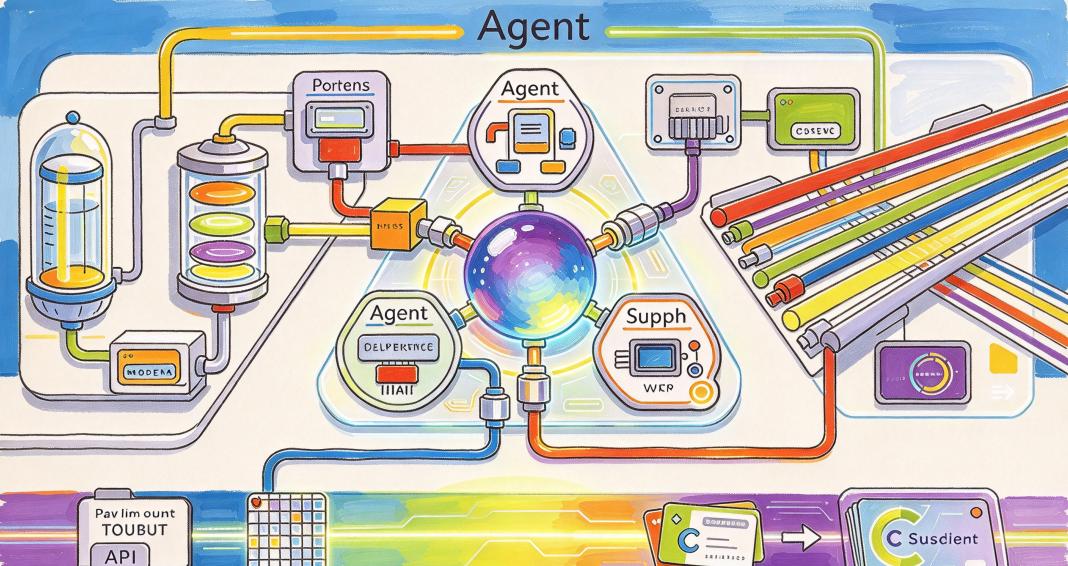
Monthly quota is a black box. Users only know "how much quota I have left this month", and have no idea "how much quota these sub-Agents have consumed in this single conversation".
Subscription users judge their quota usage based on "how many tasks I have completed", but the system calculates consumption based on "how many times the model was called, how many branches were opened, and how many times the files were read".
Therefore, Anthropic argues that as model performance and computing power gradually improve, these "patches" only deliver value in extremely complex tasks. For the vast majority of tasks, sub-Agents only consume far more tokens than necessary.
As a result, Anthropic draws the conclusion: the benefits brought by sub-Agents no longer outweigh their inherent costs.
Anthropic has even open-sourced a tool called single-agent-loop-kit for this purpose, which is specifically designed to let models execute tasks exclusively in single-Agent mode, without calling any sub-Agents.
The Bill for K3.1 Pro
Moonshot AI is the latest company to suffer losses due to opening too many sub-Agents.
On October 24, Moonshot AI launched K3.1 Pro, which boasts strong performance. It scored 65.7% on Terminal-Bench 4.0, surpassing GPT-6 Astra's 58.2%, and trailing only 0.7% behind Claude Opus 5.5's 66.4%.
However, multiple users in the community reported that the model's quota was being consumed far too quickly, with just one or two small tasks using up 5 hours of quota.
In the early hours of October 26, Moonshot AI officially announced that it would reduce unnecessary sub-Agent calls and output length.
Anyone who has worked at an internet company will find this situation very familiar.
When a new requirement comes in, you assign one product manager, one designer, one frontend developer, one backend developer, one tester, and one operations specialist to the project. Everyone has to leave a comment on the document, otherwise it looks like they are not participating. In the end, you find that a task that one person could finish in half a day ends up taking more than half a year from requirement definition to scheduling, testing and launch.
In a company, this is called organizational capability. But when applied to models, this is nothing more than token consumption.
As users of the model, they can only select the model's thinking intensity, and have no control over how many sub-Agents are activated. They only want to pay for completing the task, not for the numerous sub-Agents to "align, hold meetings, and make PPTs".
Moreover, users do not even have the opportunity to stop the process. This involves a concept called upfront failure cost.
In normal transactions, you only spend money after the task is completed. For sub-Agents, quota is consumed as soon as they are activated, even if the role of that sub-Agent is almost negligible.
To be fair, this is not a unique flaw of K3.1 Pro.
Claude users have also complained that under the $20 subscription tier, a single prompt can use up 5 hours of quota; when Opus 5.5 processes an existing codebase, it triggers the usage limit after roughly 30 minutes. Both issues are caused by Anthropic activating too many sub-Agents.
Anthropic believes this is a "structural contradiction" inherent to the "long-range Agent" product category.
When you assign it a task, it needs to look up information, read files, write, revise, and then verify the results by itself. It has to run dozens of steps, and re-read the entire context in each step, so it is very common for the process to take half an hour.
The more powerful the model is, the longer it will search, the more tools it will call, and the more self-verification rounds it will run.
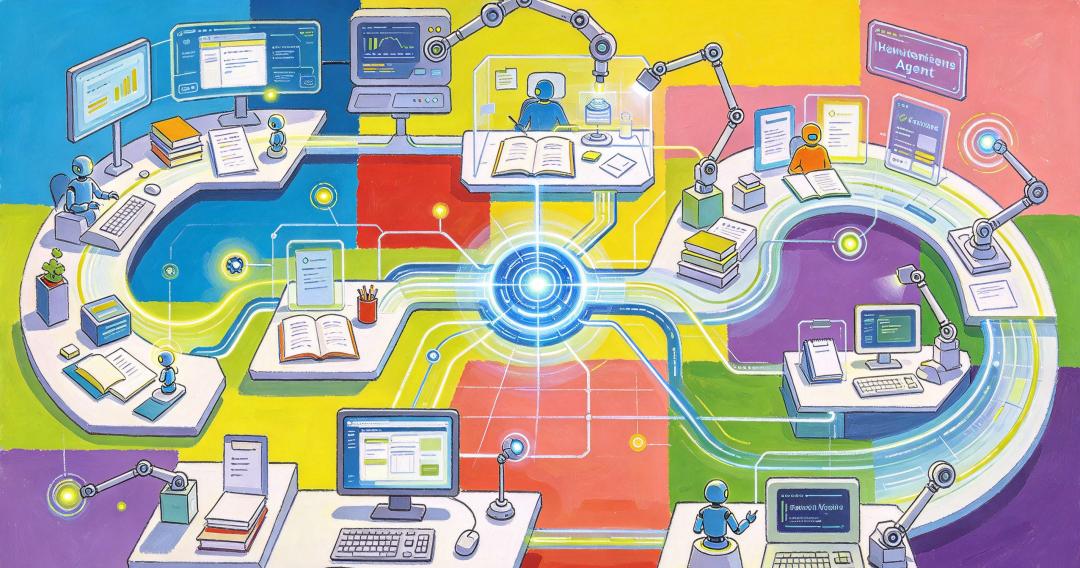
Anthropic's proposed solution is to determine on the product side "which sub-Agent calls are unnecessary" on behalf of users, then reduce the number of sub-Agents, and use a single Agent to solve the task whenever possible, instead of activating sub-Agents.
In addition, users should be allowed to set a maximum step limit, and be notified of an estimated budget range before a single task starts.
As Anthropic is approaching its public listing, reducing sub-Agent usage to cut down token consumption is also a move to please its consumer user base.
This article is from the WeChat public account "Letter AI", written by Miao Zheng, and republished with authorization from 36Kr.