Have CATL's fundamentals changed?
CATL has found itself in a rather delicate situation recently.
Recently, CATL released its 2026 Q3 financial report, with both revenue and profit continuing to grow. In the first three quarters of this year, its daily net profit exceeded 230 million yuan, showing an astonishing cash absorption capacity.
However, the day after the financial report was released, CATL's intraday drop once exceeded 10%. Prior to that, its stock price had fallen for consecutive months, dropping from the historical intraday high of 467.35 yuan in May to 227.9 yuan as of the writing date, which was almost cut in half.
The biggest concern of the market is the "de-CATL trend". Automakers hope to reduce their dependence on CATL, and second-tier battery manufacturers hope to seize more orders. Since September, a number of new energy vehicle makers including Li Auto, XPeng, Xiaomi and Leapmotor have officially announced their self-developed battery progress one after another, and reached closer cooperation with second-tier battery manufacturers such as CALB, Sunwoda and Honeycomb Energy.
CATL still leads the industry, but the market is worried about its future and has begun to vote with its feet. When the era dividend of power batteries fades away, where will CATL's next "era" start?
01 Warning lights on performance
In the third quarter, CATL delivered a mixed report card.
The good news is that CATL's revenue scale is still incredibly strong.
In the first three quarters of 2026, CATL achieved a revenue of 442.137 billion yuan, a year-on-year increase of 56.19%; the net profit attributable to shareholders reached 64.53 billion yuan, a year-on-year increase of 31.6%.
Among them, the revenue in the third quarter reached 165.221 billion yuan, a year-on-year increase of 58.58%, hitting a record high; the net profit attributable to shareholders was 21.246 billion yuan, a year-on-year increase of 14.54%.
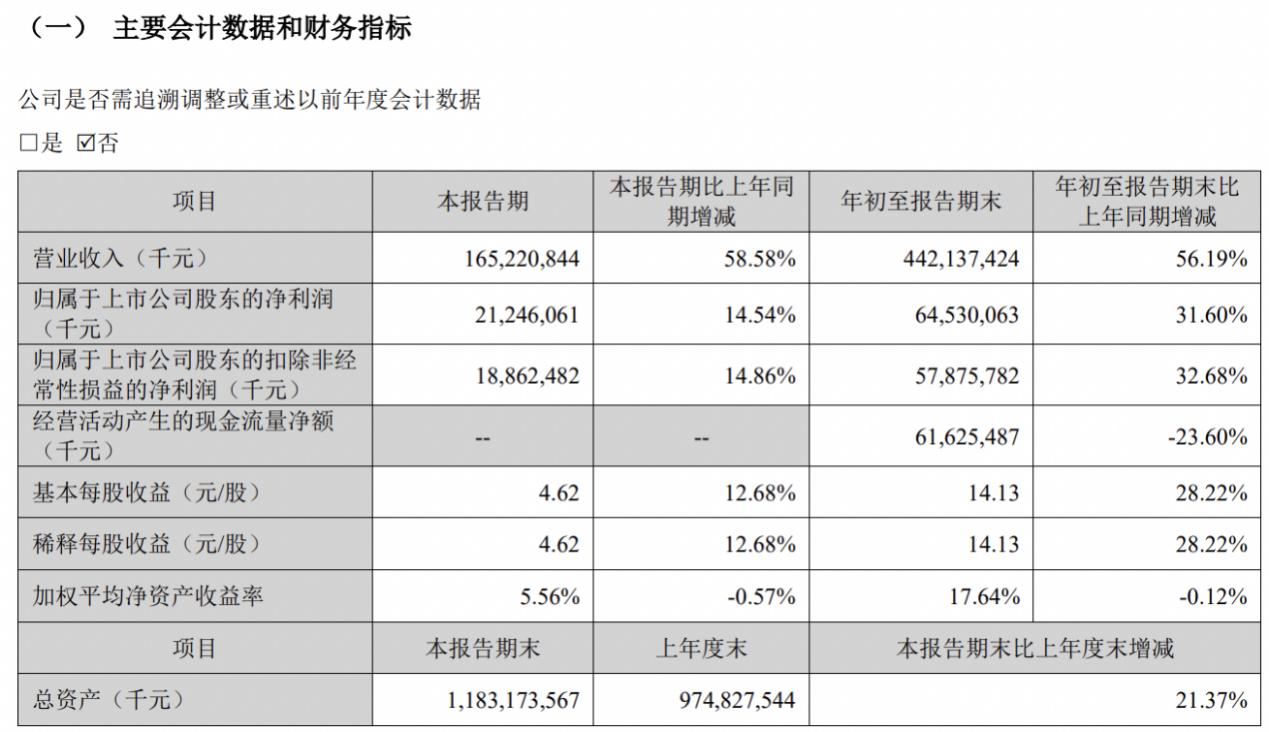
The concern is that while CATL's revenue is rising, its profit has not kept pace.
From the first to the third quarter of this year, CATL's single-quarter revenue growth rates were 52.46%, 56.9% and 58.58% respectively; however, its net profit growth rate kept sliding, reaching 48.55%, 36.4% and 14.54% respectively. The scissors gap between the company's revenue and profit growth rate has expanded from less than 4 percentage points in the first quarter to more than 44 percentage points in the third quarter.
The company's comprehensive gross profit margin also dropped all the way from 24.82% in the first quarter to 20.69% in the third quarter, and the pressure on the cost side is clearly visible.
Policy changes are the most direct influencing factor.
Starting from September 1, 2026, the consumption tax on lithium batteries has been levied, with a current tax rate of 2%, and it will be levied at 4% from September 2027; the export tax rebate for batteries has been reduced from 9% to 6% since April 1, 2026, and will be completely cancelled from January 2027.
However, the current automobile price war has reached a white-hot stage. According to data from the China Automobile Dealers Association, from January to August this year, the revenue of the automobile industry was 7.0062 trillion yuan, with a year-on-year increase of only 2.9%, while the profit dropped by 16% year-on-year.
Against this background, it is difficult for CATL to fully pass on this part of the tax cost to downstream automakers, and it may even encounter reverse price pressure from automakers on battery costs due to profit contraction.
External pressure is also reshaping CATL's product structure.
The domestic automobile market is under pressure, and the energy storage business has become the main incremental driver. CATL disclosed that the total sales of power and energy storage batteries in the third quarter exceeded 260 GWh, with energy storage accounting for about a quarter, and the sales growth rate was close to 60%, far higher than that of power batteries.
However, although the gross profit margin of CATL's energy storage business is slightly higher than that of power batteries, it is a business with low unit price, long service cycle and low profit elasticity. In the long run, its marginal contribution to profit is far lower than that of power batteries of the same volume.
The sharp drop in lithium carbonate prices is also impacting the selling price of power batteries.
Since May this year, the spot price of lithium carbonate has dropped by more than 40% cumulatively, and the battery cost has decreased. However, the drop in lithium price has led to a reduction in battery selling price, and the profit difference may not remain in the company's accounts, and may even reduce customers' stocking expectation in the fourth quarter.
In addition, CATL is also actively "increasing costs". In the third quarter, in response to industry initiatives, the company voluntarily shortened the upstream account period and increased prepayments, resulting in a 47.78% year-on-year increase in accounts receivable compared with the beginning of the year, and the inventory reached a record high of 144.77 billion yuan.
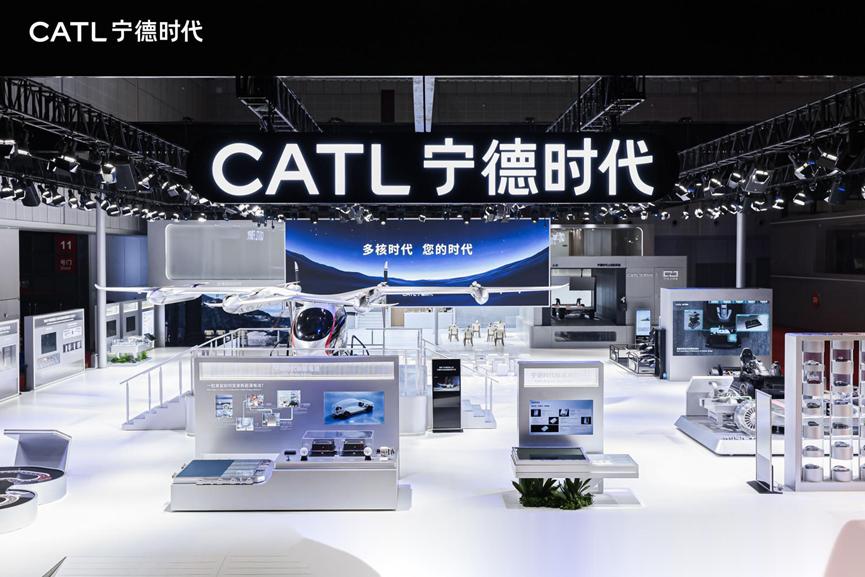
Under internal and external pressures, although CATL sold more batteries, it barely made more money.
In response, CATL said that it is mainly affected by short-term product changes and tax policies, and does not represent the long-term direction. However, the capital market may not hold the same view.
02 The truth of the "de-CATL trend"
As early as a few months ago, the capital market had already cast a "bearish vote" on CATL — "de-CATL" has changed from a slogan to a collective action of some brands.
In 2022, Zeng Qinghong, Chairman of GAC Group, said "I am working for CATL", which uncovered the undercurrent between automakers and CATL: power batteries account for 40%-60% of the total vehicle cost. Although automakers are nominally the "leaders" of the industrial chain, they are at the end of profit distribution.
This trend continues to this day. In the first half of this year, the total profit of 8 listed power battery enterprises reached 50.846 billion yuan, of which CATL alone accounted for 43.28 billion yuan, while the total profit of 23 mainstream listed automakers was only 25.1 billion yuan. According to the research report of Soochow Securities, for power batteries of the same specification, the price of CATL is usually 5%-10% higher than that of second-tier manufacturers.
But the biggest problem is not money.
CATL is not a traditional Tier 1 supplier, but more like a platform enterprise in the new energy era. It has set foot in upstream mining, downstream recycling industrial chain, and energy replenishment infrastructure, and its product scope is getting wider and wider — cells, modules, CTC and even chassis.
This not only makes it more dominant in cooperation with automakers, but also gives it C-end influence that traditional suppliers do not have at all.
For example, in the past, under CATL's direct supply model, automakers got a "gray box" like solution with very low openness. Once there was a battery shortage, automakers had to prepay, set up joint ventures and queue up to lock in production capacity. Automakers lacked the initiative in the supply chain, which was evidenced by the delayed delivery of Li Auto i6 orders last year.
However, consumers have deep trust in CATL batteries. The "2026 Global New Energy Vehicle Consumer Research Report" released by NielsenIQ in September this year shows that CATL's domestic brand trust rate is as high as 81%, and 37.1% of Chinese respondents clearly stated that if their favorite model is not equipped with CATL batteries, they will directly give up the purchase.
This has triggered an identity crisis between automakers and CATL.
Since the second half of 2021, many mainstream automakers have gradually introduced other battery suppliers.
For example, Li Auto was exclusively supplied by CATL in the early stage, and later introduced Sunwoda, Honeycomb Energy and others; after XPeng introduced CALB and EVE, CATL's installed capacity in XPeng once approached zero.
Soon, the cooperation began to move from the strategic level to the capital level: XPeng has successively invested in CALB, Sunwoda and Honeycomb Energy; in September this year, Li Auto announced to invest 2.65 billion yuan to increase capital in Sunwoda Power, becoming its second largest shareholder;
In addition, more and more automakers are beginning to strive for greater initiative in the battery field. Recently, Li Auto announced that its self-developed batteries will be fully installed on all Li Auto models; He Xiaopeng, Chairman of XPeng, said, "Starting from this year, XPeng will develop all batteries on its own."
Li Xiang, CEO of Li Auto, also mentioned in his post responding to the "de-CATL trend" that he believes the battery is not an isolated component, and it must be integrated with the whole vehicle to improve the safety and quality of the entire system.
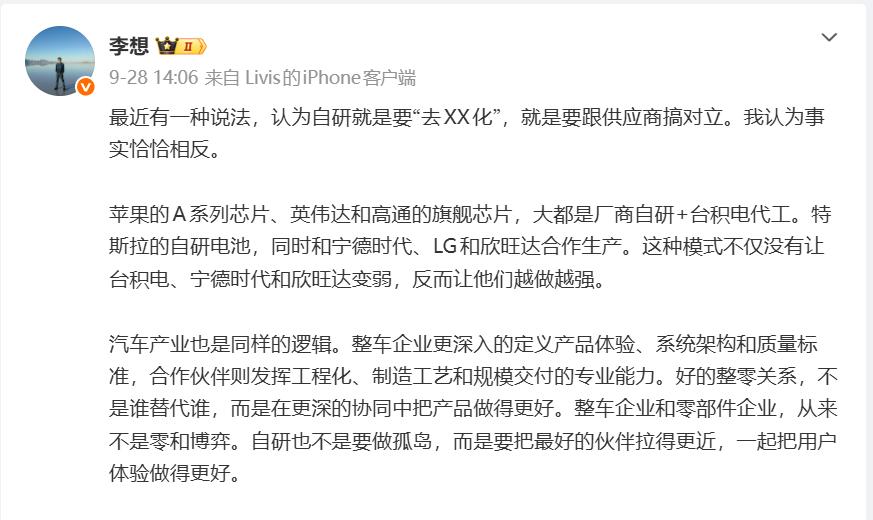
Coincidentally, the gradual convergence of cell technology has given automakers the opportunity to develop batteries independently.
Taking lithium iron phosphate cells as an example, it currently occupies 80% of the market share and is recognized as the most mature and stable battery route. The entire development and production process has high compatibility, which also makes automakers more assured to hand over cell production to second-tier battery manufacturers.
For example, Xiaomi's Longjia battery is led by Xiaomi in the design and development of the battery pack, but the core cell production is handed over to professional battery manufacturers: CALB customizes the electrochemical system, and Sunwoda is responsible for cell manufacturing.
As the battery industrial chain matures gradually, automakers begin to deeply participate in battery customization and production, and the industry will usher in a new model where automakers dominate battery definition and second-tier battery manufacturers are responsible for production. The right to speak will also be redistributed accordingly.
03 CATL shifts tracks to expand its territory
CATL's moat is still deep.
In September this year, Zeng Yuqun, Chairman of CATL, said when attending the 2026 World Power Battery Conference, "It is not difficult to make one battery. The difficulty lies in making one billion batteries with the same excellent quality."
CATL's technological leadership is not only reflected in battery technology, but also in how to control product consistency, yield stability and safety redundancy, which cannot be caught up overnight.
Taking the yield rate as an example, the research report of Soochow Securities shows that CATL's yield rate is basically 97-98%, 2-3 percentage points higher than that of second-tier battery manufacturers.
In terms of market share, CATL also continues to lead far ahead.
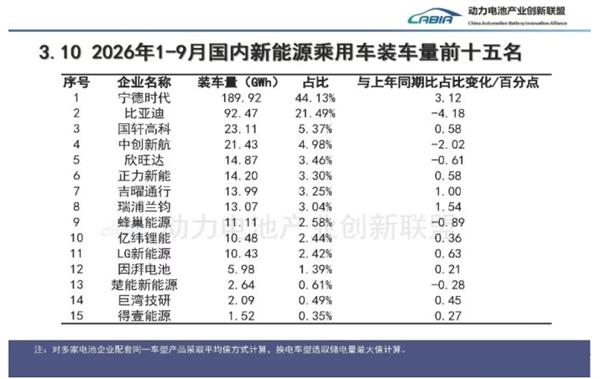
Data from China Automotive Battery Industry Innovation Alliance shows that in the ranking of installed capacity of domestic new energy passenger vehicles from January to September, CATL steadily ranks first with 189.92 GWh, accounting for 44.13%. Second-tier battery manufacturers still cannot shake CATL's position in the short term.
It is worth mentioning that the proportion of CATL's top five customers is very balanced, basically remaining in the range of 6%-9%, while the production capacity of BYD, the second largest player, is basically for internal supply, and a small number of externally supplied customers such as Xiaomi account for a very small proportion. Even if Li Auto completely switches to other suppliers, the impact on CATL will not be great.
On the other hand, CATL binds partners in new ways.
First of all, it accelerates the layout in commercial fields such as electric heavy trucks and electric vans.
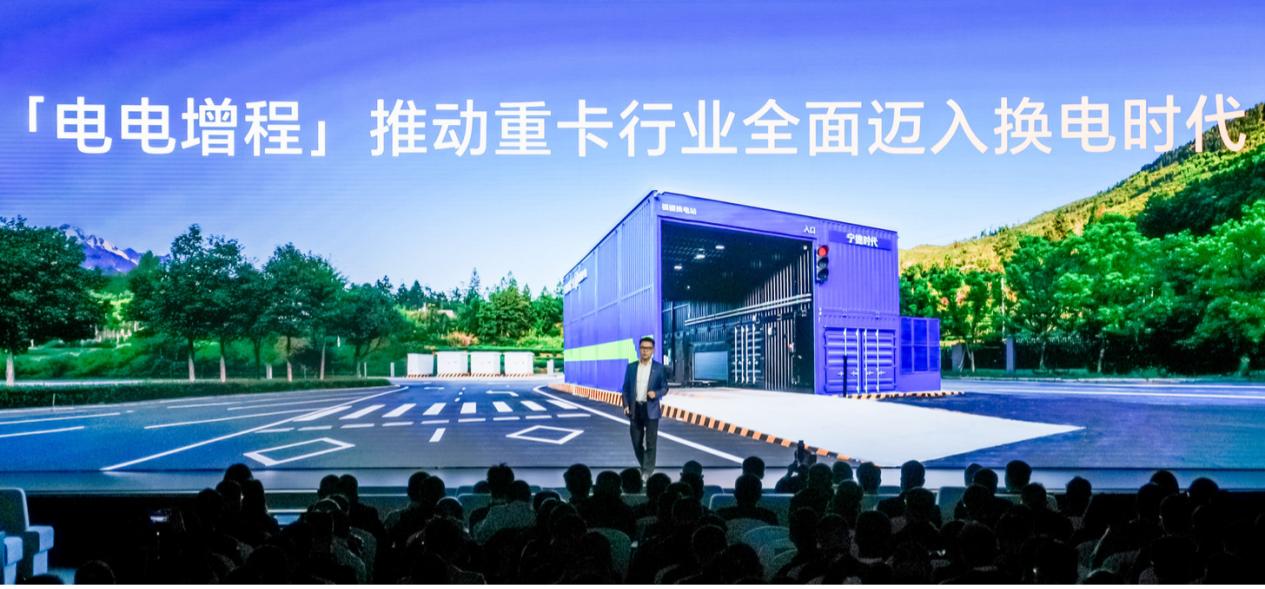
A few days ago, CATL released the "electric-electric range-extended" solution for Tianxing II heavy trucks, providing a full ecosystem solution of battery swapping for heavy trucks. Its cooperative customers include China Post, SF Express, STO Express and others, binding vehicle manufacturers and end operators into the same ecosystem to lock in demand in advance.
Secondly, it moves R&D forward and returns the right of product definition to automakers.
Several years ago, CATL has established battery factories with many mainstream automakers such as SAIC, GAC and Geely, but the early cooperation mode was more to lock in production capacity and ensure delivery;
Now, this relationship is being upgraded. For example, CATL reached in-depth cooperation with Voyah last year, exporting core technologies such as Panshi chassis and CIIC integrated intelligent chassis, and the two sides jointly plan the future vehicle platform architecture.
Finally, it expands the "battery swapping network" to shift from product binding to ecological binding.
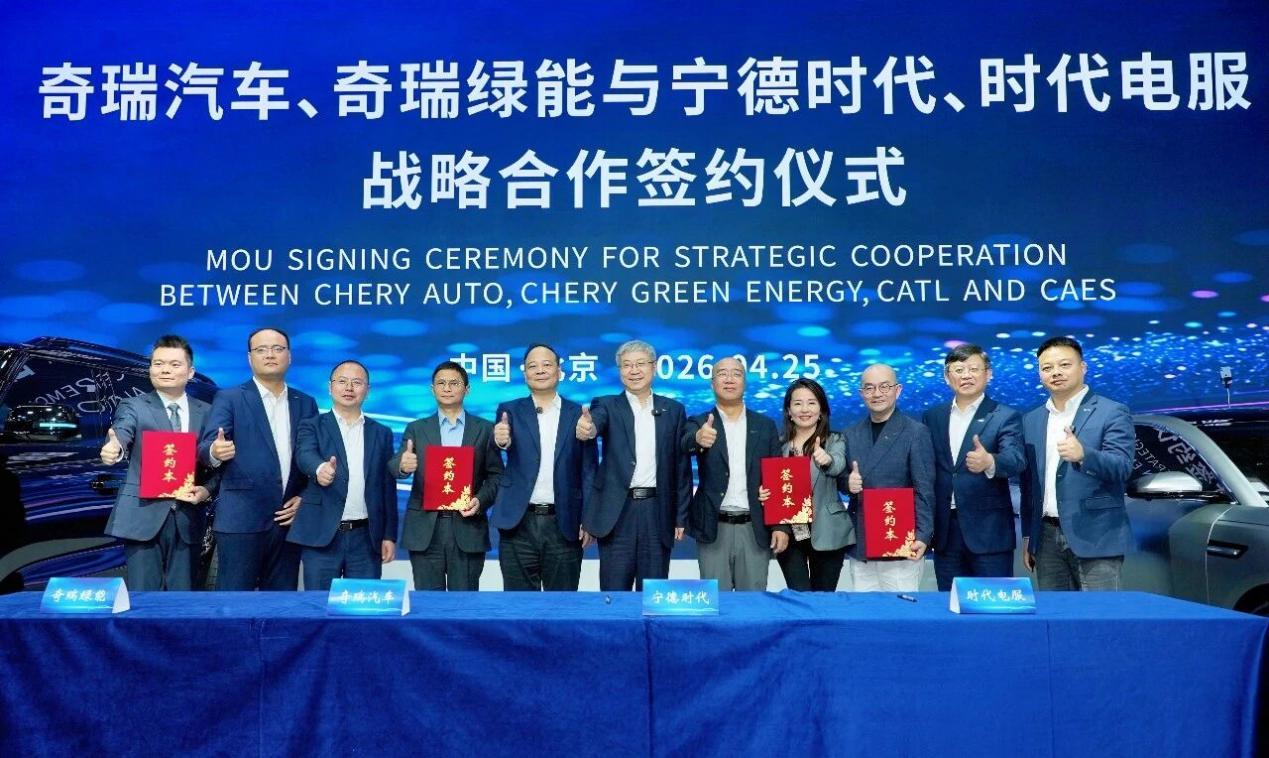
In April this year, CATL signed a strategic cooperation agreement with Chery Automobile, focusing on the shared network of "super charging + battery swapping", and the two sides also jointly built two battery joint venture projects in Wuhu and Hefei.
At present, with Chocolate Swapping and Qiji Heavy Truck Swapping as the core, CATL has jointly built a shared charging and swapping network with many automakers including Changan, GAC, Seres and Huawei's Harmony Intelligent Mobility.
CATL is laying a larger network, bringing product development, manufacturing, technology definition and charging & swapping network into the cooperation framework, using a complete set of battery swapping infrastructure to pull automakers back into its own ecosystem, shifting from "selling products" to "selling standards", so as to make itself more irreplaceable.