A fashion blogger living in a 38-square-meter rental apartment no longer wants to "put on a show of being exquisite".
With years of experience as a fashion blogger, Luo Huai maintains a familiar yet detached attitude towards the fashion industry and account operation. She regards her own industry and career as objects of practice and observation. "Whether you are performing refinement, performing an upper-class life, or performing sloppiness, performing a distressed life, it is all performance in essence."
When working in the fashion circle, Luo Huai often heard a word, vibe.
This is a word extremely difficult to translate into Chinese. Atmosphere, temperament, feeling, none of these translations seem accurate enough. When brands screen cooperating bloggers, they may reject a person directly with just one sentence "this person's vibe is not right". When a photographer picks one photo out of hundreds, he will say that the vibe of this one is particularly right.
Luo Huai looked at it over and over, but could not see the difference at all, and the other party could not explain it clearly either.
Luo Huai was once very confused about this. She found that many evaluations in the fashion circle have corresponding improvement methods: if your appearance is not good enough, you can adjust your makeup; if your outfit is not suitable, you can match it again. Only vibe is something that no one knows how to work on. "When he says your vibe is not right, what exactly is wrong?"
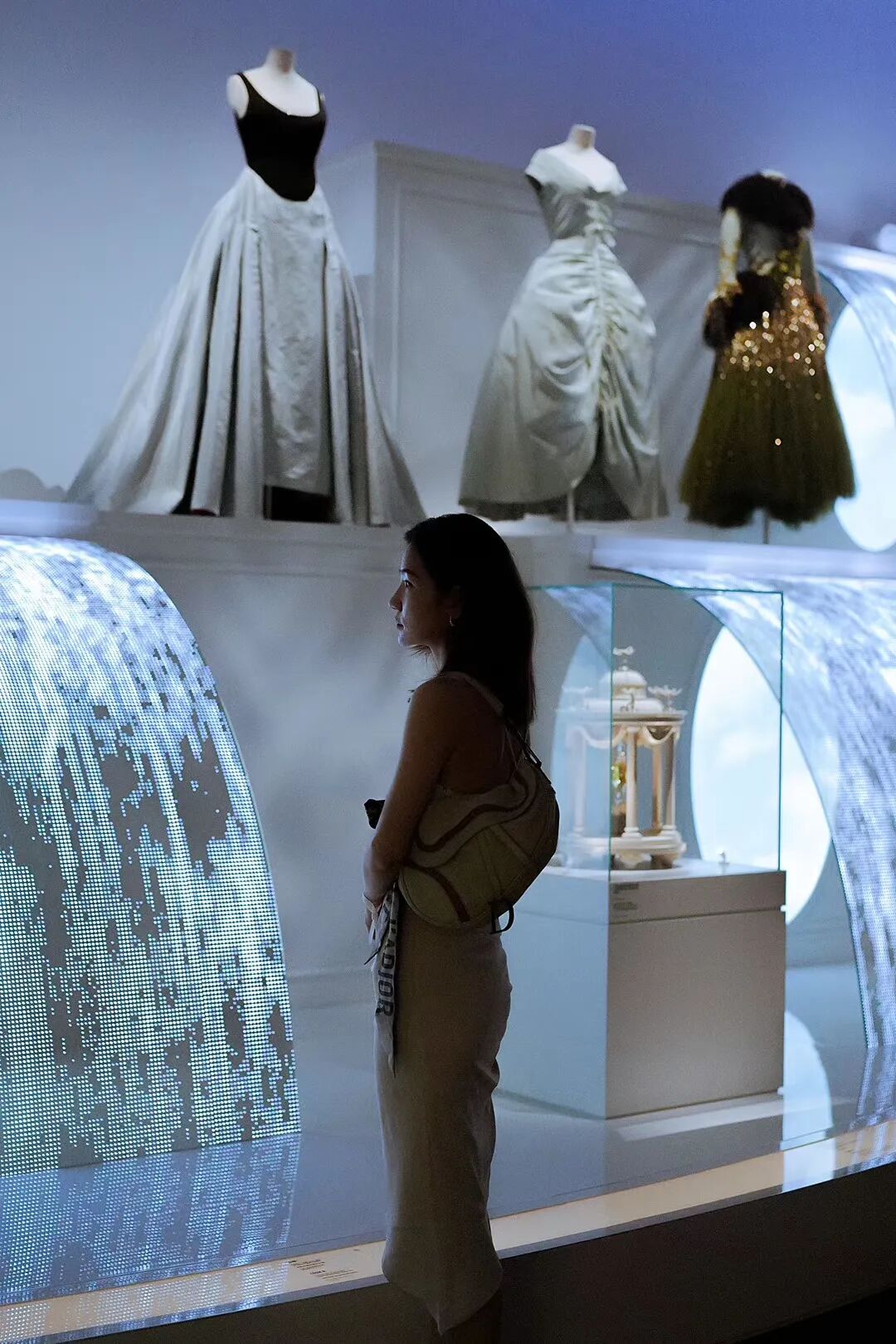
She once tried very hard to make herself have the vibe recognized by the fashion circle. To attend a Dior event, Luo Huai wore a designer dress that cost nearly half a month's salary, and squeezed into a stuffy ride-hailing car in Shanghai. The dress was too tight, and her back was soaked with sweat, and she had already drunk her third iced Americano of the day. The friend traveling with her did not forget to remind her not to get the dress dirty, after all, she planned to resell it after the event.
Seeing the huge brand billboard getting closer and closer, the two were still anxious about their admission qualifications. She could not help asking: "What if we are still found out?" Her friend replied: "Then we will run away immediately!"
(Photo provided by the interviewee)
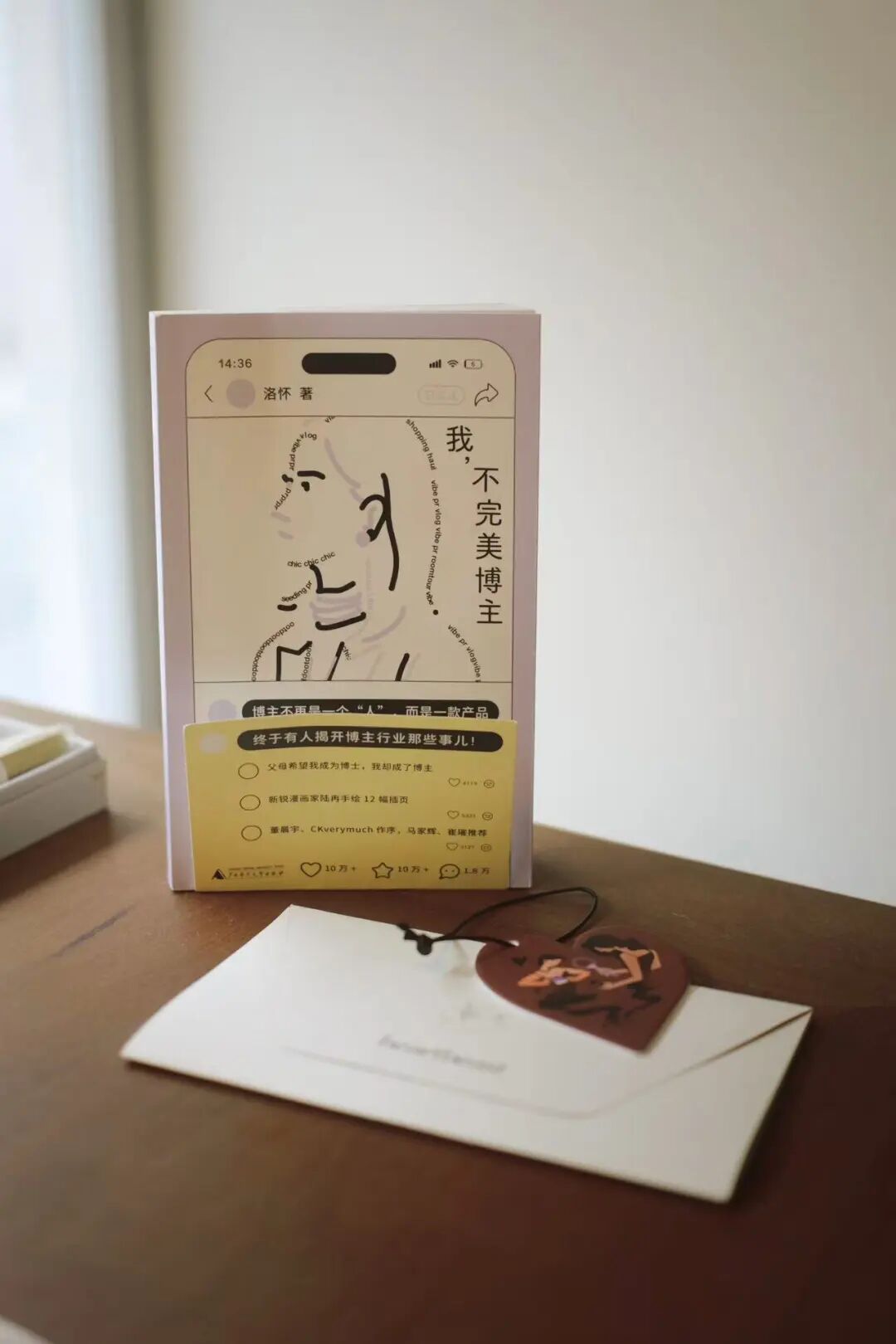
This rather embarrassing experience was later written into her new book *I, the Imperfect Blogger*. Luo Huai has worked in the fashion industry for many years. Attending brand events, shooting street style outfits, and going in and out of high-end restaurants are part of her job. In front of the camera, she is exquisite and decent, and her life seems to be filled with coffee and luxury goods. Outside the camera, she needs to calculate the cost of every appearance, and even attending events is like completing an adventure.
Now when talking about that experience, Luo Huai can already laugh at the absurdity in it. She is the host of the podcast *Wild at Heart*, and she and her partner CK call themselves "urban savages". They published their first book *I, the Imperfect Blogger* in 2026. Compared with the carefully polished fashion photos in the past, more people get to know her through her laughter, complaints and outspoken views in the podcast.
Over the years, the Internet seems to have new requirements for what kind of vibe a person should present. In the past, exquisite sense of premium was popular, but now people prefer authenticity, candor and the sense of being a real living person. Luo Huai found that the new standard is also not easy to meet. She once tried to show her life in a small 38-square-meter house, and this content was more popular than those delicate fashion photos in the past. But when distress also becomes a style that attracts traffic, how can creators continue to produce their own distress?
(Photo provided by the interviewee)
"I think what runs through my entire career as a blogger is the desire to be seen, to be seen, and the relationship after being seen." Luo Huai said.
The changes she experienced happened exactly in the most lively decade of China's Internet content industry. From the golden age of official accounts, to the commercialization of fashion bloggers, to the podcast era where everyone can tell their own stories to the microphone, the platforms are constantly changing, and the roles that creators need to play are also changing accordingly. Luo Huai once tried very hard to adapt to every change, until one day, she found that she no longer knew how to continue.
"It is all performance in essence"
Luo Huai's interest in fashion started very early.
She grew up in Hangzhou. Her family was not wealthy when she was young, but she always paid attention to beautiful clothes and expensive products, and realized very early that in addition to meeting the needs of life, consumer goods also implicitly distinguish the status of different people.
Later, when she studied anthropology, she was exposed to Veblen and Bourdieu's theories on consumption, taste and class. She got a complete set of methods to explain these phenomena, but she did not lose her yearning for beautiful things because of that.
"When you have countless theoretical reserves, you can be merciless when criticizing others, and spare no effort when supporting yourself." She teased herself in the book.
After graduating from graduate school, Luo Huai returned to Hangzhou and entered the new media industry. It was a period when WeChat official accounts were expanding rapidly, and content entrepreneurship still had a certain exciting wild vibe. Young people had the opportunity to get a lot of attention with just one hit article, and the success cases on the platform constantly refreshed people's imagination of new media.
(Photo provided by the interviewee)
She did local lifestyle content, which gave her the opportunity to access fashion shows and brand events. The media identity brought her some treatments that were usually hard to get: even without sufficient consumption power, she could enter the world composed of expensive goods.
"Because you are a media, you can attend events for bags and watches worth tens of thousands of yuan." Luo Huai thought at that time that this kind of life "seemed very awesome".
Later, she went to Beijing and joined the most popular media team at that time, responsible for operating a fashion account. What really shocked her was the first time she learned about the commercial income of top bloggers.
"You might earn my whole year's salary with just one advertisement, I was extremely shocked." In her opinion, the work of a blogger did not seem as complicated as imagined; changing a few sets of clothes and taking five or six groups of photos could complete a brand cooperation. Compared with emotional accounts that were often involved in controversies due to their views, fashion content seemed much more relaxed, and people in the comment area usually discussed whether the clothes looked good and whether the makeup was beautiful.
She admitted that making money was one of the reasons that attracted her to enter this industry, and more importantly, there was a long-suppressed desire for fashion. "I had no chance before, and now the chance comes, so I want to have a try."
But Luo Huai soon found that the successful model she saw behind the scenes was not easy to replicate. Those seemingly casually taken photos were backed by resources, family conditions and aesthetic capabilities accumulated by bloggers for many years. She later described that others had already stood at the 100-point position and continued to move forward, but she had to start from zero or even negative points.
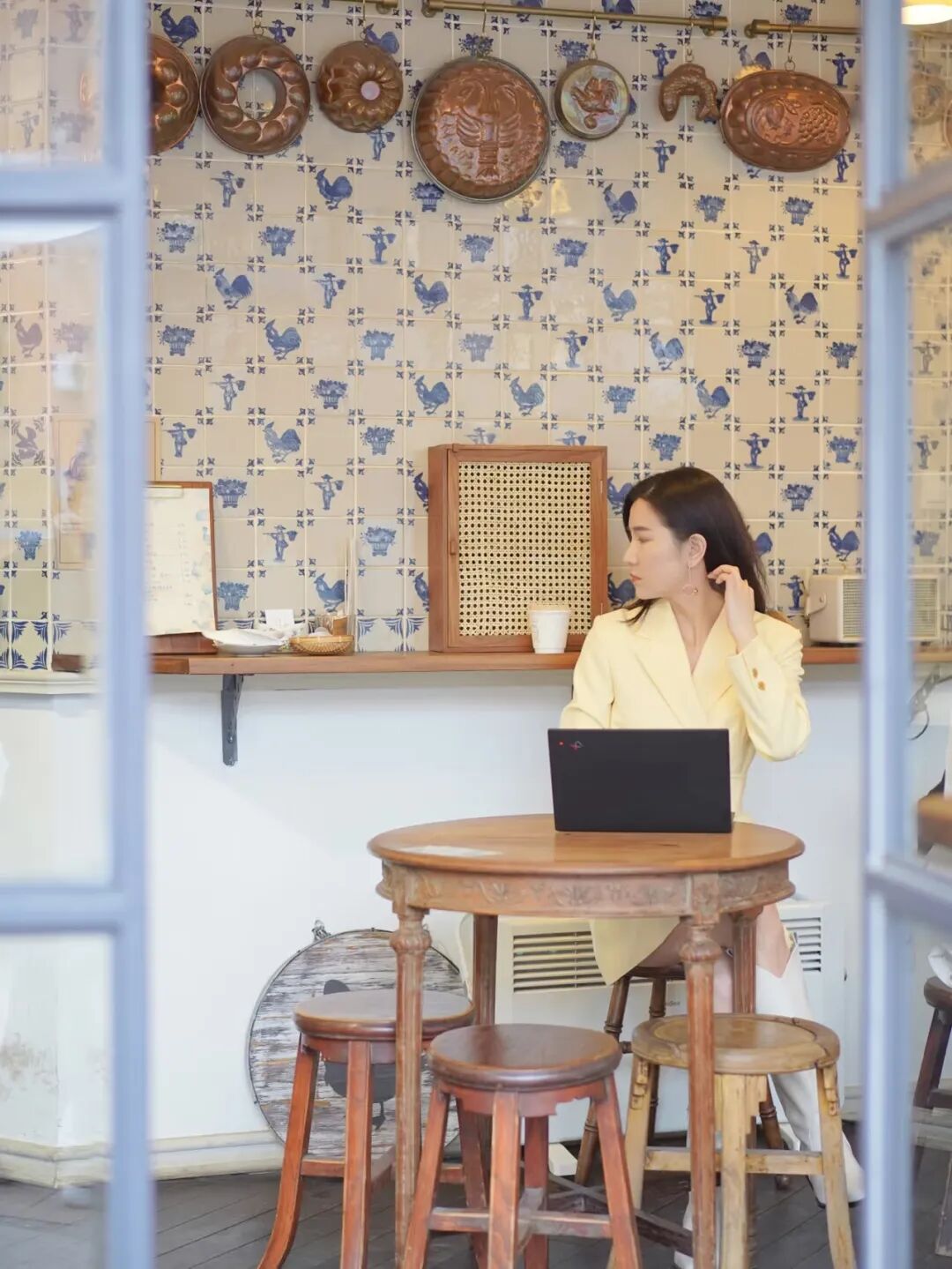
After arriving in Shanghai, she began to operate her identity as a fashion blogger in person, constantly purchasing clothes, looking for venues, and arranging photography to get good photos. She and her team could finish shooting a whole week's life in one day, and then post them one by one according to the date. Today in a coffee shop, tomorrow to visit an exhibition, the day after tomorrow to attend a party, the days in the photos are so rich that people envy, but in reality, all of them may happen in the same afternoon.
(Photo provided by the interviewee)
"At first you will find it quite interesting, but later you will really feel exhausted, and it is very expensive, especially in Shanghai."
She also tried to run this life as a business. A blogger needs to have a good enough life first to have the opportunity to attract brand cooperation; but maintaining such a life itself requires continuous investment of money. When the income is good, the money spent may be earned back; when the income is not good, the credit card bill will not decrease because of the drop in traffic.
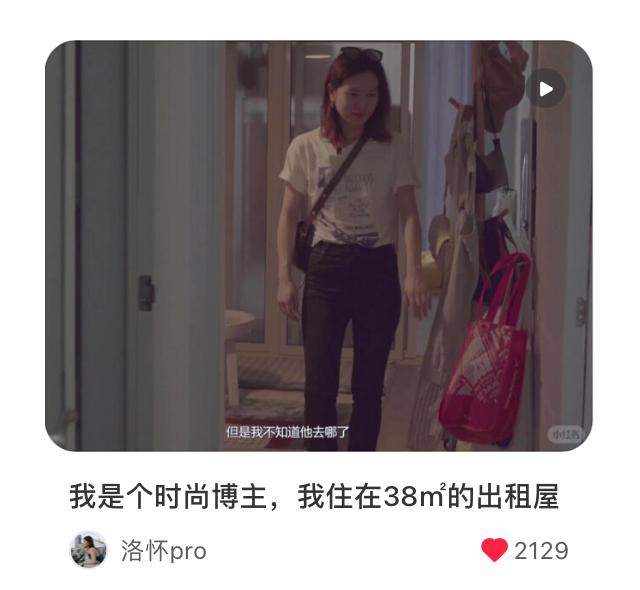
Later, Luo Huai began to shoot a content titled "Fashion Blogger Living in a 38-square-meter Small House", trying to show her real living environment. As a result, the performance of this content was even better than the carefully crafted fashion life in the past.
She found that refinement can attract people, and distress can also attract people. The problem is, when distress becomes a hit, what should she shoot next? "After that episode of content became a hit, I fell into a new dilemma, that is, how can I continuously produce this kind of distressed life? Do I also have to deliberately create distress?"
The life of ordinary people is often in a non-dramatic middle zone, but platforms prefer distinct images. A person can be extremely rich, or extremely poor, only the ordinary daily life is difficult to continuously attract attention.
"As long as you still want to make a living by the camera, by traffic, you are performing." Luo Huai said, "Whether you are performing refinement, performing an upper-class life, or performing sloppiness, performing a distressed life, it is all performance in essence."
Life taken over by data
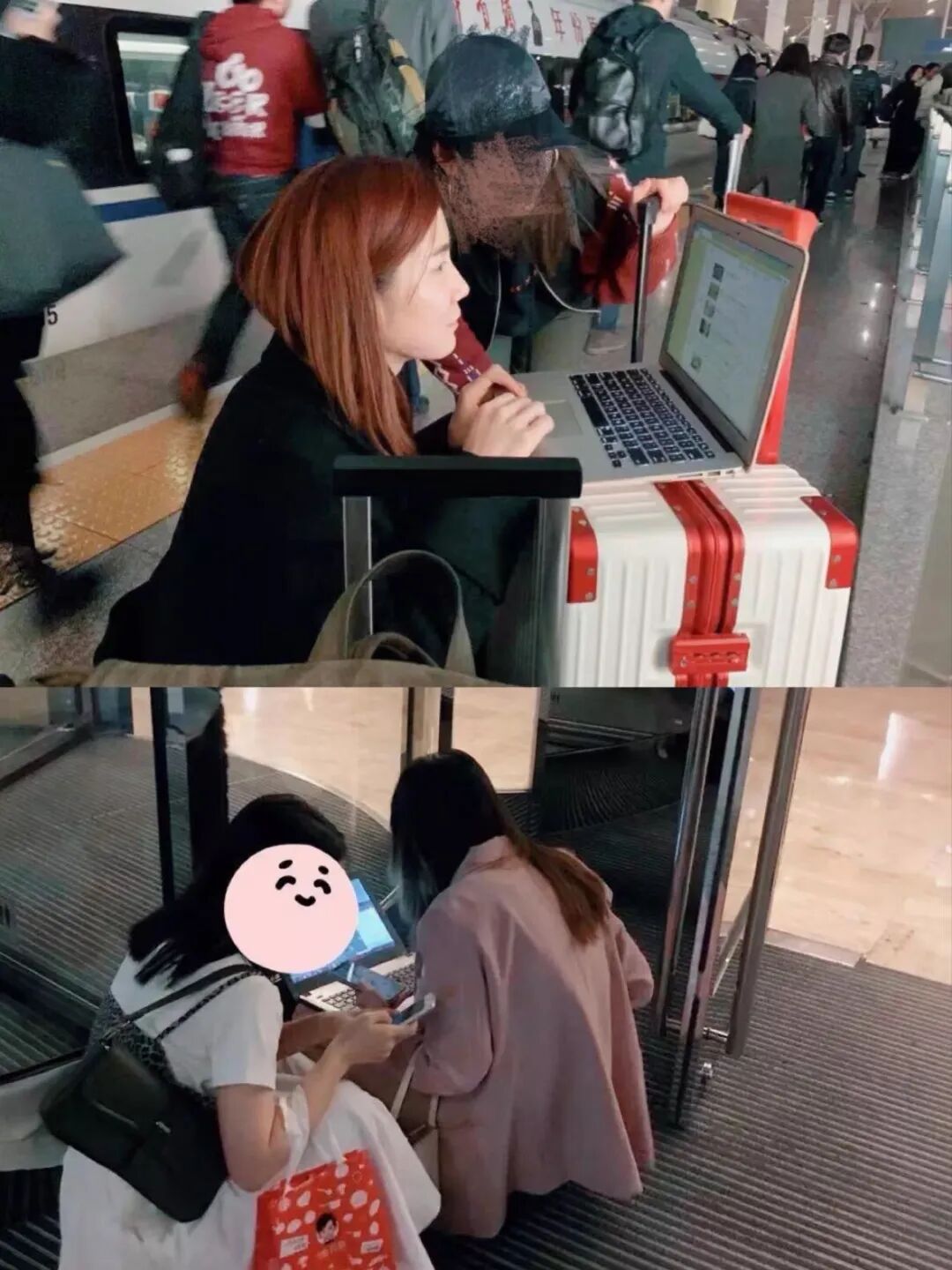
Once, Luo Huai went to Beijing to meet two friends she hadn't seen for a long time. The three sat down to eat, but she was absent-minded all the time. While her friends were chatting about recent situations, her mind was full of another thing: she hadn't updated her Xiaohongshu content that day.
At that time, the platform would give more exposure to creators who kept updating daily. Luo Huai found that as long as she kept posting, the growth of the account was quite obvious, and once she stopped, the traffic would drop accordingly. So she arranged tasks for herself that must be completed every day, no matter where she was.
Halfway through the meal, she finally could not sit still, excused herself to go to the toilet, hid and edited the content of the day on her mobile phone. Because she didn't finish writing in advance, it took her more than half an hour to finish the update. Her friends waited anxiously and thought she was not feeling well. When she returned to the dining table, she casually explained that she had diarrhea just now, but she was already relieved in her heart.
"After I finished the update, I felt completely relieved, as if I had come back to life." She recalled, "Later when I thought about this matter again, I felt I was poisoned, I was already obsessed."
This is not like running an account as people imagine, but rather a feeling of "being run by the account".
(Photo provided by the interviewee)
In this environment, the life of ordinary people is involved in content production. Today you can share how to enter the media industry, tomorrow you can sum up ten ways to become a certain profession. Being a blogger is no longer just a profession, it has also become an invasive imagination in the life of ordinary people: you should manage yourself better, explain your experiences clearly, and even turn every failure into content.
Another thing she still remembers until now is the number of likes on Xiaohongshu. At that time, her notes usually got three to five hundred likes. If the number of likes on a certain content was less than 200, she would be restless and even stay up all night. She could not accept that there was a note on her account homepage whose data was significantly lower than the average level, so she began to ask her friends to give likes, registered small accounts, and even used her parents' accounts to try to raise the number to more than 200.
(Photo provided by the interviewee)
For ordinary users, 200 likes may be just an insignificant number; but for people who take social media as their job, it means the performance of the work, the commercial value of the account, and even the proof of personal ability. "I would think this is a point of shame for me." Luo Huai said, the more she cared about the data, the more she tended to choose those contents that were definitely popular.
She later admitted in her book that she became more and more familiar with various content skills, but gradually lost the ability to write really. She knew what the audience wanted to see, but she did not know what she wanted to say.
This job also changed her relationship with her own body. Fashion bloggers need to show their faces constantly, and any detail in appearance may be magnified. Some people commented that her eyebrows were not drawn well, and some people picked on her expression or voice. She wanted to get more attention, but she could not bear the scrutiny brought by attention.
"I think most people who make these face-showing content want to be seen, but you may not be able to bear so much attention, as well as the judgment and criticism that being seen brings."
What made her more uncomfortable was the job itself. Luo Huai confessed that she was not the kind of blogger with a strong personal style. She had a stylist and a photographer, the clothes were matched by the stylist, and the shooting location and pose were arranged by the photographer. When work was busy, even the copywriting for the photos was written by the editor on behalf of her. She only needed to complete the shooting according to the instructions, and what was finally presented was a life record with her as the protagonist. "I am completely just a photo-taking machine, I am just a puppet, created by all of them." Speaking of this, she seemed to find another reason for her unhappiness back then, "I feel I have no subjectivity in it."
She specifically added that not all fashion bloggers are like this. Some bloggers know very clearly what they want to wear and how to shoot, and photographers and stylists are all helping them realize their personal ideas. But Luo Huai found that she was exactly the opposite.
This sense of alienation is also related to her anthropology training.
"I think this perspective is very useful for analyzing bloggers, but it is a disaster for being a blogger." She explained that anthropological researchers need to enter a group, live with the people in it, and at the same time maintain the distance of observation. She often had similar feelings in the fashion circle: obviously she did the same things as other bloggers every day, attended events