Just now, Anthropic publicly released its 335-page prospectus: it will be the largest IPO in history, and Anthropic is the most loss-making AI company ever.
The title of the largest IPO in history is about to be snatched away from Elon Musk's SpaceX!
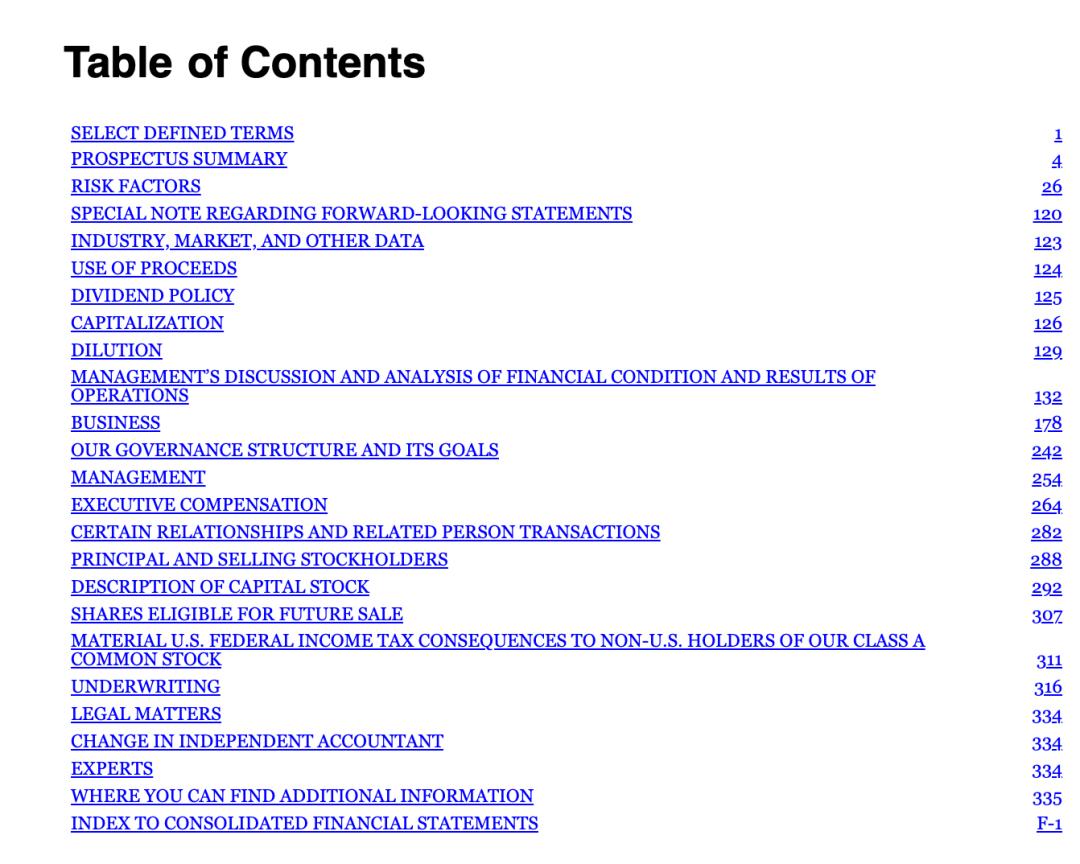
Just now, Anthropic, the parent company of Claude, officially publicly submitted its NASDAQ IPO application with the stock code "ANT".
(At first glance, you might think an insect company is going public, just kidding)
Its 335-page formal prospectus has just been freshly released on the official website of the SEC.
Compared with the previously leaked draft, the public version further updates the computing power procurement arrangement:
Anthropic's procurement commitment to Microsoft has increased from 31.4 billion U.S. dollars to 44.9 billion U.S. dollars, its procurement commitment to Google is 114.5 billion U.S. dollars; the maximum amount of the computing power contract signed with SpaceXAI is 120.5 billion U.S. dollars.
In addition, the public version also newly disclosed two computing power suppliers, Nscale and Lambda.
According to previous reports from Bloomberg citing people familiar with the matter, Anthropic plans to complete the IPO in mid-November.
In the capital race against its arch-rival OpenAI, Anthropic crossed the finish line first, forcing a sprint at a time when market sentiment is not friendly, and is expected to become the first pure-blooded cutting-edge large model listed company in the history of U.S. stocks.
Although the fundraising scale has not been finally priced, the previously exposed draft prospectus shows that its maximum target is about 1 trillion U.S. dollars, corresponding to a valuation of about 2 trillion U.S. dollars.
If this is the case, it will surpass the corresponding issuance valuation of 1.77 trillion U.S. dollars of Elon Musk's SpaceX in June this year in one fell swoop, and is expected to sprint for the largest IPO in history.
However, due to the recent pressure on the AI sector, some investors have lowered their valuation expectations from 2 trillion to about 1.5 trillion U.S. dollars (shrug.jpg)……
But who cares!
The previously leaked version has unreservedly spread this crazy Silicon Valley wealth creation myth and computing power gamble out in the sun:
Revenue skyrockets to become a money printer: It raked in 16.286 billion U.S. dollars in the first half of this year, earned another 16.8 billion U.S. dollars in the single Q3 quarter, and its annualized revenue in July soared past 65 billion U.S. dollars;
Book losses set a spectacle: The net loss in the first half of the year was as high as 80.7 billion U.S. dollars, nearly twice the loss of the whole of last year;
The most ruthless computing power exclusive contract in history: It signed a hard order of about 5.18 trillion U.S. dollars for computing power in the next ten years, and some reports say 80% of it "has to be paid even if you don't use it";
Science fiction plots are written into the prospectus: The business introduction takes up 64 pages, but a full 94 pages are used to warn that "AI may destroy mankind, resist shutdown, and even blackmail mankind".
…
The CEO of the company Dario Amodei's sentence "Growth is too fast, we can't handle it at all" is constantly gaining more weight.

△ Image generated by AI
Previously, the company confidentially submitted the S-1 draft on June 1, 2026, and this public submission still adopts the S-1 form format.
The SEC requires the S-1 to be submitted publicly at least 15 days before the roadshow. That means, Anthropic will start the roadshow as early as the second week of November.
Before everything starts, you should be as curious as we are —
How on earth does Anthropic make money? Out of the 80.7 billion net loss, how much is accounted for by accounting factors and how much is cash? Behind the listing, who will become the biggest beneficiary?
The answers to these questions are all in the prospectus, let's take a look one by one.
What is the newly disclosed financial status?
If you only look at the numbers at the bottom of the income statement, Wall Street may gasp:
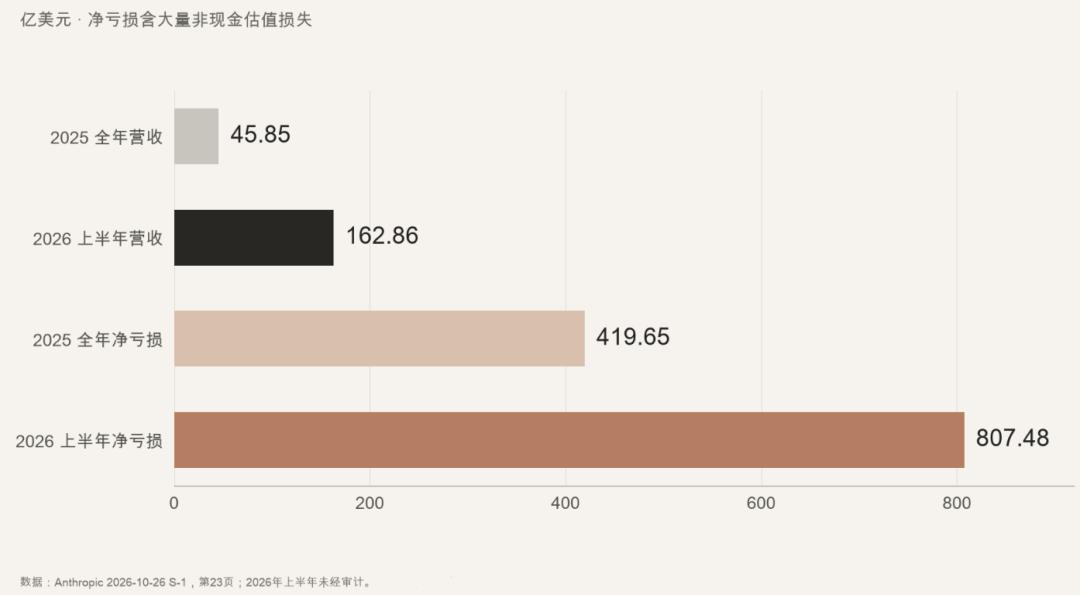
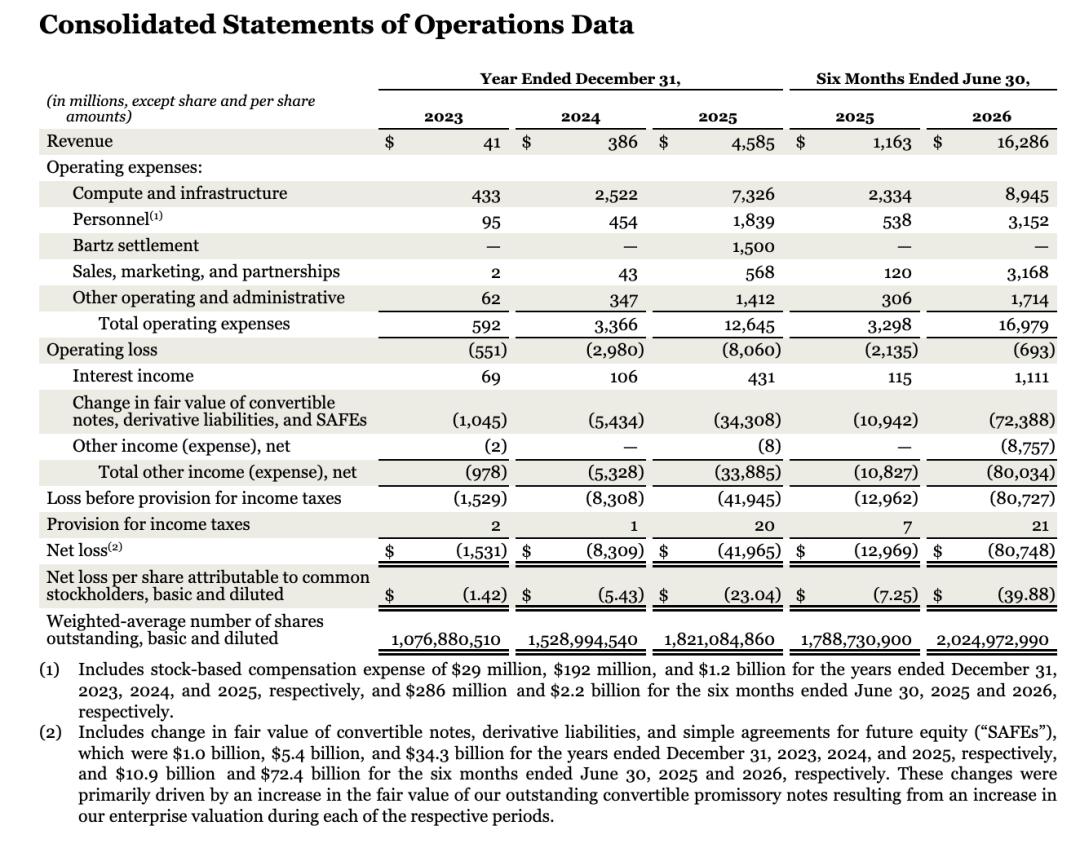
For the whole year of 2025, Anthropic's net loss was about 41.965 billion U.S. dollars.
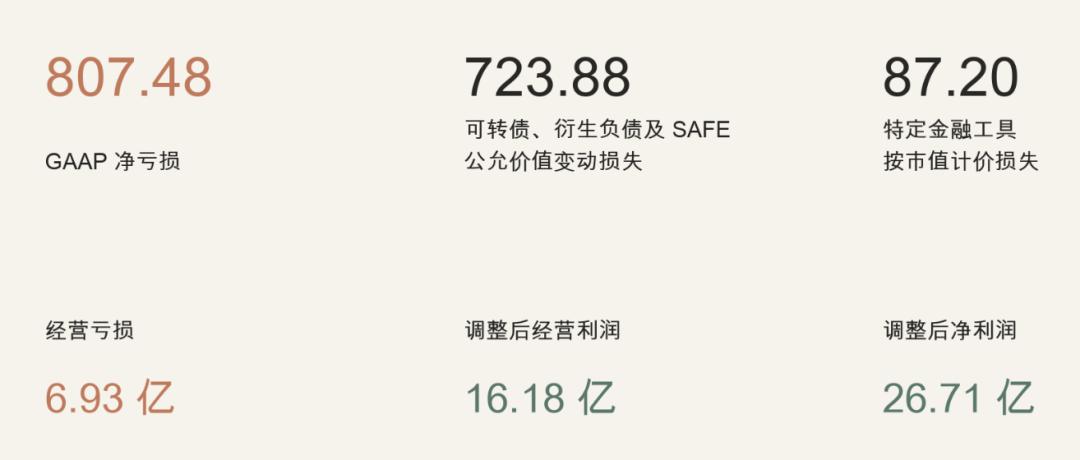
By the first half of 2026, the net loss has soared directly to an astonishing 80.748 billion U.S. dollars.
But insiders are well aware that this is actually a "happy trouble" brought about by the skyrocketing valuation, which needs to be analyzed separately.
Out of the huge net loss of 80.7 billion U.S. dollars, about 72.4 billion U.S. dollars comes from the fair value changes of convertible notes, derivative liabilities and other financing instruments.
In simple terms, as Anthropic's valuation rises sharply, the accounting measurement value of some financing instruments previously issued by the company also changes accordingly.
According to relevant accounting rules, these changes need to be included in the profit and loss, which greatly increases the book loss.
This type of fair value loss usually does not mean that the company paid the same scale of cash in the current period.
That is to say, the net loss of 80.7 billion U.S. dollars cannot be simply understood as Anthropic burned 80.7 billion U.S. dollars in cash within half a year.
However, this does not mean that the company's operating costs can be ignored. After all, the accounting factors in the book loss need to be analyzed separately, and computing power, R&D and personnel expenses are still real money investments.
Peeling off this layer of accounting fog, Anthropic's real business hematopoietic capacity is terrifying.
The condensed consolidated operating profit table in the prospectus clearly shows the revenue changes of the company.
In the whole year of 2023, Anthropic's revenue was only 41 million U.S. dollars;
It reached 386 million U.S. dollars in 2024;
It jumped to 4.585 billion U.S. dollars in 2025;
In the first half of 2026, the revenue in just 6 months hit 16.286 billion U.S. dollars (only 1.16 billion U.S. dollars in the same period last year).
Overall, the revenue side shows explosive growth, and the speed of commercial implementation has been greatly accelerated.
Although the prospectus shows that it has not yet made a profit, at the just-concluded Investor Day in mid-October, Anthropic directly laid its cards on the table:
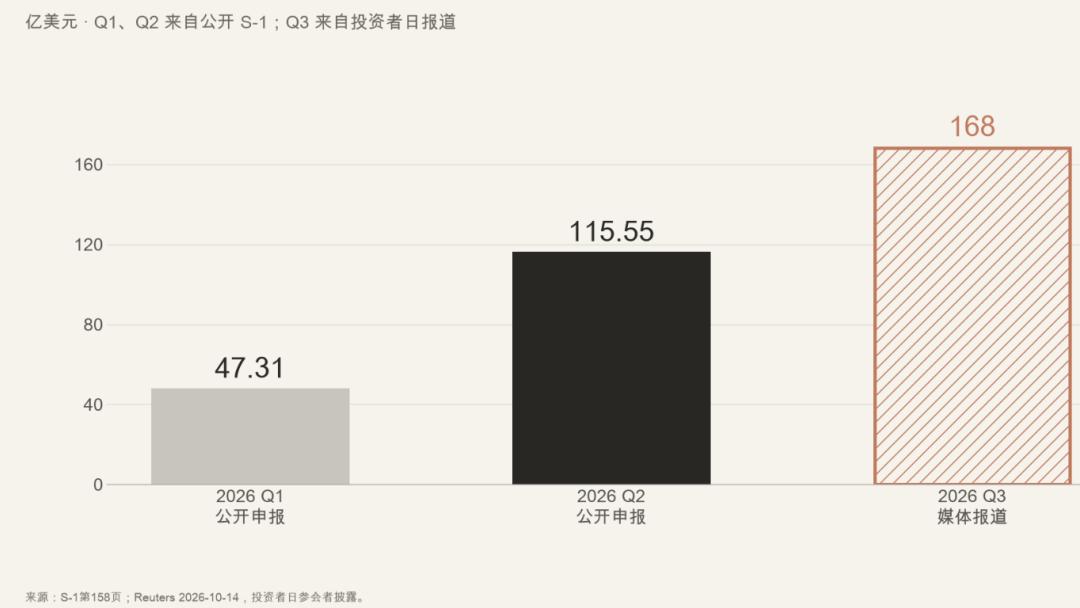
The revenue in the single third quarter reached 16.8 billion U.S. dollars, a 45% increase month-on-month, and it officially achieved profitability under the adjusted caliber.
From a "chaser" who was once crushed to the ground by ChatGPT, to now achieving a counterattack in both valuation and growth rate, what exactly did Anthropic rely on to win the turnaround?
The answer is only two words:
Code.
Since the launch of its ace product Claude Code in 2025, programming and enterprise customers have become an important growth driver.
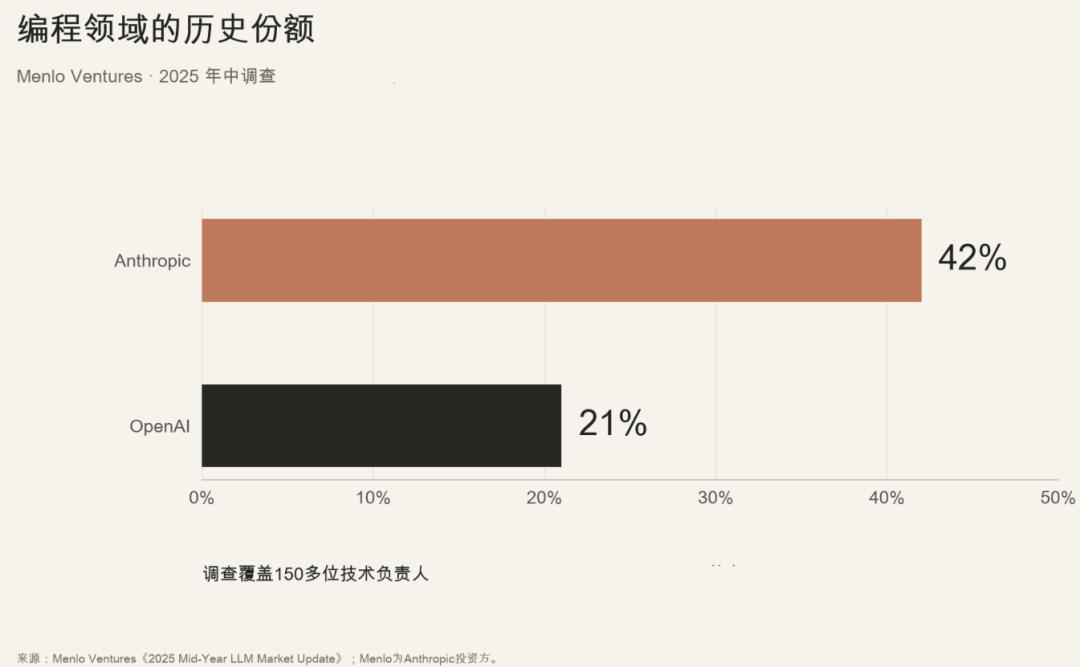
Data from venture capital firm Menlo Ventures shows that in the 1.9 billion U.S. dollar code generation market, Anthropic alone accounts for 42% of the share, pulling OpenAI (21%) a full position behind.
Divided by usage & subscription two major revenue streams, how does Anthropic segment its business?
The prospectus divides Anthropic's revenue into two categories according to the charging model.
One is consumption-based revenue, and the other is subscription revenue.
The prospectus states that consumption-based billing (including API calls, etc.) contributed about 13.06 billion U.S. dollars in the first half of 2026, accounting for about 80.2% of the total revenue in the same period.
While subscription revenue is about 3.2 billion U.S. dollars, accounting for about 19.6%.
This means that Anthropic has established a quite mature business model. The more work customers use Claude to complete, the more opportunities model calls and related services have to generate more revenue.
As more and more customers access and continuously increase their usage of Claude, the base of high-value paying customers expands rapidly.
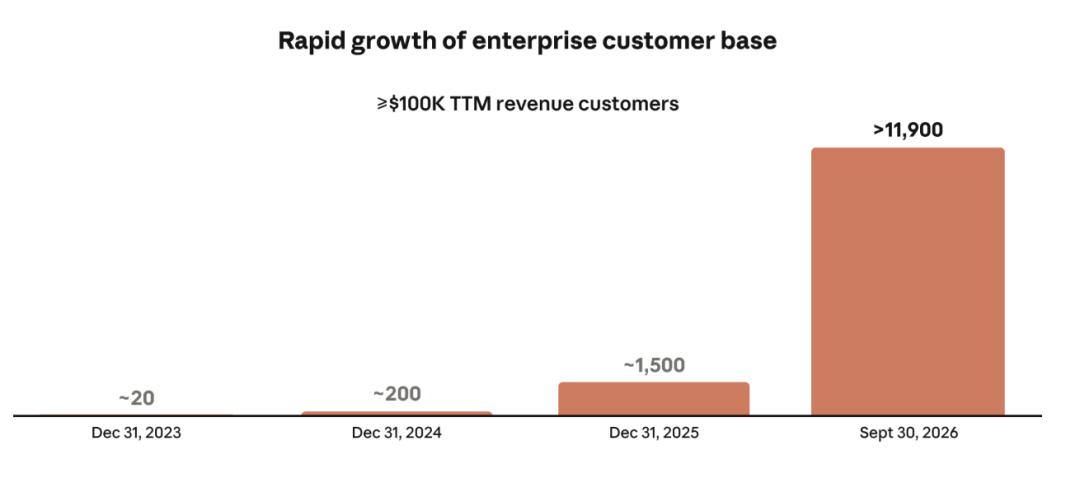
As of September 30, 2026, there are more than 11,900 customers with TTM revenue ≥ 100,000 U.S. dollars; this number was only 950 as of September 30, 2025.
This proves Claude's extremely strong penetration in the B-end enterprise market and extremely high customer stickiness.
However, there is a small oops!
Previously, the leaked version stated that the top two mysterious customers in its customer list each contributed about 12% of revenue (about 25% in total). It was previously rumored that these two customers were Cursor and Microsoft's Github Copilot.
However, the official version shows that these two customers are Amazon and Google.

At the financial statement level, the prospectus clearly states that the company currently has only one Single Operating Segment, which is globally coordinated by CEO Dario and President Daniela, the brother and sister pair, as the highest operating decision-makers (CODM).
In order to go all out for "high-value enterprise cognitive work", it also showed a "Not To-Do List" in the prospectus:
Although it is highly commercially attractive, we currently choose not to develop image generation and video generation models, but to concentrate all computing power on programming, Agent capabilities and safety research.
The prospectus systematically dismantles the company's business landscape for the first time:
A tightly interlocked "three-layer full-stack architecture" (underlying model + middle platform + top application), matched with a "20/80 charging engine".
Layer 1: Four major model families
Anthropic's current foundation is a stepped matrix composed of four major model families.
1. Mythos and Fable (top flagship level) : They are the "nuclear weapon" level models newly unveiled this year, specializing in extreme programming and ultra-long-cycle Agent tasks that AI could not handle at all in the past. Because their capabilities in exploiting software vulnerabilities and bioscience are too against the sky, Anthropic has adopted a rare "one body with two forms" strategy.
2. The full version of Mythos is only open to strictly reviewed cybersecurity and life science institutions through trusted programs such as Project Glasswing and the Cybersecurity Verification Program;
3. The mass commercial version of Fable (currently iterated to Fable 5.1) is equipped with strict production-level safety guardrails. Once sensitive high-risk requests are