With the iPhone Duo officially on sale, what kind of application ecosystem does Apple need for its localization in China?
On October 23, Apple's first foldable smartphone iPhone Duo was officially released in Chinese mainland.
In the past few years, when the outside world talked about foldable screens, the focus was almost entirely on hardware: how many times the hinge can fold, how large the inner screen is, and how deep the crease is.
In fact, compared with the eagerness of queuing up in offline stores to get the first batch of new devices, for ordinary users, whether a foldable screen is really easy to use is often not determined by the hinge, but by the frequently used applications that people open every day after unlocking the phone, and whether these apps have been redesigned for this larger screen.
With the launch of iPhone Duo, Apple also announced the list of the first batch of apps that completed adaptation. Six apps, namely Weibo, iQIYI, WPS Office, Taobao, Amap and Xiaohongshu, are on the list, covering high-frequency scenarios such as video entertainment, office work, social interaction, maps and e-commerce.
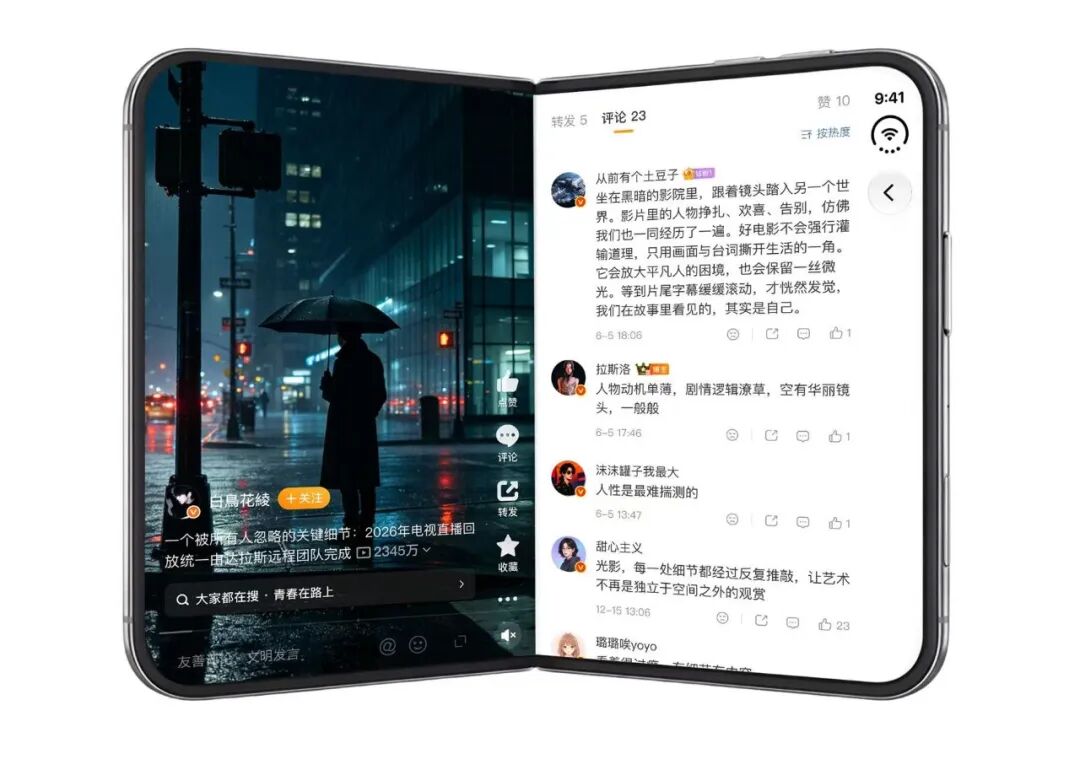
Among them, Weibo is one of the first head apps to complete the adaptation, and also the first platform among social apps to finish the adaptation, pushing out the 16.10.2 version on October 21. Weibo has optimized the feeds, videos and posting tools for iPhone Duo, providing layouts suitable for reading, viewing and sharing when the device is fully unfolded or partially unfolded.
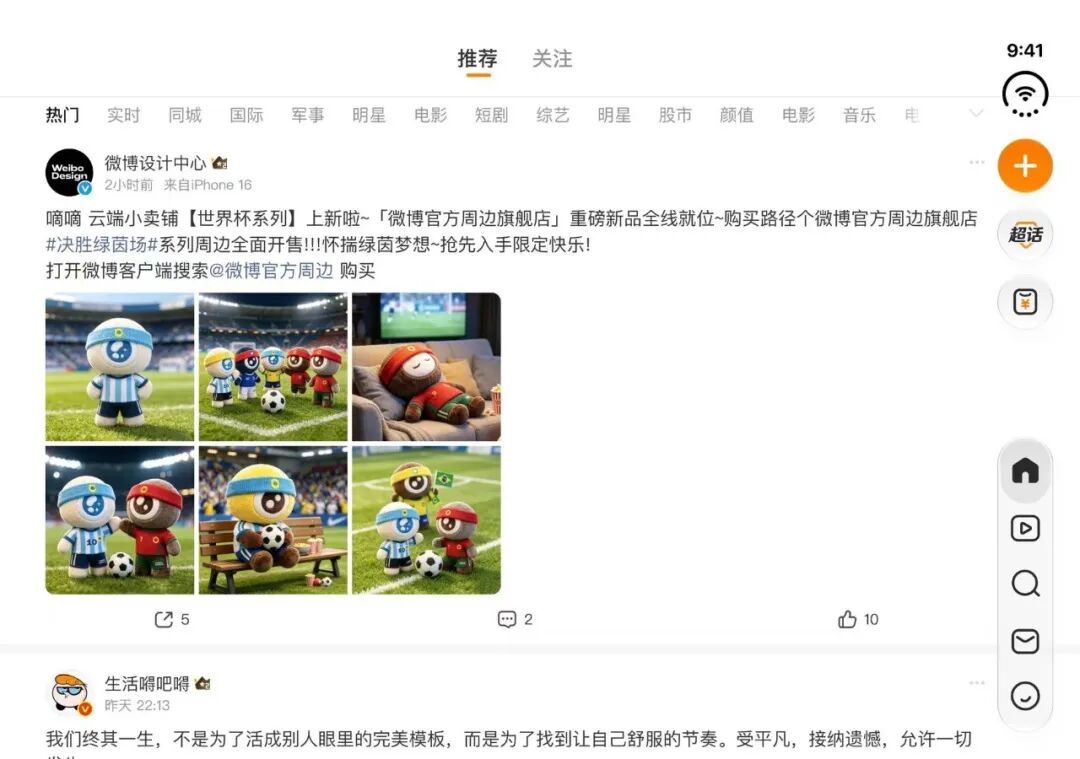
The speed and depth of app adaptation are becoming a variable that affects the first-launch experience of new devices. For Apple, the foldable screen represents a product form innovation. If the update only stays on the specification sheet, the sense of freshness users get after getting the device will fade away quickly.
Essentially, the reason why app ecosystem adaptation is getting more and more attention from mobile phone manufacturers is that the localization of global tech brands in China is increasingly relying on the local app ecosystem and communication portals.
When hardware such as screens and hinges gradually converge, the competitive experience of foldable screens often manifests in the first minute when users open an app.
1. The second half of foldable screen competition is all about app ecosystem
Apple's first entry into the foldable screen market has drawn unprecedented attention.
After pre-orders for iPhone Duo opened at 8 p.m. on October 16, the first batch of supplies sold out quickly. At present, the estimated delivery time for some orders on Apple's official website in China has been scheduled to late January 2027.
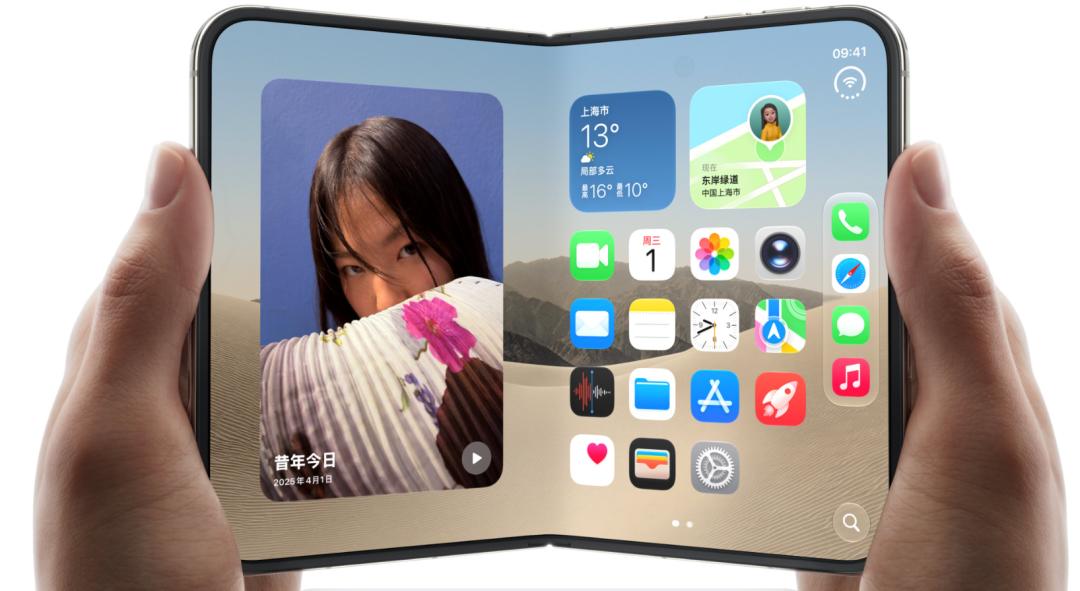
Source from Apple official website
While users are full of expectations for Apple's first new foldable device, the first round of test for this 7.6-inch inner screen is hidden in several most daily operations.
Whether the information feed can be read smoothly, whether videos can be watched immersively, whether navigation can show the lane clearly at a glance, and whether shopping price comparison can reduce unnecessary screen switching... The market has long been aesthetically fatigued by the hardware parameters of foldable screens. What really determines whether this large screen is worth unfolding every day is whether the app layer can convert the expanded screen area into use efficiency.
China is one of Apple's most important markets, and the adaptation status of China's top apps is directly related to the first-launch completion degree of iPhone Duo in Chinese mainland. At present, apps including iQIYI, Amap, Taobao and Weibo have all used the larger display screen and multi-functional design of iPhone Duo to create better user experiences.
Of course, the first batch of adaptation is just a label. These apps in different tracks are using their own ways to answer the same question — what exactly can Apple's large screen be used for?
Among them, social apps involving conversations, information feed browsing and hot topic interaction have more direct adaptation difficulty and user perception. As a super APP integrating multiple attributes such as social interaction, information and public discussion, the adaptation of Weibo's interaction mode and page layout is highly representative.
First look at the visual layer. Weibo has adapted to the Liquid Glass design language, making the interface present a more transparent texture, which is more coordinated with the device form of iPhone Duo.
What is more worth noticing is the three sets of interaction logic split according to the device posture under the interface, each of which corresponds to an action that users can directly perceive.
The large screen mode corresponds to the fully unfolded state, making full use of the screen space to provide a wider display area for texts, pictures and comments; The Book mode corresponds to the reading posture of double-screen unfolding, allowing users to browse hot searches while viewing comment content without repeated jumps; The Laptop mode corresponds to the "notebook posture" when the device is half unfolded, with the toolbar placed on the side, and it can instantly turn into a mini notebook when folded, allowing users to post Weibo content in the half-open state.
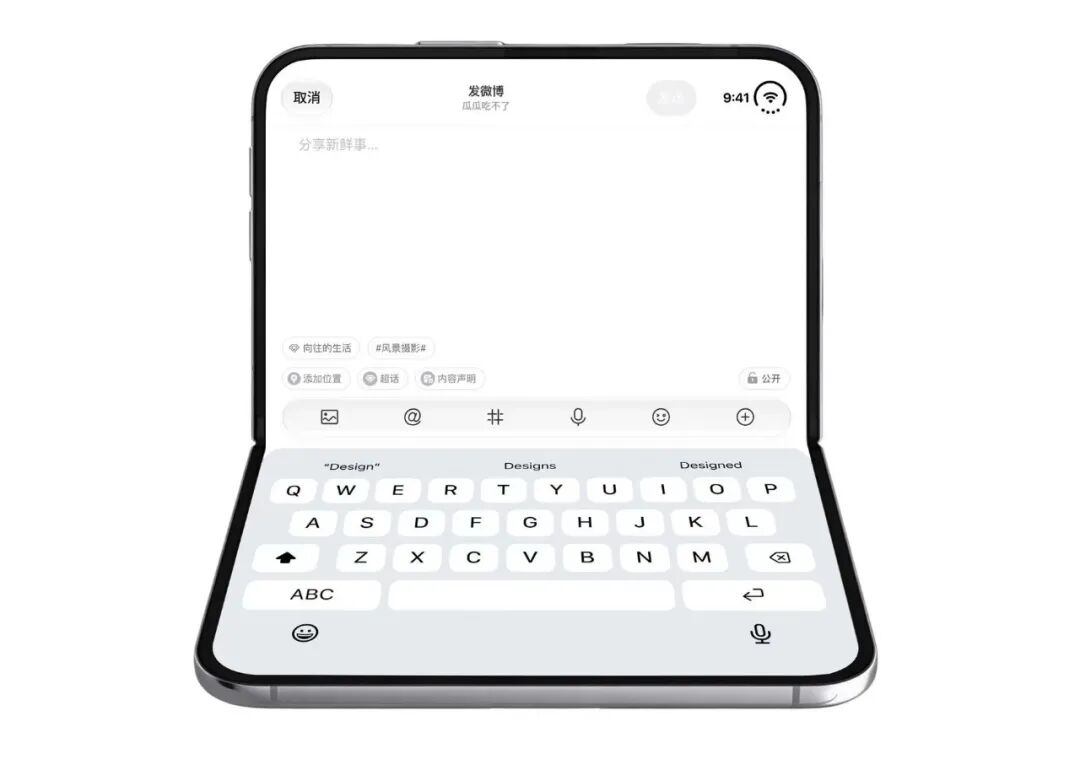
Apart from Weibo, iQIYI, Amap and Taobao have responded to the adaptation logic of the other three scenarios.
iQIYI has adapted the split-screen playback function on iPhone Duo, supporting playing videos on the raised screen in hover mode, while the flat screen acts as a playback control center for dragging the progress bar, selecting image quality, turning on and off bullet comments and other operations.
Amap chooses split-screen navigation, with lane-level navigation on the left and the regular map route ahead on the right, presenting the two views that originally required manual switching at the same time.
Taobao has adapted multi-task decision-making in the e-commerce scenario. On the shopping interface, the main product image is on the left, while the title, price and details are on the right, so users can view the description while looking at the pictures. On the chat interface, the merchant list is on the left and the chat window is on the right, compressing the entire shopping decision-making link into the same screen.
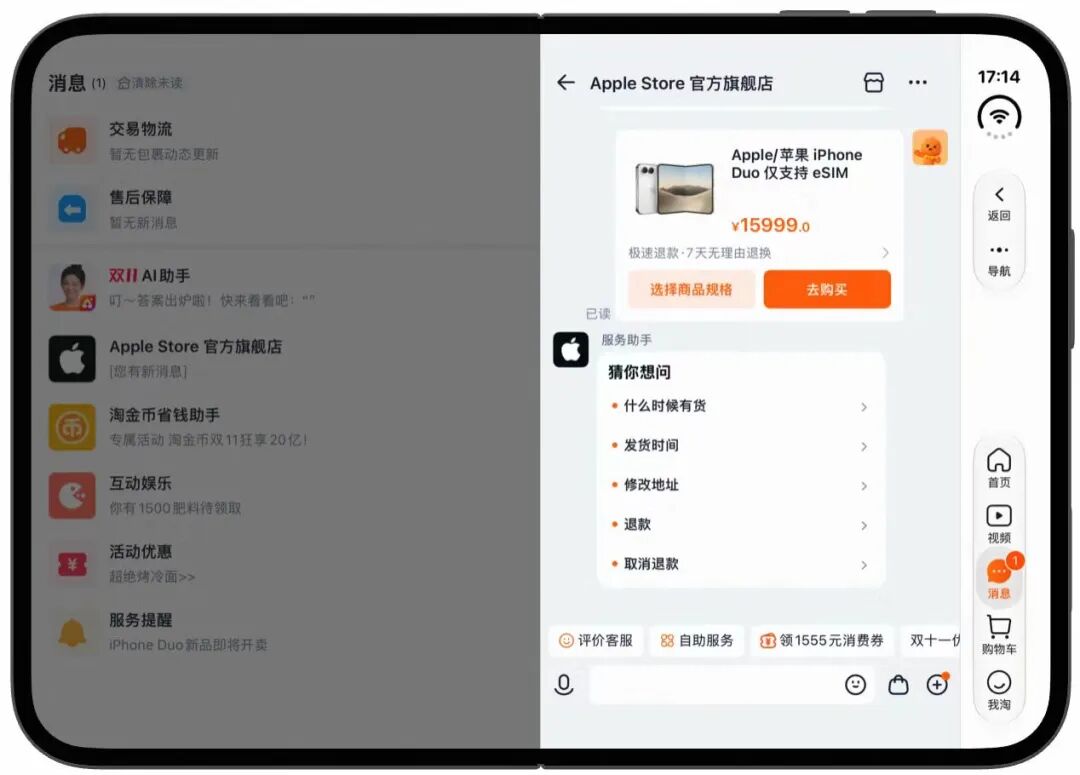
Source from Taobao official WeChat public account
Putting these scenarios together, the adaptation status of Chinese apps answers the product proposition of Apple's foldable screen. Although Apple can manufacture foldable screens, the mission of Apple's foldable screen can only be truly completed when local apps provide users with better experiences.
2. Accompanying Apple for long-term development, China's app ecosystem becomes the localization bond
To understand why Apple needs China's app ecosystem, we can shift our attention from the screen of iPhone Duo to a visit that took place in the Weibo office in October 2024.
At that time, Tim Cook, former CEO of Apple, together with Ge Yue, Managing Director of Apple Greater China, appeared in the Weibo office and had an exchange with Wang Gaofei, CEO of Weibo, and Wang Wei, COO of Weibo. Cook said, "From 2009 to today, this has been an extraordinary journey, and Apple is very honored to be part of this journey."
The year 2009 Cook mentioned is not a polite starting point. Looking back at the development history of China's mobile internet, 2009 is indeed a key node.
In January 2009, 3G licenses were issued, turning the mobile internet from a concept into infrastructure. In August of the same year, Weibo was launched, bringing new public discourse space to users. In October of the same year, iPhone 3GS officially entered the Chinese mainland market, becoming the first licensed iPhone in China. In November of the same year, Alibaba's first Double 11 Shopping Festival was born, and the commercial foundation of the mobile era began to be laid.

With the network, terminals, social platforms and commercial infrastructure starting at the same time, when Apple entered the Chinese market, it did not face a blank market, but an app ecosystem that was migrating from PC to mobile terminal with local apps growing rapidly.
The adaptation between Weibo and Apple happened at the very beginning of this timeline.
In January 2010, Weibo's first mobile client in the real sense was launched specifically to adapt to iOS.
Since 2012, the small commercial suffix showing specific mobile phone models has gradually taken shape, becoming a free exposure position for mobile phone manufacturers on Weibo. In September 2014, the iOS version of Weibo launched the "customizable small suffix" function, allowing premium members to change the displayed content.
In December 2015, the iOS version of Weibo was updated to support Live Photos, allowing users to view and post Live Photos.
In 2024, with the launch of Apple Vision Pro, spatial video became Apple's new direction in imaging and spatial computing, and the Weibo platform also supported this feature immediately.
Up to this iPhone Duo adaptation, every follow-up action of Weibo corresponds to an update of Apple's system capability or hardware form.
In the 17 years since entering China, what Apple needs in the Chinese market is not just developers adapting to different screen sizes, but partners who can translate its new capabilities into content consumption scenarios for Chinese users. The faster local content platforms follow up, the deeper the implementation of Apple's product features will be.
The significance of ecological partners like Weibo is not to help Apple sell one more device, but to help Apple turn a new capability into a daily action for Chinese users.
From another perspective, when global tech brands enter different markets, they need core communication portals for different local markets. After Apple's new CEO Ternus took office, he opened a Weibo account and updated information through this account before the press conference.
For Apple, X undertakes the communication function in overseas markets; in China and Asia-Pacific markets, it needs a social scene where Chinese users discuss technology and products every day and express their attitudes, and Weibo is a very suitable portal.
For more than ten years, Apple's demand for local content platforms and local communication entrances has not changed, only the way to undertake this demand has changed. The "extraordinary journey" Cook mentioned was not completed by one single company, but achieved by a global brand working together with China's local ecosystem.
Apple's real localization is not just selling products to China, but integrating its products into the digital life of Chinese users.
This article is from the WeChat public account "Insight Link", author: WANG Huiying, editor: ZI Ye, published with authorization from 36Kr.