COL Q3: User Acquisition Spending Contracts, Has the Inflection Point Arrived?
On October 25, Chinese Online released its third-quarter 2026 report. In the first three quarters, the company achieved operating revenue of 833 million yuan, down 17.64% year on year; the net loss attributable to shareholders was 132 million yuan, narrowing by 74.63% year on year; operating cash flow turned to a net inflow of 42.796 million yuan from a net outflow of 172.7 million yuan in the same period of the previous year.
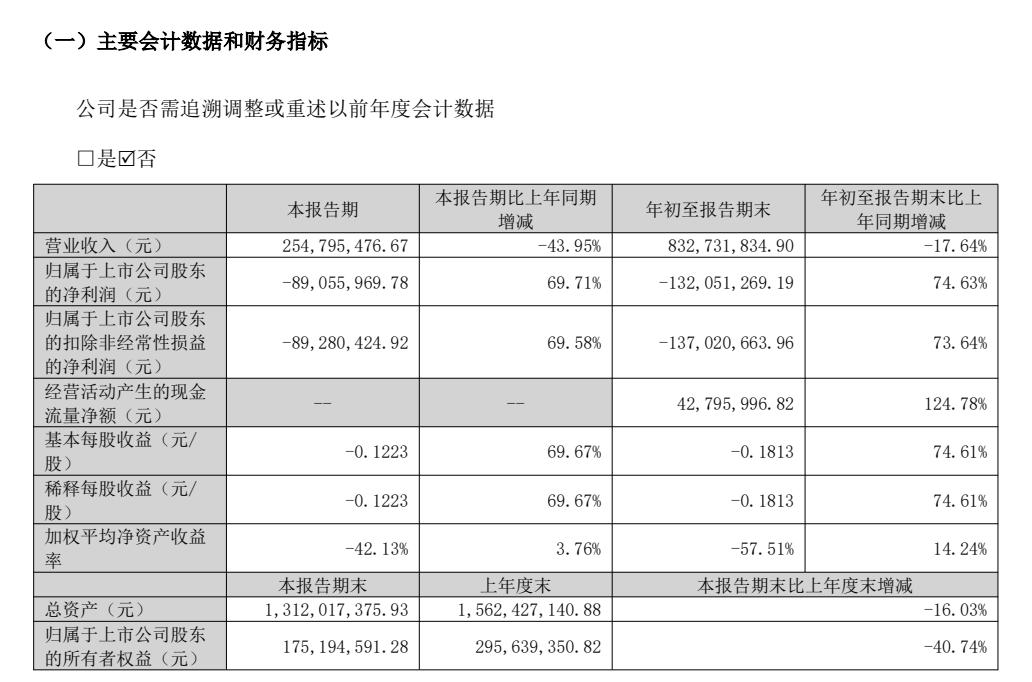
Figure 1 "Key Accounting Data and Financial Indicators" in the Q3 Report
If we only look at the magnitude of loss reduction, this seems to be a financial report showing a significant improvement. However, when we break down the third quarter separately, the picture is clearly different: the most important quantitative data of FlareFlow, which posted revenue of 252.68 million yuan and operating profit of 155.72 million yuan in the first half of the year, disappeared from the Q3 financial report. There are only qualitative descriptions such as shifting to refined operation centered on efficiency, cost and commercial performance, without practical figures.
Although there is no specific data, extrapolating from the group's total revenue in the third quarter and assuming a ±10% change in revenue from other businesses, FlareFlow's revenue may be approximately 76 million to 108 million yuan. Since the company did not disclose segment revenue for the third quarter and FlareFlow's gross profit margin (this result is only a scenario estimate and cannot be regarded as actual operating data), the real situation may have to wait for the full-year annual report to be released at the end of the year.
Loss reduction is real, and growth stall is also real
First of all, at the most basic cash level, it needs to be clarified that this round of loss reduction is not mainly driven by government subsidies or asset disposal. In the first three quarters, Chinese Online's non-recurring net loss attributable to shareholders was 137 million yuan, narrowing by 73.64% year on year, and non-recurring gains and losses were only 4.9694 million yuan, indicating that the main improvement of the income statement comes from changes in operating costs and expenses, rather than whitewashing by one-off items.
The changes on the cost side are quite obvious. In the first three quarters, operating costs reached 444 million yuan, down 32.91% year on year, a decline significantly higher than the 17.64% drop in revenue; the overall gross profit margin rose to 46.74% from about 34.61% in the same period of the previous year. Sales expenses dropped from 660 million yuan to 384 million yuan, down 41.84% year on year. In response, the company explained that this was mainly due to the reduction in overseas business promotion expenses.
But this does not mean that the financial report is very healthy.
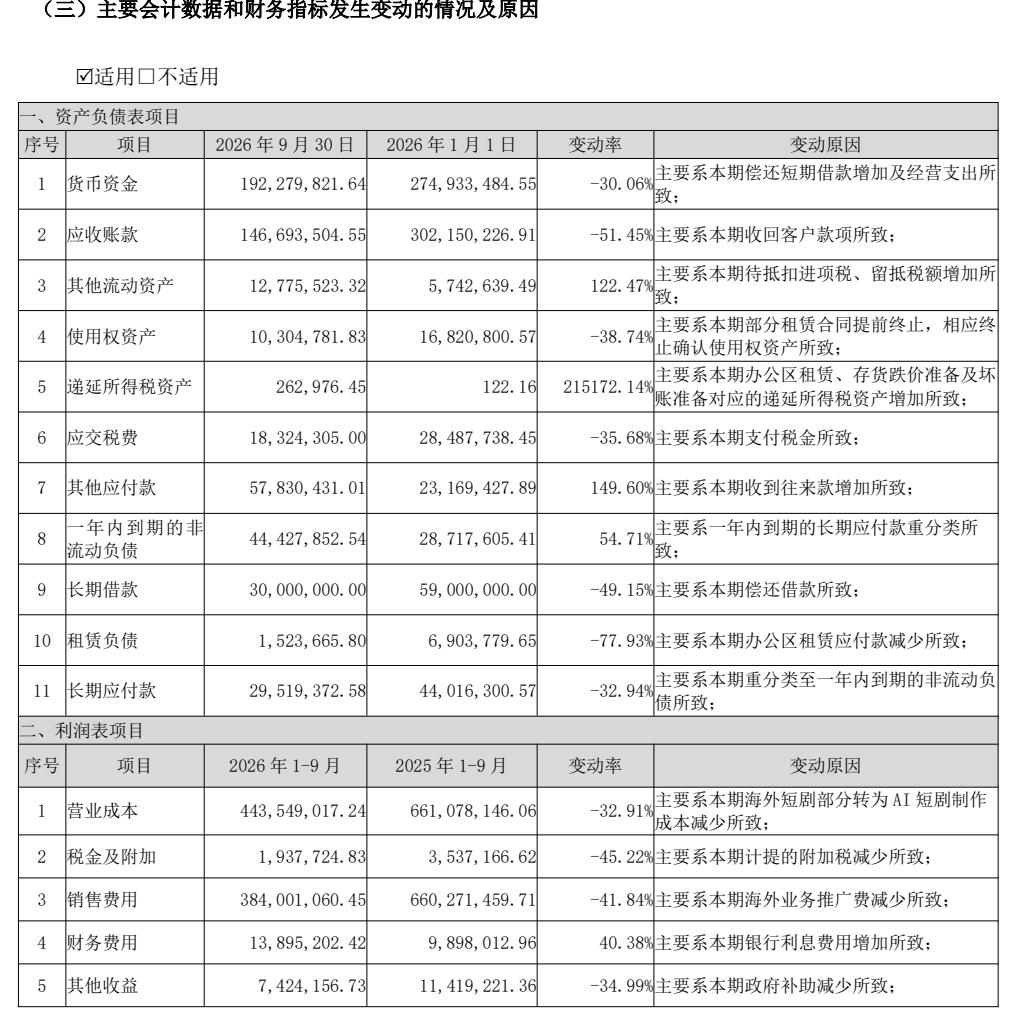
Figure 2 "Changes and Reasons for Changes in Key Accounting Data and Financial Indicators" in the Q3 Report
Even with the reduction in investment, Chinese Online's revenue side is also shrinking simultaneously. In the first half of the year, the company's revenue still increased by 3.85% year on year, but in the third quarter, the single-quarter revenue dropped by 43.95% year on year. Even if we only calculate the revenue after cost reduction, Chinese Online's revenue dropped from about 578 million yuan in the first half of the year, with an average of 289 million yuan per quarter, to 255 million yuan quarter on quarter; the attributable profit of about 2.83 million yuan in the second quarter could not be sustained in the third quarter.
What is more worthy of vigilance is the profit margin. Calculated based on the difference of cumulative data, the gross profit margin in the third quarter alone is about 40.28%, lower than 49.58% in the first half of the year; the single-quarter sales expenses are about 130 million yuan, accounting for about 50.96% of the single-quarter revenue. That is to say, the improvement of the expense rate is brought about by the cumulative performance in the first three quarters, rather than a clear change in each quarter.
Therefore, from the data alone, the loss reduction only answers "how much less loss has been made", but fails to answer "where does the revenue come from".
Short dramas take over from online literature, we can't only look at the data
To answer this question, we still need to look at Chinese Online's business structure.
In 2025, the revenue from short dramas and IP derivatives reached 896 million yuan, up 125.02% year on year, surpassing the online literature business for the first time. In the first half of 2026, the revenue of this segment was 411 million yuan, continuing to grow by 108.72% year on year, accounting for about 71.16% of the company's revenue; in the same period, the revenue from online literature and related businesses was 145 million yuan, down 54.91% year on year.
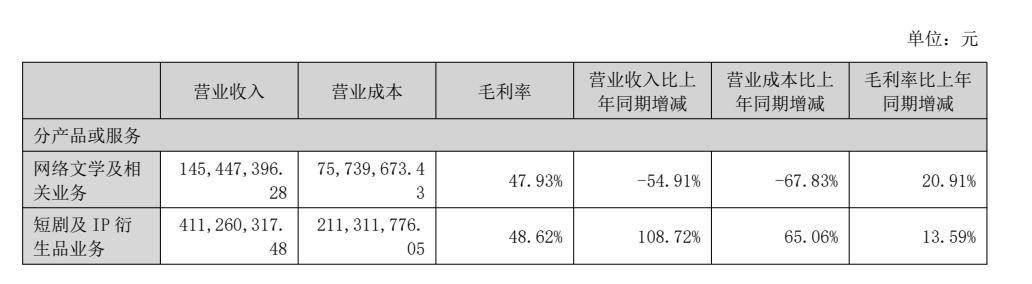
Figure 3 Segment Revenue in the 2026 Interim Report
From the data point of view, short dramas have taken over the growth baton. However, the Q3 report does not disclose segmented business data, so it is impossible to judge how much short dramas, online literature and other businesses have contributed to the total revenue decline in the third quarter. There is no sufficient basis to directly extrapolate the doubling growth rate of short dramas in the first half of the year to the whole year.
This is also the most common misunderstanding in analyzing Chinese Online at present: the company has more than 5.6 million digital contents, over 4 million registered authors, multiple product lines including AI comic dramas, overseas short dramas and IP derivatives, plus the correlation between online literature and short dramas, which makes the entire financial report easily give people the impression that "when one door closes, another opens". But having multiple product lines does not mean stable revenue, nor does it mean that all lines can complement each other automatically.
In fact, the contraction of online literature is likely to bring negative effects. On one end are the most basic revenue from reading and licensing, and on the other end is the reduction of the source for IP screening, user verification and subsequent adaptation. Short dramas can bring new increments, but they also need online literature as upstream support, which further proves that they are not project-based revenue driven only by platform revenue sharing, traffic purchase rhythm and a few hit works.
Under the large category of short dramas and IP derivatives, FlareFlow accounts for as high as 61.5%, and its performance in previous financial reports is quite good. The interim report shows that FlareFlow achieved revenue of about 350 million yuan and a net loss of more than 470 million yuan in 2025; but in the first half of 2026, the platform quickly achieved profitability, with revenue of about 253 million yuan and net profit of about 152 million yuan. A total of nearly 7,000 episodes have been launched, of which AI episodes account for more than 10%, and the net profit margin once exceeded 60%.
The flexibility from huge losses to high profitability is considerable. The company also disclosed that in the first half of 2026, AI production costs were 80% to 90% lower than that of live-action dramas, and the comprehensive time consumption per episode decreased by about 50%, which obviously implies that with the maturity of AI technology, the cost of short dramas will be further reduced.
However, for this optimism, the author of Entertainment Capital believes that more caution is still needed.
First of all, the author made a simplified calculation according to the financial report data, and FlareFlow accounts for 61.44% of the revenue of the short drama and IP derivatives segment. Ignoring the caliber difference between subsidiaries and consolidated segments, and assuming that its gross profit margin is not lower than the 60.32% net profit margin, the upper limit of the gross profit margin of the remaining 38.56% of revenue is about 29.97%; if FlareFlow's actual gross profit margin is about 66.6%, the gross profit margin of the remaining business is about 20%. This means that the existence of FlareFlow makes the partial short drama business, which is lopsided in revenue structure, look much healthier.
Secondly, the company has not simultaneously disclosed key operating data such as paying users, ARPU, retention rate, natural traffic proportion and LTV/CAC, so it is difficult for the outside world to judge how much of the profit growth comes from AI cost reduction, the release of pre-invested content, the contraction of traffic purchase and the natural monetization of users.
Finally, AI can change the content supply curve, but it cannot automatically rewrite the traffic price of the platform. The reduction of production cost is a technical dividend that the whole industry can obtain, while user attention and distribution entry are still scarce.
Entertainment Capital previously discussed this contradiction in the article "Chinese Online Terminated H-share Listing, Due to the Shenzhen Stock Exchange's Inquiry on the 2.83 Billion Yuan Private Placement?": Short dramas going global can reduce production costs, but continuous investment in traffic will erode profits, and stopping traffic investment may lead to the loss of new users.
The Q3 financial report further strengthens the argument. In the first three quarters, the company's sales expenses decreased by 276 million yuan, revenue decreased by 178 million yuan year on year, and the company's announcement stated that the revenue reduction mainly came from the reduction of overseas business promotion expenses. Combined with the nearly 50% year-on-year drop in revenue in the third quarter, it also shows to a certain extent that there is still a strong correlation between traffic investment and revenue.
Therefore, in the author's opinion, based on public information alone, it is still difficult to judge whether Chinese Online has crossed the threshold of "reducing investment will lead to revenue reduction", or is experiencing the lagging reaction brought by the contraction of traffic purchase.
Moreover, the cost reduction brought by AI is not without disadvantages. For the current AI short drama platforms that are still in the "hundred schools of thought contend" stage, AI cost reduction can easily eventually become a weapon to reshape the industry's competitive landscape. On the one hand, with the reduction of production threshold, platforms can easily expand content supply, which will not only increase the siphon effect of head platforms, but also further reduce users' willingness to pay. The production costs finally saved may eventually turn into more traffic investment, lower prices or faster content depreciation, rather than all remaining on the platform's income statement.
Therefore, FlareFlow's real problem is actually very simple: when traffic purchase is not increased, can revenue remain stable? Can old users continue to pay or contribute advertising revenue?
Cash flow turns positive, but reversal still needs to wait
Compared with these hidden problems, the risks on the balance sheet are more intuitive.
As of September 30, Chinese Online's monetary funds amounted to 192 million yuan, short-term borrowings and non-current liabilities due within one year totaled 393 million yuan, and the cash was not enough to cover short-term interest-bearing debts; the current ratio was about 0.54, and the net assets attributable to shareholders were 175 million yuan, down 40.74% from the beginning of the year.
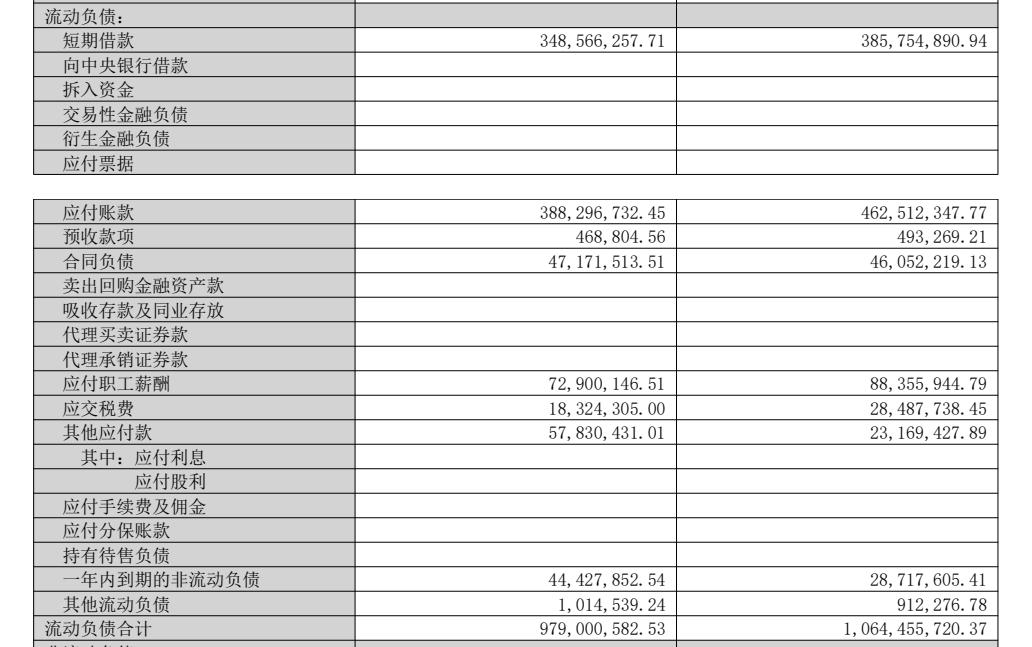
Figure 4 "Current Liabilities" Section in the Consolidated Balance Sheet (Page 8-9 Cross-page Splice)
In October, the company terminated its H-share listing and the A-share private placement of no more than 2.833 billion yuan. This means that the path of supporting content procurement and overseas expansion through external capital has narrowed. Next, the company needs to rely more on operating cash flow to balance debt repayment, content investment and growth.
This will inevitably affect the strategic freedom of the short drama business. If traffic purchase is increased again, profits and cash may be under pressure again; if traffic investment continues to shrink, the stability of revenue still needs to be verified. Chinese Online is not simply choosing between "growth" and "profit", but looking for a space where both can be established under cash constraints.
Chinese Online is not the only short drama company facing this problem.
In the past two years, platforms have used high investment in exchange for downloads and recharges, and the market paid more attention to user scale, rankings and revenue. With AI reducing production costs and the expansion of free and advertising models, the industry has begun to shift from "who grows faster" to "who can retain profits". However, efficiency transformation cannot only focus on the decline of expenses, otherwise any company can achieve phased loss reduction by cutting investment.
Therefore, the so-called positive view on Chinese Online requires at least three financial statements to confirm together.
On the income statement, revenue needs to stop declining sharply, and the gross profit margin cannot only be maintained by single-quarter fluctuations; on the cash flow statement, operating cash flow needs to be positive continuously, rather than forming a single-period improvement relying on the rhythm of collection and payment; on the balance sheet, the gap between monetary funds and short-term debts needs to be narrowed to avoid growth relying on large-scale external financing again.
In addition, there are two easily overlooked information gaps. First, the investment income disclosed in the Q3 report is 27.7277 million yuan, of which the CMS equity investment income only includes the data from January to March 2026, excluding the period from April to September, so the profit contribution of ReelShort-related assets lacks full-quarter visibility. Second, FlareFlow did not disclose independent operating data for the third quarter, and whether the high profitability in the first half of the year can be sustained remains to be verified in the annual report.
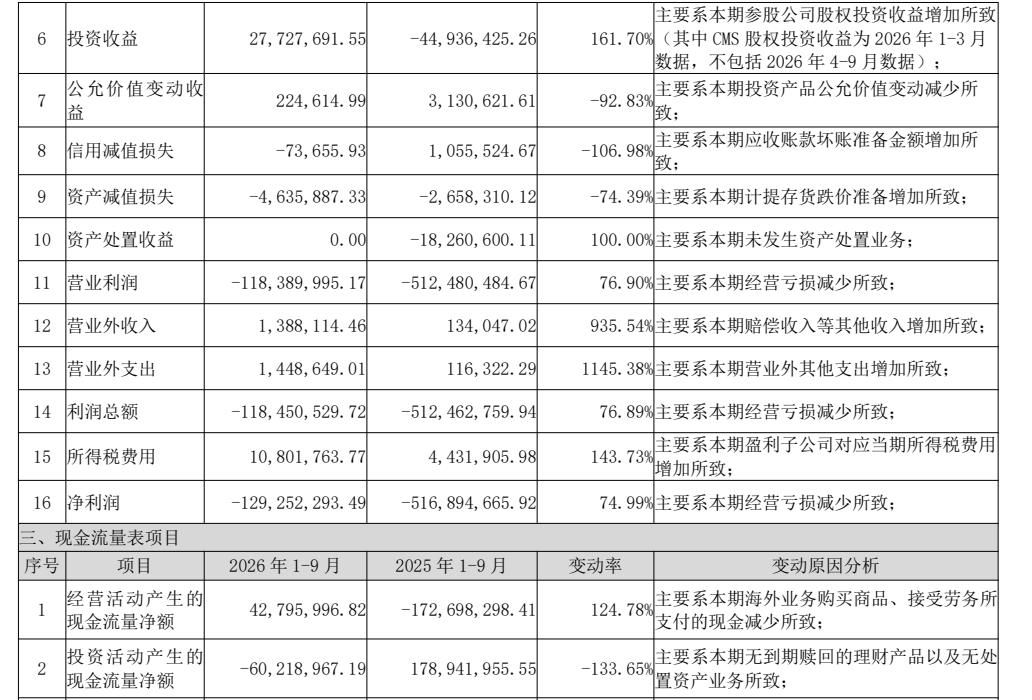
Figure 5 Investment Income and Cash Flow Statement Items. The company itself noted in the "Reason for Change" column: the CMS equity investment income is the data from January to March 2026, excluding April to September
Therefore, the Q3 report is not a financial report that can be simply defined as "thunderstorm" or "reversal". It proves that Chinese Online has the ability to reduce losses, and also exposes that revenue, cash flow and balance sheet have not been repaired synchronously. Therefore, Chinese Online may need to prove in the next report that the money saved can eventually become a sustainable business, rather than just a temporary respite on the income statement.