By analyzing nothing but a single face, half of the death list predicted by AI came true 90 days later.
Can a single facial photo reveal how much longer a person has to live?
Researchers in the United States had an AI assign a "mortality risk score" to 3820 cancer patients. The AI had never met any of these people before, and the only basis it had was a single facial photo of each patient.
Among the 122 people with the highest scores, 64 passed away within 90 days.
For the 975 people with the lowest scores, only 20 died over the same 90-day period.
These photos are nothing special, most of them were taken routinely by the hospital before the patients received radiotherapy.
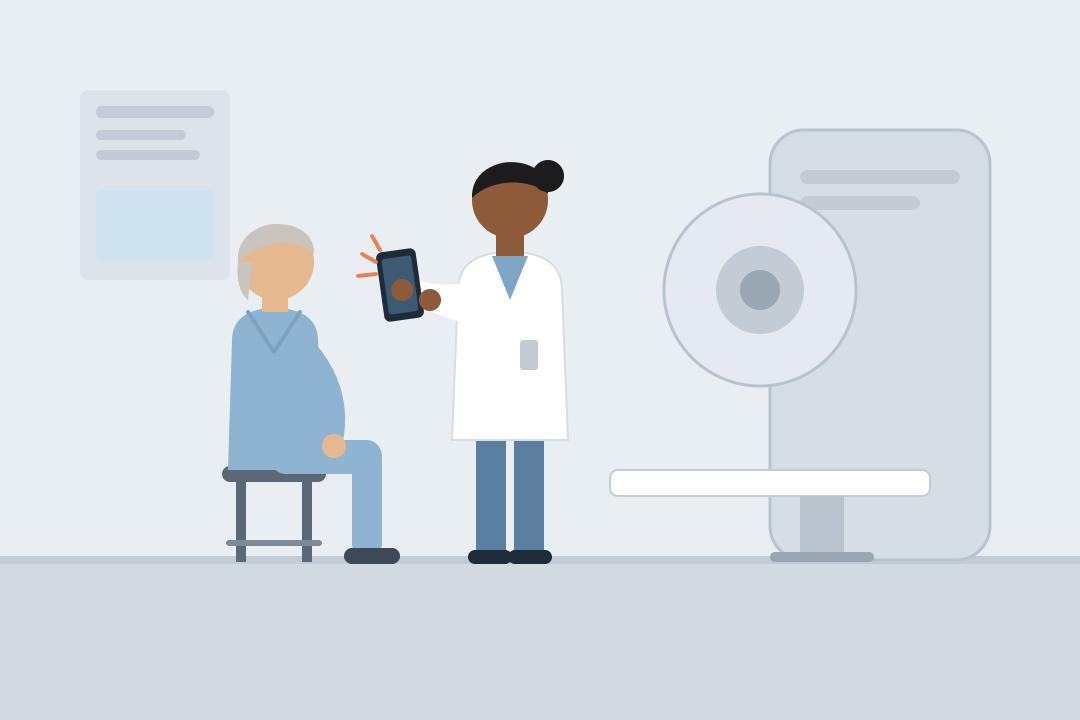
Hospitals routinely take photos of patients before radiotherapy丨AI-generated image
What the AI is doing here is something doctors actually do every day.
Ray Mak is a radiation oncologist at Mass General Brigham in the United States, and also one of the lead researchers of this study. He said, This is exactly how medical schools train doctors: when you walk into a patient's ward, you take a quick glance at them first to get a general sense of their overall condition.
This quick glance matters a lot.
Ray Mak once treated an 86-year-old lung cancer patient who looked much younger than his actual age, which was one of the reasons Ray Mak recommended him for more aggressive treatment. By last year, the patient was already 90 years old and still in good condition.
Later, when researchers used the AI to analyze his photo from that time, the AI estimated his age to be a full 10 years younger than his actual age.
The reverse is also true. Some people look more frail than their peers, and their bodies may not be able to withstand overly intensive treatment.
Doctors' first glance often affects subsequent treatment plans丨AI-generated image
The problem is that this first glance relies entirely on experience, and human observation has never been particularly reliable.
In the first-generation study published by this team last year, 10 doctors and researchers looked at photos of 100 patients with advanced cancer to judge their short-term survival. When only looking at the photos, their accuracy was about 60%, only slightly better than random guessing; after they got the AI's analysis results, their accuracy rose to around 80%.
This time, they wanted to make the AI even more accurate. On October 19, the new study was published in the medical journal *The Lancet Digital Health*.
Start with 40 Million Faces
The researchers didn't start by teaching the AI to identify patients. First, they showed the AI 40 million facial photos without telling it what to do.
After seeing so many faces, the AI gradually figured out the patterns of human faces: which parts are roughly the same for everyone, and which parts vary from person to person. This is a bit like a painter who has painted portraits for decades: without any medical training, they already have a keen grasp of the subtle differences on human faces.
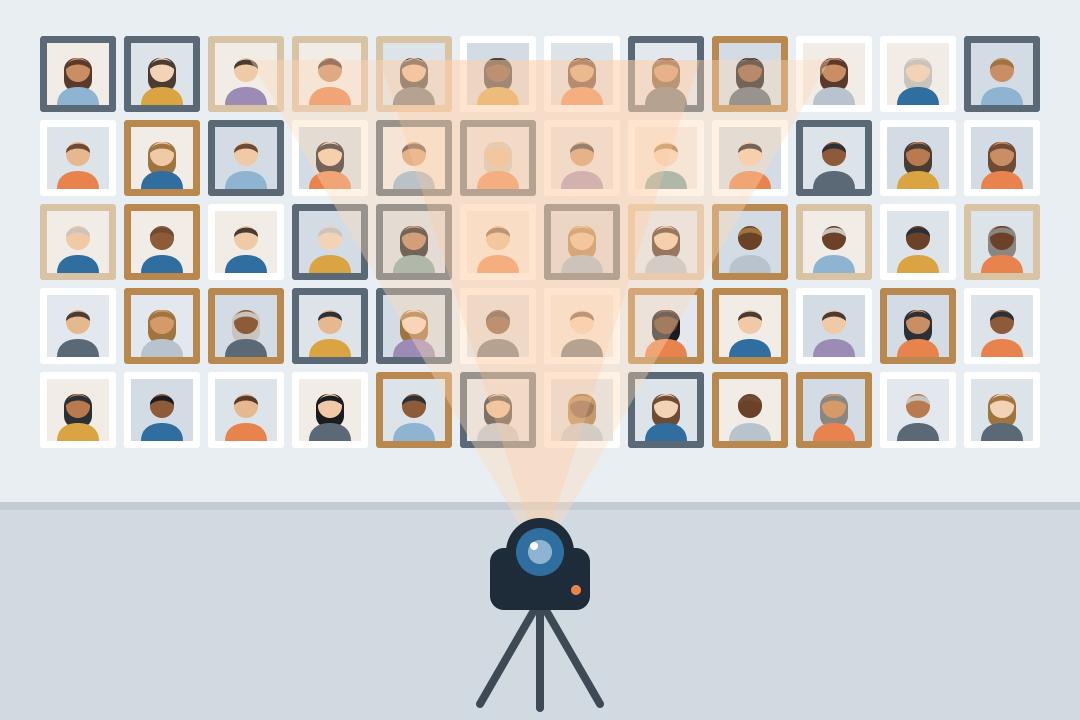
The AI first viewed 40 million facial photos丨AI-generated image
With a solid foundation laid, the researchers then began to teach it to assess health conditions.
First, they taught it to estimate "biological age". Biological age refers to the age of the body, not the age on an ID card. Two people may both be 60 years old, but one can climb five flights of stairs without getting winded, while the other gets tired after walking just a few steps, and their biological ages could be vastly different.
On the same foundation, they also developed a bolder version: directly estimating mortality risk from a face. To do this, the researchers fed photos of more than 34,000 cancer patients into the AI for learning, along with their subsequent survival outcomes.
The 3820 people mentioned at the beginning were specifically set aside as "test takers" that the AI had never learned from in advance.
As it turned out, neither of the two versions disappointed people.
We have already seen the AI's ability to directly estimate mortality risk at the beginning of this article. The research team wrote in the paper that to their knowledge, this is the first AI that can directly predict the survival outcomes of cancer patients using only a single facial photo.
The biological age estimation version also performed well. The researchers used it to view photos of more than 38,000 radiotherapy patients, and found that for people judged by the AI to "look more than 5 years older than their actual age", their mortality risk was still 21% higher even after accounting for factors such as chronological age, gender, and cancer type.
What's more interesting is that these two AIs are built on the same foundation, but their judgments are barely correlated, with different focuses. Using the two scores together is more accurate than using either one alone.
Clues Humans Cannot Interpret
Looking at the same face, where exactly are the two AIs focusing?
The researchers used a method called "attention map" to see where the AI's "gaze" falls when it analyzes a face. It is similar to a heat map: the brighter the color of an area, the more attention the AI pays to it.
The AI that estimates age focuses on nasolabial folds (the two lines extending from both sides of the nose to the corners of the mouth), as well as the forehead above the eyebrows and the temples. This is expected, as these areas are very prone to changes with age.
The AI that estimates mortality risk, however, focuses on the area under the eyes and around the bridge of the nose.
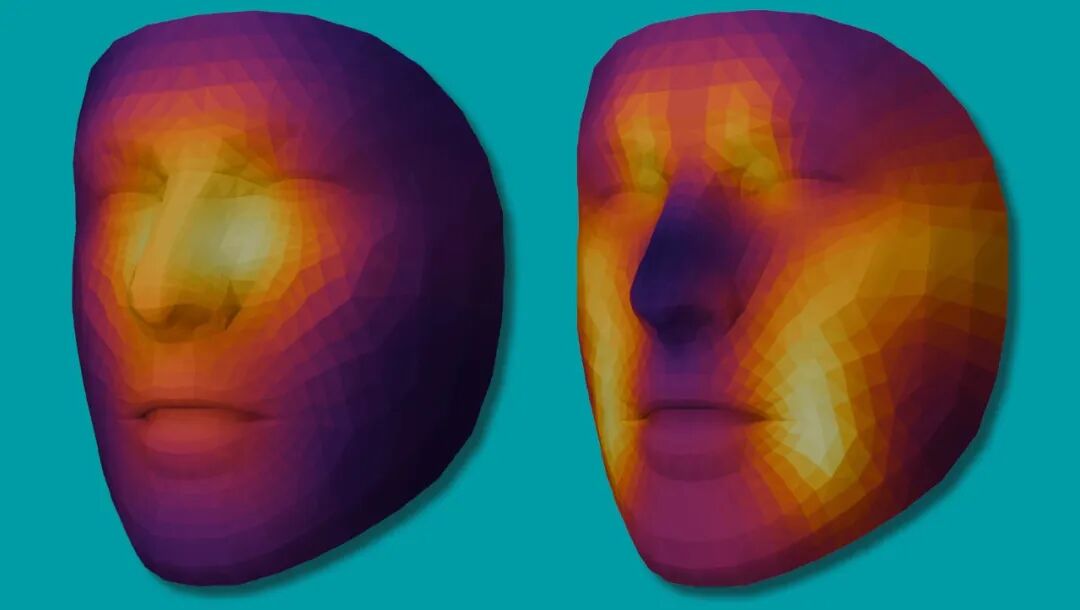
The "attention map" of the AI when predicting survival risk (left) and age (right): the brighter the color, the more attention the AI pays to that area丨Mass General Brigham
Why this specific area? The researchers cannot say for sure. Ray Mak explained that the attention map can only tell them where the AI is looking, but not exactly what it has seen.
Are they eye bags? Wrinkles? Pigment spots? Or skin texture? It cannot be determined at present.
In other words, the AI has captured a certain feature related to health status in this area, but what exactly this feature is remains undecipherable to humans for now.
However, some judgments made by the age-estimating AI do have identifiable explanations.
The researchers found that people who abuse alcohol, take drugs, and smoke all appear older in the AI's eyes. The pattern for smokers is the most obvious: current smokers look older than people who have quit smoking, and people who have quit smoking look older than people who have never smoked.
The damage caused by bad habits to the body seems to really leave marks on the face, and the AI can spot them.
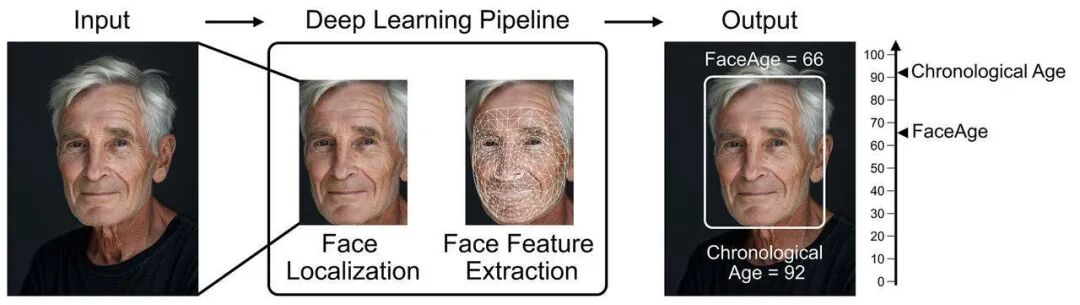
Schematic diagram of the process by which the AI assesses biological age through facial photos丨Mass General Brigham
Changing the photo pose, adjusting the lighting, changing the expression, or putting on makeup barely changes the results given by the age-estimating AI. Most cosmetic surgeries also fail to fool it.
The only exception is rhinoplasty. After people get nose jobs, the AI tends to estimate their age to be about one year older. Ray Mak speculates that this may be related to the local tissue loss caused by the surgery.
The Weight of a Single Selfie
Ray Mak hopes that this AI will be introduced into hospitals in the future to provide doctors with an extra reference, rather than making decisions for them. He even believes that in all medical scenarios where decisions are made based on chronological age, this algorithm can be used instead.
The team has already started trials in hospitals. They take photos of early-stage lung cancer patients over 65 who are about to receive radiotherapy, to see if the AI can identify those who are relatively frail and in need of extra nutritional support or rehabilitation training.
It could also act as an early warning system: If a person's face starts to age faster than their peers, it may mean that something abnormal is happening inside their body.
Ordinary people can already access this tool. Last March, the team quietly launched a research website, where anyone can upload a few selfies and get the biological age estimated by the AI in a few seconds. So far, more than 10,000 people have signed up. The researchers emphasize that the results are for research purposes only and do not constitute a medical diagnosis.
These selfies will in turn help the AI continue to learn. This is exactly what it needs most right now: the mortality risk prediction AI was trained on photos of patients in the Boston area, most of whom are white. It is still unclear whether it will remain accurate when applied to people of other backgrounds. The team hopes to use the photos uploaded by the public to let the AI see more diverse faces.
A facial photo can help doctors identify patients who need extra care, but it could also be used by insurance companies to decide whether to issue a policy丨AI-generated image
What is more difficult than the technology itself are the issues beyond technology.
Matthew Liao, director of the Center for Bioethics at New York University, believes that this type of tool may help doctors identify patients who need extra care; but the AI can also make mistakes. Once a patient in need of treatment is misjudged as "fine", that person may not receive the care they deserve.
He also worries about another scenario: Insurance companies use it to decide whether to underwrite a person, and employers use it to pick the "healthier" candidate from a pool of job applicants.
Taking a facial photo only takes one second, and almost everyone has one on their phone. This is both the advantage of this technology and what makes people uneasy about it.
Matthew Liao says that while advancing this technology, we really need to think through its impact on society.
References
[1] Can AI predict whether you’ll die from cancer from just an image of your face? Scientific American, 2026-10-19. https://www.scientificamerican.com/article/can-ai-predict-whether-youll-die-from-cancer-from-just-an-image-of-your-face/
[2] Haugg F, et al. Foundation artificial intelligence models for health recognition by use of face photographs (FAHR-Face): a model development and validation study. The Lancet Digital Health, 2026. DOI: 10.1016/j.landig.2026.101056
[3] Mass General Brigham. AI facial health recognition tools help physicians assess age and survival risk to guide personalized treatment. 2026-10-19. https://news.massgeneralbrigham.org/en/ai-facial-recognition-tools-assess-age-cancer-survival-risk
[4] Bontempi D, et al. FaceAge, a deep learning system to estimate biological age from face photographs to improve prognostication: a model development and validation study. The Lancet Digital Health, 2025. DOI: 10.1016/j.landig.2025.03.002
[5] Rahal S. You can now upload a selfie to a Mass General Brigham AI tool and it’ll estimate your biological age. The Boston Globe, 2026-10-20. https://www.bostonglobe.com/2026/10/20/metro/ai-biological-age-face-selfie-free-tool/
This article is from the WeChat Official Account "Guokr" (ID: Guokr42), written by Steed, published with authorization from 36Kr.