The root cause of the iPhone Duo's screen cracking issue has been confirmed, the repair cost is nearly 8,000 yuan, and the product has already fallen below its official launch price on Pinduoduo.
The highly anticipated iPhone Duo has been met with a wave of complaints just a few days after its launch.
To start with, its software adaptation is not fully optimized, and a number of apps still leave large black borders after being expanded, the "shared screen area" is surprisingly large.
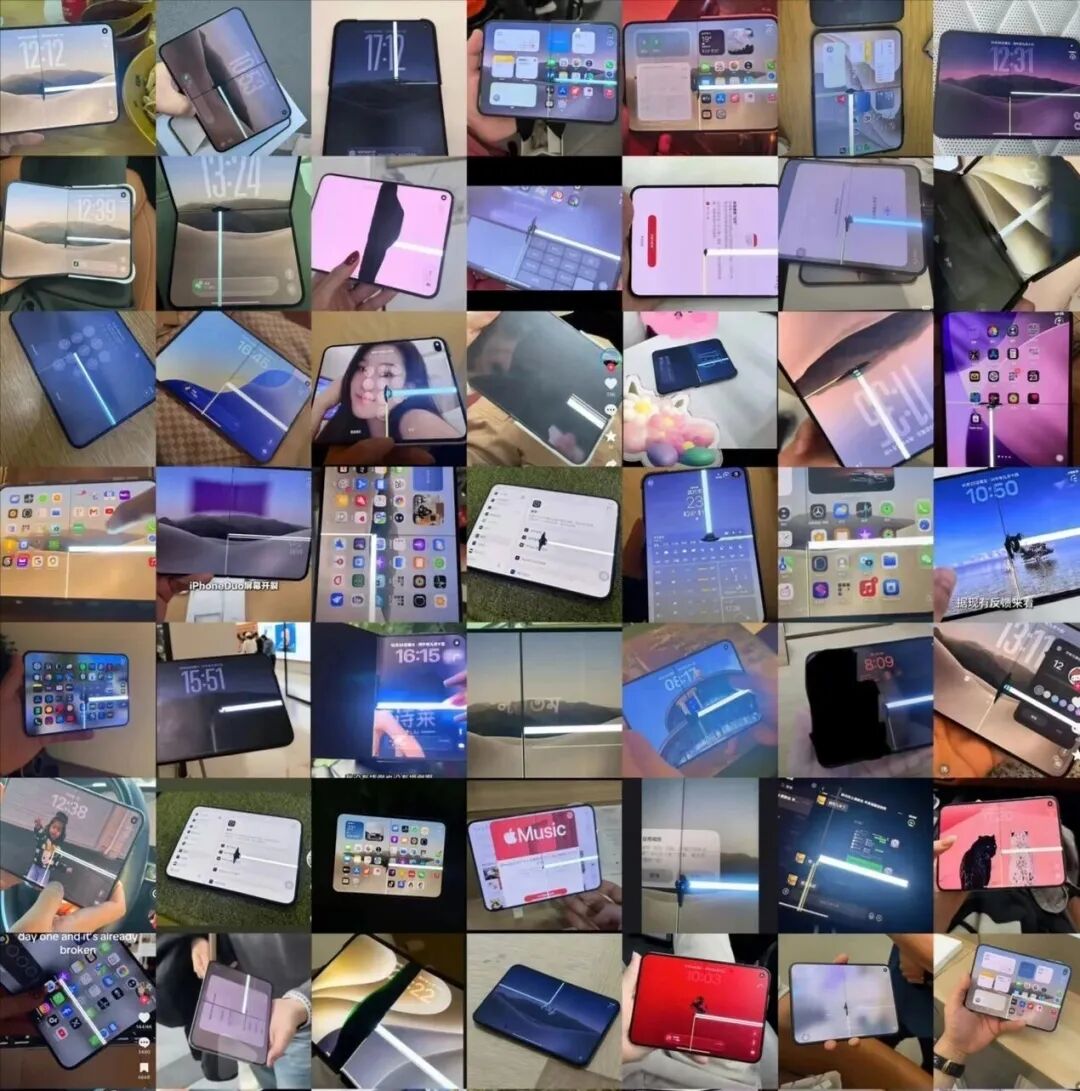
Worse still, many users reported that their iPhone Duo suddenly made abnormal noises during normal opening and closing, followed by cracks and bright lines appearing on the inner screen.
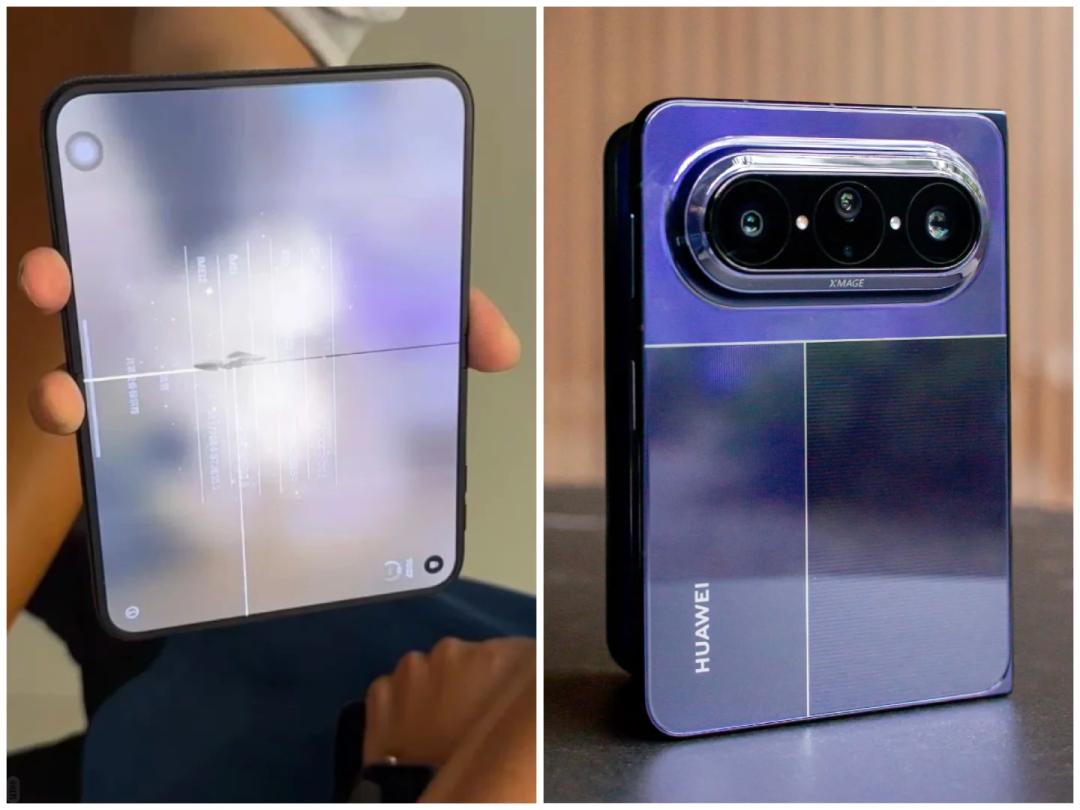
Upon closer inspection, these cracks almost all appear at the same position, slightly below the hinge in the middle of the screen.
To be fair, this design looks quite similar to the back cover of the Huawei Pura X max...
Meanwhile, the 256GB version originally priced at 15,999 yuan under Pinduoduo's multi-billion subsidy program has dropped to 15,799 yuan.
A few days ago, this phone was even resold by scalpers at a markup of several thousand yuan, but now its price has fallen below the official launch price. Those who still have unsold stocks are likely to be extremely frustrated by the situation.
On October 25, teardown agency iFixit released a full disassembly report, stating that the screen cracking issue may be related to the support structure at the center of the hinge.
If the hinge support structure does not give way sufficiently when the phone is closed, it may squeeze the inner screen and cause screen damage.
An industry insider told Tech Daily Push that Apple's design and production are separated, and production performance is mainly assessed based on output. If hinge issues emerge after launch, it will be extremely difficult to resolve them in a short time.
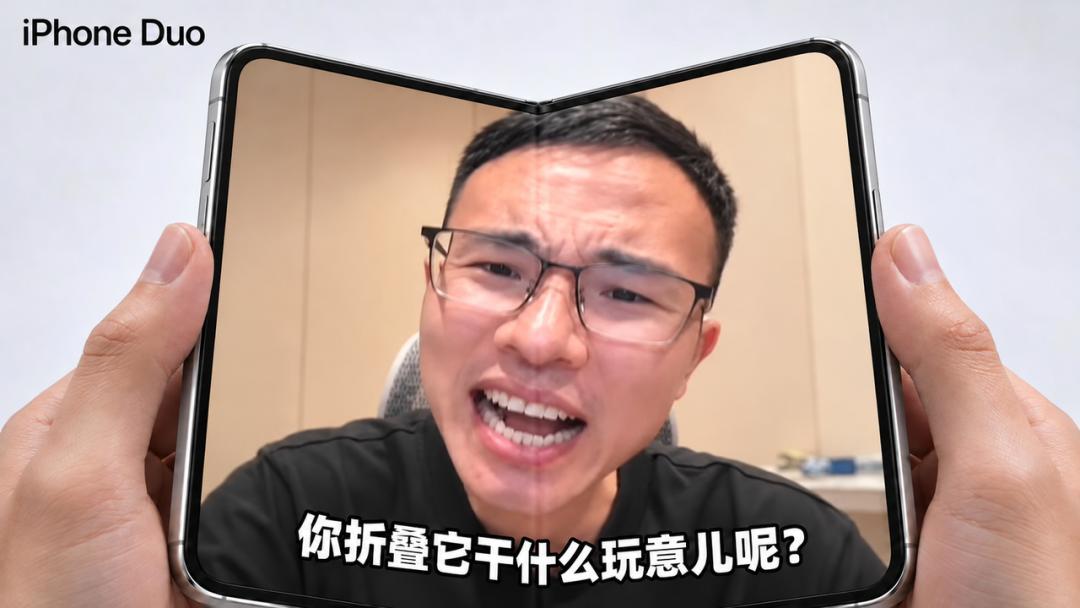
The most repairable foldable screen, with a repair cost of 7,998 yuan
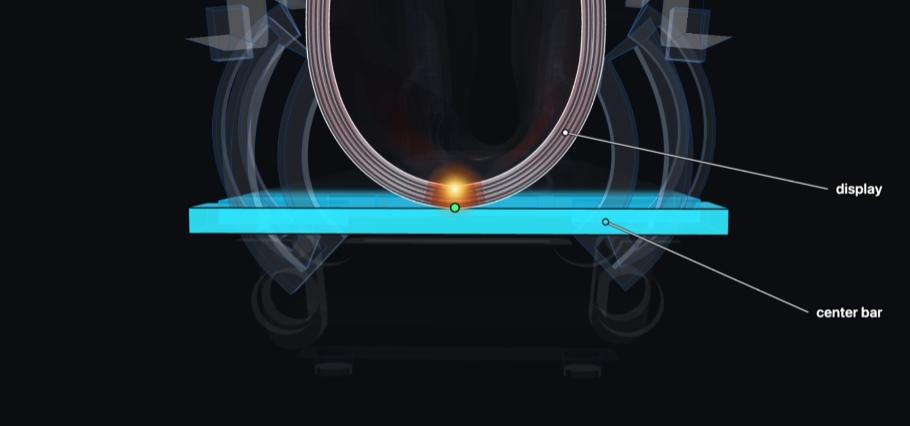
As the most well-known teardown agency in the industry, iFixit combined CT scanning and disassembly results to put forward a possible explanation for this screen cracking issue:
The intersection of the horizontal and vertical bright lines from the cracked screen exactly corresponds to a set of metal support structures at the center of the hinge.
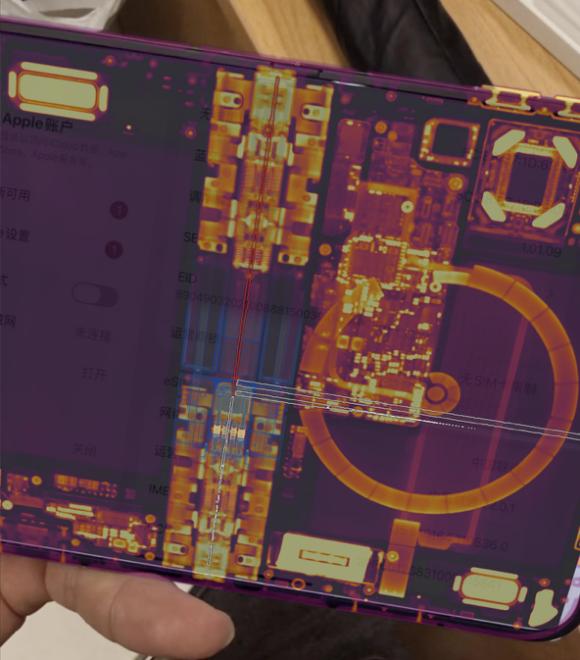
Under normal circumstances, this structure supports the screen when the phone is unfolded; when the phone is folded, it needs to move down to make space for the screen to bend.
However, if the central metal support rod does not fully move down, it may push the screen from below when the phone is folded.
In this case, the screen that is supposed to bend naturally along the hinge will be squeezed by the metal component, resulting in excessive local pressure, which may damage the internal circuits and cause bright lines or even cracks.
iFixit believes that this may be the cause of inner screen damage on some iPhone Duo units. However, it is still unclear whether the hinge itself has a design flaw or if individual parts have malfunctioned.
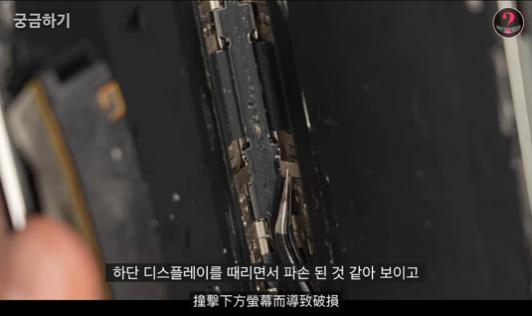
Another Korean blogger disassembled an iPhone Duo with a damaged screen and also found abnormalities in the hinge.
A thin metal connecting piece at the center of the hinge has broken, and the fracture position is very close to the intersection of the horizontal and vertical bright lines.
Apart from this hinge design issue, other parts of the iPhone Duo are quite well-designed.
iFixit believes that this is the easiest foldable phone to disassemble and repair among all the foldable devices they have tested so far.
The outer screen can be removed as a whole, the battery is easy to access, and the inner screen bezel is fixed with snaps, all of which are not difficult to repair.
However, the inner screen that has the problem this time is extremely expensive to repair.
According to the prices announced on Apple's official website, the estimated out-of-warranty repair cost for the inner screen of the Chinese mainland version is as high as 7,998 yuan, nearly half of the starting price of the new device.
The first-generation foldable screen has to pay the tuition fee
Apart from the iPhone Duo, Samsung also encountered major setbacks when it first started producing foldable phones.
In 2019, Samsung released its first foldable phone Galaxy Fold, which was originally scheduled to launch in April, but the review units sent to media outlets suffered from one failure after another.
Some screens developed bright lines and black screens after just a few days of use, and some even bulged with a small bump.
Disassembly revealed that one of the problems lay in the hinge.
Due to the large gap between the hinge and the body, foreign objects such as dust and debris could get under the screen and damage the flexible display from the back side.
Some reviewers mistook the protective layer on the screen surface for an ordinary screen protector and tore it off, which directly rendered the inner screen completely unusable.
In the end, Samsung had to recall all the review units and postpone the launch for nearly five months.
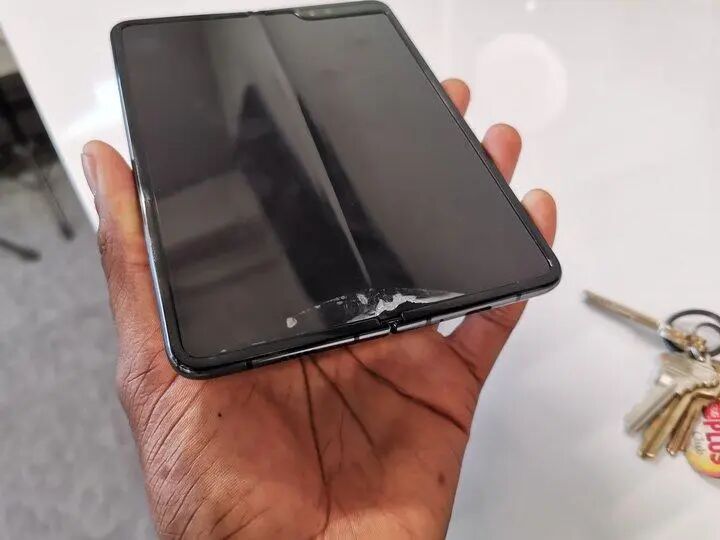
During this period, Samsung revised the product structure, added protective covers to the top and bottom of the hinge, narrowed the gaps in the body, and added a metal reinforcing layer under the screen.
In comparison, domestic foldable phones in China have not had major catastrophic issues, and the main problems in the early stage were relatively severe creases and insufficient inner screen durability.
After generations of upgrades, Huawei and OPPO have successively launched water-drop hinges: the screen is no longer forcibly folded to 180 degrees, but bent into a water-drop shape, with a larger bending radius, so the crease naturally becomes much less noticeable.
In terms of inner screen materials, the soft film was replaced by UTG ultra-thin glass, which is harder and more wear-resistant.
For the Find N6 released in March this year, OPPO further upgraded the hinge.
With a flatter metal support structure, the screen is less likely to sag downward when unfolded; at the same time, special resilient glass is used, so that the traces left by folding will gradually flatten out after the screen is unfolded.
Even when the screen is off, the crease is almost invisible.
From the hinge structure to the screen material, domestic manufacturers have spent generations of products continuously solving the problems of creases and durability.
Although Apple applied for foldable screen patents very early and now uses the mature water-drop hinge solution, it still encountered troubles when it came to mass production for the first time.
The first major test for Apple's new CEO
Apart from product design, the screen issue of the iPhone Duo has also drawn public attention to the relationship between Apple and its supply chain.
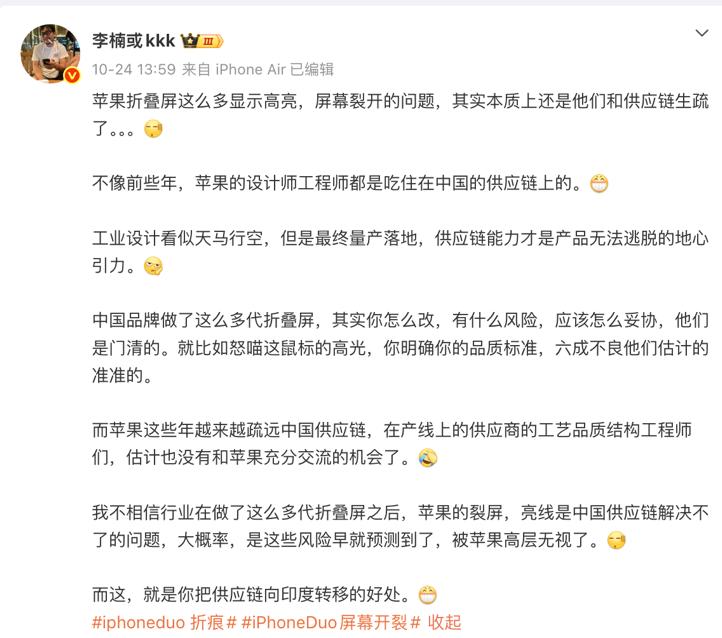
Li Nan, former senior executive of Meizu, believes that Apple may have become somewhat unfamiliar with the Chinese supply chain.
In the past, Apple engineers stayed in Chinese factories for a long time, and both sides could communicate directly to solve problems encountered in design and manufacturing.
Nowadays, this connection is not as close as before, and the experience accumulated on the production line may not be fed back to the design team in a timely manner.
It is worth noting that Ternus, who just took over as Apple's CEO in September this year, has a different professional background from his predecessor Tim Cook.
Cook has a background in supply chain management, while Ternus is a hardware engineer who was previously mainly responsible for Apple's product R&D.
As early as 2011, Ternus submitted a foldable device patent together with other Apple engineers; earlier this year, in an interview, he even criticized the early foldable products from other peers as cheap and rough.
Unexpectedly, after years of waiting, Apple's first-generation foldable phone still encountered problems.
For Ternus, this test is particularly important.
In the past few years, Apple's decade-long electric vehicle project was finally canceled, the Vision Pro delivered mediocre market performance, and its AI business was also questioned for its slow progress.
As the first major new product released after Ternus took office, the iPhone Duo not only needs to prove Apple's innovation capability, but also determines whether the new CEO can make a successful start in his new position.
Seven years ago, Samsung spent five months fixing the issues of its first-generation foldable phone, and now it is Apple's turn to solve this problem.
This article is from the WeChat official account "Tech Daily Push", author: Tech Daily Push, published with authorization from 36Kr.