Multi-brand Robot Stores: High traffic, but hard to turn a profit.
Shopping malls are welcoming a new group of permanent residents.
Robot dogs somersault, humanoid robots dance, the surrounding crowd keeps taking pictures with their phones, and children squeeze to the front row, eager to get close and touch these novel "guys". Such scenes are increasingly appearing in major shopping malls, and robots have become a new attraction to draw foot traffic.
Previously, some robot manufacturers opened brand direct stores in core business districts to sell their own products. Nowadays, robot stores have a new gameplay: gathering robots of different brands and types in one store to run a collective business.
Some of these collective stores focus on experience and retail, others draw on the model of automobile 4S stores, integrating sales, leasing, customization, research and study tours and other services into one store, and even 6S, 7S and 9S stores have emerged.
The expansion speed is also very fast. On July 28 last year, the world's first robot 6S store opened in Longgang, Shenzhen. A year later, more than 20 similar stores have opened across the country, with signed coverage of 23 cities.
While more and more stores are opening, not many people are willing to pay for robots.
Recently, 「AIX Finance」 visited a number of robot collective stores in Beijing and found that what attracts consumers to stop and watch are humanoid robots that can dance and demonstrate kung fu, while the products that are actually easier to sell are companion and educational products with relatively affordable prices.
The household robot market is still in its early stage, and robots priced at tens of thousands of yuan are still out of reach for ordinary consumers. So what exactly are these robot collective stores selling? Who is opening these stores? Is this business really easy to run?
01 More onlookers, fewer paying customers
At present, the robot collective stores on the market are roughly divided into two categories.
The first category is product collective stores, represented by Tao Zhu New Creation Bureau, INNO100, and the robot experience store of JD MALL, most of which are located in shopping malls, mainly targeting ordinary consumers, attracting foot traffic through experience and then converting it into product sales.
「AIX Finance」 visited multiple stores of Tao Zhu New Creation Bureau in Beijing and found that even for the same brand, there are large differences in the scale and product categories of different stores.
According to the official introduction to the media, the Shougang Park store in Shijingshan is equipped with multiple sections such as smart product display area, robot interactive experience area, and technology development history area, displaying more than 200 robot products from enterprises including Unitree, Songyan Power, and Galaxy General, focusing more on robot display and interactive experience.
The stores in shopping malls such as Solana and Hopson One present a different scene. 「AIX Finance」 found through visits that these stores are relatively small in size, basically have no humanoid robots that can dance or demonstrate kung fu, and the shelves are mostly filled with companion, early learning robots and various AI hardware, looking more like AI hardware retail stores.
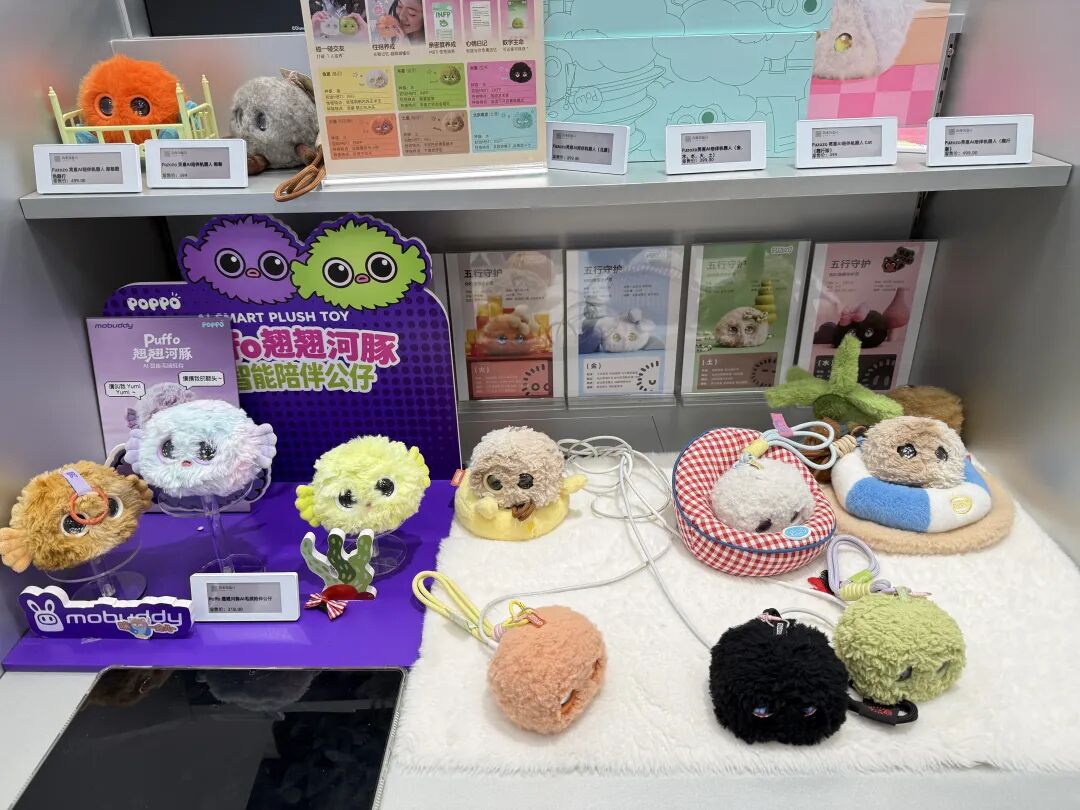
Companion robot exhibition area in Tao Zhu New Creation Bureau store
Take the Hopson One store as an example, the VITAPOW robot dog at the entrance is responsible for "attracting customers", and passing children often stop to interact with it. Going further inside, products such as companion robots, AI air guitars, AI glasses, and smart speakers are placed on different exhibition stands, where consumers can experience them hands-on, and store staff will provide guidance nearby.
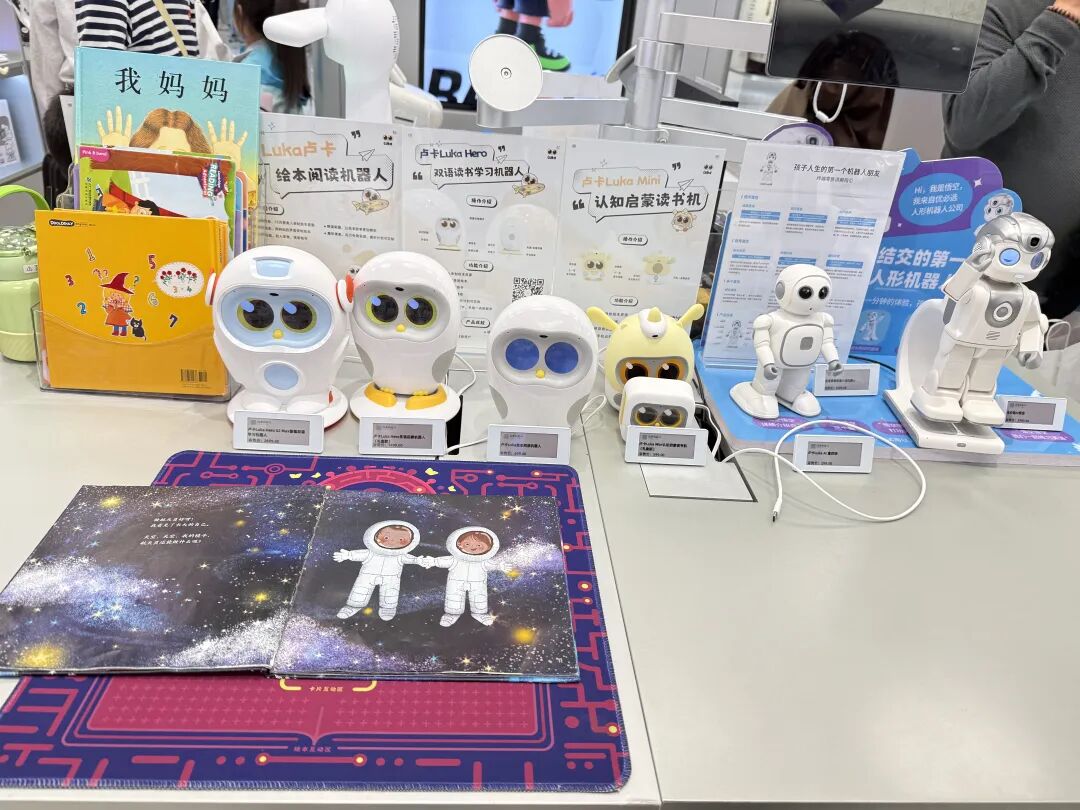
Educational robot exhibition area in Tao Zhu New Creation Bureau store
Robot products account for about 70% of the products in the store, mainly companion and educational robots, including brands such as RoboIntelligence, Ling Technology, Can Technology, Aibingo, and UBTECH. Compared with well-known humanoid robot manufacturers such as Unitree and Agibot, these brands have relatively limited popularity in the consumer market. The products are mainly companion robots that can provide voice interaction, as well as educational robots and Go robots that assist children in learning, with prices ranging from 399 yuan to 2399 yuan.
Not all the products that sell well are robots. A salesperson at a Beijing store told 「AIX Finance」 that the currently best-selling products in the store are AI air guitars and companion robots. The AI air guitars sell well due to novel gameplay, high online attention, and store discounts. Companion robots with early education functions are more popular with parents, their prices are close to some learning machines, and they can also provide voice interaction and companion functions.
The second category is service-oriented collective stores, represented by Beijing Yizhuang Robot 4S Store, Shenzhen Longgang Robot 6S Store, and Changsha Robot 9S Store. Such stores usually have larger areas and more displayed products. In addition to sales, they also provide services such as robot leasing, customization, and research study tours, and some stores charge for visiting experiences.
According to the definition of the automotive industry, 4S stores include four businesses: whole vehicle sales, spare parts, after-sales service, and information feedback. However, in robot collective stores, names such as 4S, 6S, and 9S do not form strict business boundaries, and the number of "S" does not specifically refer to a certain business.
「AIX Finance」 also visited the Beijing Yizhuang Robot 4S Store. It is more like a robot exhibition hall. The first and second floors bring together mainstream robot brands such as Unitree, Agibot, and StarMap, with display scenarios covering health care, medical treatment, education, cultural tourism and other fields.
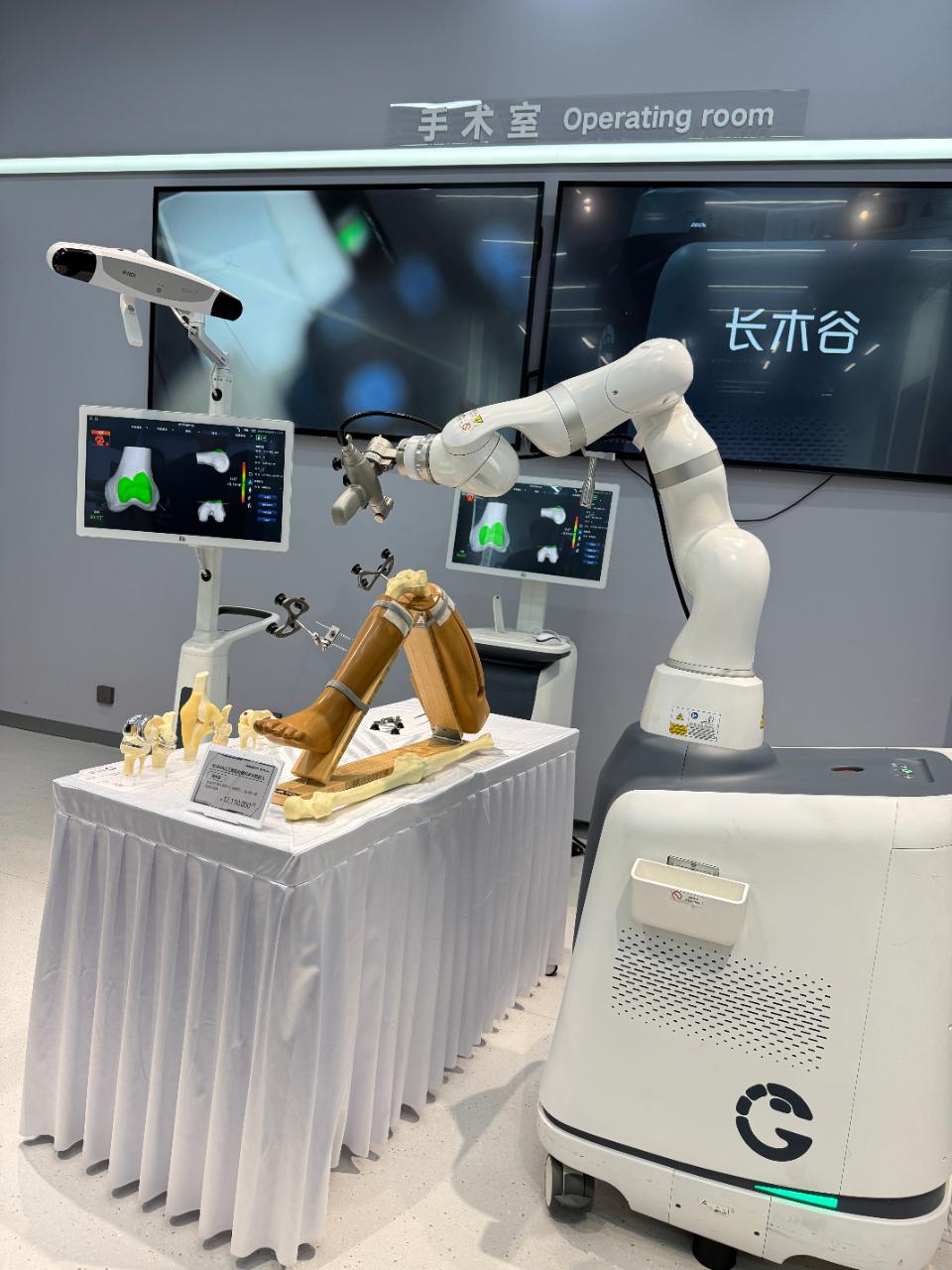
Robot medical scenario display in Yizhuang Robot 4S Store
Different from product collective stores in shopping malls that allow entry and experience at any time, visiting Yizhuang Robot 4S Store on weekends requires advance reservation, with a ticket price of 98 yuan. When 「AIX Finance」 made a reservation at noon on Friday, it found that there were only a small number of remaining tickets for multiple sessions on weekends.
The visit takes about an hour, during which visitors are led by an interpreter to visit different exhibition stands on the first and second floors. In the about 50-minute explanation, in addition to introducing the functions and application scenarios of various robots, the interpreter will also mention the achievements of some products in robot competitions. The exhibition hall covers application scenarios such as logistics, health care, medical treatment, and entertainment, but in practice, scenario displays of dance and kung fu account for a large proportion.
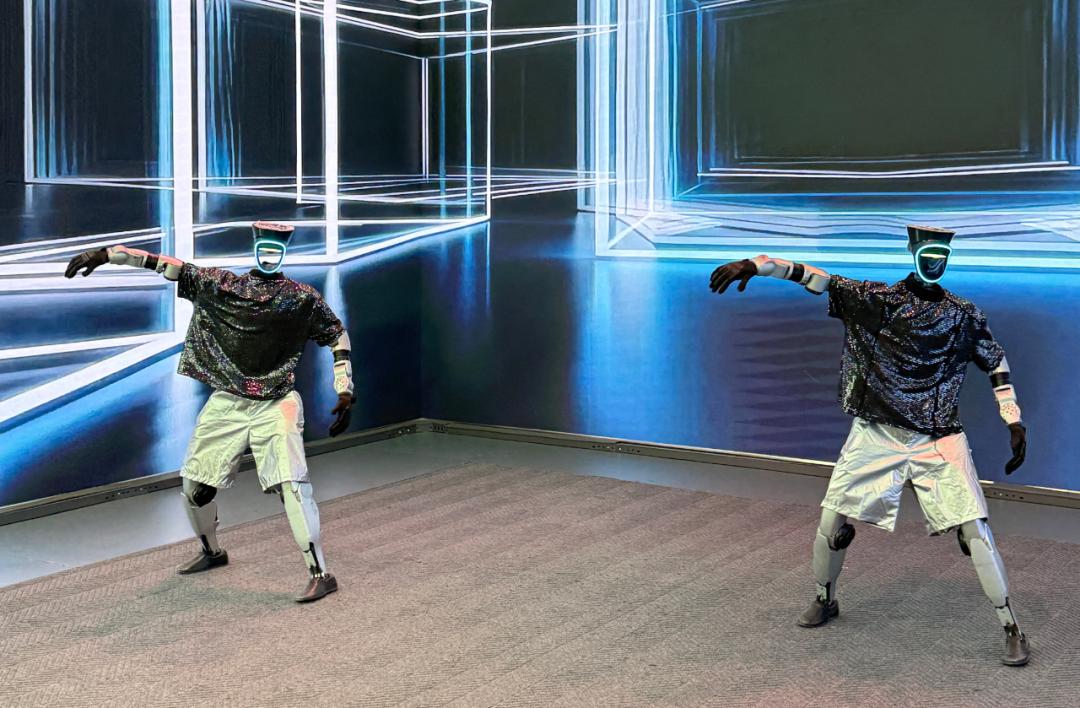
Robots performing dance in Yizhuang Robot 4S Store
These exhibition stands are also the most popular. Humanoid robots perform mantis boxing, tai chi, and K-pop dance, drawing cheers from the audience from time to time. Interactive projects such as simulating traditional Chinese medicine pulse diagnosis and making portraits into coffee latte art also attract everyone to participate. Simulated robots such as Li Bai and Albert Einstein also attract many tourists through voice interaction.
After the explanation, visitors have about 10 minutes of free experience time, where they can interact with the simulated robots, or try experience projects such as controlling the car through concentration. The exhibition hall also has a product sales area, in addition to cultural and creative peripherals, it also sells small robot products such as companion, educational and Go robots.
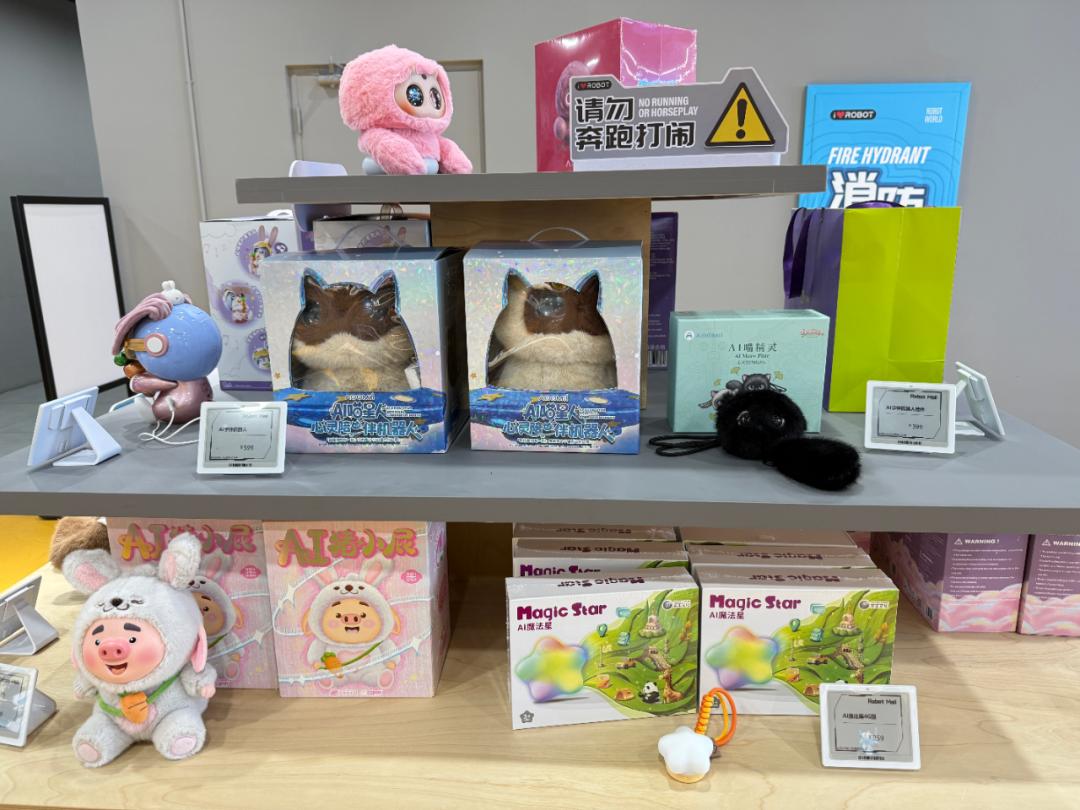
Robots sold in Yizhuang Robot 4S Store
The humanoid robots that attract a large number of tourists to watch on site are not the main best-selling products of the store. According to the staff, the best-selling products in the store are mainly companion robots and small early education robots.
In this regard, although the two types of stores have different positioning, the products that sell well are all products with relatively affordable prices. Large humanoid robots cost tens of thousands or even hundreds of thousands of yuan, and the purchase demand mostly comes from customers with clear application scenarios such as schools, enterprises, and scenic spots.
02 Four types of players, with different purposes for opening stores
The players deploying robot collective stores can be roughly divided into four categories: industrial capital, e-commerce platforms, local industrial platforms and government-supported projects, and private operators. They have different purposes for opening stores, and different requirements for whether the stores themselves are profitable.
The first category is industrial capital.
For example, behind Tao Zhu New Creation Bureau is the state-owned listed company Shoucheng Holdings. A staff member at one of its Beijing stores told 「AIX Finance」 that all stores adopt a direct operation model, in addition to enterprises invested by Shoucheng Holdings that can settle in, external enterprises can also apply. The stores mainly target early-stage and growing enterprises, do not require products to have mature sales performance, and value the future commercialization space more. In addition, goods can be transferred between different stores, if the product consumers want to buy is not available in their local store, it can be transferred from other stores.
Some practitioners believe that such stores are more like post-investment empowerment tools to help invested enterprises contact consumers, verify products, and accumulate reputation, and "making money" may not be the primary assessment goal at this stage.
The second category is e-commerce platforms, represented by JD.
In May this year, JD opened the JD MALL consumer-grade robot experience store in Shuangjing, Beijing, and then set up a comprehensive robot experience hall in Shanghai JD MALL, expanding the offline robot sales channel through multi-brand display and interactive experience. Take the Shuangjing store in Beijing as an example, the official introduction says that the store brings together 20 leading brands including Unitree and UBTECH, providing various products such as humanoid robots, quadruped robot dogs, and household service robots.
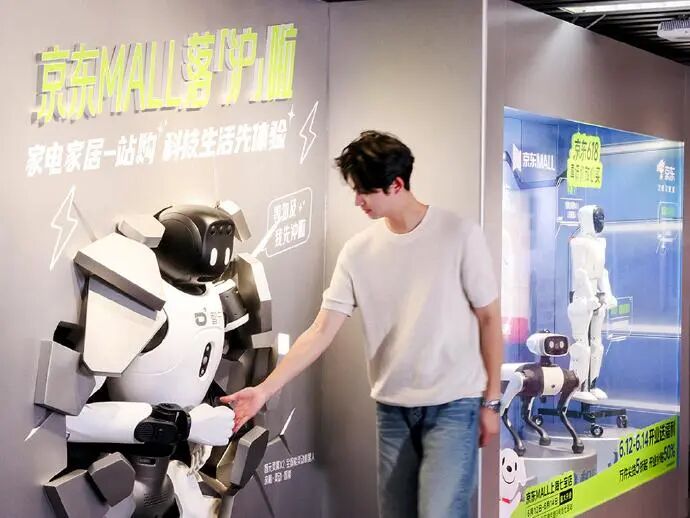
Source / JD MALL official Weibo
JD's layout is not limited to retail. In August this year, JD proposed to build 80 RoboBase robot bases in the next five years, covering links such as robot display and delivery, maintenance, R&D and design, pilot assembly, and data collection.
For JD, offline experience stores can help consumers understand and experience robots, while RoboBase further extends to the delivery and service links of the industrial chain. JD hopes to use its existing retail, supply chain and service resources to deploy the emerging category of robots in advance.
The third category is local industrial platforms and local governments.
Take the Beijing Yizhuang Robot 4S Store as an example, its operator is Beijing Yizhuang Robot Technology Industry Development Co., Ltd., backed by the local state-owned platform Beijing Yizhuang Investment Holding Co., Ltd. In addition to state-owned capital participating in the operation, Beijing Economic and Technological Development Area has also issued policies to include new formats such as robot 4S stores in the support scope. Recognized projects can get support at 30% of the actual robot procurement amount, up to 10 million yuan, to reduce equipment procurement investment for related projects.
Similar layouts have also appeared in Shenzhen, Jiangsu and other places. Longgang, Shenzhen regards the robot 6S store as an important part of the robot characteristic block, promoting enterprises to display products and connect application scenarios. In May this year, the first robot 4S store in Yancheng, Jiangsu opened in the Jianhu Robot Industrial Park, jointly built by Beijing Yizhuang Robot Technology Industry Development Co., Ltd. and the local industrial platform, providing services such as product display, sales, leasing and research study tours.
Such stores undertake functions such as industrial display and supply-demand docking. By centrally displaying the products of robot enterprises and promoting the implementation of application scenarios, they help enterprises reach potential customers, and at the same time attract upstream and downstream enterprises to gather.
The fourth category is private operators and their franchisees, who are the group that really needs to make money from the stores themselves.
For example, the operator of Changsha Robot 9S Store, Super Robot, adopts a franchise model, providing different product and service combinations according to the capital budget of franchisees. Such enterprises hope to reach more customers through the store network, expand robot sales, leasing, customization and other businesses, and explore a sustainable and replicable business model at the same time.
Therefore, robot collective stores are opening very fast, but the considerations behind them are different. Industrial capital, e-commerce platforms and local governments open stores, valuing channel layout, industrial investment attraction, and ecological connection, and are not in a hurry to calculate profit and loss at the single store level; brand operators expand through the franchise model, the store opening funds are mainly borne by franchisees, and they can quickly expand with light assets.
03 Investing millions, how to get the money back?
Robot collective stores can run many businesses, but for operators who want to enter the market, they have to do the accounts first.
Let's look at the investment first.
A recruitment staff of a robot 4S store brand told 「AIX Finance」 that opening a robot 4S store pays attention to "doing things according to the capital you have". Small stores can sell popular products to drive volume, while large stores can add services such as leasing, customization, and research study tours. The larger the store area and the richer the business, the more money you need to invest. Take a 400-square-meter robot 4S store as an example, the initial investment is at least 2 million to 3 million yuan, not including the site rent.
The money is mainly spent on equipment, site and operation. Compared with ordinary digital retail stores, the equipment procurement cost of robot collective stores is higher. A single humanoid robot may cost hundreds of thousands of yuan, if you want to display multiple brands and different types of products at the same time, only stocking requires a considerable investment. The aforementioned brand recruitment staff mentioned that they have established cooperation with more than 90 robot manufacturers, and can provide franchisees with a 20% to 30% discount on procurement prices.
In addition, the store also needs to