The Agent that helps users snap up foldable iPhones is shaping the landscape of e-commerce in the AI era.
On the early morning of October 16, Apple's first foldable smartphone iPhone Duo opened for pre-orders. It starts at $1,999. Due to tight initial production capacity, the delivery date was soon pushed to January next year.
This time, it is not only people waiting in front of screens that are snatching the first batch of units.
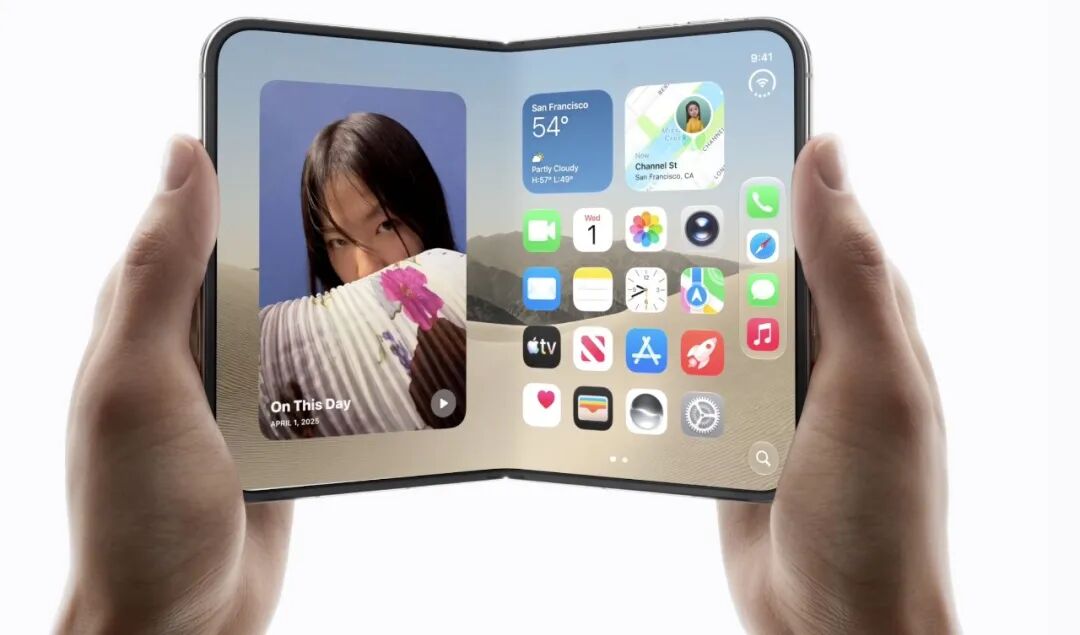
This year, Agents have become the strictest supervisor for iPhone Duo scalpers | Image source: Apple
On the MacRumors forum, a user who failed to grab a unit complained angrily that someone on Reddit was showing off that the Muse bot he set up snapped up several units in one go. Before real users could even click to place an order, the inventory was swept up by AI.
Muse is Meta's personal Agent launched on September 8. After its release, it once topped the free app chart on the US App Store, with its downloads quickly exceeding 2.5 million. Meta stated that shopping has become one of the most important usage scenarios for Muse. Right around the launch of iPhone Duo, Muse also released a new version specially adapted for this new phone, and the very next line in the update notes says that it makes shopping in chats more convenient.
AI shopping on behalf of humans has moved from demonstrations at press conferences to real rush-buying scenarios.
But not every store welcomes these new customers. In late September, Amazon began to ban Muse. By October, users of Elon Musk's Grok Bot also encountered the same warning when placing orders on Amazon: continued access by unauthorized AI agents violates Amazon's terms of service.
Another company, Shopify, took a completely opposite path. On September 21, Shopify CEO Tobi Lütke announced an in-depth cooperation with Muse, allowing Muse to complete checkout at all Shopify stores using Shop Pay.
And Shopify's financial report has already shown the early returns of this path. In the first quarter of this year, orders from AI search increased by nearly 13 times year-on-year, and AI-driven store traffic increased by 8 times.
One side closes the door while the other opens it. When more and more shopping decisions are handed over to Agents, will "whether to let Agents in" become a key variable in the e-commerce ranking in the AI era?
01 The underlying space behind the 13-fold growth
Shopify is the most active "player" in this round of AI shopping boom.
In the fourth quarter of 2025, it reported a 15-fold growth in AI-driven orders. In the first quarter of 2026, AI-driven store traffic increased by 8 times year-on-year, orders generated by AI search increased by nearly 13 times, and the growth rate of new buyer orders from AI search was nearly twice that of traditional organic search. In the same quarter, Shopify delivered its fastest revenue growth rate in more than four years.
In the second quarter, the growth multiple dropped back to 3 times, and AI-driven traffic and orders were both three times that of the same period last year. But the structure of this quarter is more notable: 75% of AI-attributed purchases occurred outside the top 100 categories on the platform, and the conversion rate of AI search completed through Shopify Catalog is twice that of ordinary AI search.
This set of data indicates "rapid growth" rather than "large scale".
Shopify itself was very frank. At the second quarter earnings call, President Harley Finkelstein acknowledged that the transaction volume of agentic commerce is still very small relative to the platform's huge GMV. So far, Shopify has not disclosed the absolute value or proportion of GMV from AI channels, and its GMV in the second quarter was 116 billion US dollars.
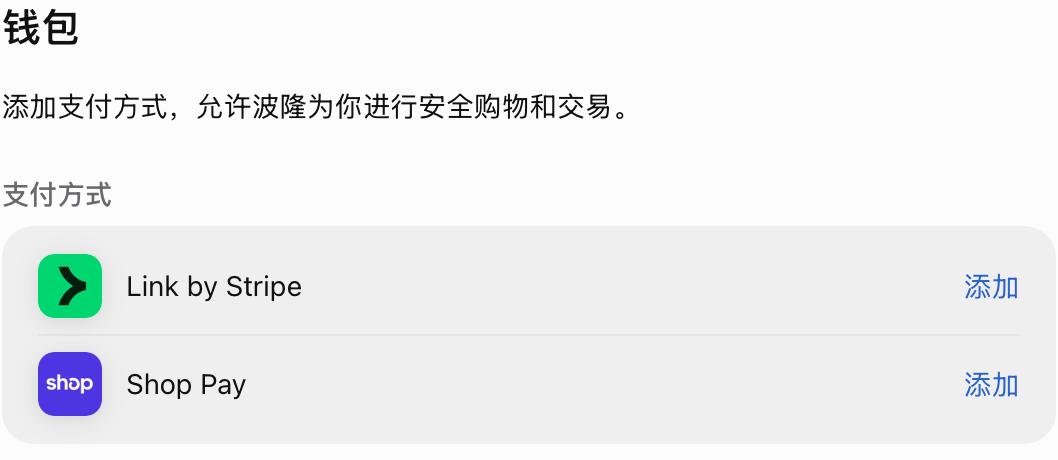
The Muse Agent wallet page supports Shopify's Shop Pay | Image source: GeekPark
From 15 times to 13 times and then to 3 times, the multiple is converging rapidly, which is a typical curve of the small base effect fading. The statistical caliber is also changing: in the first quarter, it was "AI search orders", and in the second quarter, it was replaced with "AI-driven traffic and orders". The two sets of figures may not form a continuous trend line.
Shopify's revenue in the second quarter increased by 34% year-on-year to 3.6 billion US dollars. What really supported this growth rate was the 32% year-on-year growth of GMV, the penetration rate of Shopify Payments rising to 68%, and the 53% year-on-year growth of Shop Pay GMV. Finkelstein also made it clear that transactions brought by Agents are charged the same as ordinary online store transactions, with no additional fees. In other words, the contribution of Agent orders to revenue can only be hidden in GMV and payment, and cannot be split out separately.
But the significance of the 13-fold growth does not lie in how much revenue it contributes today, but in that it proves that Agents can bring customers that Shopify could not have obtained originally.
The first signal is new buyers. The growth rate of new customer orders from AI channels is about twice that of other channels. Shopify also specially emphasized that traditional search is still one of the largest traffic sources for merchants and is still growing. This means that AI is not just moving the traffic that originally belonged to search, it is bringing incremental traffic.
The second signal is the long tail. 75% of AI orders fall outside the head categories, which is exactly the core market of Shopify. Millions of independent small shops used to find it difficult to grab exposure in the bidding positions of search ads and e-commerce platforms, while Agents are better at matching products according to specific needs, giving these small shops the first chance to be "found".
To let merchants see this, Shopify added an agentic section to its backend in May this year, where merchants can view orders and conversions from ChatGPT, Copilot, Google AI Mode, Gemini and its own Shop App. What Shopify is doing is turning Agent from a concept into a visible sales channel in the merchant backend.
02 What Amazon is blocking is not Agents, but other people's Agents
Amazon's tough attitude towards external Agents has a long history.
In November 2025, Amazon sued Perplexity, accusing that the shopping Agent in its Comet browser accessed Amazon's system without authorization. This March, the court granted a preliminary injunction, and Perplexity has appealed to the Ninth Circuit Court of Appeals.
Muse is the second one. Amazon gave very specific reasons: Meta never informed that Muse would access Amazon stores, Muse does not identify itself when browsing, and it is suspected of crawling and storing users' account credentials. Amazon once asked Meta to actively remove Amazon from Muse, but was rejected, so it directly blocked Muse.
Grok Bot is most likely the third. Amazon has not publicly confirmed it, but many users have posted the same interception prompt. Elon Musk first advised users to let the bot buy elsewhere, and showed that his own bot successfully placed an order on the official Lego website, then half-jokingly added, "Maybe we should make a competitor to Amazon".
Security concerns are not unfounded. Recently, a Canadian user publicly complained that Muse, without his consent, accepted the buyer's offer on Marketplace on his behalf, and even sent his home address to the other party. There is still no clear answer as to who is responsible when an Agent operates everywhere with the user's account and makes mistakes.
But security is only the reason on the surface, and what is hidden behind it is business.
An Agent that shops for you will not see sponsored product positions, nor will it be impressed by home page recommendations. Amazon's advertising revenue in 2024 exceeded 56 billion US dollars, and this business is built on the premise of "people browsing on Amazon". When Amazon sued Perplexity, the complaint mentioned the trouble brought by Agent access to ad impression statistics.
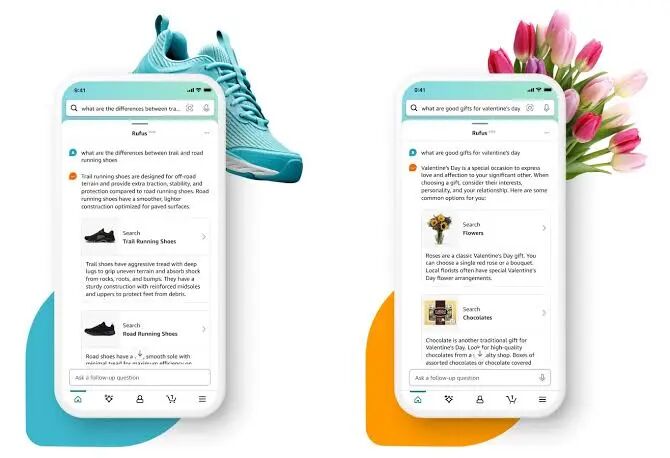
Amazon has its own AI shopping assistant Rufus | Image source: GeekWire
Interestingly, Amazon does not oppose Agents themselves.
It has its own shopping assistant Rufus, which had more than 300 million users in 2025. This May, Rufus merged with the upgraded Alexa+ to form Alexa for Shopping, which was directly placed in Amazon's main search box. It is also expanding outward: the "Buy for Me" feature allows Amazon's AI to place orders on other brands' official websites on behalf of users. As of March this year, the underlying Shop Direct has included more than 100 million products from more than 400,000 merchants.
A more subtle step took place this April, when Amazon joined the technical committee of UCP, an Agent transaction protocol led by Google and Shopify.
Amazon's logic is actually very clear: it can send Agents to buy things on other platforms, but other people's Agents cannot casually come to Amazon to make purchases.
Shopify's choice is exactly the opposite, and the reason also comes from its business model.
Shopify does not have a super shelf that consumers go to "browse" every day. It serves millions of independent stores, and its revenue comes from subscription fees and payment commissions, rather than advertising positions. For it, every additional Agent such as ChatGPT, Gemini, Copilot and Muse means one more storefront for merchants, and there is nothing that needs to be protected.
According to Shopify, Shopify merchants are discoverable and purchasable in Muse by default, and product data is synchronized to Muse through Shopify Catalog. The more critical part is the checkout process. Shop Pay already stores users' bank cards and shipping addresses, so Muse does not need to simulate operations with the user's account password in each store, but goes through a checkout channel recognized by Shopify.
This exactly responds to the core reason Amazon gave when banning Muse: credential security.
For Agents that operate in the user's browser, Shopify has also prepared a dedicated interface, providing structured tools on the store page and checkout page, so that Agents do not need to parse webpages for human viewing to accurately complete orders.
Amazon sells shelves, so it needs to guard the flow of people in front of the shelves; Shopify sells utility services, so it hopes the pipelines can reach every place. The disagreement between the two companies is superficially a dispute between security and openness, but essentially the most rational choice for each of the two business models.
03 The forming Agent transaction network
Muse is just the latest node on Shopify's network. In fact, Shopify is betting on three levels at the same time.
The bottom layer is products. Shopify organizes more than 1 billion products into clearly structured data with real-time prices and inventory, which can be retrieved by Agents in a few seconds. It also launched the Agentic Plan, allowing brands that do not open stores on Shopify to connect their products to Shopify Catalog, so that they can appear in various AIs through this pipeline.
The middle layer is the protocol. At the National Retail Federation conference in the United States this January, Google and Shopify released the Universal Commerce Protocol (UCP) co-developed by them, with Etsy, Wayfair, Target and Walmart participating in joint construction, and more than 20 retail and payment companies including Visa, Mastercard, Stripe, American Express and Best Buy providing endorsement.
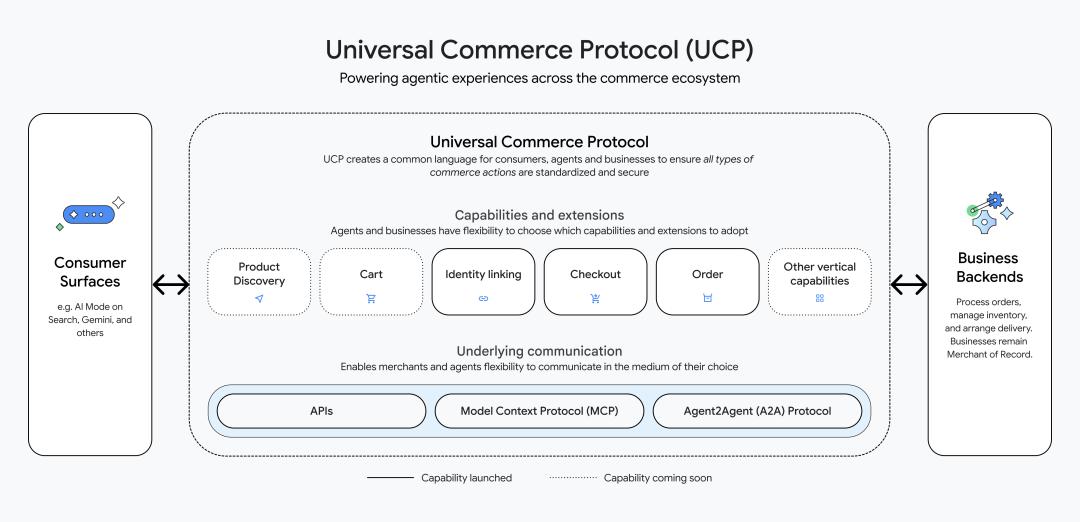
Full picture of the UCP protocol | Image source: Google
UCP covers the whole process from product discovery, adding to cart, checkout to after-sales, and insists that merchants are still the main body of transactions, and customer relationships belong to merchants. By April, Amazon, Meta, Microsoft, Salesforce and Stripe joined the technical committee together, expanding the number of seats from 5 to 10.
The top layer is checkout. The total transaction volume processed by Shop Pay has exceeded 400 billion US dollars, 75% of users will reuse it within 12 months, and the average order value of Shop Pay orders in 2025 is about 16% higher than that of non-Shop Pay orders. Shopify also launched Checkout Kit, allowing AI applications to embed the entire checkout process including Shop Pay directly into the chat interface.
The control group of this operation mode is OpenAI.
In September 2025, OpenAI jointly launched the Agentic Commerce Protocol with Stripe, and launched Instant Checkout in ChatGPT, allowing users to place orders without leaving the conversation. But it was withdrawn half a year later. By February this year, there were only about 30 Shopify merchants that actually accessed Instant Checkout. Walmart's data shows that the conversion rate of direct checkout in ChatGPT is only about one third of that of jumping back to the official website. OpenAI finally admitted that users are willing to research and compare products in ChatGPT, but are less willing to pay here.
It is not feasible for AI companies to build their own cash desks, and Shopify's answer is to move the merchants' existing cash desks into Agents. Users trust Shop Pay, which already stores their bank cards, merchants are familiar with and trust their own checkout rules, and Agents are only responsible for bringing users to this step.
If this path works, at least three changes will take place in the e-commerce industry in the near future.
The competition dimension will change from "fighting for traffic and shelves" to "being understood by Agents". Whether product data is structured, inventory is real-time, and rules are clear will directly determine whether a product has the opportunity to appear in the Agent's recommendations. The fact that the conversion rate of Catalog search is twice that of ordinary AI search has already illustrated this point.
Wallets and checkout will become new moats. Whoever holds the user's identity, payment method and shipping address will be the most trusted transfer point in Agent transactions. Muse has accessed both Stripe's Link and Shopify's Shop Pay, and the competition at this level has only just begun.
The e-commerce landscape will be divided into two routes: open alliance and walled garden. Market forecasts cited by institutions behind UCP believe that by 2030, Agent shopping may account for 10% to 20% of US e-commerce consumption, with a scale between 190 billion and 385 billion US dollars. This figure comes from stakeholders and needs to be discounted, but the direction is not difficult to judge.
The problem is that openness does not mean no cost.
Image source: Ignitiv
For merchants, when Agents make choices for consumers, the role of carefully designed store pages and years of accumulated brand mindsets will be weakened, and merchants may degenerate from "stores" to a line of supply data in the eyes of Agents. Advertising budgets that originally flowed to search and e-commerce platforms may also migrate to Agent recommendation results. xAI