Audi has brought in a "savior" from Chery.
After a 2-year tenure, he leaves Chery
A veteran of Audi, he is returning to Audi after 6 years.
On October 22, Audi officially announced that Zhang Jun will take office as President of Audi China Region starting from November 1, succeeding Johannes Roscheck. Meanwhile, Rolf Michl, current Head of Audi Sport GmbH, will serve as Chief Operating Officer (COO) of Audi China. The two will jointly form the streamlined Management Board of Audi China.
Zhang Jun is the first Chinese national president in Audi's nearly 40 years of presence in China. As the top representative of Audi in China, he reports directly to the global CEO of Audi.
Before joining Audi, Zhang Jun had worked at a number of multinational automotive companies including Nissan Motor, Audi China, Stellantis Group and Chery.
Public information shows that from 2025 to 2026, Zhang Jun served as Deputy General Manager of Chery International and General Manager of Chery Brand Overseas Business Division. According to his LinkedIn profile, he previously promoted the entry of Chery, Omoda and Jaecoo brands into the European market, and participated in the establishment of Chery's European regional headquarters in Barcelona, Spain.
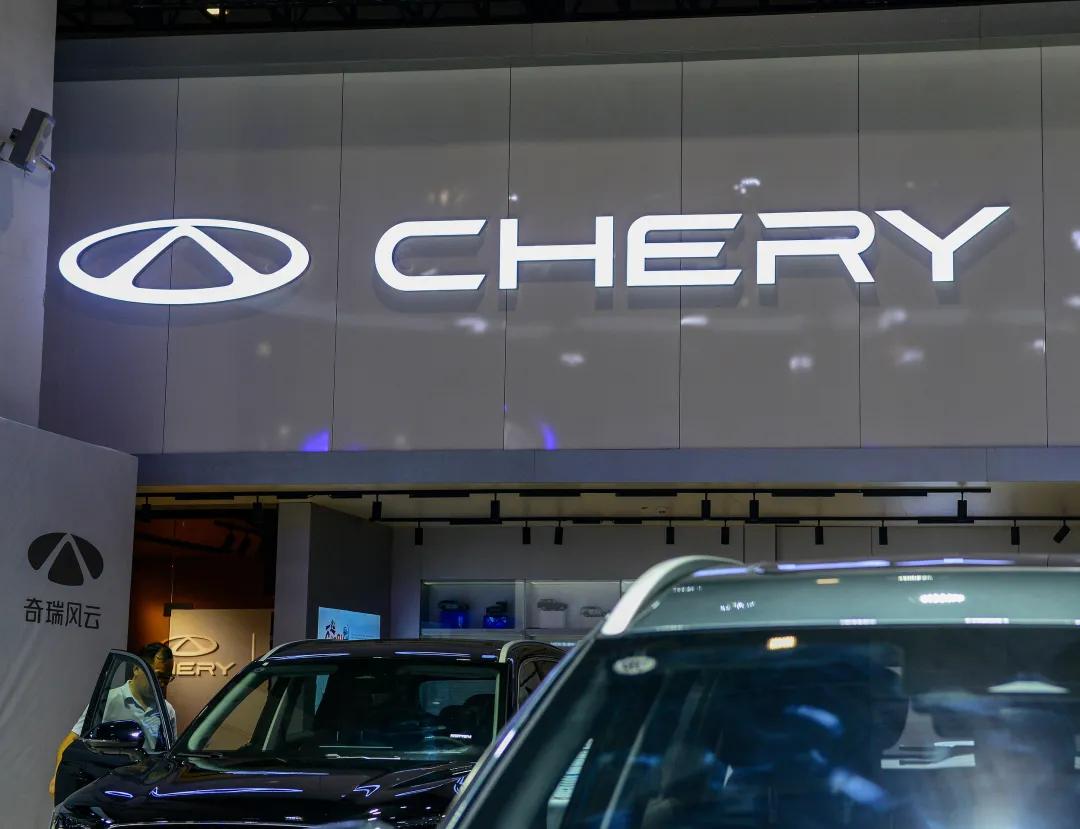
In April this year, Chery officially put into use its brand-new R&D center in Spain, and launched the Spain Research Institute at the same time, focusing on the development of cutting-edge intelligent and electrification technologies. As Chery's first overseas regional operation center, this hub will integrate functions including operation, compliance, supply chain, finance and public affairs, and become the core hub of the group's European business. At that time, Chery appointed Zhang Jun as the person in charge of this business.
Audi's move to invite Zhang Jun back may stem from its recognition of his rich experience in both foreign luxury brands and the overseas expansion of Chinese independent brands.
He Lingling, an employee of Chery International, said that her first reaction after learning about Zhang Jun's new career move was that his resignation was not unexpected. Chery has undergone frequent adjustments recently, and it is normal for core senior executives to join or leave the company. The fact that he left so quickly means that the negotiation must have been completed long ago.
In her impression, Zhang Jun attaches great importance to results in meetings, holds people accountable for their work, repeatedly asks employees when problems will be solved, and rarely listens to excuses. He is pragmatic, tough, logic-driven and a little bit stern, which is the shared feeling of many colleagues.
As for what he left at Chery, He Lingling believes that he may have pushed forward a number of systematic constructions, such as the unification of brand tonality. As the person in charge of the brand, Zhang Jun devoted most of his energy to achieving actual sales and delivery targets in various regions, which he supervised extremely strictly. Another thing that impressed her deeply is the special campaign of grand safety challenges that ran through the whole year after the start, which was promoted at the group level, but Zhang Jun paid close attention to its implementation.
Returning to his "old employer" as President
For Audi, this leadership reshuffle means Zhang Jun returns to his "old employer" as president, marking a status promotion within a system he is already familiar with.
From 2018 to 2020, Zhang Jun held a senior management position at Audi China, so he is very familiar with Audi's business system. During this period, he assisted in the establishment of the SAIC Audi sales organization and participated in a number of strategic projects of FAW Audi, giving him a good understanding of the operation logic of the two joint ventures in northern and southern China.
Many industry insiders believe that a Chinese national leader who understands both luxury brand operation and the practices of local Chinese automakers may accelerate the implementation of Audi's electrification and intelligence strategies in China.
However, the position Zhang Jun takes over is no easy job, as Audi is now in a critical period concerning its sales volume, profit and electrification transformation.
Johannes Roscheck, the former president of Audi China, has a financial background. His core strategy was "not pursuing short-term sales volume" and stabilizing the price system to guarantee profits. He has repeatedly stated in public that "we are deeply cultivating the Chinese market, not limited to pursuing short-term growth". But this strategy did not really work as expected.
In the first half of 2026, Audi delivered 232,200 vehicles in China, down 19.2% year on year. The profit contributed by its Chinese business shrank from 279 million euros in the same period of 2025 to 73 million euros, a sharp drop of 74%. In the third quarter, the Audi brand delivered 314,900 vehicles globally, down 19.7% year on year. Audi China did not release separate data, while Wilson Terminal data shows that its sales volume in China was about 94,600 vehicles, with the year-on-year decline expanding to 24.5%.
At the end of September, the CFO of Volkswagen Group issued a stern profit warning to Audi. The German magazine *Manager Magazin* later reported that internal forecasts show Audi's 2026 sales volume in China will be only slightly higher than 420,000 units, about 30% lower than that in 2025, hitting the lowest level since 2012.
Competition in China's new energy vehicle market is extremely fierce. Even with the prices of Audi's fuel models including A6L, Q5L and A4L continuously cut, it is still difficult to reverse the downward trend of sales.
In September this year, the hot search topic "None of the BBA models recorded retail sales exceeding 10,000 units" went viral. Domestic vehicle insurance registration data shows that in September, the retail sales of mainstream models including BMW 3 Series, 5 Series, X5, Mercedes-Benz E-Class, GLC, C-Class, and Audi A6L, Q5L, A3 all failed to exceed 10,000 units per unit. The best-selling Audi model A6L only recorded retail sales of just over 8,000 units that month. In the same period last year, all these models had retail sales exceeding 10,000 units.
In terms of electrification, Audi has adopted a differentiated brand strategy: it has launched a standalone brand bearing only the "AUDI" letter logo without the four-ring emblem to focus on pure electric vehicles, trying to draw a clear line between traditional fuel vehicle users and new energy early adopters. However, the sales performance of the two models under this new brand is not optimistic. The first model E5 Sportback briefly reached a monthly sales of 2,630 units in March 2026 thanks to a sharp terminal price cut, before dropping rapidly to only about 300 units in September. The second large and medium-sized pure electric SUV E7X saw an even faster initial growth: its sales volume hit over 4,000 units in June, the second month after its launch, but then declined all the way, with monthly sales reaching only 1,503 units in September.
This article is from the WeChat official account "Caijing Tianxia WEEKLY", author: Caijing Tianxia, published with authorization from 36Kr.