Kimi has admitted its mistake, and Yang Zhilin still needs to learn from Liang Wenfeng.
Less than 48 hours after the release of K3.1 Pro, Moonshot AI released an official announcement stating, "We sincerely apologize for the speed limit issue and the unexplained quota consumption problem of the model. All these issues are our responsibility, and we should have pushed for solutions earlier. Starting from October 26, all subscription users of all tiers will be refunded 25% of their total monthly payment. We have also adjusted the product operation parameters, cut unnecessary sub-Agent calls, and compressed redundant output length to make the quota more durable."
After this adjustment, the most obvious experience is that K3.1 Pro no longer "burns through the quota" as it did right after its initial release.
Back on the day the model was released, the entire AI industry was taken aback: its performance surpassed all models from OpenAI, only lagging behind Opus 5.5 by a small margin. The third-party evaluation agency ModelCompare published an article stating that the AI capability gap between China and the United States has shrunk from 3 to 4 months to only 31 days.
However, this wave of enthusiasm did not even last for two days, and the rating of K3.1 Pro dropped from "Very Positive" to "Mostly Positive". Yang Zhilin was also given the nickname "Dual Personality of Deity and Demon": the "deity" part refers to the model's sky-breaking performance, while the "demon" part refers to the fact that using K3.1 Pro always makes users feel a "pain in the wallet".
The most frequently reported problem is the quota issue. Multiple users in the community stated that they had barely used the model, yet their 5-hour monthly quota of K3.1 Pro was already exhausted. Take myself as an example: I subscribed to the 199-yuan tier, and in two days I generated less than 10 3D models and several demo animations each no longer than 30 seconds, but half of my monthly quota was already used up.
Even for some simple tasks, K3.1 Pro will call a large number of sub-Agents to think and reason. Its output quality has not been significantly improved, but these sub-Agents cause users to waste a lot of quota.
Yang Zhilin also expressed helplessness: improving the model's intelligence level inevitably requires more tokens.
This leads to the result that although K3.1 Pro is 30% cheaper than K3, the excessively small quota means few users actually feel that it is "affordable".
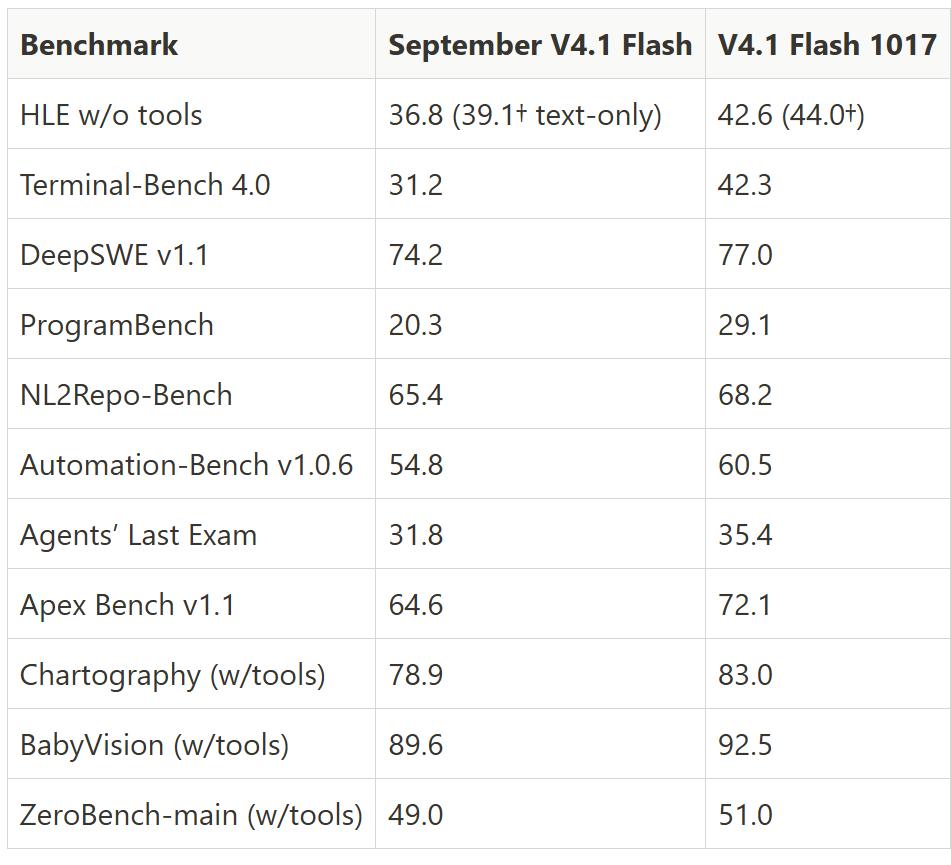
Just one week before the release of K3.1 Pro, DeepSeek launched V4.1 Flash-1017, which follows a completely opposite logic: instead of chasing the absolute upper limit of performance, it optimizes performance, speed and output length at the same time while keeping the price unchanged.
V4.1 Flash-1017 perfectly embodies Liang Wenfeng's product philosophy, and it has been "widely praised" ever since its release.
Perhaps Yang Zhilin should learn a thing or two from Liang Wenfeng in terms of product design.
Quota consumption is the biggest pain point of Moonshot AI
After the release of K3.1 Pro, a large number of users in the community are discussing the quota issue. For example, there is a highly upvoted comment, the poster wrote that "it only took about 10 minutes, and the 5-hour quota window was already fully consumed".
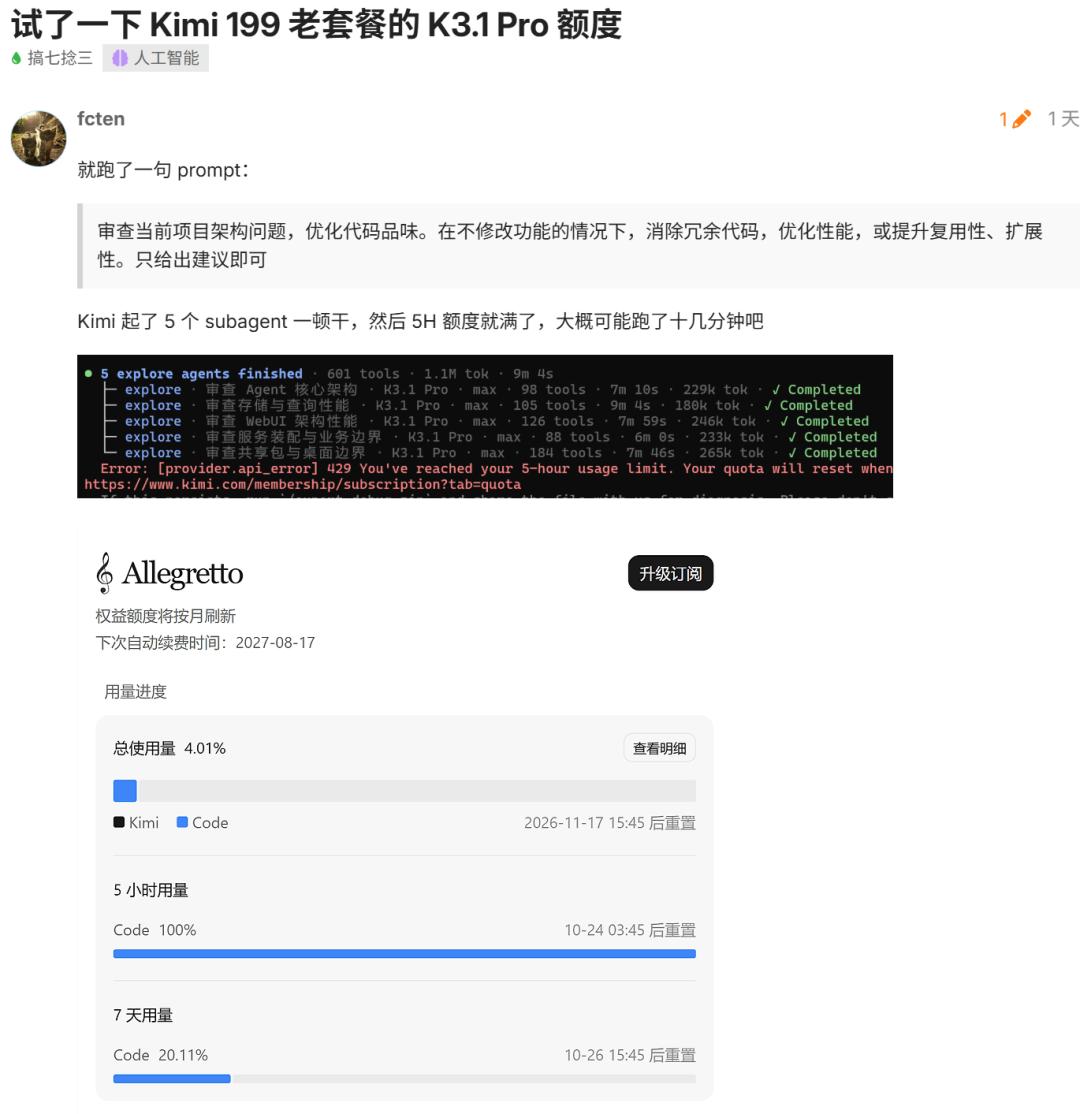
On Linux.do, a user who subscribed to the 199-yuan package said he only sent one instruction asking the model to review the project architecture, Kimi launched 5 sub-Agents, and the 5-hour quota was fully used up after more than ten minutes.
Weibo user @ThisIsQuiteBoxy posted that when using K3.1 Pro in WorkBuddy, a simple task had not even finished running, and more than 450 points were consumed.
In fact, the 99-yuan standard version of WorkBuddy only has a total of 4000 points per month, which means that one simple task consumed one tenth of the monthly quota. @ThisIsQuiteBoxy also said that the current point consumption multiplier of K3.1 Pro is 0.97, which means that the actual point consumption should be even lower.
Artificial Analysis believes that the core reason why K3.1 Pro consumes so much quota lies in its low token efficiency.
The test results show that to complete the full Intelligence Index test set, K3.1 Pro needs to output about 150 million tokens in total, while the median value of models in the same price range is 87 million.
For the same test set, GPT-6.1 Sol only uses about 67 million tokens, and GPT-6 Astra uses about 60 million tokens. According to the conversion standard of OrcaRouter, the output volume of K3.1 Pro for the same task is about 2.5 times that of Astra.
Artificial Analysis also stated that the speed of K3.1 Pro is also lower than the median value of similar products, at about 70 to 80 tokens per second. In addition, K3.1 Pro only supports thinking mode, requests to turn off thinking will be directly rejected, and every call is charged for reasoning.
Although K3.1 Pro has launched a Highspeed version, Moonshot AI official stated that the high-speed version only accelerates the model output. The time consumption of tool calls (reading and writing files, executing commands, etc.) and script execution in the task is not affected. If this part accounts for a large proportion, the overall speed improvement will not be obvious.
Although K3.1 Pro is 30% cheaper than K3, Artificial Analysis found in the test that the cost of a single task of K3.1 Pro is not much lower.
The average cost of a single task for K3.1 Pro is 2.11 US dollars, while that of GPT-6 Astra is 3.26 US dollars. The token price of K3.1 Pro is only one fifth of that of Astra, but in terms of actual cost, it only saves about 35%.
All this may be related to the training of K3.1 Pro.
Yang Zhilin believes that to enable the model to achieve longer output, it must always maintain rigor throughout the whole process, repeatedly check, modify and self-correct. This has been the case since K3, and the official technical document at that time wrote that K3 would show excessive caution and repeated self-examination in its output.
The official research blog of Fireworks AI Introducing Ember-1 mentions that even if the repeated checking process of K3 is removed, there is almost no impact on the model performance. In other words, K3 is a little too rigorous.
For K3.1 Pro, the model is not only rigorous with the task, but also rigorous with the entire environment.
The official technical report of K3.1 Pro mentioned a case: when the model simulated the process of human learning to walk, K3.1 Pro found that the arm movement was always unsatisfactory, and adjusting the reward could not solve the problem. So it went back to check the simulator, fixed 36 calculation errors of the shoulder muscle force arm, and then retrained to finally get a better effect.
This is also why K3.1 Pro has high performance but longer output and more tokens: because it needs to maintain rigor for almost everything, even the environment.
Yang Zhilin burns tokens, while Liang Wenfeng saves tokens.
DeepSeek calls the iteration of V4.1 Flash 1017 "Pareto improvement". This is an economic concept, which means that after a thing is adjusted, at least one aspect becomes better, and no aspect gets worse.
Reflected in the model, it means that the model has higher benchmark scores in all dimensions, faster task completion, shorter output, and the price remains unchanged.
Some users in the DEV community have done tests, showing that compared with 4.1 Flash, DeepSeek V4.1 Flash 1017 has shorter output, faster task completion, and the cost of completing each task is even lower.
In fact, V4.1 Flash itself is an extremely "talkative" model. The actual measurement on OrcaRouter shows that on the same Intelligence Index set of Artificial Analysis, V4.1 Flash needs to output 250 million tokens, which is 56% more than the 160 million tokens of K3.
However, due to the Causal Encoder-Decoder architecture of V4.1 Flash, the total parameter is 552B, but only 8B parameters are activated during prefill and 16B parameters are activated during decode. The KV cache is compressed to only 890 bytes per token, the video memory occupancy is reduced to a quarter of the previous generation, and the SSD occupancy is reduced to one eighth of the previous generation.
Therefore, DeepSeek achieves better benchmark scores, faster task completion and shorter output. Liang Wenfeng is not willing to sacrifice one attribute in exchange for another.
Agent is a part of serving AGI
Liang Wenfeng once said, "Now the thing that investors see most is Agent, but for those of us who are doing research, what we see more now is learning, and how to solve the problem of learning."
The implication is that Liang Wenfeng believes that Agent is only a part of AGI rather than the whole.
In 2025, Yang Zhilin was invited to Zhang Xiaojun's Business Interview. For pure reasoning models and Agents, Yang Zhilin put forward a Brain in a Vat theory: "Imagine a fish tank, you put a brain in it, which has no connection with the outside world. It just thinks constantly in its own mind, and can solve a problem without any interaction with the outside world."
For Agent, Yang Zhilin said: "It is no longer a 'Brain in a Vat', it interacts with the outside world. My next behavior is related to the feedback obtained from the interaction and the update of new states given by the outside world."
The Brain in a Vat represents a strong reasoning model like o1, but what Yang Zhilin wants is to enable the model to use more tools and carry out more rounds of interaction.
No matter what Liang Wenfeng and Yang Zhilin say, those are their definitions of Agent in terms of product philosophy. To really see how the model Agent performs, we have to test it in real tasks.
In addition to Artificial Analysis, the community also often uses the "Zhizhe | Long-term Tracking List of Large Model Intelligence" (Cat List) to test the level of models.
It divides the model's capabilities into three sections: reasoning, Agentic and vision. On the Agentic page, it uses a set of tasks that require long processes, multiple constraints and tool collaboration. The numbers and letters on the left represent the deduction score and tier, the page notes that "1/A represents deduction score / tier", the smaller the number the better; the ¥ amount on the right seems to be the cost for the model to finish the question.
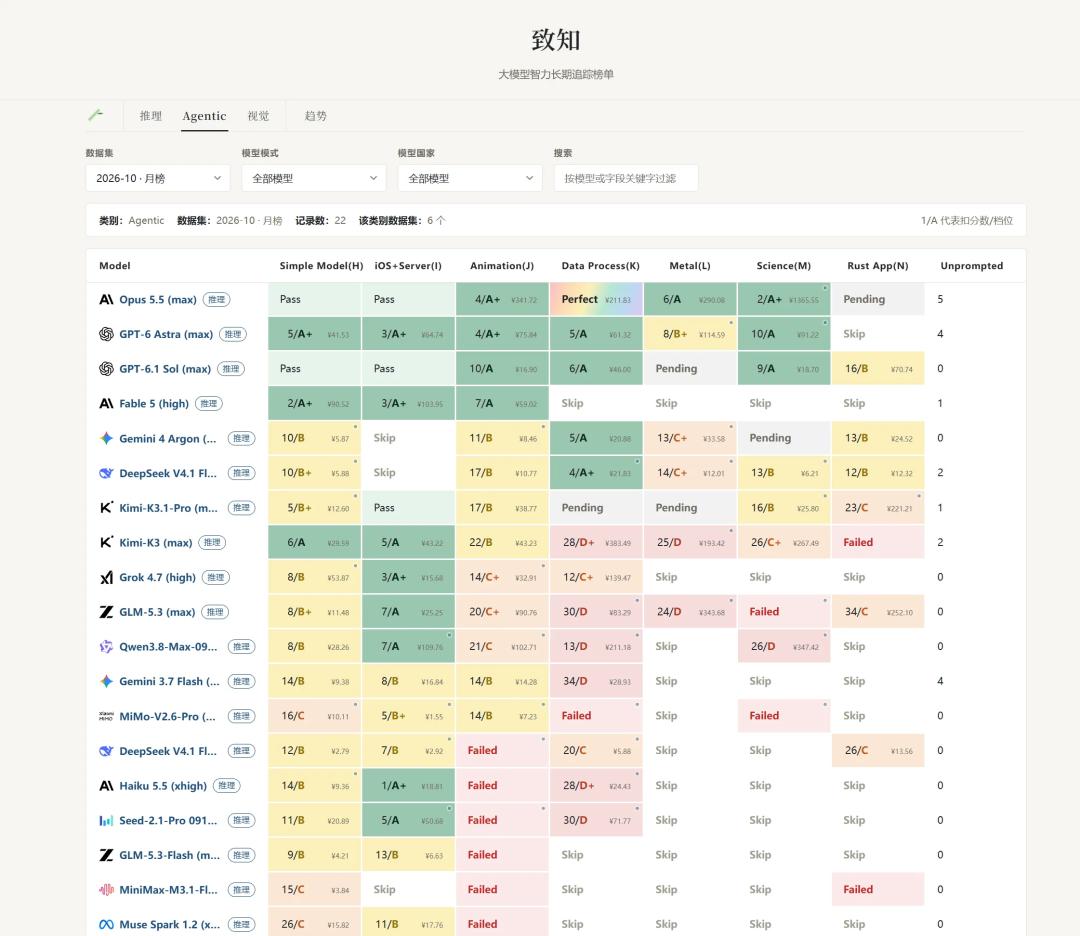
Compared with the previous generation K3, the progress of K3.1 Pro is very obvious. K3 got "Failed" on Rust App, which means it cannot complete the task, while K3.1 Pro got 23 points, tier C; K3 got 26 points, tier C+ on Science, K3.1 Pro was improved to 16 points, tier B; the score of Animation was also raised from 22 points to 17 points.
This result is consistent with Moonshot AI's official emphasis on "greatly improved Agent execution capability".
However, on this list, K3.1 Pro lost to DeepSeek V4.1 Flash 1017.
On Rust App, DeepSeek V4.1 got 12 points, tier B; K3.1 Pro got 23 points, tier C; for the Simple Model item, K3.1 Pro got 5 points, DeepSeek got 10 points, both are in tier B+, Kimi performs slightly better; for the Animation item, both sides got 17 points, tier B, a tie; for the Science item, DeepSeek got 13 points, Kimi got 16 points, both are in tier B, DeepSeek performs slightly better.
In addition, K3.1 Pro is still "Pending" in Data Process and Metal items, which means that a complete conclusion cannot be drawn yet.
K3.1 Pro, which is close to Opus 5.5 in the Artificial Index test, has a lower score than DeepSeek here?
This is because the Cat List has a rule that "the model is not restricted by Max Token, but excessive long thinking will be deducted points according to the difficulty of the question". That is to say, the more tokens you spend, the more points you will be deducted, and K3.1 Pro suffered a big loss here.
For the Rust App task, DeepSeek spent 12.32 yuan, while K3.1 Pro spent 221.21 yuan. For the Simple Model task, Kimi spent 12.60 yuan, while DeepSeek spent 5.88 yuan. For the Animation task, Kimi spent 38.77 yuan, while DeepSeek spent 10.77 yuan. For the Science task, Kimi spent 25.80 yuan, while DeepSeek spent 6.21 yuan.
Another point is that the technical blog of K3.1 Pro wrote that the model will have "excessive proactiveness": when encountering ambiguous intentions, it will make decisions for you and act excessively improvisationally. Especially for Agents, K3.1 Pro is more willing to freely play according to the prompt words.
But in the Cat List, for tasks like Rust App, the environmental feedback chain is extremely long and the demand boundary is completely fixed, which will strictly limit the free play of the model.
What Liang Wenfeng is doing is to make every Agent call stable and cheap; what Yang Zhilin is doing is to make the most difficult scenarios look amazing enough.
Moonshot AI needs "restraint"
The 3D capability of K3.1 Pro is one of the key points of its release. You can give the model several pictures, without explaining anything, and it can convert them into 3D modeling.
The day after the release, a highly upvoted post appeared on the community. The poster said he found that Kimi has a built-in skill called model3d_generation, which will run a Python script to generate 3D models through external API services.
The poster specially disabled this skill, and let K3.1 Pro generate the 3D model only with its own code, the quality was significantly worse. More importantly, the script supports three model versions: v3.1, v3.0 and v2.5, which are completely consistent with the model versions of 3D generation company Tripo AI.
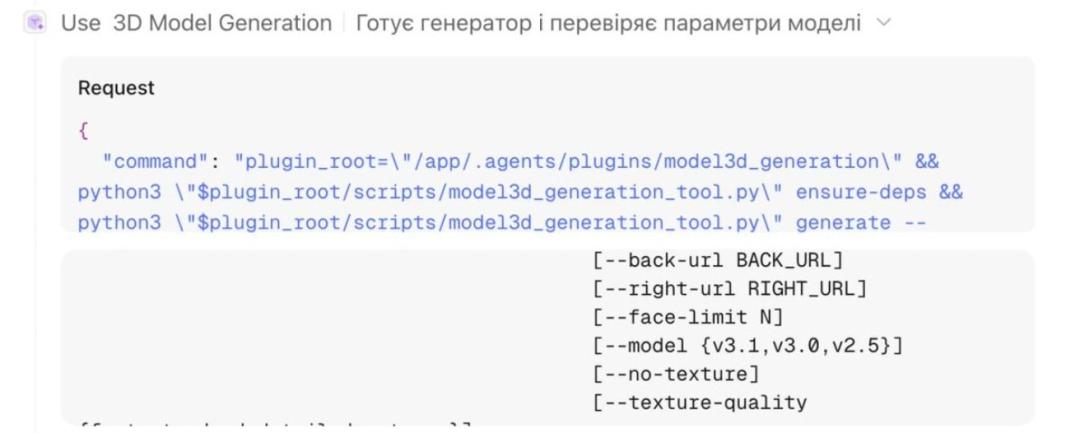
In fact, long before the release of K3.1 Pro, the Kimi Work desktop client had already included Tripo 3D into its plugin ecosystem.
The article How to Make 3D Image Design with Realistic Effects updated by Moonshot AI Resource Center on October 17 clearly states that Kimi Work "supports Bl