A startup founded by a professor from Shanghai Jiao Tong University targets space manufacturing, "Jinkong Technology" has completed tens of millions of yuan in angel round financing | 36Kr Exclusive
The next stop for commercial aerospace may not only be sending more satellites into space, but also enabling robots to truly "get to work" in space.
With the accelerated development of low-orbit satellite internet, space computing power platforms and commercial space stations, more and more high-value equipment is deployed in orbit. Who will complete equipment maintenance, module replacement, precision assembly, and even future space manufacturing, is becoming a new industrial proposition.
On the ground, a large number of these tasks have been undertaken by industrial robots, but the space environment of microgravity, strong radiation and extreme temperature difference puts forward higher requirements for robot reliable control, fine operation and autonomous decision-making.
36Kr learned that recently, space intelligent robot firm Jinkong Technology has completed tens of millions of yuan in angel round financing, led by CDH VGC, with participation from SJTU Hanyuan Asset, CAS Green Fund, Dexterous Intelligence and other institutions. This round of financing will be mainly used for the R&D of core components of space robots, on-orbit verification and product engineering.
Founded in April 2026, Jinkong Technology was established by He Jun, professor and doctoral supervisor of Shanghai Jiao Tong University. The company focuses on the field of space robots, takes space manufacturing as the long-term direction, and is committed to building an intelligent operation base for future space manufacturing.
At present, the core components independently developed by the company, including intelligent controllers, servo drives, joint modules and multi-dimensional force sensors, have completed environmental tests such as thermal vacuum, high and low temperature, and radiation, and are planned to be launched into orbit for verification on a computing power satellite by the end of 2026.
In mid-2027, the company also plans to send the "Jinkong No.1" robot into orbit to verify complex operation capabilities such as autonomous tool replacement and connector plugging and unplugging, and explore future computing power satellite maintenance and space manufacturing applications.
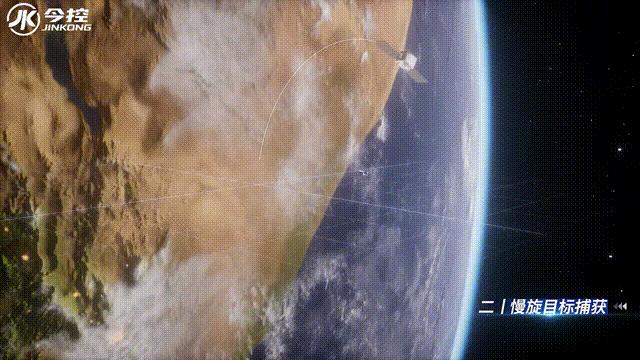
Targeting space manufacturing, building a base for future space intelligent operations
In the past few years, the competition in the commercial aerospace industry has mainly focused on launch vehicles, satellite manufacturing and constellation deployment. However, as launch costs gradually decline, the industry focus is extending to downstream applications, and space manufacturing has become a new direction worthy of attention.
The space microgravity environment can reduce the influence of factors such as gravity sedimentation and buoyancy convection on material growth, and provide special conditions for the preparation of high value-added materials such as high-quality semiconductor crystals and pharmaceutical crystals. Enterprises such as Varda in the United States and Space Forge in the United Kingdom have carried out explorations in fields such as space pharmaceuticals and advanced material manufacturing.
However, moving from space experiments to large-scale manufacturing still faces a basic challenge: future space factories cannot rely on astronauts to complete every production operation for a long time.
Whether it is the maintenance of experimental equipment, the replacement of precision components, or the assembly of space facilities, intelligent robots with autonomous operation capabilities are required.
On the ground, industrial robots, motion controllers, sensors and industrial communication networks have formed a mature intelligent manufacturing system, while in space, this set of infrastructure is still in the early stage of development.
Jinkong Technology believes that space manufacturing will gradually evolve along the path of "satellite maintenance - on-orbit experiment - large-scale manufacturing". Correspondingly, space robots will evolve along the technical path of "cerebellum (manipulator + satellite attitude and orbit control) - human-in-the-loop (human-computer interaction + autonomous coordination) - big brain (perception + decision-making + execution integration)".
Recently, the on-orbit maintenance of high-value spacecraft such as computing power satellites is expected to become an important application scenario for the fine operation capability of robots.
With the development of space computing power infrastructure, computing modules and related equipment may have demands for on-orbit upgrading, replacement and maintenance. Robots that can complete module plugging and unplugging and tool replacement are not only expected to reduce the long-term operating cost of space facilities, but their operation capabilities can also be extended to manufacturing scenarios such as microgravity experiments, material preparation and space assembly.
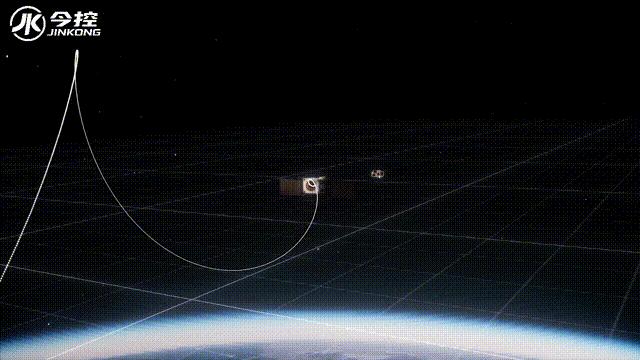
While more enterprises are solving how to provide services for satellites, Jinkong Technology is building the operation capability, control architecture and intelligent infrastructure of robots for future space manufacturing.
This constitutes the differentiated positioning of Jinkong Technology: it does not regard satellite maintenance as the end point, but takes it as the entry point, starting from the underlying capabilities such as core components, intelligent control, fine operation and industrial communication, and gradually builds a general intelligent operation platform for space manufacturing.
Industrial-grade components aerospace-adapted, Ethernet bus builds high-speed "nervous system"
For space robots to move from customized equipment to large-scale application, two major problems, cost and control system, need to be solved first.
Traditional aerospace equipment usually adopts a customized mode, with strict component screening, long development cycle and high cost. In the future, if robots need to be deployed in a large number of space facilities, cost and maintainability will become important constraints.
Jinkong Technology has chosen a different engineering path: based on mature industrial-grade components, realize aerospace-grade applications for space scenarios through reliability design, environmental adaptability optimization and system-level verification.
The company has independently developed core components such as intelligent controllers, servo drives, joint modules and multi-dimensional force sensors, hoping to reduce costs with the help of mature industrial supply chains, and improve the degree of standardization and product iteration efficiency.
If the aerospace adaptation of industrial-grade components solves the problem of space robots being "affordable", then another technical layout of Jinkong Technology — robot control architecture based on Ethernet bus — focuses on the demand of future space intelligent equipment for "fast connection and good coordination".
Compared with traditional satellites, space intelligent robots need to process a large amount of data in real time, such as multi-joint motion, position perception and force feedback. With the introduction of visual perception, intelligent planning and autonomous decision-making capabilities, the system's requirements for communication bandwidth, real-time performance and multi-device synchronization will be further improved.
Jinkong Technology introduces Ethernet bus technology into the space robot system to build a high-speed communication architecture between intelligent controllers, servo drives and sensors.
Compared with some traditional aerospace control communication schemes, Ethernet bus has potential advantages in bandwidth, scalability and multi-node data interaction, and is expected to support more complex robot motion control and collaborative operations.
More importantly, the value of this architecture is not limited to a single robot, but may extend to the data interconnection between future space intelligent equipment.
With the development of computing power satellites and space computing platforms, the demand for data interaction between on-board computing units, robot actuators and sensing devices will continue to increase. A unified, efficient and scalable communication architecture is expected to become an important part of future space intelligent infrastructure.
Jinkong Technology plans to verify the application capability of Ethernet bus in the space robot control system through the on-orbit mission at the end of the year, accumulate engineering experience of space communication interfaces and protocols, and explore and promote the standardization of related control architectures.
From cost reduction of core components to high-speed control and data interconnection, what Jinkong Technology hopes to establish is not only the technical capability of a single robot, but also the reusable underlying system for future space intelligent equipment.
Entrepreneurship by SJTU professor, enabling space robots to have "brain" and "dexterous hands"
The technical accumulation of Jinkong Technology comes from the founding team's long-term research in the field of aerospace space robots.
Founder He Jun is a professor and doctoral supervisor at Shanghai Jiao Tong University, studied under academician Lin Zhongqin of the Chinese Academy of Engineering, has long been deeply engaged in the field of space robots, and is currently the director of the Shanghai Aerospace Intelligent Manufacturing Service Platform, and serves as an executive director or member in many professional societies in the fields of robots and space control.
His team has long studied technologies such as space floating robot control, compliant operation and ground microgravity simulation, and related achievements have been applied to major national aerospace engineering fields such as robot on-orbit operation, lunar orbit spacecraft docking, and space station manipulators.
He Jun said: "In the past, we mostly solved individual technical problems in aerospace missions. But with the rapid development of commercial aerospace, I have felt more and more clearly that what the future space needs is not a certain customized robot, but a complete set of intelligent manufacturing capabilities that can be applied on a large scale. Universities can break through technical problems, but to truly solve the problems of cost, reliability and continuous delivery, we must move towards the industry."
In He Jun's view, future space robots not only need a "brain" that can perceive the environment and make autonomous decisions, but also "dexterous hands" that can complete precise operations.
Different from industrial manipulators fixed on the ground, the movement of space manipulators may affect the attitude of the satellite platform, and connector plugging and unplugging, tool replacement and precision assembly also put forward higher requirements for end positioning and contact force control.
Aiming at these problems, Jinkong Technology has formed a technical system of space floating robot control, contact compliance control and high-fidelity ground simulation.
Its developed "Jinkong No.1" robot adopts a modular design, and autonomously replaces end tools through standardized electromechanical interfaces, which can realize "one manipulator with multiple functions" according to task requirements.
At the same time, Jinkong Technology has established industrial cooperation with the dexterous hand enterprise "Dexterous Intelligence" to explore the application of dexterous hand, tactile perception and intelligent operation technology in space scenarios.
Dexterous Intelligence will give full play to its technical advantages in the field of dexterous operation, provide solutions integrating dexterous hands, perception, front-end computing power and operation models, which are characterized by trainable and deployable, and the two parties will jointly explore fine operation tasks in the complex space environment.
Xu Chunshan, founder of Dexterous Intelligence, said: "If satellites are the infrastructure of the future space economy, then robots with intelligent brains and dexterous hands will be the first batch of workers in future space factories. We look forward to cooperating with Jinkong Technology to promote the extension of ground dexterous operation technology to space scenarios."
In addition to the dexterous execution capability, Jinkong Technology is also building the intelligent "brain" of space robots.
Real space missions are costly and have limited test opportunities, so it is difficult to carry out large-scale training like ground robots. To this end, the company has established a high-fidelity ground semi-physical simulation platform, and proposed the Hil2Space model migration technology path, exploring to migrate the robot operation capability formed by ground training to the real space environment, realizing "ground training, space execution".
According to the introduction, the team has completed the verification of more than 20 types of operation tasks such as capture, maintenance, detection and dual-arm cooperation on the ground microgravity simulation platform, which has accumulated a technical foundation for subsequent on-orbit tests.
From the "brain" of autonomous decision-making, modular manipulators and "hands" for dexterous operation, to the "nervous system" composed of core components and high-speed communication, Jinkong Technology is gradually forming an intelligent operation technical system for space manufacturing.
Two on-orbit verifications, from core control components to space manufacturing
Technology ultimately needs to be verified through real space missions.
According to the plan, Jinkong Technology will complete the first batch of core components on-orbit tests by the end of 2026, focusing on verifying the reliability of the aerospace adaptation scheme for industrial-grade components and the space application capability of the Ethernet bus control architecture.
In mid-2027, the company plans to push the "Jinkong No.1" robot into orbit to verify complex operations such as autonomous tool replacement and connector plugging and unplugging, and carry out technical exploration for future computing power satellite maintenance.
These seemingly simple actions require high-precision motion control, contact force feedback and multi-joint coordination, and are also important basic capabilities for future space manufacturing.
Through the two-stage verification, Jinkong Technology hopes to gradually open up the technical chain from core components, complete robot machines to complex space operations.
According to reports, Jinkong Technology is jointly developing a miniature space crystal preparation experimental cabin with leading domestic institutions, which is planned to be carried on "Jinkong No.2", and the on-board robot will independently complete operations such as sample transfer, detection and packaging, to explore the space automatic manufacturing of high-quality seed crystals. After a small amount of high-quality seed crystals prepared in orbit return to the ground, diameter expansion growth and large-scale production can be carried out.
From extravehicular satellite maintenance to intra-cabin intelligent manufacturing, Jinkong Technology is trying to extend the fine operation capability of robots to more space scenarios, laying a foundation for future large-scale space manufacturing.
Led by CDH VGC, optimistic about the industrialization opportunities of space intelligent robots
This round of financing is led by CDH VGC, with participation from SJTU Hanyuan Asset, CAS Green Fund, Dexterous Intelligence and other institutions. As commercial aerospace extends to space facility operation and downstream applications, space robots and intelligent operation systems are becoming emerging directions worthy of attention.
CDH VGC said: "We are optimistic about the long-term trend of commercial aerospace developing from infrastructure construction to space applications. Jinkong Technology not only has profound technical accumulation in space robots, but also has a clear industrialization path. The team explores cost reduction through aerospace adaptation of industrial-grade components, improves system capabilities with high-speed bus control architecture, and builds an intelligent operation system together with industrial partners such as Dexterous Intelligence. We are optimistic about the company's development potential in the field of future space manufacturing."
At present, space manufacturing is still in the early stage of the industry, and both business models and product reliability need to be continuously verified through real missions. For Jinkong Technology, the on-orbit operation of core components at the end of 2026 and the complex operation verification of the "Jinkong No.1" robot in 2027 will become important nodes from technical accumulation to commercial application.
If commercial aerospace in the past mainly solved the problem of "how to enter space", what Jinkong Technology hopes to answer is how to make robots really start working after entering space, and finally establish large-scale applicable space intelligent manufacturing capabilities.
This is exactly the long-term goal targeted by Jinkong Technology — to become the intelligent operation base for space manufacturing.