Supercharging is getting faster and faster. Why are car manufacturers setting their sights on battery swapping?
In China's new energy vehicle industry, battery swapping has long been a niche route, but now this solution has suddenly become the focus of major industry players.
On October 19, 2026, Huawei HiChord, CATL and E-Chen New Energy signed the "Strategic Cooperation Agreement for Intelligent Energy Replenishment Ecosystem". The three parties will strengthen cooperation in swappable batteries and battery swapping networks, and work with ecosystem partners to jointly build an intelligent battery swapping ecosystem. In the future, battery-swapping models equipped with Huawei's intelligent driving solution will support autonomous battery swapping.
On October 22, BAIC and CATL signed a comprehensive agreement to deepen cooperation in battery swapping business. Multiple brand-adapted models under BAIC will be connected to CATL's Chocolate Battery Swapping Ecosystem. The two sides will jointly build a nationwide, highly interconnected public energy replenishment infrastructure network in the future.
The question that follows is: with the advancement of ultra-fast charging technology and the gradual popularization of ultra-fast charging stations, the charging time of new energy vehicles has been continuously shortened, and the gap in energy replenishment time between charging and battery swapping is also narrowing. Why are so many automakers ramping up their investment in battery swapping?
Ultra-fast Charging is Speeding Up, and Battery Swapping is Gaining Momentum
Although at the early stage of the birth of new energy vehicles, automakers represented by BAIC and NIO began to deploy battery swapping technology, this solution has never become the mainstream energy replenishment method. The reason is that due to the separation of batteries and vehicles, compared with fast charging technology, the operation chain involved in battery swapping solutions is more complex.
On the one hand, automakers cannot "work behind closed doors" and need to carry out overall design for models, batteries and battery swapping stations. As battery technology evolves rapidly, batteries of various models and specifications emerge in an endless stream, and battery swapping solutions will limit the technological iteration of automakers to a certain extent.
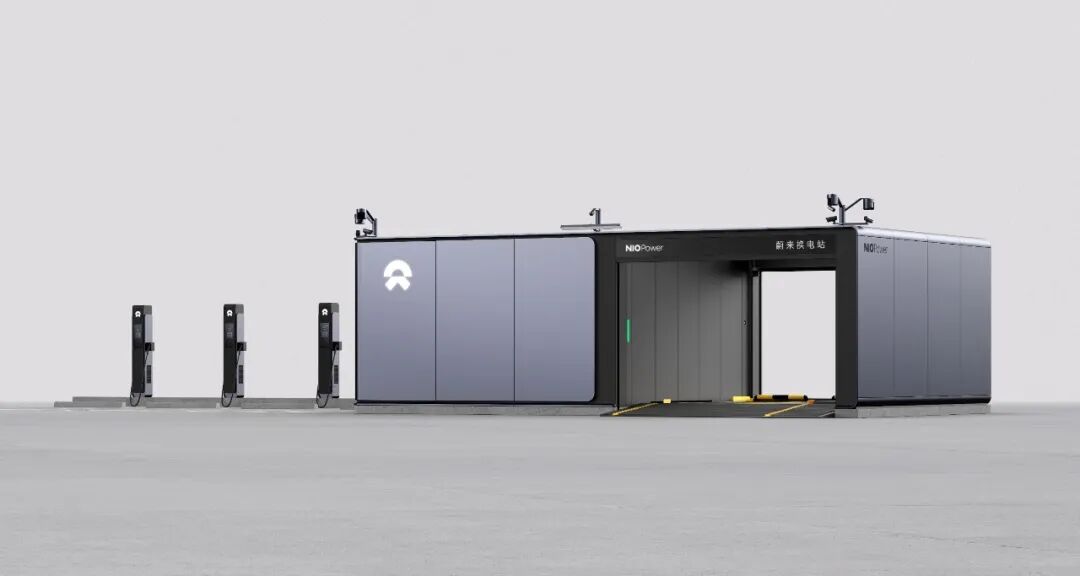
Source: NIO
On the other hand, in the context where cross-brand compatibility and network sharing are not yet sufficient, automakers need to bear large investment in station construction and operation, and large-scale promotion also faces considerable pressure.
More importantly, as ultra-fast charging technology matures gradually, the comparative advantage of battery swapping solutions in "fast energy replenishment" will be weakened.
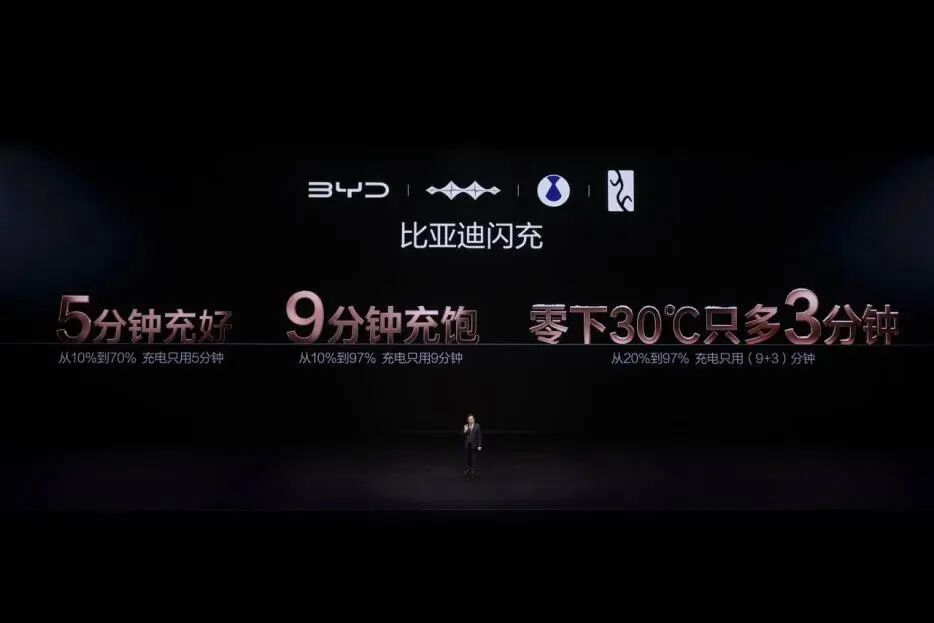
Source: BYD
For example, in March 2026, BYD launched the second-generation Blade Battery and its flash charging technology, which can achieve 10%-70% charge in 5 minutes, 10%-97% full charge in 9 minutes, and only takes 3 minutes longer than at room temperature at minus 30℃ for 20%-97% charging.
The following month, CATL released its third-generation Shenxing ultra-fast charging battery, which delivers equivalent 10C and peak 15C ultra-fast charging capabilities, taking only 6 minutes and 27 seconds to charge from 10% to 98%.
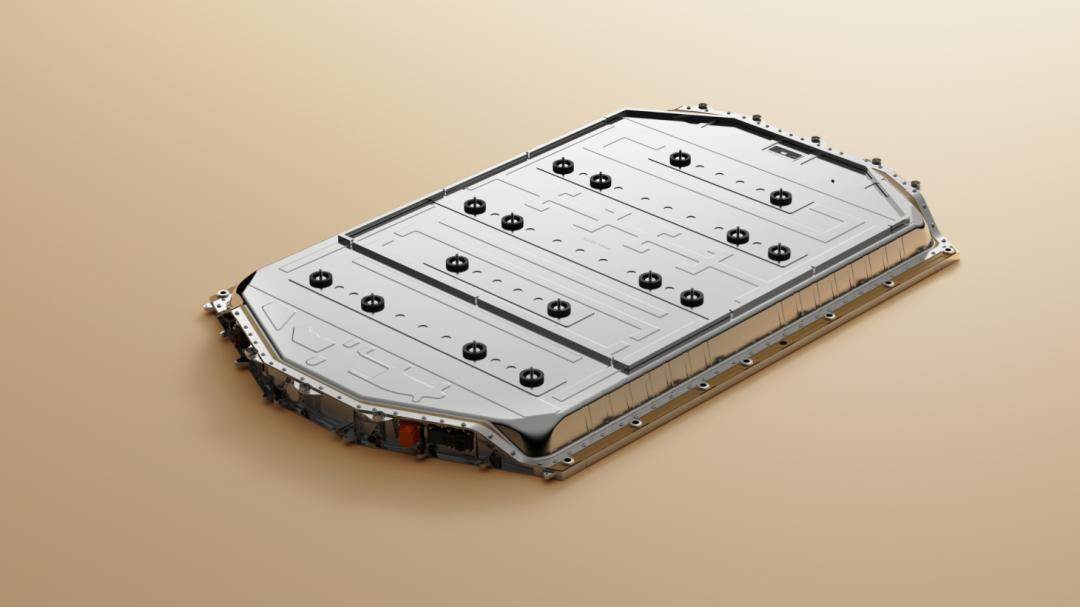
Source: Li Auto
In April 2023, Ma Donghui, President and Chief Engineer of Li Auto, explained why Li Auto chose ultra-fast charging instead of battery swapping. Because electricity has no physical boundary, but battery swapping requires replacing the entire PACK (battery pack), which has physical boundaries. At the same time, achieving compatibility between different models and different brands is a huge challenge, which does not conform to Li Auto's principle of prioritizing efficiency.
Different from the fact that it is difficult to form an effective unified standard for battery swapping, Ma Donghui believes that the charging gun standard is easier to unify and become a public resource, so he "does not think battery swapping can perform better than ultra-fast charging in the promotion of passenger vehicles."
All in all, the thresholds such as technical adaptation, station investment and cross-brand collaboration have prevented battery swapping from becoming the mainstream energy replenishment method. The development of ultra-fast charging technology will further weaken the comparative advantage of battery swapping. With brands such as Feifan and Ruilan fading out, only NIO still adheres to the battery swapping technology route in the consumer market before.
Lowering Vehicle Purchase Threshold, Battery Rental Solution Has Become a Consensus
Since 2026, the battery swapping solution has become increasingly popular, not because the battery swapping technology itself has made considerable progress, but because the market environment of China's new energy vehicles has undergone significant changes.
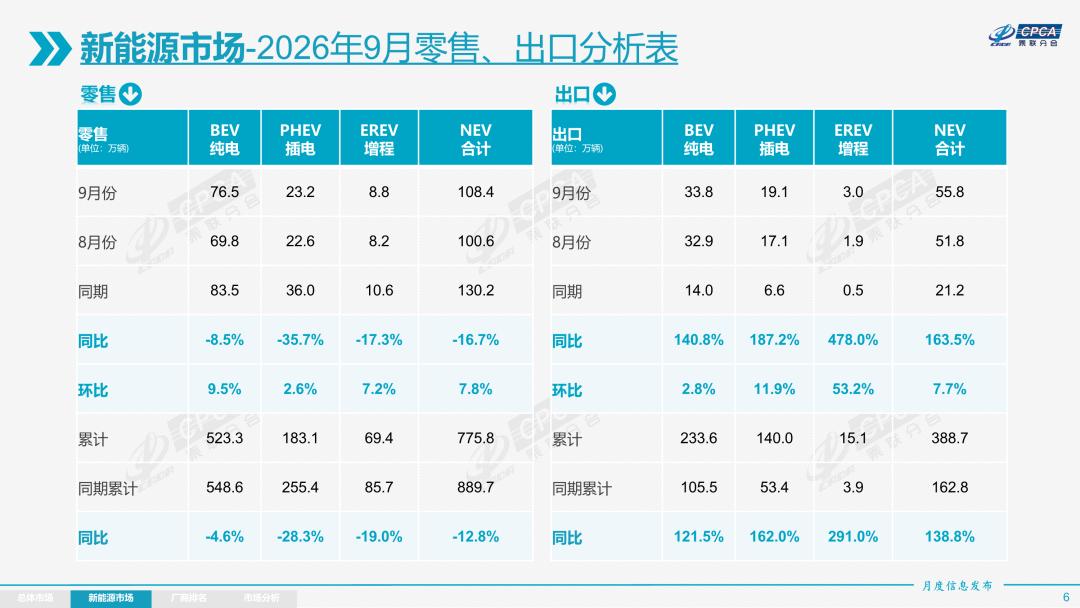
Source: China Passenger Car Association (CPCA)
Data disclosed by CPCA shows that in September 2026, the retail sales of passenger vehicles in China reached 1.618 million units, down 28.0% year on year. Among them, the retail sales of new energy vehicles decreased by 16.7% year on year, with a penetration rate of 67%, and the growth of penetration rate began to slow down.
Against the background of sluggish retail performance in China's passenger vehicle market, new energy vehicles are also facing the challenge of poor sales. For automakers, in addition to continuing to attract fuel vehicle users, they also need to reduce the initial purchase cost to attract potential consumers who are still on the fence.
Source: NIO
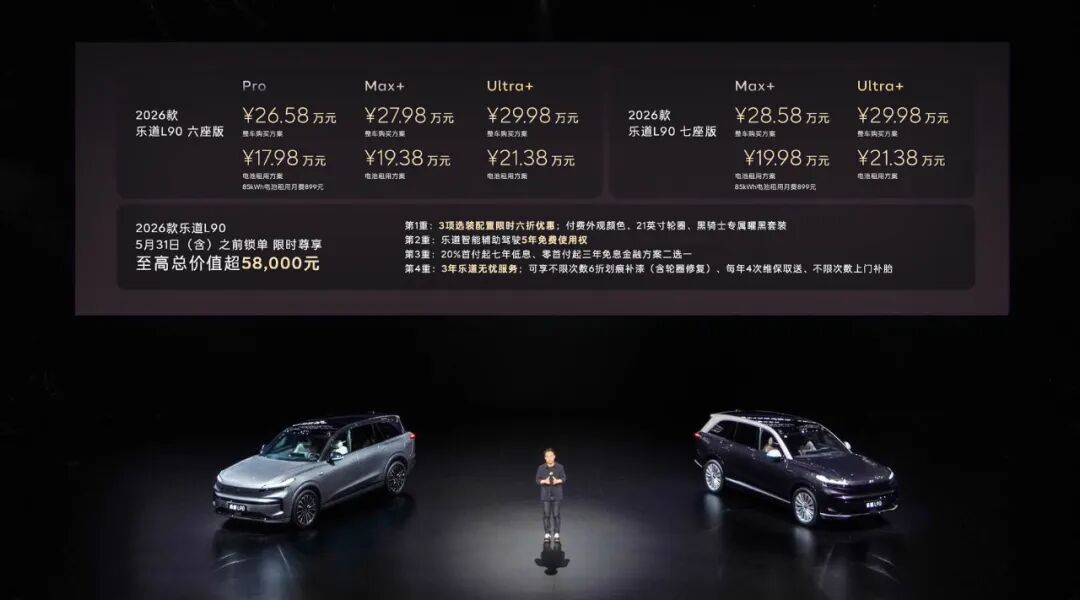
Since the vehicle and battery can be separated, the battery swapping mode can significantly reduce the price of vehicles. Take the 2026 Leidao L90 as an example, the official guide price for its 6-seat Pro version with the whole vehicle purchase is 265,800 yuan, equipped with an 85kWh battery pack. By adopting the BaaS (Battery as a Service) battery rental solution, the vehicle purchase price drops to 179,800 yuan, the initial payment is reduced by 86,000 yuan, a drop of as high as 32.4%.
It is worth noting that the difference between the BaaS battery rental and the whole vehicle purchase solution only lies in the ownership of the battery. The reduction of the purchase threshold will not reduce the battery capacity or cut the vehicle configuration. Compared with models of the same price range, models adopting the BaaS battery rental solution have more competitive configurations.
On the other hand, in accordance with China's current policies, eligible new energy vehicles will be levied a halved vehicle purchase tax from 2026 to 2027, with a maximum tax reduction of 15,000 yuan per vehicle. For eligible battery-swapping models, if the sales amount of the vehicle excluding the power battery and the power battery are accounted for separately and invoices are issued separately, the tax-exclusive price stated in the vehicle sales invoice excluding the battery will be taken as the tax basis for the vehicle purchase tax.
Still taking the 2026 Leidao L90 6-seat Pro as an example, calculated based on the whole vehicle purchase price of 265,800 yuan and the BaaS purchase price of 179,800 yuan, the corresponding purchase taxes for the two solutions are 11,761 yuan and 7,956 yuan respectively, with a difference of 3,805 yuan. Coupled with the 86,000 yuan reduction in the initial purchase payment, only in terms of vehicle payment and purchase tax, the battery rental solution can reduce the vehicle purchase cost by about 90,000 yuan, and the subsequent battery rent is calculated separately.
It can be said that at this stage, automakers deploying battery swapping solutions are more focused on the price advantage brought by vehicle-battery separation rather than the battery swapping technology itself, hoping to further expand the market influence of new energy vehicles with lower purchase prices.
Burdened by Heavy Assets, It Is Difficult for Battery Swapping Stations to Achieve Profitability
Due to the limited compatibility between different battery swapping systems, some automakers previously mainly built networks around their own models, thus bearing heavy asset investment.
Taking NIO as an example, by the end of September 2026, the company has invested more than 20 billion yuan in the field of battery swapping and charging technology and infrastructure. Due to high operating costs, NIO has still not achieved annual profitability to this day.
In response to this, in April 2026, Yang Jun, General Manager of CATL's Battery Swapping Business, said in an interview with the media, "The energy replenishment industry is actually facing great challenges today, almost the whole industry is losing money, and the utilization rate is very low."
In order to improve the utilization rate of battery swapping stations, CATL, NIO, Geely and other enterprises are currently strengthening cooperation, promoting the unification of industry technical standards and interconnecting battery swapping networks.
Source: NIO
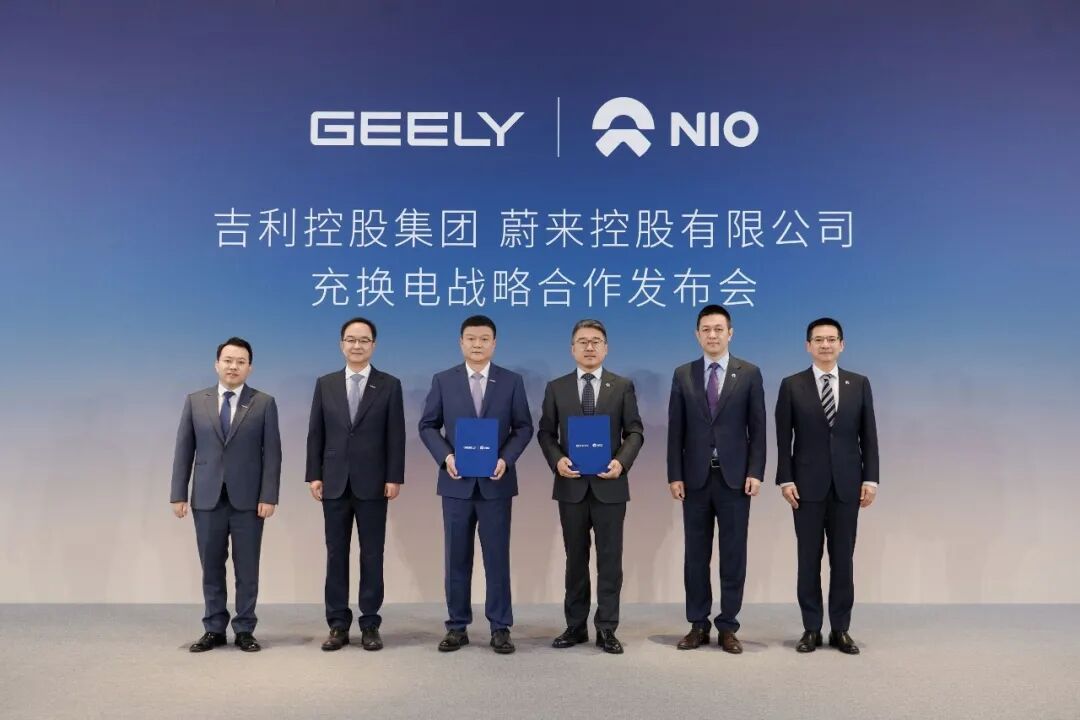
In October 2026, in response to the strategic cooperation on charging and battery swapping reached between Geely and NIO, Li Shufu, Chairman of Geely Holding Group, said, "There should be no redundant construction in the battery swapping field. It is unnecessary for Geely and NIO to build their own separate battery swapping systems, so the two sides chose to merge related businesses."
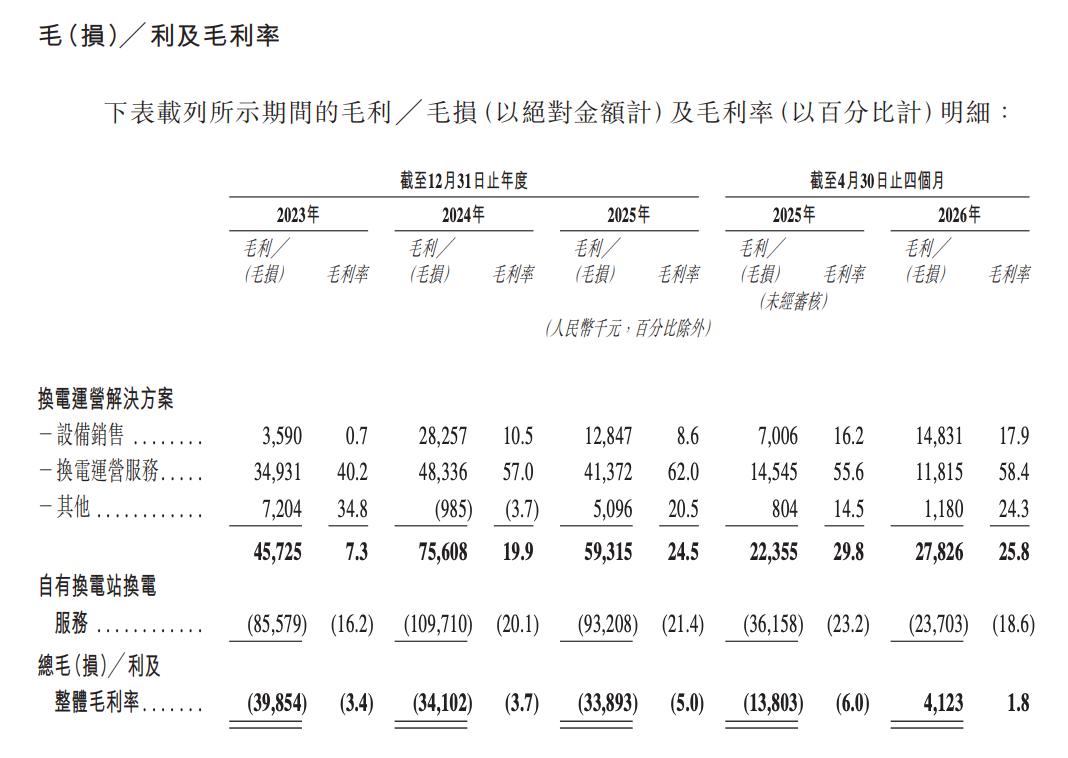
However, combined with the financial data of Aulton New Energy, an independent third-party battery swapping service operator, the self-operated battery swapping station business is still far from profitability.
The prospectus of Aulton New Energy cites data from CIC Consulting, stating that in terms of the revenue of battery swapping station operation services in 2025, the company ranks third in China. However, the battery swapping service business of self-operated battery swapping stations is the core reason why Aulton New Energy is trapped in continuous losses.
Source: Aulton New Energy Prospectus
The prospectus shows that from 2023 to 2025 and the first four months of 2026, the gross profit margins of Aulton New Energy's self-operated battery swapping station service business are -16.2%, -20.1%, -21.4% and -18.6% respectively; the gross losses are 85.579 million yuan, 110 million yuan, 93.208 million yuan and 23.703 million yuan respectively.
In view of the continuous loss of the self-operated battery swapping station service business, Aulton New Energy is transforming to an asset-light business model, committed to shifting from directly operating self-owned battery swapping stations to providing operation services for third-party battery swapping stations.
The operating situation of Aulton New Energy shows that vehicle-battery separation helps reduce the initial vehicle purchase expenditure, but the test of the battery swapping business does not end after the vehicles are sold. Automakers, battery swapping operators and battery asset holders still need to continuously provide services and make rents and service revenues match asset investment to form a sustainable business closed loop.
All in all, automakers refocusing on battery swapping reflects a shift in the competition of new energy vehicles. When technological upgrading is increasingly difficult to drive sales growth alone, making vehicles affordable for consumers has also become part of product competitiveness. Vehicle-battery separation moves part of the battery expenditure out of the vehicle purchase bill, giving automakers more room for sales beyond direct price cuts, but also extending competition to after vehicle delivery.
This means that the battery swapping mode needs to form a new benefit distribution mechanism — automakers get sales growth, consumers reduce initial expenditure, and battery asset holders and station operators rely on long-term services to recover their investment. If the revenue from vehicle sales is realized first, while the return on assets remains unfulfilled for a long time, it may not naturally form a synergy after more partners join.
Therefore, what is more noteworthy in this round of battery swapping boom is whether automakers are willing to take responsibilities for model adaptation, user acquisition and continuous operation beyond sales targets. Low vehicle purchase prices can open up the market, and only when the system that supports low prices can operate sustainably, battery swapping can become a choice trusted by more consumers in the long run.
This article is from WeChat Official Account "Farsight", written by Farsight Team, published with authorization from 36Kr.