Led by a PhD from the Chinese Academy of Sciences, the robotics team has secured a new round of financing.
In 2007, Zhang Zhengtao was still pursuing his doctoral degree when his supervisor assigned him a research topic: developing a robot that can play table tennis.
During this year's National Day holiday, Zhang Zhengtao paid a visit to the Massachusetts Institute of Technology in the United States, where he met a nearly graduating PhD student in a laboratory. The student was also working on a table tennis robot, and Zhang Zhengtao could not resist walking in to have a chat with him.
The student was researching the trajectory prediction of the ball, which was exactly the problem Zhang Zhengtao studied back then. Twenty years later, the prediction results are far more accurate than they used to be. Then the student went on to explain how to model the ball-returning mechanism, how to return the ball to a designated point, and how to judge spinning balls. This research topic has been around for quite some years, but it is still advancing little by little.
Zhang Zhengtao was completely absorbed in the conversation. Over the past 20 years, the research has been ongoing, with significant improvements in results and accuracy. In his view, enabling robots to make decisions independently in a constantly changing environment is exactly the "brain" problem that embodied intelligence aims to solve today.
And the seed sown during his doctoral years finally found a place to take root. In 2023, he founded Zhongke Huiling with his team.
Just recently, Zhongke Huiling announced the completion of several hundred million yuan in Series A++ financing, jointly invested by institutions including Zhilai Investment, Yonghua Investment, Maotian Investment, Yuanhe Chenkun, Guoke Kezhi, and Luning Investment. Back in June last year, Zhongke Huiling secured nearly 100 million yuan in Series A financing led by Lens Technology.
Zhang Zhengtao explained the allocation of the newly raised funds: 60% will be invested in the R&D of the embodied brain, 30% will be used for mass production and delivery of products, and the remaining 10% will be allocated to market expansion and after-sales services.
"At present, several products of the company are in short supply. In the past two years, we focused on tackling key technologies and exploring application scenarios. Now our brain solutions, as well as the three business lines covering robot band, mining, and footwear & apparel, have all reached the stage where commercialization is feasible."
Stepping Out of the Laboratory
Around 2020, the Institute of Automation of the Chinese Academy of Sciences had already made layout for the humanoid robot direction, but scientific research follows its own pace. How to further transform relevant technological research into industrial applications has become a new research topic. Zhang Zhengtao has long been engaged in robot research, majored in control theory and control engineering, is familiar with the manufacturing industry, and also has management experience. Promoting the relevant technologies to industrial applications has become his key choice in the next stage.
The manufacturing industry is indeed a field he is very familiar with. Around 2015, he started to visit factories in Dongguan, and what impressed him deeply was the lively atmosphere on the streets and the scene of tens of thousands of commuters going to and from work. But when he visited Songshan Lake ten years later, the flow of people had decreased significantly. Traditional industrial robotic arms have taken over the programmable and teachable processes, and the remaining tasks are mostly small-batch, multi-variety long-tail work: there are dozens to hundreds of models of BMW car keys, and thousands of types of drills for high-end machine tools.
Specialized equipment cannot handle these tasks, and fixed procedures cannot adapt to them either. The situation he saw left only two choices: either find new ways to keep these manufacturing activities in China, or let them flow to Southeast Asia where labor costs are lower.
Against the backdrop of industrial transformation, there are also some more practical demands.
The first thing Zhang Zhengtao thought of was his hometown. He was born in Zhaoyuan, Yantai, Shandong Province, which is known as the famous "Gold Capital", and all the industries around his home are related to gold. He once saw a photo showing three generations of the same family working in the mine, but underground operations inevitably carry certain risks, which gave him an idea: "Since I am working on robots, I should do something for mine intelligence."
In his view, the geological conditions thousands of meters underground are unpredictable, no one knows when water inrush will happen, or which rock will fall. Even if the accident probability is only 1 in 10,000, it cannot be reduced to zero. The best solution is to realize fully unmanned operation.
Another demand comes from the attention of the business director of Zhongke Huiling to the footwear and apparel industry in his hometown Putian. Zhang Zhengtao went to visit there and saw that the workshops were crowded with people sitting around the tables, making shoes all by hand. This scene reminded him of the old days when he watched old women embroidering and making shoes in his childhood.
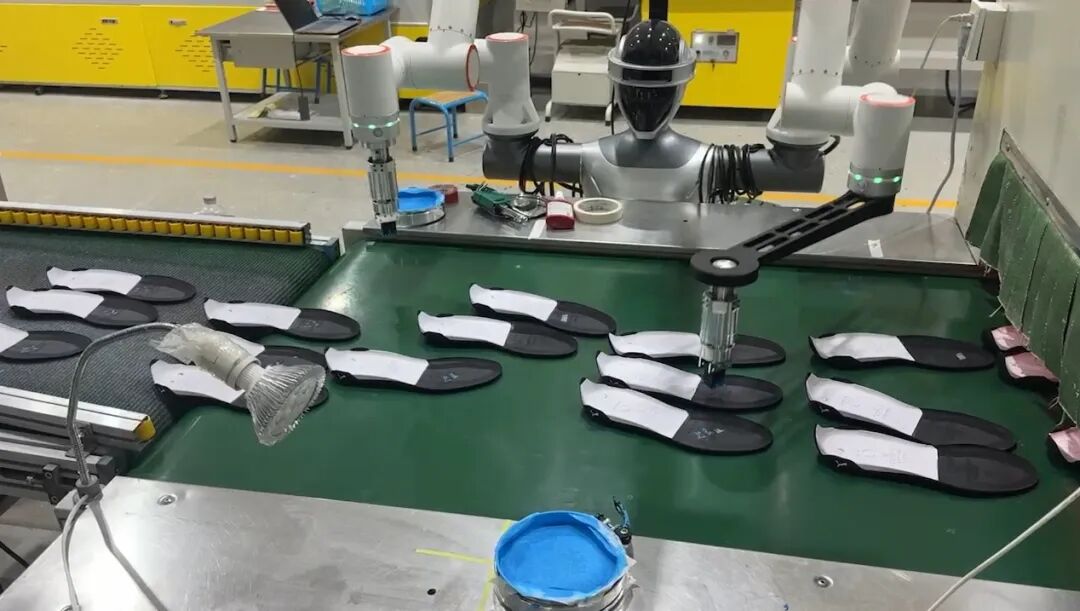
The factory owner told him that there are 25,000 such shoe production lines from that area to Southeast Asia, which is a hundred-billion-yuan business. Zhang Zhengtao then took a closer look at the production process: pattern drawing, cutting, laminating, glue brushing, all done manually, with pungent glue fumes. Nowadays, few young people are willing to take such jobs.
The mining industry is related to safety, and shoe factories are related to heavy manual labor. Both are jobs that cannot be done without people, but few people are willing to do. The team focused on these two scenarios, and independently developed the robot body, embodied brain, and dexterous hands.
This also gave Zhongke Huiling a clear sense of direction from the very beginning: the technology can be truly applied to real life. In Zhang Zhengtao's words, it is "technology for good, with broad commercialization space". Today, this has also become Zhongke Huiling's strongest moat.
From Kilometer-deep Mines to Shoe Production Lines
"In the past, investors most often asked how far and how high the robot could run and jump. But now they care more about landing and application," Zhang Lei, the secretary of the board of Zhongke Huiling, said frankly.
Zhongke Huiling has made many attempts in landing applications. The first scenario they went to was the underground mine not far from Zhang Zhengtao's hometown. There is a mine in Yantai that has been mined since the Song Dynasty. It has been emptied now and becomes a ready-made training ground: it can produce ore by loading explosives, and the environment and processes are all real, not simulated.
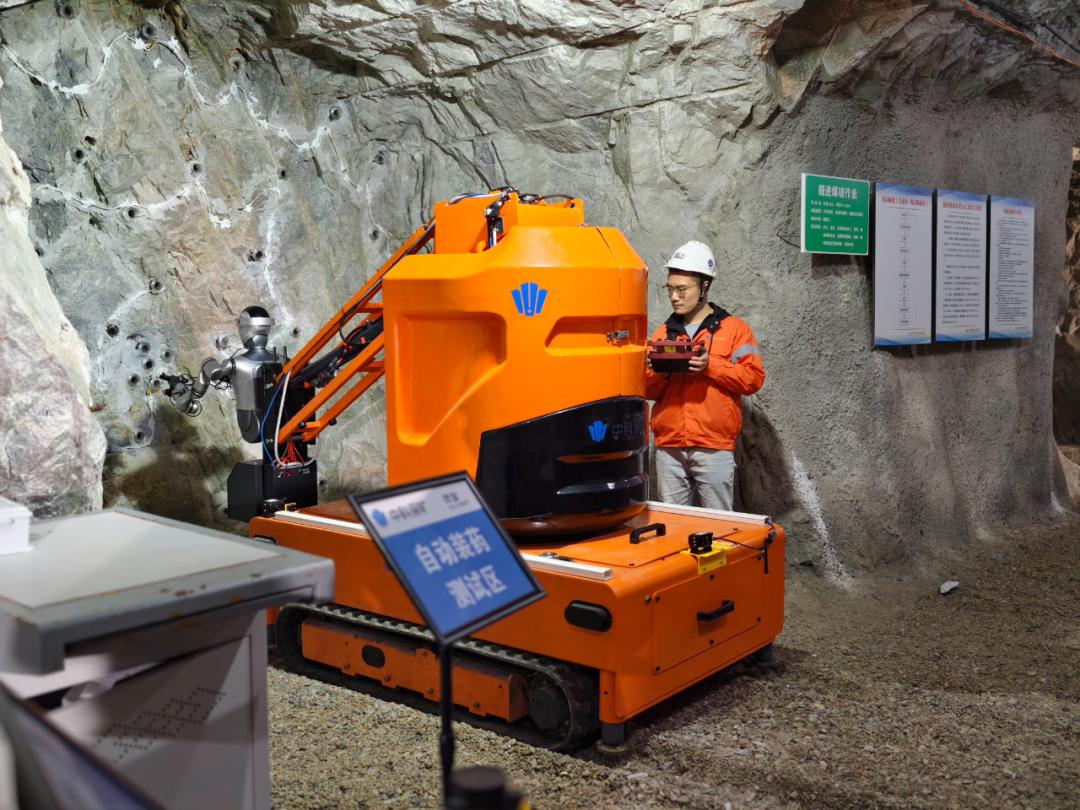
In the first half of this year, the team completed the whole process of drilling, charging, blasting, shoveling, loading and transporting here. The charging process is the most time-consuming: hundreds of explosive tubes need to be assembled, and each explosive tube is connected with a flexible wire that needs to be tied one by one.
After mastering the skills on the ground, the real underground operation is a completely different story. The team invited retired old mine managers to teach them how to load explosives, and how to arrange water, electricity and gas pipelines. The mines near the sea have high humidity, so every problem must have a solution, including how to protect the machines, and how to make the underground batteries meet intrinsic safety requirements.
In the second half of the year, they signed a business order with a benchmark mine about 1,000 meters deep with normal on-site operations. Zhang Zhengtao said that this is the first time in the history of metal mines to carry out such an underground unmanned mining demonstration. After stable operation for about half a year, it is expected to become a paradigm that can be promoted to the whole industry. In June 2025, the company has established Zhongke Deep Mine together with Shandong Zhaojin Group and Shandong Zhongkuang Group, focusing on this type of underground operation.
Out of the mine, when arriving at the shoe factory, what matters is speed.
Zhongke Huiling's partner is a leading footwear and apparel enterprise. The assembly line has a fixed beat: if the robot moves one beat slower, the subsequent processes will stop. Zhang Zhengtao introduced that in the test of relevant processes, the beat of outsole stamping operation reached 7 seconds per piece, and the outsole pressing reached 18 seconds per pair. Calculated according to the existing projects, the annual return on investment of the relevant solution is about 50% to 70%, and the estimated payback period of investment is within two years.
Besides speed, data processing is more challenging. In the same workshop, the lighting of each production line is different, so the model has to be re-adjusted. There are two ways to collect data: one is that the robot is teleoperated by people on the production line, the other is that workers wear the equipment while working. The team recalled that 70% of the early collected data was sometimes unusable, so they had to repeatedly adjust the wearing method and collection method until the data is usable, the hardware is compatible, and the model can generalize within a limited range.
Through continuous polishing and debugging, Zhongke Huiling has achieved repurchase from customers in multiple links of footwear and apparel manufacturing.
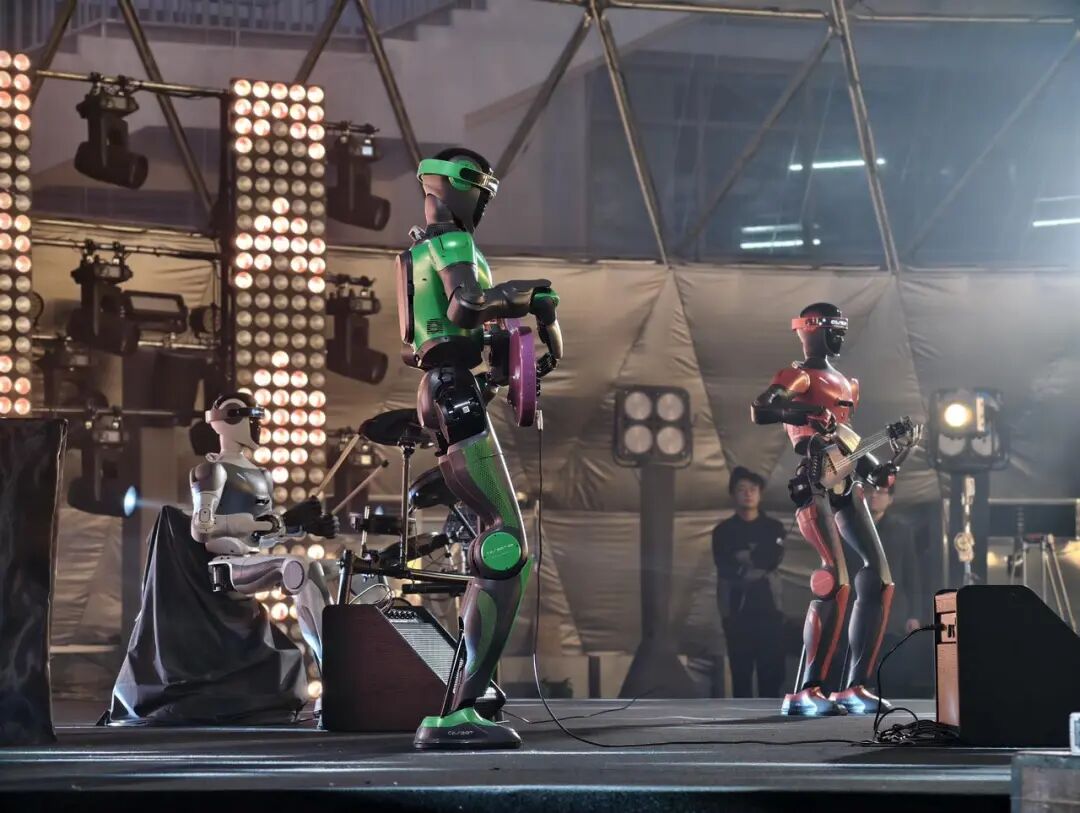
While robots work at customer sites in mines and shoe factories, the robot band stands directly in front of the audience. In February this year, a robot band composed of four CASBOT 02 made its debut, and later appeared on the Beijing Spring Festival Gala, Zhongguancun Forum, and World Artificial Intelligence Conference. Since August, it has been stationed in an experience store in Qingdao on a regular basis. Playing musical instruments requires dexterous fingers, beat synchronization, and multi-machine cooperation, whose difficulty is no less than that of industrial stations. The data accumulated by the band is fed back to the dexterous hand model for targeted training when applied to other scenarios. In the field of dexterous operation, Zhongke Huiling is also promoting the R&D of a 37-degree-of-freedom dexterous hand to support more complex fine operations and real musical instrument performance tasks.
Mines, shoe factories and robot bands seem to be completely unrelated. Zhang Zhengtao said that what connects them is dexterous operation. Whether this development path is feasible ultimately depends on whether the robot can work stably for a long time.
When the Hype Fades, Competition Focuses on Error-free Operation
2026 is called the first year of mass production in the industry, and the shipment volume is growing rapidly. Zhang Zhengtao divides this wave of growth into two stages. In his view, at the current stage, the shipment demand of robots is mainly concentrated in data collection, education, commercial performance and other fields, and the proportion of applications that have really entered the industrial site is still relatively low. The next stage of growth driven by real industrial demand may not be further highlighted until 2027 and 2028.
The industry trend is changing. From the documents of the Ministry of Industry and Information Technology to the listing review standards, all are requiring enterprises to deliver real practical results. Under such guidance, enterprises that take root in the industry and do difficult but correct things are encouraged.
This year, Zhang Zhengtao visited local robot companies in Silicon Valley. Demonstrations of folding towels and clothes are not uncommon, but there are still considerable challenges to increase the operation success rate to 99.5%, achieve stable operation for three consecutive days, and truly meet the requirements of commercial applications. Investors have also realized this problem. This year, they went to the application scenarios to see how the machines operate, how data is collected, and how much the data is worth.
In Zhang Zhengtao's view, the industry competition is shifting from making robots to making robots work stably.
"There are still many challenges in the industry now. For example, if a robot moves wobbly and slowly, it is real; if it moves fast and neatly, it may be a fake demonstration. Robots with decision-making capabilities think while moving, and they are not as fast as traditional robots that follow fixed trajectories," Zhang Zhengtao said, "In addition, the hand is a consumable part, which may break down after two or three weeks to one or two months. The model will also fail due to errors after long-term use. These stability problems can only be polished little by little on site."
As for whether the humanoid form is the final form, his answer is very straightforward: No. The form of robot is determined by the task. Doors, stairs, tools and assembly lines are all designed according to the size of human body, so bipedal humanoid robots have inherent advantages when entering open scenarios. For mines and warehouses that require high load, long battery life and high efficiency, wheeled mobile operation robots are more suitable. In his view, in the future, several forms of robots will most likely perform their respective duties.
"In the future, embodied intelligent robots that want to stay in the game need to have four capabilities: core technology, engineering capability, deep access to real scenarios, and continuous iteration capability."
Back to that table tennis table. When the ball flies over, the robot needs to predict the trajectory, judge the spin, and decide how to return it. More than ten years have passed, and the ball has been replaced by shoe soles, explosive tubes, and rows of piano keys. Zhang Zhengtao sighed that the theme of his report has never changed from the first day, all about scenarios and landing. Only this time, the place where the "ball" flies from is on the assembly line of the shoe factory, and in the mine 1000 meters deep.
This article is from WeChat Official Account "Rongzhong Finance" (ID: thecapital), Author: An Duo, Editor: Wu Ren, 36Kr is authorized to release it.