IPO Suspended: What Lies Ahead for Agibot?
The value of repurchase revenue is rising. The era when high valuations could be obtained only by prototypes and conceptual stories is gone. Taking internal competition as the main battlefield makes it hard to form a real closed business loop. Leading enterprises need to find new breakthrough paths, which can even be explored earlier than that of new energy vehicles.
Agibot has spared no effort, and it has no other choice.
On October 21, Agibot announced that it would release seven achievements for seven consecutive working days starting from October 22, covering datasets, operation platforms, heavy-duty robot G2Max, embodied Agent framework GenieMaster, simulation platforms, foundation large models and group experience learning paradigms.
There is a major background behind this: the attitude of the capital market towards embodied intelligence has taken a 180-degree turn between the beginning and the end of this year. In the early stage, the entire embodied intelligence track rushed to the capital market, but most IPOs have now become confusing events.
Specifically for Agibot, as a global leading player, it is reported that Agibot Innovation has recently launched a new round of financing, with a market rumored valuation of about 500 billion yuan, but its IPO has been suspended.
One detail is that the performance of humanoid robot players in the secondary market is relatively unsatisfactory, which makes capital shift from fanaticism to patience. The green light for conceptual stories is no longer wide open. Previously, Unitree's market value almost halved after landing on the STAR Market, and Mech-Mind's Hong Kong stock listing obtained extremely high over-subscription but broke on the first trading day, such successive market cases are in full view.
However, suspending the IPO does not mean giving up capitalization. It is more like a strategic choice based on the current situation: at the node where the industry valuation bubble is cleared, instead of hurrying to the stage to accept the scrutiny of the market magnifying glass, it is better to go back to the track to polish the business fundamentals. The reason is that the capital logic of embodied intelligence has undergone an essential shift, and the market evaluation criteria have changed from prototypes, concepts and stories to order quality, customer repurchase and real commercial performance.
Selling one more real machine seems to be more valuable than a one percentage point increase in stock price.
Unitree flopped in the capital market, has Agibot become smarter?
Lujiu Business Review noted that a number of industry insiders revealed to the outside world that the market has repeatedly spread news that Agibot's pace of listing in Hong Kong has slowed down. If the new round of financing reported by *Caijing* is true, Agibot will not be able to complete the IPO within this year.
This is not just Agibot's problem, but a microcosm of the entire industrial development cycle. In the past, "wild growth" was a typical representative word of the embodied intelligence track in the past two years, and the humanoid robot industry also permeated a general consensus: as long as the humanoid robot label is attached, it can replicate the capital feast of mass listing in the chip and semiconductor industries.
Just because it appeared on the Spring Festival Gala, embodied intelligence became popular rather suddenly. The primary market was willing to pay a high premium for the long-term industrial imagination, and prototype conferences and cool demonstration videos were enough to support the valuation narrative of enterprises, which was the early bubble.
The development of the humanoid robot industry has indeed cooled down so far, which has been severely broken by two secondary market market trends.
Unitree Technology, the first A-share humanoid robot stock, landed on the STAR Market in August. Its intraday market value once exceeded 440 billion yuan, and its market value almost halved in just a few trading days, with more than 200 billion yuan of market value evaporated. In the Hong Kong stock market, robot component manufacturer Mech-Mind obtained about 3835 times over-subscription for public offering, refreshing the subscription record of the Hong Kong stock robot track, its share price broke the issue price directly on the first day of listing, and the subsequent share price continued to weaken.
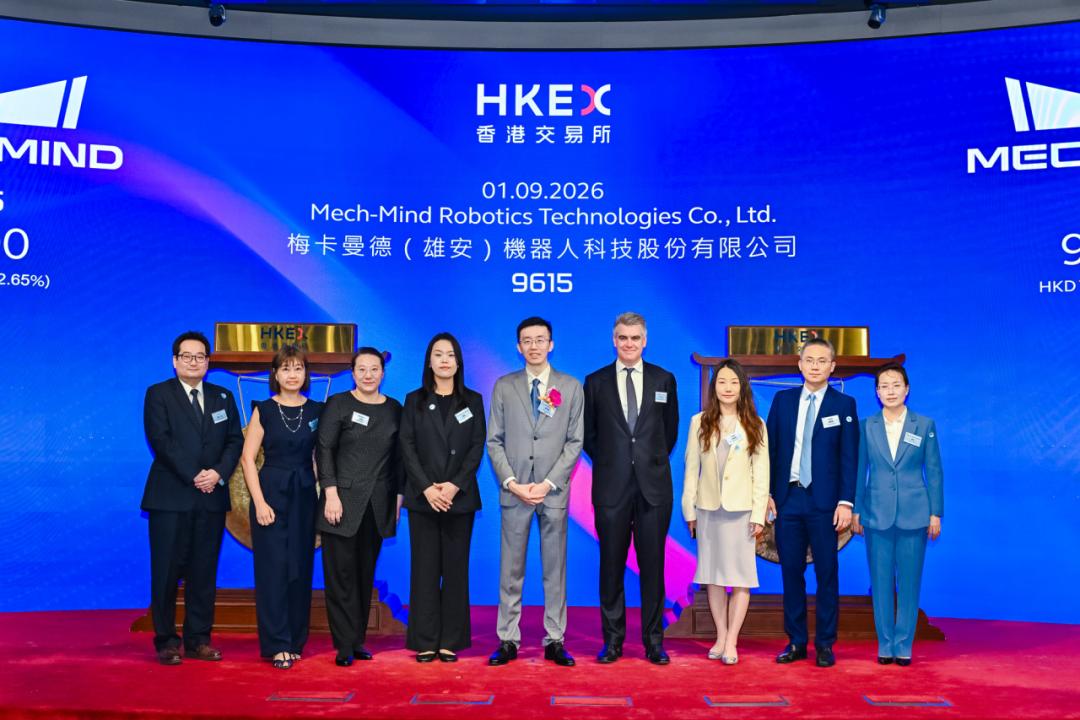
The successive market changes convey a clear signal: capital has shifted from fanatical capital to patient capital. Secondary market investors are unlikely to simply pay for the humanoid robot concept, and the real orders in the hands of enterprises and the market-oriented repurchase capability have been placed at an unprecedented level of importance.
For enterprises including Agibot, in accordance with the rules of Chapter 18C of the Hong Kong Stock Exchange for Specialised Technology Companies, after an enterprise submits its listing application, if it really completes a new round of financing before listing, without obtaining the exemption from the exchange, it must wait 120 days after the financing delivery is completed to advance the listing process.
New financing objectively lengthens the listing timetable of other unlisted enterprises. But apart from the objective restrictions at the regulatory level, the change of the industry environment is an underlying incentive that cannot be ignored.
After all, the regulatory review threshold has risen significantly. The Hong Kong Stock Exchange has released signals that it plans to launch a consultation on the 18C special technology listing system in the first half of next year, including a review of the market value threshold, which will directly affect the fate of dozens of embodied intelligence enterprises in the queue. Similarly, the A-share STAR Market revised the issuance and listing regulations in June, listing robots and embodied intelligence as key support directions, while clearly strictly controlling listing access, strictly adhering to the bottom line of financial authenticity, and avoiding the phenomenon of disease-carrying applications.
According to Wind statistics, more than 50 embodied intelligence track enterprises are queuing up at the Hong Kong Stock Exchange. However, after sorting out, Lujiu Business found that the market on the industrial chain has formed a realistic differentiation: upstream component manufacturers have relatively smooth listing access, Rokae Robotics, Seer Intelligent, Mech-Mind and Benmo Technology have successively completed listing on the Hong Kong Stock Exchange; humanoid complete machine enterprises face significantly greater resistance to break through, and it is difficult to see the case of complete machine enterprises ringing the bell in the short term.
Because the situation of rising first and then falling has been a lesson from the past.
Theoretically, the prospectus is a completely public test paper, and all income structures, order sources and customer compositions are fully exposed to the vision of investors and industry peers. However, public disputes have emerged in the track, and the market has begun to distinguish whether an income comes from market-oriented commercial customers or other sources.
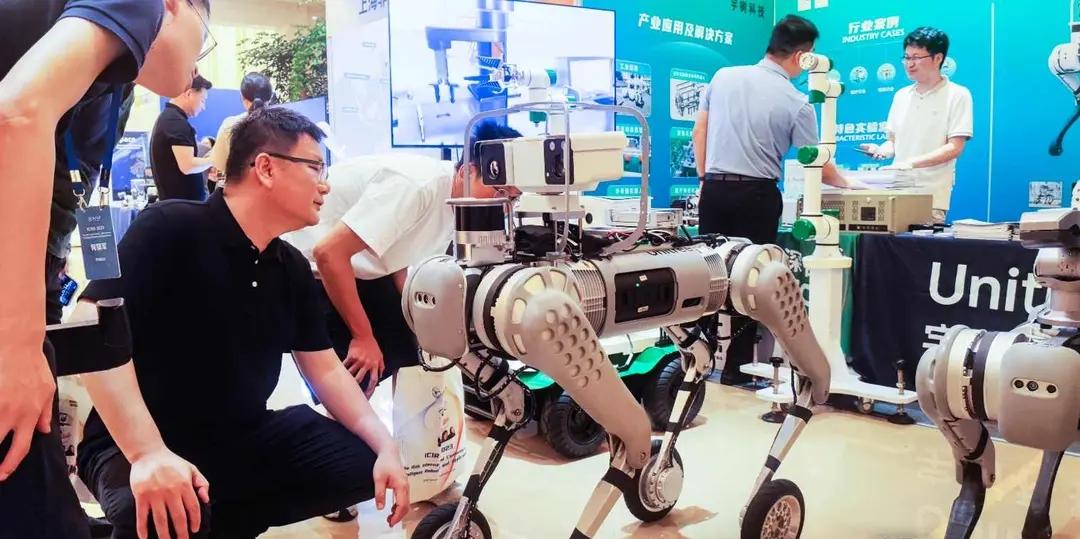
In this context, if the prospectus of an enterprise that wants to go public is exposed to insufficient high-quality real revenue, it will be criticized by the outside world. Obviously, few enterprises are willing to face the public interrogation of the capital market, investors and the public on the authenticity of revenue when they are not fully prepared. Suspending the IPO and leaving a window period to polish business indicators has become a realistic choice for some subsequent players.
It seems that even large factories have to run around for demand. Gradually, people with ideals believe that in the future, whether business indicators can withstand audits and the scrutiny of the secondary market will become more important than rushing to ring the bell.
Since the window of the capital market has changed, the external environment is only the source of pressure. What really affects how far an enterprise can go still lies in its own business foundation.
Agibot's opponents: peer competitors or its own business quality?
From the perspective of the competitive landscape of the humanoid robot industry, Agibot and Unitree form a duopoly in the track.
According to statistics from SAG in the first half of 2026, Agibot shipped 8,400 units and Unitree shipped 5,900 units, the two together accounted for more than 70% of the global market share. The shipment volume of other small and medium-sized manufacturers did not exceed 1,000 units in the first half of the year, and the scale gap between leading enterprises and mid-tier enterprises has been widened.
Unitree has achieved profitability before. On the surface, Agibot's biggest competitors are the leading peers in the same track.
But penetrating the appearance of the industry, the development bottleneck faced by the whole track is also the core examination question pressing on Agibot. The real test comes from the business quality of the enterprise itself.
The whole industry is being examined for the real quality of its revenue. According to the statistics of the Humanoid Robot Scene Application Alliance, there were 218 publicly announced humanoid robot winning bid projects in China in the first half of 2026, with a total scale of 1.723 billion yuan. Among them, procurement by educational and scientific research institutions accounted for 55.5%, government and state-owned platforms accounted for 20.6%, and orders from real industrial enterprises only accounted for 21.1%. Most of the orders from industrial enterprises still stay at the stage of prototype testing, exhibition hall display and training pilot, rather than the normal commercial procurement of factory production lines.
If a large number of orders have the attributes of scientific research projects, and the budget fluctuates with the project cycle, it is difficult to form continuous repurchases. Once the project ends, the corresponding revenue will have the risk of fluctuation, which is also the key risk point that current regulatory inquiries and secondary market investors focus on. This is not a special case of a certain enterprise, but the industry reality faced by the vast majority of humanoid complete machine manufacturers.
In contrast, Agibot has positive factors. For example, it is expected that from November 2 to 3, 6 G2 robots will enter a real convenience store for 24-hour live streaming operation to complete the real scenario verification of full-stack technology.
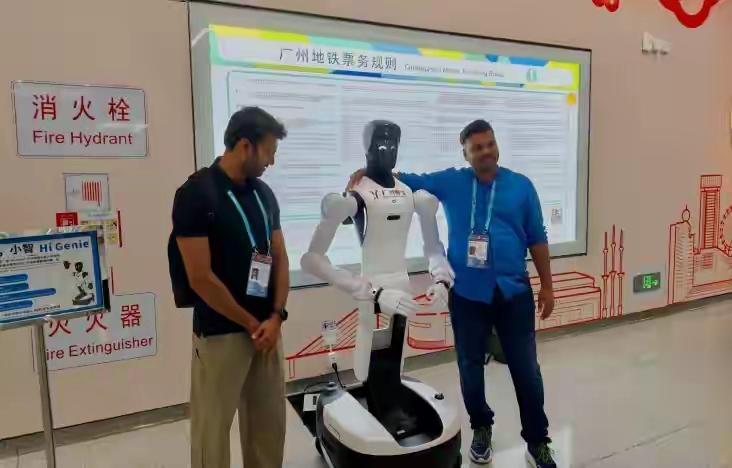
In addition, at the 2026 Agibot Partner Conference, Deng Taihua, founder and CEO of Agibot, disclosed the revenue status since the establishment of Agibot: "From 300,000 yuan in the first year of establishment, to more than 60 million yuan in the second year, and last year (2025) the revenue exceeded 1 billion yuan. We have achieved 20 times growth every year. This year's target will further achieve several times growth. In 2027, we will cross the 10 billion yuan revenue mark."
However, these do not mean that the products have been fully mature. The shipment volume under the statistical caliber includes wheeled and half-size models, and there is still room for improvement in the large-scale deployment of full-size humanoid robots.
A large number of domestic complete machine enterprises have a high proportion of external procurement of core components such as reducers, servo motors and controllers, and their supply chains are highly convergent. At the prototype level, it is easy to make robots that can walk and perform actions, but product differentiation mostly stays in appearance and demonstration actions. The operation capability in real unstructured industrial scenarios still needs to be polished and iterated with massive working condition data. Therefore, even for Agibot, the equipment can be deployed in batches day by day, but there is a considerable distance between the demonstration effect and more stable operation.
Deng Taihua, CEO of the company, once said that he is "not in a hurry to pursue net profit", and he also emphasized that Agibot's current strategy is to maintain saturated investment in the R&D field to build product competitiveness.
Under the heavy R&D track, the cash flow pressure of enterprises exists objectively. Hardware iteration, algorithm training, team manpower and market expansion all continuously consume funds. Agibot has not achieved profitability yet and has a certain dependence on external financing.
Looking back, the competition between peers in shipment volume and market share is only superficial competition. The propositions at the business foundation level, such as the optimization degree of order structure, the actual product landing capability, and the path to reduce losses, are the internal barriers that Agibot needs to cross.
Compared with the increasingly fierce fighting among domestic leading players, Lujiu Business Review has observed another trend: taking internal competition as the main battlefield makes it hard to form a real closed business loop, leading enterprises need to find new breakthrough paths, which can even be explored earlier than that of new energy vehicles.
Instead of competing with peers in internal competition, it is better to go overseas in advance
The speculation of accelerating outward expansion is not groundless.
Looking back at the development path of the new energy vehicle industry, most domestic manufacturers have experienced the development sequence of first deeply cultivating the local market, accumulating technology and scale, and then going overseas. In the embodied intelligence track, however, different possibilities have emerged: domestic humanoid robots have advantages in supply chain, cost and manufacturing, and going overseas can become an important growth engine earlier.
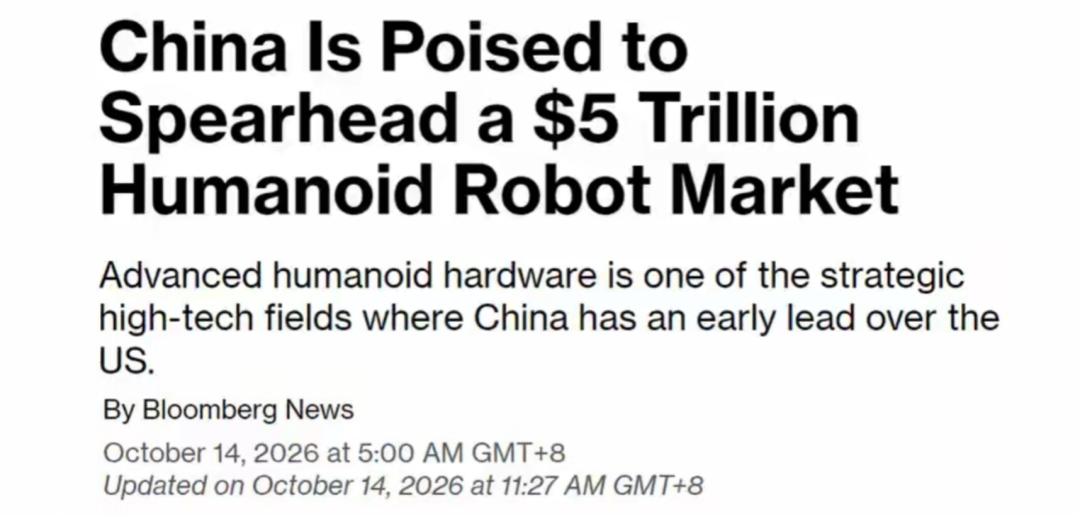
In terms of overall market data, statistics show that in the first quarter of this year, China's humanoid robot exports increased by 210% year-on-year. Bloomberg published an article on October 14, saying that China is expected to lead the $5 trillion humanoid robot market.
Specifically for Agibot, Jiang Qingsong, partner and co-president of Agibot Robotics, introduced that the company plans to make overseas sales account for more than 30% in 2026, and it is expected to exceed 50% in the future.
The above data means that polishing business fundamentals inward and seizing overseas incremental market outward can become a more realistic way out for leading complete machine enterprises, and going overseas has the opportunity to become a vital second curve in this solution.
Chinese humanoid robots have sufficient advantages in going overseas. Morgan Stanley's research report judges that the development stage of the humanoid robot industry is equivalent to that of new energy vehicles from 2018 to 2020, and the global shipment volume will usher in a hundredfold growth in the next five years, with Chinese manufacturers firmly occupying the leading position in the industrial chain. New energy vehicles opened up overseas markets relying on energy substitution logic, while humanoid robots leverage global demand relying on the rigid demand of labor substitution, with comprehensive advantages in market space, expansion speed and industrial chain discourse power, making the overseas wave more explosive.
The disadvantage is whether the external market will accept product access on a large scale, which tests the product compliance capability of enterprises including Agibot. At the same time, the first high wall from the competitive market cannot be ignored.
According to reliable sources, as Tesla revealed that its third-generation humanoid robot Optimus is ready for mass production, the market has focused on this enterprise again. Just like Tesla's recent breakthrough in aerospace, domestic humanoid robot brands cannot ignore the global competitive pressure from Tesla. Elon Musk even said bluntly that Optimus humanoid robot and Cybercab will constitute the vast majority of Tesla's value.

The second wall is that the road to industrialization is not smooth. Hardware reliability, generalization capability of physical AI algorithms, cost control, industry compliance standards and data closed-loop construction are still the core