Ice and Fire Behind a Bowl of Eel Rice
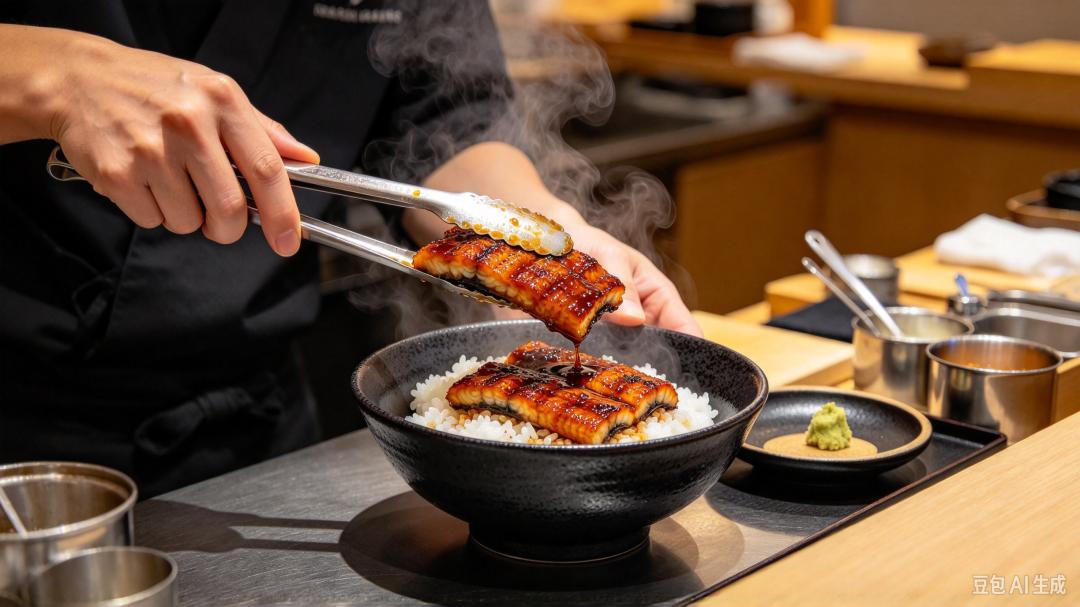
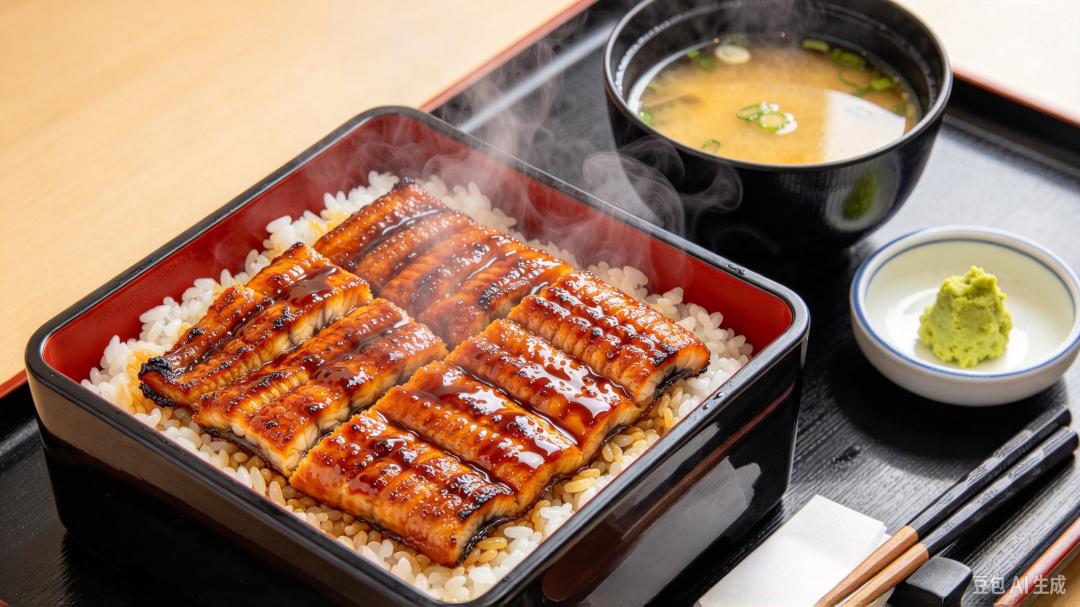
There is a popular joke circulating among white-collar workers in Shanghai: pork knuckle rice and braised chicken with brown sauce can only fill one's stomach, while a bowl of eel rice is the "spiritual year-end bonus" for office workers.
This joke has been around for a long time, virtually becoming a measure of workplace well-being, and also reflects the rising popularity of the domestic eel consumption market.
When enjoying this bowl of hot eel rice, most workers take it for granted that the grilled eel in the bowl comes from Japan. In fact, most of them are produced in Fujian or Guangdong provinces.
Local enterprises breed live eels and process roasted eels, export the products to Japan, where the eel rice culture was formed, which then influenced Chinese consumers through Japanese anime. Chinese consumers then go to Japanese restaurants to buy high-priced eel rice, forming an interesting industrial cycle.
The core advantage of domestic roasted eel lies in its cost, with the selling price less than half of similar Japanese products. Japan has long been the largest export market for Chinese roasted eel.
With the maturation of the supply chain, the price of domestic eel rice has been continuously decreasing, and even in central and western cities, people can now get a bowl of affordable eel rice for only 30 yuan.
Many eel enterprises in the industry adopt a two-wheel drive strategy of both export and domestic sales to hedge against cyclical fluctuations in the industry. However, in recent years, the entire industry has faced numerous challenges: in 2025, the eel fry harvest was abundant, which directly led to a continuous decline in export market prices. On the domestic consumption side, eel rice is still a niche optional consumer product, far less popular than mass fast food such as pork knuckle rice.
The problems plaguing domestic eel enterprises are far more than these. As the industry enters a downward cycle, the stock of eels in breeding ponds has increased, tying up huge amounts of capital and intensifying financial pressure. Tianma Technology, the industry leader, and its actual controller Chen Qingtang are now going through such a difficult period.
Eel Market: Rising Volume and Falling Price
The operating conditions of domestic eel farming enterprises are closely related to eel fry that weighs only 0.15 grams, equivalent to the weight of 3 drops of water.
All eel fry are obtained through wild fishing. The annual scale of fishing and stocking of natural fry directly determines the supply expectation of the entire industry.
In the 2024 fiscal year, the catch of natural eel fry was relatively low, with only 24 tons of fry actually put into ponds across the country. The fry price remained at a high level, creating an expectation of tight market supply, driving the industry's prosperity upward, and the price of commercial eels rose accordingly.
In the 2025 fiscal year, about 79 tons of eel fry were stocked across the country, a rare large stocking volume in recent years. The sharp increase in fry stocking created an expectation of loose market supply, and the prices of live eels and roasted eels continued to weaken.
Last October, an additional external risk emerged in the industry: the Dominican Republic added South American eel fry to the Appendix of the Convention on International Trade in Endangered Species of Wild Fauna and Flora, restricting international eel fry trade and disrupting the structure of the domestic eel fry market.
At the same time, domestic eel farming capacity has continued to be released, and the supply of commercial eels in the market has increased. As the leader of the whole industrial chain in the industry, Tianma Technology's eel output from ponds in 2025 reached as high as 18,700 tons, hitting a record high.
The market has fallen into a situation of rising volume and falling prices, and the farming side is generally facing losses. In 2025, Tianma Technology (603668.SH) recorded a net loss attributable to shareholders of up to 179 million yuan. Among the 3.807 billion yuan of ending book balance of inventory, the consumptive biological assets alone reached 2.782 billion yuan, with a large amount of capital tied up in the farming sector.
Changes in market prices are very intuitive. For the whole year of 2025, the sales price range of the company's eels with the specification of 1P-5P (per tail) was 50,000 yuan/ton to 130,000 yuan/ton. In 2026, the sales price range of eels of the same specification dropped to 32,700 yuan/ton to 112,000 yuan/ton, at a historically low level.
Although the company has actively slowed down the rhythm of eel harvesting, its overall operation and profitability are still under periodic pressure.
In the first half of 2026, the company's smart farming business achieved operating revenue of 126 million yuan, down 69.80% year on year. Under the rhythm of controlling eel harvesting, the output of eels from ponds was about 7,638.07 tons; the proportion of eels used for self-processing rose from 47.35% in 2025 to 75.90% in the first half of 2026.
Enterprises are controlling the stock in ponds to support the price of live eels, while increasing the self-use rate to digest production capacity through domestic sales.
In September this year, the pond-out price of eels dropped to 32,700 yuan/ton to 64,200 yuan/ton. Facing the continuously sluggish market, the company changed its previous rhythm of harvesting more than 1,000 tons per month, with the monthly harvest volume only 103.84 tons, a sharp month-on-month decrease of 91.09%.
40 Years of Eel Farming, Several Reforms
By opening a food delivery app, ordinary people can easily buy a bowl of affordable eel rice, but few people know that eel farming in China has a history of more than 40 years.
In the late 1970s, Fuqing in Fujian province took the lead in exploring the cement pond eel farming model; later, Shunde in Guangdong province tried eel farming in earth ponds. By the mid-1980s, large-scale eel farming in China officially started.
In the early stage of development, eel fry were mainly obtained by fishing in the estuaries of the Yangtze River and Min River, while farming feed and technology relied on imports from Japan and Taiwan region of China, and commercial eels were exported to Japan to earn foreign exchange.
By the mid-1990s, the domestic eel farming output far exceeded that of Japan, making China the world's largest eel farming country. At that time, the eel market was highly prosperous, and a large number of farmers got rich by raising eels in Fujian and Guangdong regions.
However, at this stage, the domestic eel industry only stayed at the pure farming end, with no commodity pricing power, and the feed and core technologies were constrained by external parties. At the end of the 1990s, the domestic eel supply to Japan was excessive, and Japan subsequently raised trade barriers, leading to the exit of a large number of individual eel farmers in China.
Around 2008, Chen Qingtang, founder of Tianma Technology, led the team to independently develop opening feed for eels, getting rid of the dependence on imported feed from Japan, which became a key inflection point for the domestic eel industry to move towards independent and controllable development. Tianma Technology also entered the eel industry from the special aquatic feed track.
Almost at the same time, China established the standard system for pesticide residues and traceability of exported eels. After strict environmental protection rectification and market elimination mechanisms, the main eel producing areas gradually formed the Fujian-Guangdong industrial cluster, with more than 300,000 employees in the whole industry.
Under the long-term export-oriented industrial background, the domestic eel consumption market also began to sprout quietly.
Around 2016, eel as an ingredient gradually separated from domestic Japanese restaurants, and began to explore chain and brand operations, initially forming a segmented eel track.
The real industry transformation took place in 2020. Affected by cross-border logistics and fluctuations in export orders, the uncertainty of export business increased, forcing many enterprises to expand the domestic market, and export-grade roasted eel products began to enter the domestic consumer market.
According to the *2022 China Japanese Cuisine Category Development Report*, eel rice ranks second among the popular Japanese cuisine dishes; data from a certain e-commerce platform that year revealed that the number of in-restaurant orders related to eels increased by nearly 20% year on year.
This market change is mainly driven by three major factors: the mature and complete supply chain, the business hedging strategy of leading enterprises, and the impact of industry cycles.
In terms of supply chain, the pre-made grilled eel technology is mature, and the B-end catering supply chain system has taken shape, so affordable eel rice can penetrate into first-tier and second-tier cities;
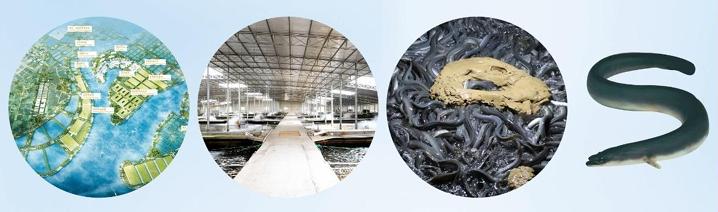
Tianma Technology, the leading enterprise, has built a whole industrial chain covering feed, farming, roasted eel processing and catering brand terminals, and continuously increases the proportion of self-processed eels to hedge against the cyclical rise and fall of live eel and roasted eel exports.
But objectively speaking, the overall domestic eel consumption market is still limited, with the annual domestic consumption of roasted eel only in the range of 20,000 to 30,000 tons, and the terminal market size of eel rice is about 8 billion yuan. Eel rice is an optional consumption, and does not have the rigid demand attribute like pork knuckle rice.
Against the background that the limited domestic consumption scale is difficult to fully absorb the local farming capacity, the export of live eel and roasted eel products is still the basic market of the industry.
Inevitable Hardship
For a long time, China's eel industry has always taken export as the core, and the eel consumption culture was spread outward from Japan, so the domestic market started relatively late.
Most Chinese consumers' first exposure to eel rice comes from Japanese anime such as *Crayon Shin-chan* and *Detective Conan*. With the increasingly developed domestic cold chain logistics network, roasted eel products have penetrated into B-end catering, and the market has expanded.
Meituan data shows that in 2021, there were more than 60,000 types of eel-related dishes, and the eel-related food delivery orders increased by 37% year on year; CCTV Finance statistics show that the number of relevant catering merchants increased by 14% year on year in that year.
After 2020, deep-processed eel products caught the development trend of pre-made dishes. Grilled eel products can be easily purchased through e-commerce platforms, and can be served on the table after simple heating. Eels broke through the scenario restrictions of Japanese restaurants and high-end catering stores, and "swam" to the dining tables of ordinary families.
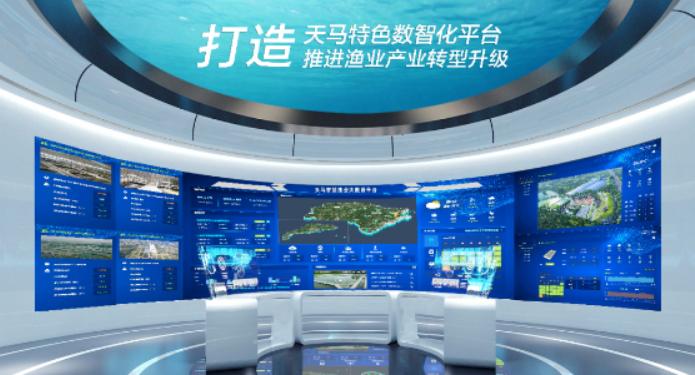
In order to expand the domestic sales market, Tianma Technology began to increase its roasted eel processing capacity in 2019, and also launched its own offline chain store brand "Man Xiaotang" to lay out terminal consumption.
In 2025, the company's roasted eel sales volume reached 5,370.81 tons, up 57.75% year on year. In the first half of 2026, the sales volume of roasted eel was 3,680.90 tons, a slight increase of 0.53% year on year.
However, dragged down by the low operating price of roasted eel, the company's health food business revenue was 296 million yuan in the first half of this year, down 26.18% year on year.
The root cause of Tianma Technology's current operating dilemma lies in its large-scale fry stocking in the early stage and excessive capacity expansion. In 2024, the investment in eel fry procurement was 166 million yuan, and it reached 812 million yuan in the first half of 2025.
The huge amount of fry stocking corresponds to the concentrated harvest of eels in the next 2-3 years, coupled with the continuous investment in breeding costs, which keeps the financial pressure of the enterprise rising.
As of June 2026, the book value of the company's restricted assets was 2.443 billion yuan, of which the book value of restricted fixed assets was 1.764 billion yuan, mainly equipment, land and other assets used as collateral for bank loans and sale-leaseback transactions.
In the same period, the company's monetary funds were only 461 million yuan, which was not enough to cover the 2.521 billion yuan of short-term loans and 935 million yuan of non-current liabilities due within one year.
To resolve the enterprise crisis, Chen Qingtang, the actual controller of the company, has already taken various self-rescue measures. In December 2025, Tianma Investment controlled by him provided financial support of no more than 450 million yuan to the company and its subsidiaries.
After that, Chen Qingtang obtained funds through methods such as share reduction and share pledge. In a share reduction announcement in July this year, it was clearly stated that the move was not only for his own capital needs, but also intended to support the company's operation.
As of September 23, the cumulative pledged shares of Chen Qingtang accounted for as high as 96.56%, and 100% of the company's shares held by Tianma Investment have been pledged; by October 23, the cumulative frozen shares of Chen Qingtang and persons acting in concert with him reached 40 million shares, accounting for 27.35% of the company's shares they held.
After a series of self-rescue measures, the enterprise's operational risks have not been completely eliminated.
The research report of AVIC Securities pointed out that the eel fry stocking volume in 2026 has declined, the industry capacity clearance is accelerating, and the trend of supply side tightening has taken shape; at the same time, China has implemented one-year phased control measures including a full ban on local eel fry fishing and a ban on imported American eel fry, and the supply-demand pattern of the industry is ushering in positive changes.