The "Little Golden Dragon" that originated in Xiamen has had a far from easy journey in its global expansion.
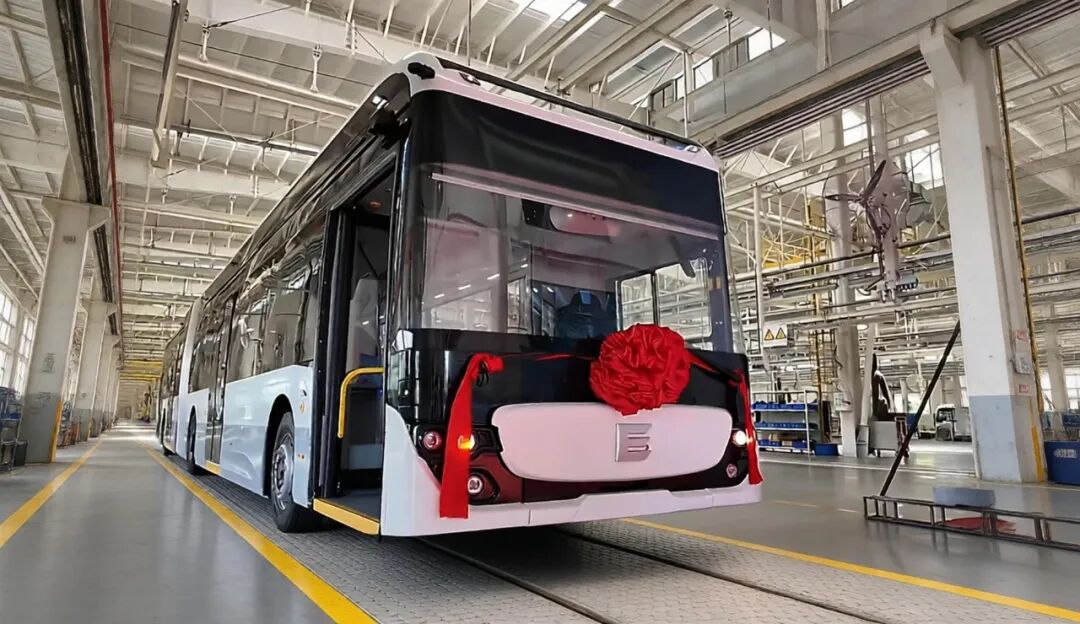
In July 2026, an 18-meter-long pure electric articulated bus rolled off the production line at the Longhai factory.
The new vehicle adopts an all-carbon fiber composite body and is targeted at the European market, but the logo hanging on the front of the bus is not a Chinese brand, but the logo of Ebusco, a Dutch electric bus enterprise.
The company responsible for manufacturing this vehicle is none other than Golden Dragon, a long-established Chinese bus manufacturer.
According to the information disclosed in Ebusco's subsequent performance announcement, this Ebusco 3.0 is part of a "large batch" order from a European customer.
After leaving the Longhai factory, these "Golden Dragon-made" buses will be transported back to Ebusco's factories in the Netherlands and France to undergo pre-delivery inspections in accordance with European manufacturing standards.
This is different from Golden Dragon's past overseas expansion methods. Before that, Golden Dragon mostly exported buses bearing the Golden Dragon logo to overseas markets; now, it has also started to manufacture vehicles on behalf of European brands and become a contract manufacturer for European brands.
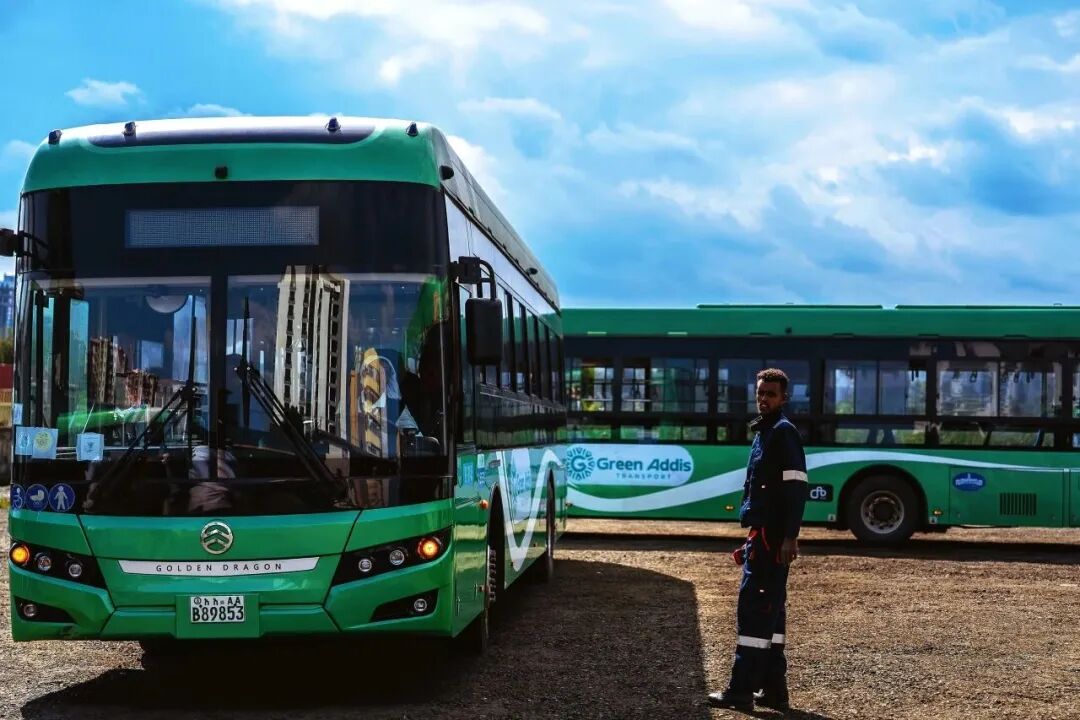
Behind this identity shift, Golden Dragon's position in the global bus industry chain is also changing.
In the past, Golden Dragon mainly relied on complete vehicle exports to open up overseas markets, with its competitiveness concentrated in manufacturing costs, delivery capabilities and product adaptation; now, in the Ebusco project, it has begun to undertake the production links of European brands, embedding its own manufacturing system into the R&D, certification and delivery chains of European bus enterprises.
However, entering the supply chain of European brands does not naturally mean completing brand upgrading. Although the vehicles are manufactured by Golden Dragon, the brands, customer relationships, and part of the leading rights in design and delivery are still in the hands of Ebusco. For Golden Dragon, this type of cooperation can obtain orders and accumulate manufacturing experience in carbon fiber bodies and European standard models, but it may also keep the enterprise in the contract manufacturing link with relatively limited profits and discourse power.
Especially under the background that partners are continuously facing financial constraints, order cancellations and operational uncertainties, the OEM model not only brings access to high-end markets, but also brings risks of order continuation and payment collection.
This complexity is exactly the epitome of Golden Dragon's overseas expansion entering a new stage.
The competition in overseas markets is no longer just about how many vehicles are exported, but about whether it can establish local production, after-sales service, regulatory certification and brand awareness. From large-scale government procurement in Tunisia, to contract manufacturing in the European market, and then to high-end product platforms such as "Qiantu", Golden Dragon is trying multiple paths to find its new position in the global bus industry chain.
Starting from 13 vehicles, the transformation of the "Little Golden Dragon"
In the history of Xiamen's bus industry, "Jinlong" (Golden Dragon) is a name that is easy to confuse.
The more well-known one is the listed company King Long Automobile. Under King Long Automobile, there are three core bus enterprises: Xiamen King Long United Automotive Industry Co., Ltd., commonly known as "Big Golden Dragon" in the industry, with the English brand King Long; King Long United Automotive Industry (Suzhou) Co., Ltd., which uses the Higer Bus brand, with the English name Higer; Xiamen Golden Dragon Van Co., Ltd. is Golden Dragon Bus, with the English brand Golden Dragon.
The three companies all belong to the King Long Automobile Group, but each has its own product system, production base and sales channels.
Different from many automobile enterprises founded and led by individual entrepreneurs for a long time, Golden Dragon does not have a typical "founder" who integrates the identities of founder, actual controller and spokesperson. If we trace back to the origin of the enterprise, we cannot avoid Huang Peiyu, who is regarded as one of the main founders of Xiamen's automobile industry in the industry.
At the end of the 1980s, Xiamen did not yet have a complete foundation for the automobile industry. Huang Peiyu was assigned to prepare for the establishment of Xiamen Automobile Industry Corporation. The original idea was to strive for part of the 300,000 sedan project of the Second Automobile Works to settle in Xiamen, but this plan was not finally realized.
At that time, Xiamen neither had a foundation for automobile manufacturing nor a mature parts industry chain. After the project faced cancellation, Huang Peiyu still advocated retaining the team that had been formed, and shifted the direction from sedans to buses with higher investment thresholds.
Around 1989, Xiamen Golden Dragon Van, known as "Little Golden Dragon", entered the preparation stage.
The "little" in "Little Golden Dragon" does not refer to the small scale of the enterprise, but corresponds to Huang Peiyu's idea of "making small vehicles". At that time, "Big Golden Dragon" mainly targeted large and medium-sized buses, while "Little Golden Dragon" took on the exploration of light buses and small commercial vehicles.
In 1992, Xiamen Golden Dragon Van Co., Ltd. was formally established, and gradually developed into today's Golden Dragon Bus in the following years.

In the early stage of its establishment, Golden Dragon Bus was also engaged in assembly business, relying on imported parts to assemble and produce buses. Public data shows that the company only trial-produced 13 vehicles initially, with an output value of about 2 million yuan. Around 1997, Golden Dragon began to produce Coaster-type medium-sized buses; after entering the 21st century, its products gradually expanded from light buses to large and medium-sized buses.
In 2003, the company registered the "Golden Dragon" trademark, and began to strengthen its own brand recognition outside the complex "Jinlong" name system.
Since then, Coaster, city buses, intercity buses and new energy buses have together formed Golden Dragon's main product line. Golden Dragon has also developed from an enterprise starting with parts assembly to a complete vehicle enterprise with R&D and manufacturing capabilities for large, medium and light buses.
Data shows that from 2021 to 2023, the company's operating revenue increased from 4.745 billion yuan to 5.341 billion yuan, while its net profit changed from a loss of 364 million yuan and a loss of 189 million yuan to a profit of 40.02 million yuan. In 2024, Golden Dragon's revenue further increased to 6.308 billion yuan, a year-on-year increase of about 18.1%, but its net profit was only 42.19 million yuan.
This "weakness" in operating conditions is not without the pressure brought by the gradual peaking of domestic market growth. Therefore, going overseas has become a must-answer question for a large number of enterprises including Golden Dragon Bus in recent years.
In 2025, Golden Dragon Bus exported more than 9,000 buses, and overseas revenue accounted for 57%, making the overseas market an important support for business growth; however, whether the export scale can be further transformed into higher profits and more stable cash returns is still the key to measuring the quality of its globalization.
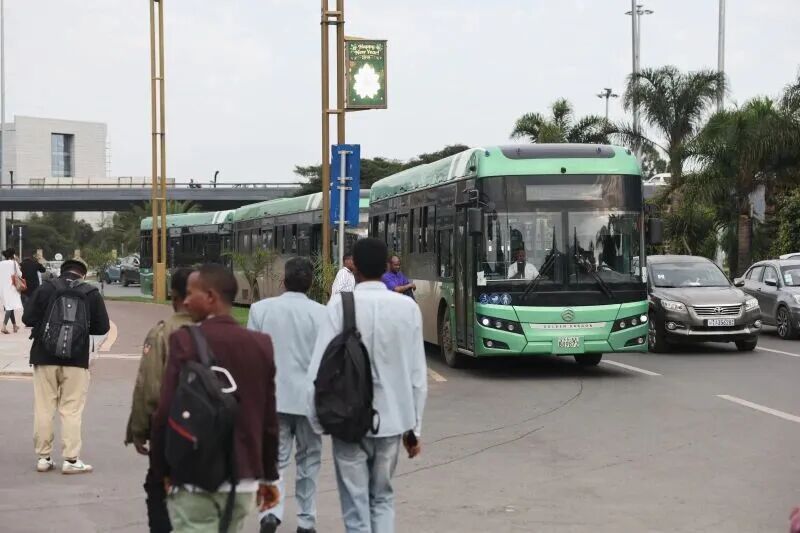
Compared with the generation of Huang Peiyu who needed to answer the question "Can Xiamen manufacture automobiles", the problems facing the current management have changed: can a Chinese bus enterprise with more than 30 years of manufacturing experience and products entering many overseas markets get rid of its dependence on prices and individual orders, and form stable customer relationships, continuous profitability and its own real brand premium in the global market.
"From selling more buses to building a truly global brand, there are still multiple thresholds such as localized operation, stable profitability and market discourse power in between." An industry insider who has long observed the bus market said so.
Two overseas expansion paths: operating the market while selling production capacity
To measure the internationalization degree of a bus enterprise, we should not only look at the quantity, but also the quality.
In February 2026, the cargo ship loaded with Chinese buses sailed into the Mediterranean coast and arrived at La Goulette Port near the capital of Tunisia. These vehicles will later be distributed to many local public transport enterprises to update the old public transport capacity.
This is one of Golden Dragon's most representative overseas projects in recent years.
Tunisia is located at the northernmost tip of North Africa, facing Italy across the Mediterranean. Influenced by historical and industrial ties, the local bus market has long relied on European vehicles: some enterprises purchase European chassis and install bodies locally, while others directly use second-hand European buses.
Due to the lack of a mandatory scrapping system, many buses are 15 to 20 years old. The accumulated renewal demand for old vehicles provides an opportunity for Chinese bus enterprises to enter the local market.
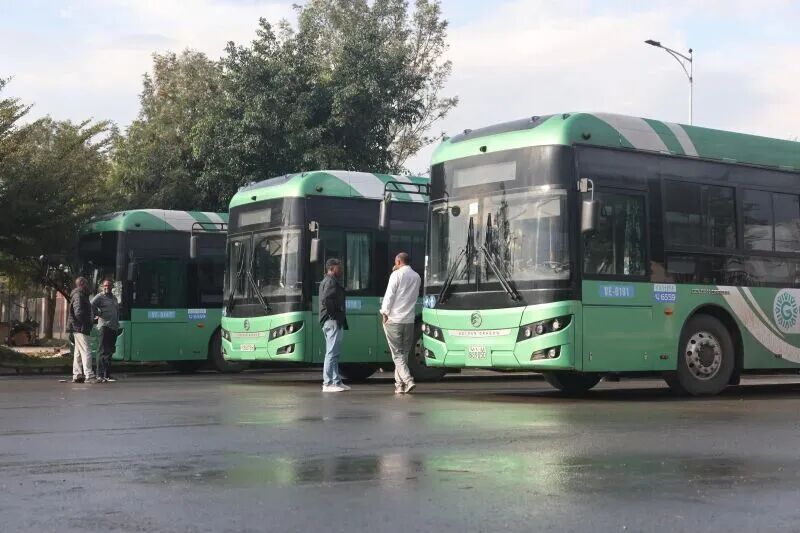
In early 2026, Golden Dragon announced that it had received an order for 462 buses in Tunisia, covering 12-meter and 18-meter models, which are planned to be put into use in 15 bus companies in 14 cities of the country. Golden Dragon called it "the largest government public vehicle procurement order in the history of Tunisia", and said that it was a major breakthrough for the company in the North African market.
As early as 2018, Golden Dragon began to carry out the "Pilot" high-end bus SKD (Semi-Knocked Down) business in Tunisia. In the early stage of the business, the demand for SKD business was not large. It was more like a "ticket" for Golden Dragon to enter the market: with the help of local partners, it got familiar with certification rules, procurement systems and operational needs, and gradually accumulated brand awareness.
According to the disclosure of Golden Dragon Bus, since launching the global layout strategy of KD (Knocked Down) factories, it has had 17 overseas KD projects, and it is known as the Chinese bus enterprise with a large number of overseas KD factory layouts. Another industry media report said that since launching the global KD layout in 2017, Golden Dragon has landed CKD (Complete Knocked Down) projects in more than 10 countries and regions along the "Belt and Road".
However, the KD business is neither a simple complete vehicle export nor a mature overseas manufacturing base, but a mode between the two: core production is still in China, while product adaptation, assembly cooperation, after-sales training and customer relationships are gradually extended to the local area.
For example, in order to meet the use environment of high salt and high humidity along the coast and high temperature and dust in the inland of Tunisia, Golden Dragon has carried out adaptive development for the anti-corrosion, sealing and body strength of the vehicles.
Golden Dragon disclosed that it will cooperate with Tunisian partners to promote the construction of service networks and local operation and maintenance training, and discuss subsequent cooperation in new energy public transport, intelligent scheduling and other fields.
This is also the key to overseas exports. After the delivery of 462 vehicles, whether spare parts can be in place in time, whether local personnel can complete maintenance independently, and whether the first batch of vehicles can bring repurchases are the real tests for Tunisia to become a "North African pivot".
If the Tunisia project still faces end customers with the Golden Dragon brand, then the cooperation with the Dutch electric bus enterprise Ebusco represents another overseas expansion logic: the brand moves behind the scenes, and the manufacturing capacity comes to the front stage.
In July 2026, an 18-meter carbon fiber pure electric articulated bus rolled off the production line at Golden Dragon's Longhai factory. The vehicle is produced by Golden Dragon, but bears the Ebusco logo.
According to the disclosure of both parties, the cooperation between Golden Dragon and Ebusco started around 2012, involving aluminum body models in the early stage, and this time it is further extended to carbon fiber composite models.
For Golden Dragon, being able to manufacture 18-meter carbon fiber pure electric articulated buses shows that its technology, quality control and supply chain organization capabilities have certain competitiveness.
However, manufacturing a bus for a European brand is a completely different dimension from building a Chinese bus brand in Europe. Ebusco refers to Golden Dragon as a contract manufacturer in its operating report.
According to the public division of labor, after the vehicle is manufactured at Golden Dragon's Longhai factory, it will go to Ebusco's sites in Deurne, the Netherlands and Rouen, France, to undergo pre-delivery inspections and complete finishing work such as software. That is to say, Golden Dragon is mainly responsible for manufacturing and supply chain execution, while Ebusco controls the product brand, European customer relationships and the final delivery link.
This division of labor determines that the value both parties get from the same vehicle is different. Golden Dragon can obtain manufacturing revenue, improve the capacity utilization rate of the factory, and accumulate engineering experience in carbon fiber bodies and European models during the production process; what Ebusco obtains is not only the vehicle, but also lighter production organization and lower fixed costs.
But the key point is that after the vehicles are put into operation, operators and passengers see the Ebusco logo, and the market reputation formed by vehicle reliability, energy consumption performance and user experience is also mainly deposited under the Ebusco brand.
What is more noteworthy is that the two parties have not disclosed the OEM price, profit distribution, intellectual property arrangements of the project, and whether Golden Dragon can apply relevant manufacturing experience to its own brand products.
The so-called "entering the European high-end new energy bus market" is more accurately that Golden Dragon has entered the production supply chain of European new energy buses, rather than the Golden Dragon brand has entered the European end market.
The two major projects in Tunisia and Ebusco directly show the two sides of Golden Dragon's overseas expansion: in Tunisia, Golden Dragon advances to the end market with its own brand; in Europe, it hides its brand and embeds itself in the value chain of others by relying on its production capacity.
The former needs to bear the cost of market development and service construction, while the latter can use partners to lower the entry threshold, but must give up brand and channel revenue. In the long run, what Golden Dragon may get is only more access to the market, not stronger control over the market.
However, Golden Dragon Bus has not yet given exact answers to the key points of the overseas expansion model, such as project profit, payment collection cycle, repurchase situation and whether the after-sales system can operate continuously.
Selling overseas does not mean retaining profits
Nowadays, for domestic bus enterprises, going overseas is no longer an optional question.
After the centralized replacement of new energy in domestic public transport, the market has gradually entered the stock renewal stage. When domestic increments are insufficient, the overseas market is not only related to revenue growth, but also related to whether production capacity can be effectively utilized.