The once-renowned "internet pioneer" in Hangzhou, now completely deserted with all its staff gone and its premises empty, has been undone by its own overambition.
The once "Are You Dead Yet" app has unexpectedly made a triumphant return?
It went viral at the start of this year with a striking, thought-provoking name. Originally designed as a lightweight safety net tool for people living alone, many thought it would be a flash in the pan. No one expected that it has recently not only been renamed "Are You There Are You There", adopted by government procurement for communities in Hangzhou, but also officially announced paid services.
Founder Lv Gongchen stated that the app is now shifting to the elderly scenario, focusing on serving elderly people living alone. The software system is divided into Version 1.0 and Version 2.0, "Version 1.0 costs 99 yuan per year, Version 2.0 costs 199 yuan per year", and elderly people living alone can install and use it for free.

However, when the "Are You Dead Yet" app is brought back to life by official support, Panpass, the former internet pioneer, is being sentenced to death by the authorities.
On October 22, 2026, the Gongshu District Police in Hangzhou issued a notice that Zhejiang Panpass Information Technology Co., Ltd. and its affiliated companies are suspected of contract fraud, and the case has been filed for investigation. The person surnamed Tian has been taken compulsory criminal measures in accordance with the law.
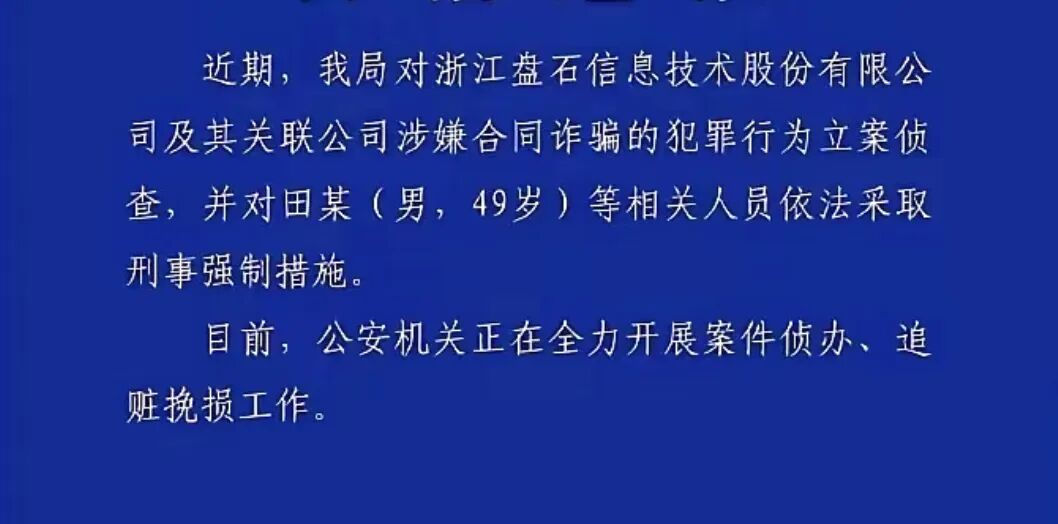
The "person surnamed Tian" in the notice is none other than Tian Ning, the founder of Panpass. A few years ago, he had a long list of glamorous titles: "The first college student entrepreneur in Zhejiang", one of the "three giants of website alliance" alongside Alimama and Baidu Union, "Global Young Leader" of the World Economic Forum...
Panpass, founded by him, completed a 2.25 billion yuan Series D financing in 2018, with a post-investment valuation of 10.25 billion yuan, making it a genuine 10-billion-yuan unicorn.

Why did the once favored child of everyone fall to such a state?
From a 10-billion-yuan dark horse to "person surnamed Tian",
it only took 10 years
In fact, the collapse of Panpass had long been foreshadowed.
As early as mid-July 2026, Tian Ning lost contact and disappeared for a full 3 months, with his last WeChat Moments post dated July 4. The official Weibo account of Panpass also stopped updating on July 13.
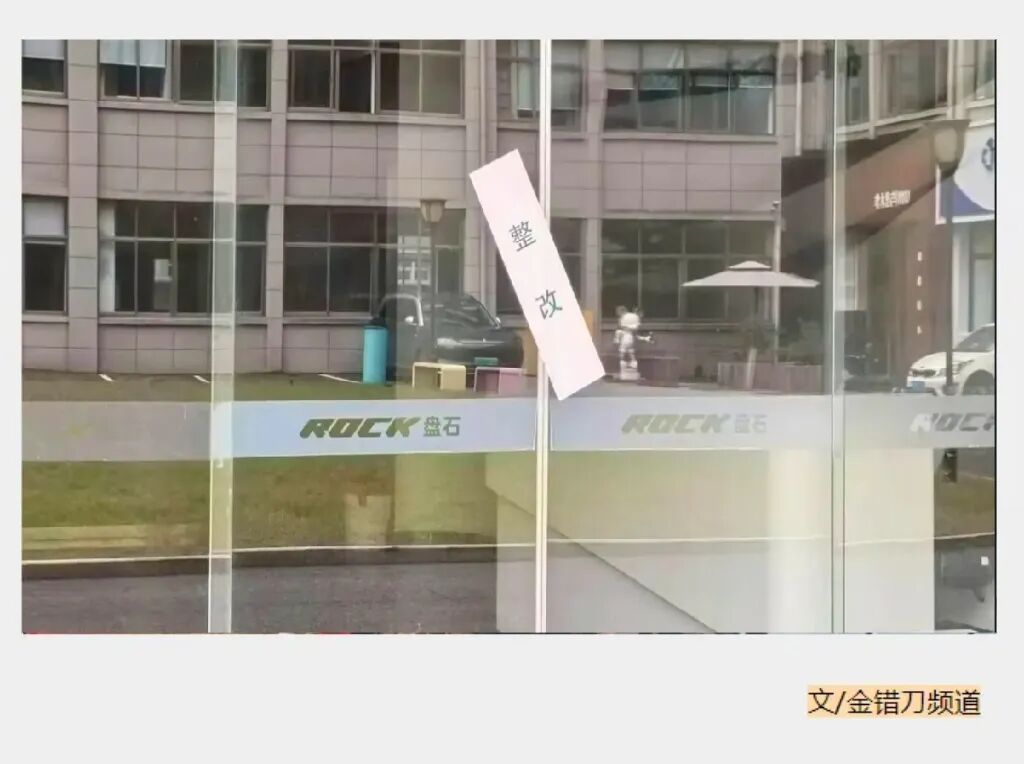
A media reporter paid an on-site visit to the Panpass Global Digital Economy Industrial Park, only to find that the gate was pasted with a "rectification" seal, and the office area was blocked by obstacles, with no one allowed to enter or exit.
A former employee revealed that the entire team of the department had been disbanded. The property management and the management committee have set up a reception point in the park, taking turns on duty every day to receive visiting partners and employees demanding unpaid wages.

Completely different from the current mess, Panpass 10 years ago was exactly the protagonist of a rags-to-riches novel.
In 1999, Tian Ning, a junior student majoring in animal science at Zhejiang University, pooled 100,000 yuan with two classmates and founded a computer company called Panpass in Hangzhou.
At that time, the Internet had just emerged in China, and computers were still rare commodities. The company sold hardware and built local area networks. Relying on the reputation of Zhejiang University and the drive of young people, Panpass grew into one of the top computer sellers in Zhejiang within a few years.

However, the computer sales business had a very low ceiling. No matter how large the sales volume was, it was all price competition, and the profit margins got thinner and thinner.
Tian Ning knew this clearly, so in 2004, he made a bold decision: to put down the booming hardware business, re-register "Zhejiang Panpass Information Technology Co., Ltd.", and switch to internet advertising.

The logic of the agency business is simple: small and medium-sized enterprises pay first, and Panpass helps them place their advertisements. Over time, Panpass accumulated tens of thousands of enterprise clients, and gained a thorough understanding of the mindset of small and medium merchants who "have limited budgets but expect tangible results".
But Tian Ning soon realized that being an agent meant working for others forever. "Your throat is held by someone else", and Panpass was nothing more than a channel. Around 2011, he made up his mind to take back the right to speak, and then Panpass Union was launched.
The website alliance gathered tens of thousands of small and medium websites into one pool. Any webmaster who had traffic could contribute their ad spaces; advertisers who wanted to find customers could pay per click. Every time a user clicked, the advertiser paid, and the platform and the webmaster would split the revenue. For small and medium-sized enterprises, they could spread their advertisements across a huge number of web pages with a small amount of money.

This business caught the biggest dividend of the PC Internet era. Around 2010, the number of small and medium websites in China exploded, and advertisers complained that search advertising was too expensive.
At its peak, Panpass Union aggregated about 400,000 websites, claiming to cover more than 90% of Chinese netizens, with tens of billions of ad displays per day. The media ranked Panpass Union alongside Alimama and Baidu Union as the "three giants of website alliance".
Panpass stood out not just by luck. First of all, it had a deep understanding of the mindset of small and medium-sized enterprises.
The tens of thousands of clients accumulated in the early agency days became the earliest advertiser base of the alliance. It packaged complex advertising technologies in a very simple way: enterprises did not need to understand algorithms, they only needed to care about "whether anyone clicks on the ads they placed".
Secondly, it caught up with the era of "pay for performance". At that time, people did not believe in brand exposure, they only believed that "clicks count", and Panpass just turned this idea into a profitable business.

Its counterattack speed was as fast as a rocket. It was listed on the New Third Board in 2015, its revenue surged to more than 500 million yuan in 2017, with net profit multiplying 8 times. In 2018, after the Series D financing led by Cybernaut with a post-investment valuation of 10 billion yuan, Panpass officially joined the "unicorn" ranks. Tian Ning also reached his highlight moment:
At that time, he succeeded Jack Ma as the chairman of Hangzhou E-commerce Association, and later appeared on a TV show, where he ambitiously asked Jack Ma a question: "Under the three mountains of Alibaba, Tencent and Baidu, do young people still have opportunities?"

Facts have proved that he has no chance left. The "Little Jack Ma" is never Jack Ma after all.
Catching the wind of the times,
but also stepping on the landmine of heavy assets
It is not so much that Panpass suddenly collapsed overnight, but that its collapse was doomed long ago.
An important signal is that after getting the 10-billion-yuan valuation in 2018, Panpass never ran a self-sustaining business that could generate cash flow on its own.
Why did Panpass suddenly fall from grace? It is inseparable from two of its decisions.
Panpass used to be a light-asset business: it aggregated the traffic of small and medium websites and sold it to small and medium enterprises for advertising, no inventory, no factories, even the servers were rented.

It sounds very attractive, but the light-asset business has a fatal flaw: the traffic and clients do not belong to you. Especially after the decline of personal websites, small and medium advertisers were lost.
At this critical juncture, Panpass chose another path -- to tell a bigger story.
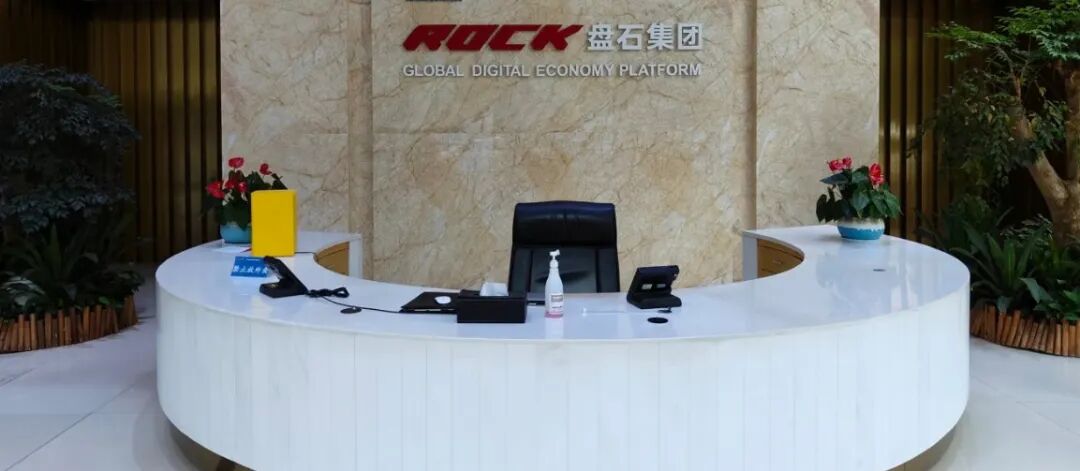
In its publicity, Panpass was portrayed as a "global digital economy platform", and directly launched the "Seven Clouds" plan: Industrial Park Cloud, SaaS Cloud, Metaverse Cloud, Live E-commerce Cloud, Overseas Digital Entertainment Cloud, Talent Education Cloud, and Digital Technology Cloud.

The names were more novel than one another, and the logic sounded perfect. Cooperating with local governments, Panpass provided the brand and the concept, while the local authorities provided land and policies, to build the "Panpass Global Digital Economy Industrial Park", and then recouped the investment through investment attraction, operation and industry introduction.
Therefore, Tian Ning also added a strategy of "Industry + Fund + Base", a company that used to sell ads suddenly became associated with real estate.
However, Panpass's core competence is traffic reselling, not real estate operation. The most feared thing for a light-asset company is heavy assets.
Because heavy assets burn cash extremely fast. After the industrial parks were built, a former employee revealed to Qianjiang Evening News that many industrial parks were located in remote areas with poor supporting facilities, and the investment attraction performance was far below expectations, which accelerated the decline of Panpass.

What's more troublesome is that Panpass had no ability to "slow down". In the heavy asset period, it was normal to see no returns for three years, but the business scale had already expanded, and government cooperation and supplier payment terms were all tied together, so it could only bite the bullet and use new money to fill old holes.
The prospectus of Panpass Digital Intelligence revealed that the proportion of SaaS revenue shrank all the way. For a "technology company", its technology-related revenue accounted for less than 10%. A few years later, its Hong Kong stock listing application expired, and its headquarters was completely emptied.
When the hole was already clearly visible, it was still running blindly, and in