What missing link in the industry is Qianli Technology filling with an AI millimeter-wave radar?
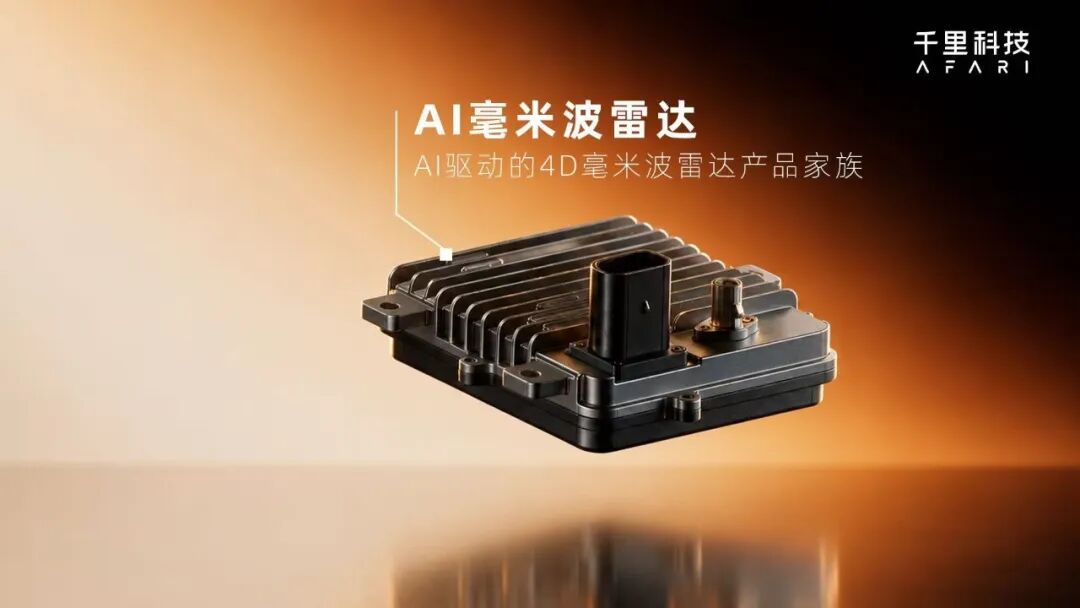
On October 23, Qianli Technology launched an AI millimeter-wave radar. Within the scope of public information, this is the first solution that integrates an NPU with 10 TOPS of computing power inside the radar. The radar can independently complete target detection and classification, and supports three working modes: edge-side, satellite architecture and compatibility.
This is not a simple expansion of the product line.
Over the past two years, competition in the intelligent driving industry has focused on models, with players competing for stronger end-to-end capabilities and faster data closed-loop iteration. However, when the performance of models begins to be limited by the raw information provided by sensors, competition will move one level upstream to the hardware sector.
The question this radar aims to answer is whether the perception end can be reshaped when the model is already sufficiently powerful.
Why radars are starting to be equipped with AI
Two directions of intelligent driving are advancing simultaneously at present. One is the penetration of high-level intelligent driving into the mainstream mass market with vehicles priced at hundreds of thousands of yuan, and the other is the preparation for mass production of L3-level autonomous driving. These two directions have different technical requirements, but both are centered on the core keyword of safety. Large-scale popularization relies on safety to convince users to pay, and L3-level autonomous driving puts forward even higher requirements for safety by an order of magnitude.
Under the demand for safety, the 4D millimeter-wave radar has become a critical component. It is cheaper than LiDAR and has better stability in rainy and foggy weather, making it one of the few sensors that can strike a balance between cost and reliability.
The problem lies in the working mode of traditional 4D radars.
Take the obstacle recognition that plagues the industry as an example. Traditional 3D radars can only judge that there is an object ahead. 4D radars add the height dimension and can capture the contour features of the target, but the point cloud data still needs to be transmitted layer by layer to the central domain controller to determine what the target actually is. The length of the transmission link directly determines the reaction time. Intelligent driving requires both accuracy and speed, and the longer the link, the shorter the window left for decision-making.
Integrating the computing unit inside the radar to complete detection and classification immediately after obtaining the point cloud, and directly output structured results to the intelligent driving system, is exactly the way to shorten this link.
However, the real bottleneck is not the length of the transmission link.
The signal processing of traditional millimeter-wave radars relies on classic algorithms such as CFAR, and the rules are fixed at the stage of architecture design. For scenarios not preset during design, the algorithm can only process them conservatively, which leads to problems such as multipath ghosting, clutter interference, weak target loss, and insufficient multi-target separation. The root cause of these problems is that the rules have a coverage upper limit. Tuning parameters can only adjust the trade-off between false detection and missed detection, but cannot bring new capabilities.
Replacing rules with models breaks this upper limit. Starting from the antenna array and waveform design, algorithms are used to find the optimal solution under the multiple constraints of manufacturing, size and performance; the entire link including point cloud detection, angle measurement, point cloud enhancement, target tracking and classification can introduce data-driven models. What Qianli's radar does is not patch optimization for a single scenario, but directly targets the inherent defects of the traditional architecture from the front end of the perception link.
However, this cannot be achieved simply by embedding a chip in the radar. Under the current division of labor, millimeter-wave radars are finished products delivered by suppliers, and the algorithm team can only obtain the processed results. To make the model run in the radar, it is necessary to participate from the radio frequency design stage. Without crossing this boundary, AI can only stay at the end to add an extra layer of post-processing.
Why Qianli is the one to do this
The premise of running the model in the radar is that the model must be self-developed.
This sentence sounds like common sense, but it is a hard threshold in the industry. What kind of features the radar end outputs, in what format, and how to divide the work with the domain controller, once these parameters are set by external suppliers according to general logic, no matter how strong the algorithm team is, they can only optimize within the established interface. Qianli has its own base model, which means these parameters can be set according to the needs of the model, instead of letting the model adapt to the hardware.
This is also the point where Qianli's work in the past two years can be connected. Among the three achievements of Qianli 2.0, the most important one is not how many vehicles have been equipped, but the cycle: the model determines the upper limit of the product, the engineering system determines the delivery speed, and the data generated by vehicle installation in turn trains the model. With this cycle, the extra raw information from the radar end has a clear destination, which can be used for training, verification, and deployment to the vehicle end, instead of being trapped in the hardware.
Others in the industry have thought of this path, but the difficulty lies in having all the required capabilities at the same time. Qianli has completed the full layout of algorithms, computing power and vehicle application in just two years. At the AI strategy conference in April this year, Yin Qi called this model "chain collaboration", emphasizing in-depth cooperation with clear boundaries, rather than incorporating all links into one company. This combination enables Qianli to have three core capabilities at the same time: large model capability, in-depth understanding of chips, and engineering experience of deploying algorithms to the vehicle end.
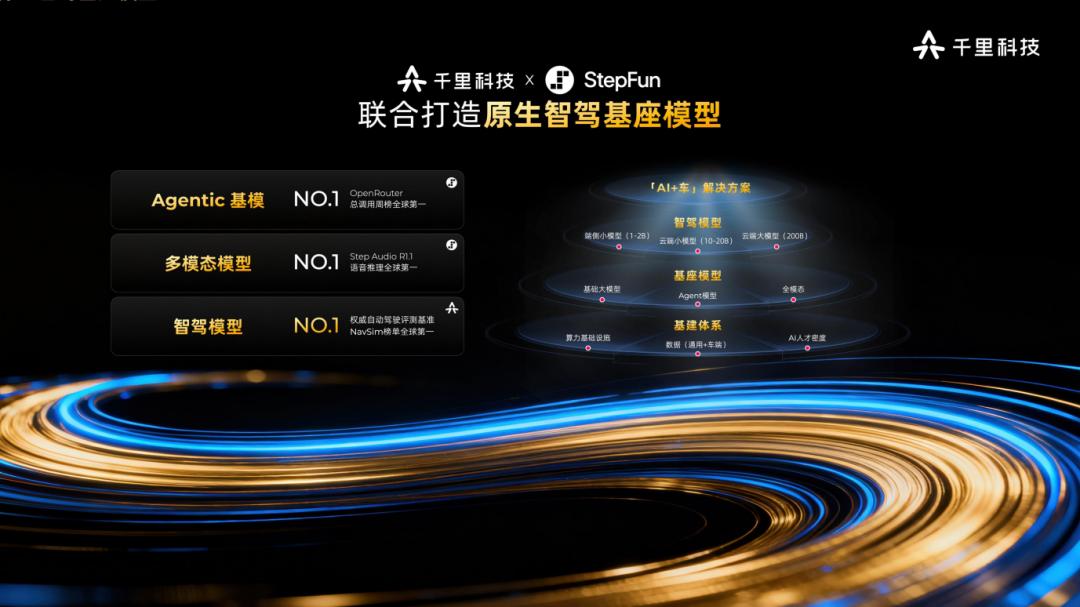
This division of labor has gone through a round of verification. In the first half of 2026, Qianli Technology's intelligent assisted driving business revenue reached 1.235 billion yuan, accounting for 24.3% of the main business revenue. The equipped volume of Qianli Haohan has exceeded 1 million, covering dozens of models of brands including Zeekr, Lynk & Co, smart, and Galaxy, with a user activation rate of 93.9%.
The sensor segment was supplemented this year. According to public announcements, on June 11, 2026, Chongqing Qianli Intelligent Driving Technology Co., Ltd., a holding subsidiary of Qianli Technology, acquired 100% equity of Ningbo Rongan Technology Co., Ltd. for 25.908 million yuan. Founded in June 2023, Ronggan Technology focuses on vision and millimeter-wave fusion radars. It is reported that its 4D imaging millimeter-wave radar has previously achieved fixed-point verification and small-batch delivery for many mainstream OEMs. The description of this transaction in the announcement is to open up the business closed loop of hardware and software integration and full-stack delivery, and realize joint optimization and synchronous iteration of self-developed algorithms and hardware.
The amount of this transaction is not large, but the position it fills is very critical. It allows Qianli to transform from "writing algorithms with other people's radars" to "participating in definition from the radar design stage". This difference cannot be seen on traditional radars, but it is decisive for AI radars.
Yin Qi is the chairman of Qianli Technology, and he has served as the chairman of Stepfun since January 2026. Looking back at his entrepreneurial experience, we can find that his AI business map has always centered on the integration of software and hardware: the product system in the Megvii era covers visual sensors, industrial robots and intelligent vehicles. In 2024, Yin Qi took the helm of Lifan, and in February of the following year, the company was renamed Qianli Technology, and launched the strategic transformation of "AI + Vehicle" in a vigorous manner.
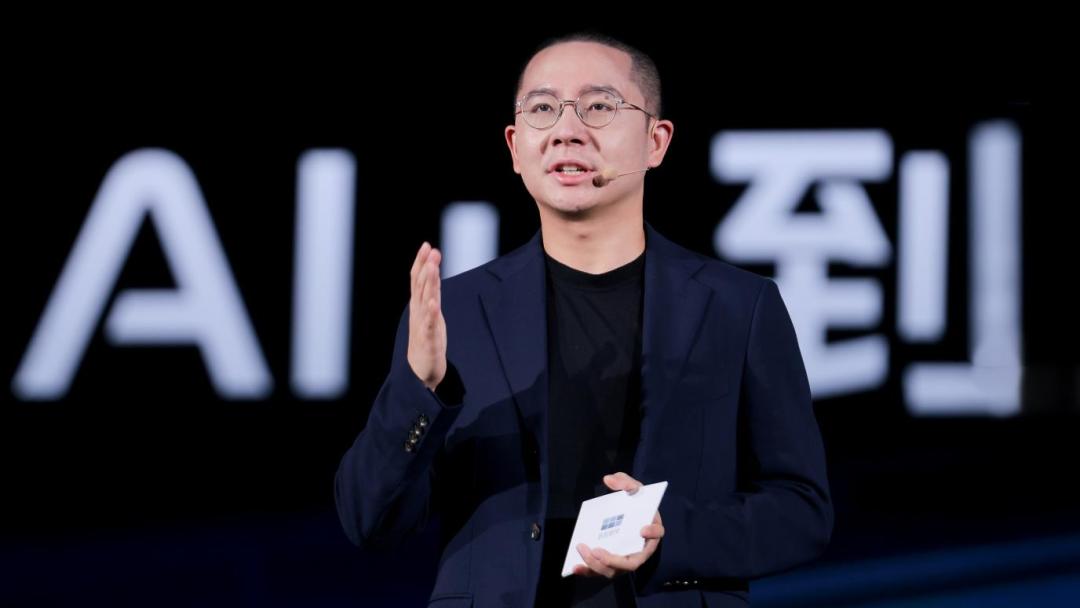
Yin Qi, Chairman of Qianli Technology
What does this radar bring
This radar supports three working modes, which is the biggest difference from most 4D radars on the market.
In the edge-side mode, the NPU runs models such as AI Detector, AI-assisted angle measurement, and AI point cloud enhancement inside the radar, and directly outputs structured perception results to the outside. The link is short, the response is fast, and the burden on the domain controller is also reduced. In the satellite architecture mode, the radar is only responsible for collecting and transmitting, and sends the intermediate frequency data without target detection to the central domain controller, where a larger model performs multi-source pre-fusion. The advantage is that the information is more completely retained, the algorithm is unified, and subsequent upgrades are supported.
The third is the compatibility mode, which performs both tasks at the same time. The most original RAW data of the radar is directly handed over to the SOC for processing and fusion, while the edge-side processor on the radar independently completes a round of processing. The two sets of results have their own uses: the RAW data enters the central model to obtain more scene information; the independent edge-side result is a ready-made perception conclusion.
This point is worth expanding.
In the past, when the industry talked about dual modes, it usually focused on "safety redundancy", which means that in case the central system fails, the radar itself can take over. But interpreting it as a fallback underestimates the value of this design. The real value of the compatibility mode is to obtain two perception results of different calibers at the same moment: one is the original information with a large amount of data but requiring central computing power; the other is the processed conclusion with a small amount of information but directly ready to use. These two are not backup relationships for the model, but two types of inputs that can verify each other and be selected according to the scenario.
It does not preset the perception architecture for automakers. On platforms with sufficient domain controller computing power, RAW data goes through central pre-fusion for higher information utilization; on platforms with limited computing power or pursuing low latency, edge-side results can be directly used. The compatibility mode allows these two options to coexist on the same radar, without requiring a trade-off decision at the architecture design stage. The radar returns this choice to the vehicle system design, instead of making decisions for customers.
In terms of performance, this radar can stably detect child targets at a distance of 100 to 150 meters, leaving a longer reaction window for AEB. Child crossing is one of the most difficult scenarios to handle on urban roads. The target is small, appears suddenly, and is frequently occluded, so the reaction time left for the system is extremely short. Extending the detection distance moves the judgment window forward as a whole, allowing AEB to intervene at an earlier time point instead of being passively triggered at the limit distance.
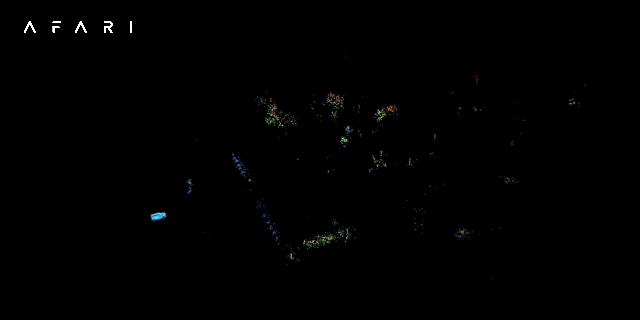
Perspective of following a car on an elevated road
Compared with Qianli's previous generation of 4D radar with DSP end-side computing, this radar has 10 times enhanced point cloud density, 40% increased detection distance, 95% ghosting elimination rate, and 12 times improved spatial angular resolution.
What is the significance of this event
The significance of this radar is not only a breakthrough in a single point of performance, but also that it verifies a replicable model. Instead of pursuing 100% self-research, it establishes a community of interests through equity binding in key links through in-depth cooperation, and runs through the entire AI link from hardware, data, algorithms to application scenarios. The reference value this experiment brings to the industry will far exceed the short-term revenue return of Qianli Technology itself.
On the other hand, after self-developing the radar and mastering the original point cloud, the data at the radar end is no longer an isolated perception result, but can directly enter the training closed loop and become another key variable to accelerate model iteration. The full-process cycle from discovery, annotation to model adaptation of long-tail problems in real road test scenarios will also be significantly shortened. This technical path not only provides a new solution, but also creates new competitive chips for Qianli Technology in the industry.
Through this radar, Qianli Technology is trying to gradually transform from a supplier that simply provides algorithm solutions to a technology company with system-level R&D capabilities.