Co-Head of Global Investments of the Trillion-Dollar Giant Delivers a High-Profile Statement
Martin Horne, Co-Head of Global Investments at Barings: It remains uncertain whether the Fed will raise interest rates in October, and long-dated US Treasuries are facing a "perfect storm"
Earlier in October, US Treasuries were hit by a sell-off. In the view of Martin Horne, Co-Head of Global Investments at Barings and member of the Senior Leadership Team, this is the result of converging forces: "This is almost a perfect storm that pushes the long end of the interest rate curve upward."
On October 22, during an exclusive interview with this newspaper in Shanghai, Martin Horne judged that in the face of cascading uncertainties, "diversification is a strategy in itself". He believes that "this time it is different from usual": against the backdrop of rising Fed rate hike expectations and a stronger US dollar, emerging markets have withstood the pressure, which is underpinned by the growing maturity of emerging markets.
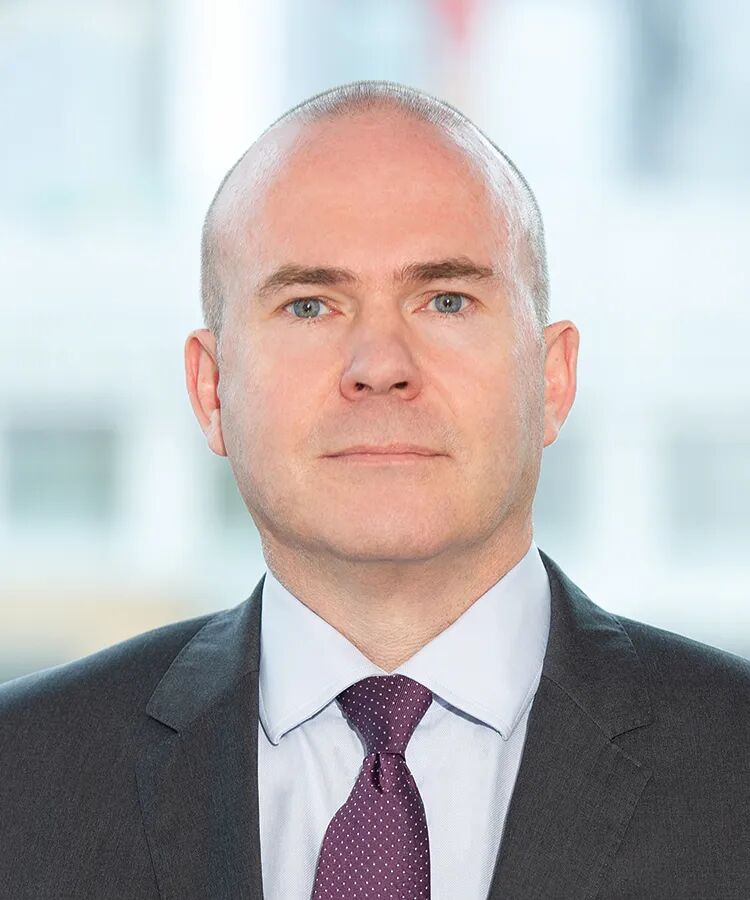
Barings is a global asset management firm owned by MassMutual, with alternative assets at its core, serving institutional, insurance and wealth management clients, covering credit and insurance, real assets, capital solutions and emerging markets. As of June 30, 2026, Barings has approximately $5.02 trillion in assets under management (equivalent to about 3.42 trillion yuan), with 35 offices around the world and more than 2,000 professionals.
Long-dated US Treasuries Hit by a Perfect Storm
Martin Horne believes that it remains uncertain whether the Fed will raise interest rates at the end of October. "One or two more rate hikes will probably be enough to deal with the current inflationary pressure. It is doubtful whether they will act in October. With the midterm elections around the corner, even though the Fed will say it is not affected by politics, I am not sure if that means they will do something for the midterm elections. Let's wait and see."
He believes the Fed may resume rate hikes in December, "which actually does not make much difference in terms of the interest rate path and the final landing point of interest rates". He agrees with the market consensus that the Fed will raise interest rates one or two more times from now on, then pause to observe how geopolitical issues such as the situation in Iran evolve.
Martin Horne believes that US Treasuries are facing a "perfect storm". He listed four factors: growing attention to sovereign debt issues, a large amount of capital expenditure flowing to AI-related companies, inflation pushing up interest rates, and marginal buyers of US Treasuries stepping back. All these factors put pressure on US Treasuries.
Some investment institutions have already started adjustments.
NBIM, the manager of Norway's sovereign wealth fund, recently proposed to the Norwegian Ministry of Finance to reduce the weight of government bonds in the benchmark bond index from 70% to 50%, of which the proportion of US Treasuries will drop from 34.1% to 21.9%, and the freed quota will mainly shift to non-government bonds such as MBS. The proposal is pending decision by the Ministry of Finance and the parliament and will be implemented as early as 2027.
In addition, as Japanese government bond yields rise to multi-decade highs, the attractiveness of US Treasuries after exchange rate hedging declines. Data from the US Department of the Treasury shows that Japan, the largest overseas holder of US Treasuries, has seen its holdings fall for four consecutive months from about $1.21 trillion in April to about $1.07 trillion in August, part of which is related to the Japanese government's exchange rate intervention.
"None of the above individual events will have a huge impact on a market of about $40 trillion," he said, "but adding all these together, plus the inflation situation, competition from AI, and the fact that the deficit and debt levels of some countries are drawing much attention, this is almost a perfect storm."
Martin Horne believes: "Structural changes have taken place in the global market. We live in a world with higher inflation, and the Fed's 2% inflation target may not be achievable. Look at the situation in the United States today: inflation has not returned to 2% for five years, yet the US economy is still running smoothly."
He listed the underlying reasons one by one: AI data centers occupy power grid resources and push up electricity prices; industrial reshoring raises manufacturing costs -- "China accounts for 20% of the global export market for a reason: its manufacturing costs are lower than anywhere else"; immigration restrictions push up labor prices; climate change brings food price inflation; multi-year wage contracts and energy transition also push up costs in the short term. "Inflation probably means that interest rate levels will always be at a relatively high level to some extent."
Martin Horne keeps a distance from the narrative that AI will reduce costs, increase profits and taxes, and thus resolve government debt: "This is a story -- but can you believe it today when we haven't seen the results yet?"
Higher Coupon, but Uncertainty of Holding US Treasuries Remains High
The yield on 10-year US Treasuries once rose above 5%, hitting a peak of about 5.34% in early October, the highest level since 2002.
Do investors need to increase their allocation to US Treasuries for the coupon? Martin Horne believes the answer is not that simple. "If your foreign exchange allocation is wrong, 5% will not translate into 5%. That's the story in Japan right now," he said, adding that another key factor is the holding period.
He believes AI has boosted demand, but it is still uncertain whether it can increase tax revenue. "The US government's debt projections are still rising, and the only solution that everyone has been touting is: AI will come, corporate profits will rise, everything will be fine, because tax revenue will suddenly improve. I'm not sure I want to believe that right now."
He believes that countries including Japan, the United States, the United Kingdom and France are burdened with excessive debt that has not been dealt with for a long time, "and France may be at the top of the list". However, people have not yet listed the US debt issue as an urgent matter, because "it seems that only one story can be focused on at a time", and today's story is inflation, interest rates and geopolitics. One day, people will pay attention to the US debt burden and regard it as a systemic risk for the entire financial market.
However, this is not unsolvable. "Today, the yield on Greece's 30-year government bond is lower than that of the United States, which is quite incredible considering that it defaulted in 2012," Martin Horne said. "The key to solving the problem lies in political will. Even if politicians have no incentive, the market will make the choice for them. Think about Liz Truss in the UK, she thought she could ignore the market, but in the end the market showed her that she couldn't. When governments or politicians refuse to cooperate, the market tends to step in."
If Japanese interest rates also "stay higher for longer", Japanese investors will be more inclined to invest domestically, but "currently domestic investment options are quite limited".
This Time Investors Are Taking Real Action to Diversify US Assets in Their Portfolios
Investors are shifting to high-grade corporate bonds and short-duration high-yield bonds. Barings is optimistic about underweighted emerging markets: these markets have real growth, have coped with inflation better, and still have room for monetary policy stimulus.
"I'm sure your job is changing, and my job is changing too," Martin Horne said. When this uncertainty spreads to every industry around the world, diversified bets become a natural choice, "because being too concentrated and betting wrong is a very bad thing".
However, he admitted that diversification is not easy, and the concentration level of all markets is rising. "The most obvious is South Korea, where you are essentially investing in two companies, and everything else is just the background."
Generally speaking, a strong US dollar is the most unfavorable for emerging markets, but this time emerging market currencies have withstood the pressure. The underlying reason is that emerging markets are maturing, and investors have a clearer understanding of their own risk appetite.
"In addition, headlines around the world show that some traditional safe-haven assets do not look as safe as they used to," Martin Horne prefers emerging market local currency bonds, valuing "old-school" growth, that is, "growth brought by population growth and market development, not just growth brought by AI".
Among emerging market bonds, Chinese bonds have always been quite robust. For international investors, in the long run, the attractiveness of Chinese bonds depends on the transformation of China's economic model: shifting from export-oriented to domestic demand and consumption-oriented, and from relying on the real estate sector to relying on technology. However, Martin Horne believes that expanding domestic demand will not happen overnight, "people need to be a little more patient".
When talking about Chinese technology, Martin Horne said foreign clients are most concerned about understanding the rules of the game and policy directions. Martin Horne believes that the development models of Chinese and US technology companies are different: US technology companies are oriented to take the lead in breakthroughs, while Chinese technology companies are good at popularizing new technologies in an easily accessible way. "Judging only from the price-earnings ratio, the Chinese market obviously has more attractive valuations." However, he believes that past market volatility is suppressing valuations. If truly globally leading Chinese companies emerge, they will attract a lot of attention.
Huge capital expenditure in AI is intensifying global capital competition. Martin Horne believes that rather than AI "crowding out" other financing needs, it has become an important source of capital competition that did not exist two years ago. In the context of limited capital supply, the new large-scale capital demand means that some financiers need to pay higher capital costs.
In Martin Horne's view, market confidence is currently very fragile. "Whenever things are up in the air, volatility will fill the gap. Because before the results are settled, our confidence fluctuates with real-time data -- we are optimistic today, and we may fall into extreme pessimism tomorrow."
This article is from the WeChat Official Account "China Fund News" (ID: chinafundnews), author: Wu Juanjuan, published with authorization from 36Kr.