Huawei's foray into the battery swapping industry has made NIO absolutely thrilled.
NIO is no longer the "lone warrior in battery swapping" at last. On October 19, Zhiyue signed a strategic cooperation agreement on smart battery swapping ecosystem with CATL and E-Car Service, where the three parties will connect vehicles, battery swapping stations and the cloud, to promote the synergy between Huawei Qiankun and CATL's Choco-Swap network.
Two points are particularly emphasized in the cooperation:
First, to create a "smart and non-inductive energy replenishment" experience, where vehicles will realize a full-process intelligent closed loop of autonomously judging energy replenishment demands, searching for stations, entering stations, aligning positions, completing 99-second full-automatic battery swapping, and driving away independently.
Second, Zhiyue will officially join CATL's Choco-Swap ecosystem, and work with strategic partners to jointly expand the battery swapping energy replenishment ecosystem around the adaptation and access of cooperative models to CATL's Choco-Swap network.
In simple terms, the cooperation essentially leverages Huawei's intelligent driving capabilities, and with the help of CATL's battery swapping network, the intelligent driving system will independently decide "whether to swap the battery" and "where to swap the battery", so as to realize the smart and non-inductive energy replenishment experience. On the premise that the technology is fully verified, the relevant brands under Zhiyue including the Jing series will further launch battery swapping models.
It is rumored that CATL and Zhiyue are advancing the development of the first batch of five battery swapping models, which are scheduled to be launched in 2027.
Coincidentally, on October 22, BAIC Group also officially announced that it has signed a "million-unit" battery swapping strategic cooperation agreement with CATL.
According to the agreement, BAIC Group will promote the access of adapted models of its multiple brands to CATL's Choco-Swap ecosystem, and strive for the target of one million battery swapping vehicles.
It is worth noting that BAIC Group will also open its dealer network resources, while CATL's Choco-Swap will accelerate the station deployment relying on dealer stores, and the two sides will jointly explore the joint operation model.
Although the battery swapping models of Huawei and BAIC, as well as their specific launch time, have not been officially confirmed, this series of "alliances and collaborations" has indeed brought a new trend: in the pure electric vehicle market, flash charging and ultra-fast charging are not the only solutions, and battery swapping is gaining recognition from more industrial players.
What NIO has been waiting for is not just Huawei's entry
When talking about battery swapping, NIO is an unavoidable name. Since its establishment more than ten years ago, NIO has always taken its battery swapping system capability as its "moat".
However, battery swapping is a capital-intensive business, which requires investment in construction, maintenance and battery reserve. If it only relies on its own vehicle models, the scale and utilization rate of the battery swapping network will eventually be limited by sales volume.
Therefore, from the very beginning, NIO has hoped that more players will join the big family of battery swapping. From another perspective, on the same track of battery swapping, NIO's experience in battery swapping can also be transformed into real competitive advantages.
In fact, since November 2023, NIO has reached battery swapping cooperation with Changan Automobile, Geely Holding Group, Chery Automobile, JAC Group, Lotus, GAC Group, FAW Group and other enterprises. However, these "cooperation frameworks" are far less significant than the cooperation finalized between NIO and Geely.
On September 28, NIO and Geely Holding reached a comprehensive strategic cooperation in the field of charging and battery swapping. According to the agreement, Geely will take a stake in NIO Energy with the equity of Yiyi Internet and cash, holding 30% of the shares after the transaction is completed; Geely will develop consumer-oriented battery swapping models, with NIO Energy providing battery swapping services.
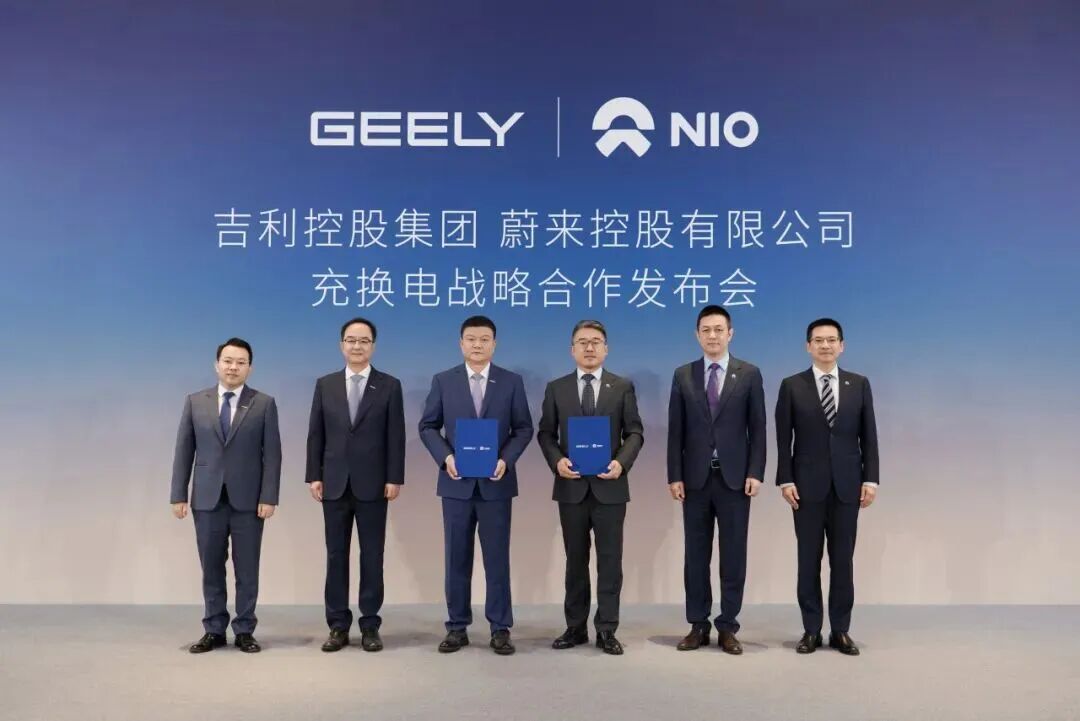
The fact that multiple battery swapping cooperations have been reached in the industry in a short period of time is by no means "child's play", but indicates that in the mainstream passenger vehicle market in the future, battery swapping models will no longer be exclusive to NIO. Geely, Huawei's Jing series brand will all launch competitive products in this field.
From a competitive perspective, NIO has more rivals now, which may affect the sales of its own products. But for NIO, its first-mover advantage in battery swapping is still solid.
What's more, the completion of a battery swapping station does not mean that the battery swapping business is successful. The bigger "hurdle" lies in operation.
A battery swapping station needs a sufficient number of vehicles in continuous use to spread the costs of equipment, site, battery reserve and operation personnel. Car owners hope to have more stations nearby, while operators hope to get more orders from each station.
The two sides restrict each other, which makes battery swapping easily fall into a vicious circle: the network is not large enough for users to choose battery swapping; without enough users, the network cannot continue to expand.
This is also the reason why NIO keeps looking for partners.
However, it must be made clear that as more participants join the battery swapping industry, whether the energy replenishment networks can be interconnected and whether the standards can be compatible is still a practical problem to be solved.
Battery swapping has been raised to a brand new strategic height
If NIO's promotion of battery swapping opening aims to get more vehicles to use its own network and thus spread the cost, then CATL's choice adds an industrial dimension to this market change.
In fact, CATL has long laid out its battery swapping business.
In 2021, E-Car Service was officially established as the operation entity of CATL's battery swapping business, and started the R&D of EVOGO modular Choco-Swap solution.
The following year, EVOGO was officially released, with CATL announcing its Choco-Swap battery blocks. The first cooperative carmaker was FAW Bestune (NAT battery swapping version); the first batch of 10 pilot cities focused on the online car-hailing and taxi operation market.
In 2025, CATL will see a concentrated explosion of battery swapping models: multiple Choco-Swap models including GAC Aion UT, Aion RT, Changan Qiyuan A05, Qiyuan A07, FAW Hongqi EH7, Chery iCAR V23 were officially announced one after another, kicking off a new cycle of household battery swapping.
Now, the entry of Zhiyue and BAIC has brought a strong new force to CATL's battery swapping ecosystem.
In addition, it is worth noting that CATL's vigorous promotion of battery swapping development can further ease the "interest entanglement" between itself and carmakers.
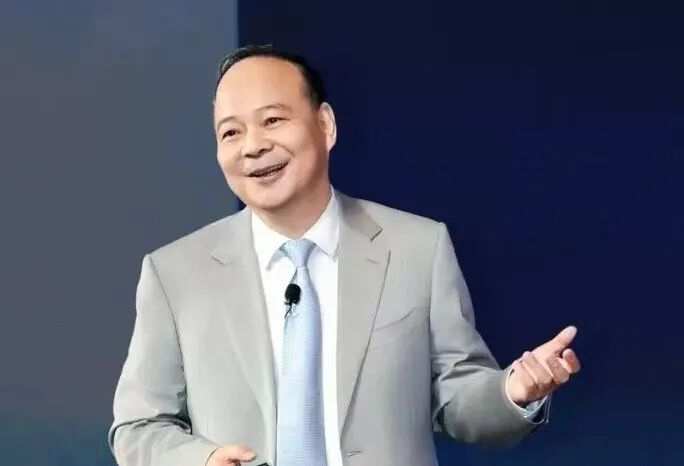
"We have cooperated with many manufacturers now, and we tell them that we will be responsible for their batteries. Our batteries are of high quality, and we will lease them to them continuously, so that they can rest assured, and consumers can also rest assured, so as to prove our own value."
In June this year, Zeng Yuqun, Chairman of CATL, said in an interview with the media that CATL will use battery swapping to cope with the price competition in the battery industry. It is no exaggeration to say that CATL leading the battery swapping business is a win-win-win solution.
For consumers, renting a battery is definitely cheaper than buying a battery, which can bring them actual benefits, lower the vehicle purchase threshold, and free them from worrying about battery degradation and battery quality issues.
For carmakers, the battery cost is underwritten by CATL, which indirectly achieves "cost reduction" and helps them retain part of their profits against the backdrop of shrinking market demand.
From CATL's perspective, batteries are its core business after all.
The so-called heavy assets and heavy investment are nothing new to CATL. What's more, by vigorously developing battery swapping, CATL has the opportunity to extend its battery technology to battery asset management, energy replenishment services, and even full-lifecycle operation, continuously expanding the market boundary and incremental market.
All in all, the parties concerned may not be focusing on the same thing, but they converge on the track of battery swapping. The actions of all parties prove that both CATL and carmakers have raised battery swapping to a brand new strategic height.
Can 2026 become the "first year of battery swapping"?
Ultra-fast charging and flash charging have already been very fast, so why do carmakers still want to enter the battery swapping track?
Since the beginning of this year, BYD has taken the lead in launching the "energy replenishment campaign", launching the second-generation Blade flash-charging battery and 1500kW flash charging piles, and simultaneously starting the construction of the "Flash Charging China" energy replenishment network.
Subsequently, Geely and Chery have successively launched their self-developed flash charging solutions, forming a complete closed loop from cells, thermal management to megawatt-level charging piles, and directly following up the flash charging track on the complete vehicle end.
Battery manufacturers are also important promoters of this wave of flash charging popularization. CATL's third-generation Shenxing high-rate battery and Sunwoda's 15C flash charging solution are supplied to the whole industry.
But no one could have expected that this lively flash charging arms race would first bring about the industry-wide promotion of the battery swapping model.
Putting the actions of NIO, Geely, CATL, BAIC and Zhiyue together, this year is very likely to become the "first year of battery swapping".
The "first year" here does not mean that battery swapping will replace charging, nor does it mean that all carmakers will turn to battery swapping. The real change is that battery swapping is evolving from the independent exploration of a few enterprises to the joint layout of more industrial participants.
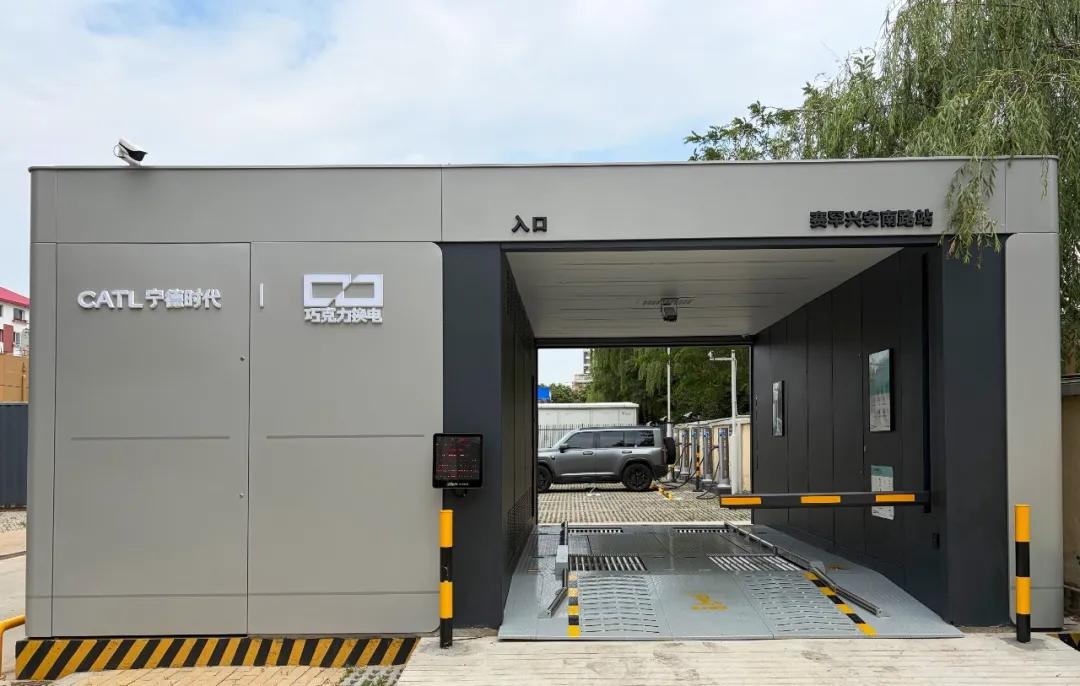
In the past, the most frequently discussed topic about battery swapping was speed: can swapping a battery in a few minutes be more convenient than charging?
Now, there are more questions:
Can vehicles of different brands use the same battery swapping network? Can battery standards be gradually unified? Who will bear the investment in battery swapping stations? How much time and cost can users actually save by using battery swapping? Can operators get reasonable returns after continuous investment?
These questions seem trivial, but they determine how far battery swapping can go.
From the perspective of consumers, there is no need to declare an absolute winner among different energy replenishment methods, since the preference for energy replenishment methods usually varies in different scenarios.
People who have fixed parking spaces at home and do not travel long distances for daily commuting prefer to charge at night, which is cost-effective.
People who travel long distances and have tight energy replenishment time will pay attention to the charging efficiency along the expressway and the queuing situation at stations.
For high-frequency operating vehicles, the downtime directly affects their income, so battery swapping has strong appeal for them.
Therefore, whether it is ultra-fast charging, flash charging or battery swapping, as long as it can solve the energy replenishment anxiety, save time and improve convenience in the process of using vehicles, it can already meet most of the needs of consumers.
Of course, enterprises definitely consider more factors. At least they will not take action until the distribution of interests of all parties is clearly calculated. Now that Huawei has entered the market, who will be the next?
This article is from WeChat Official Account "Auto Community" (ID: iAUTO2010), written by Zhang Zhidong, and authorized for release by 36Kr.