After 79 days, the largest chip IPO has fallen through.
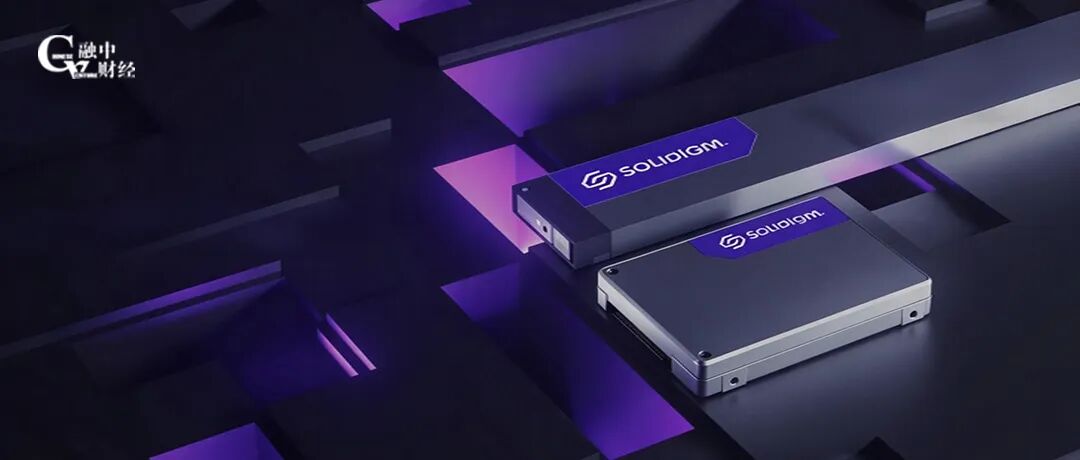
At 3 a.m. on October 23, the paid platform of The Korea Economic Daily broke the news first: SK Hynix accepted shareholders' opinions and withdrew the listing plan of its U.S. subsidiary Solidigm. A few hours later, SK Hynix posted an announcement on Korea's electronic disclosure system, officially terminating the pre-IPO financing and IPO assessment of Solidigm.
According to previous reports from Reuters and Bloomberg, this was originally expected to be one of the largest semiconductor IPOs in U.S. history, with a fundraising scale ranging from $10 billion to $15 billion and a maximum valuation of up to $150 billion.
Shortly after the market opened that day, SK Hynix's share price once dipped to 1.171 million won, then turned to rise all the way, closing up 4.42% at 1.277 million won. A company announced that it would abandon a financing of tens of billions of dollars, but its share price rose instead of falling, and the attitude of shareholders has been clearly reflected on the K-line.
Such a scenario is rare in the capital market.
Solidigm has a remarkable background. It is the NAND flash memory business that SK Hynix acquired from Intel in the past. It suffered losses year after year in previous years and was once regarded as a burden that could not be shaken off. It was not until the explosive demand for high-capacity solid-state drives in AI data centers that its value doubled in just two years. According to calculations by Korean media, it is a high-stakes card in the hand of the world's second-largest memory chip company.
However, this very card almost dragged down SK Hynix's share price in the past two months. As soon as the news of the listing came out, the share price fell by about one-tenth within a day. Minority shareholders issued open letters and statements through platforms, and the head of the Financial Supervisory Service and the chairman of the Financial Services Commission also publicly criticized it on public occasions. Even the person leading the pre-IPO was questioned by Korean media.
From the leak of the listing plan on August 5 to the announcement of its cancellation on October 23, a total of 79 days passed.
The reason given by SK Hynix is "capital market environment and share price trend". But what happened during these 79 days cannot be explained clearly in one sentence. Among them, a subsidiary was brought back to life because of artificial intelligence, and there is also a five-layer equity structure diagram that made Korean stockholders very uncomfortable. Moreover, South Korea has implemented the new duplicate listing regulation for only two months, and it is waiting for its first major test case.
The once tasteless asset, valuation soars to hundreds of billions of dollars
The story starts with Intel.
In 2020, SK Hynix announced the acquisition of Intel's NAND flash memory and solid-state drive business at a price of about 10 trillion won, and established Solidigm in California the following year to take over these assets.
The payment was made in two installments, the first installment was about 7 billion U.S. dollars, and the second installment was about 2 billion U.S. dollars, all settled before the end of March 2025. At that time, the plan was very clear: SK Hynix's advantage lies in NAND for mobile phones, while Intel has a deep foundation in enterprise-level solid-state drives. The combination of the two just made up for the gap where SK Hynix's NAND business was slightly inferior to its DRAM business.
Reality soon brought people back to earth. After the acquisition was completed, the memory industry entered a downward cycle, and Solidigm suffered losses for several consecutive years, with cumulative losses exceeding 7 trillion won. In South Korea's securities circle, it has long been regarded as the "chicken rib" in SK Hynix's hands - tasteless to eat, but a pity to discard. In September 2024, Choi Tae-won, chairman of SK Group, personally joined the board of directors of Solidigm.
The turning point came from AI.
In the second quarter of 2024, Solidigm achieved profitability for the first time in 12 quarters. AI data centers need to store massive amounts of training and inference data, and high-capacity QLC enterprise-level solid-state drives are considered the most suitable product to replace mechanical hard drives, which is exactly the business that Solidigm holds. Since then, enterprise-level SSDs and HBM have become the two pillars driving SK Hynix's AI memory performance. In September this year, South Korea's SSD exports surged 532% year-on-year, and the once tasteless asset has become a highly sought-after business.
Earlier this year, SK Hynix reorganized Solidigm. The original Solidigm entity was transformed into AI Company, and the enterprise-level SSD business was incorporated into a newly established Solidigm. On January 28, SK Hynix promised to contribute up to 10 billion U.S. dollars to this system, and SK Co., Ltd., SK Innovation and SK Telecom contributed an additional 1.1 billion U.S. dollars. After a series of adjustments, Solidigm changed from a subsidiary to a sub-subsidiary - this detail did not attract much attention at the time.
The valuation rose accordingly. In late September, Reuters reported that Solidigm had met with investment banks competing for underwriting roles, with a maximum valuation of up to 150 billion U.S. dollars, and plans to raise about 15 billion U.S. dollars, which is expected to become one of the largest semiconductor IPOs in U.S. history.
In early October, Bloomberg reported that it had selected Goldman Sachs and Morgan Stanley as lead underwriters, with plans to raise about 10 billion U.S. dollars and list as early as 2027. According to calculations by Korean media, Solidigm accounts for about 13% of SK Hynix's market value.
SK Hynix later explained the original intention of the listing. The existing production capacity cannot keep up with the demand brought by AI, and Solidigm needs to build a new factory in the United States; the introduction of external capital can increase the consolidated cash flow, and the funds can be used for capital expenditure, dividends and share repurchase and cancellation. A separate listing can also allow the market to give Solidigm an independent valuation.
It sounds like a win-win deal.
79 days, caused by an equity diagram
The trouble came from that equity diagram.
On August 5, The Korea Economic Daily reported that Solidigm was advancing a pre-IPO of 5 trillion to 10 trillion won, with the ultimate goal of listing on Nasdaq. SK Hynix issued a clarification announcement on the same day, stating that it is studying various plans and no decision has been made yet. Obviously, the shareholders did not buy it, and the share price fell by about 10% the next day.
The reason why retail investors reacted so fiercely lies in the position of Solidigm. The shareholding chain of SK Group's semiconductor business is SK Co., Ltd. - SK Square - SK Hynix - AI Company - Solidigm. The first three are all listed in South Korea, and SK Hynix issued ADRs in New York in July this year, with a scale that set a record for non-U.S. enterprises. If Solidigm is then placed on Nasdaq, Korean media simply call it "quadruple listing". The logic is not complicated: Solidigm is wholly owned by AI Company, and its profits are basically incorporated into SK Hynix's statements; once external shareholders are introduced, this part of the profits will have to be shared with others.
A head of research at a brokerage firm put it more directly that lack of funds is not the reason for promoting the listing at all. He pointed the reason to the group's governance structure - SK Hynix's largest shareholder is SK Square, and only about 20% of the dividends distributed by SK Hynix flow into SK Square, and then go up layer by layer to SK Co., Ltd.
Another detail made the situation more delicate. According to Korean media reports, the person leading this round of pre-IPO is Noh Jong-won, former president of SK Hynix, who left the company and established a private equity institution in the United States. And the plan to acquire Intel's NAND business back then was entirely his work.
The voices of opposition came one after another. In August, the Korea Corporate Governance Forum, which represents institutional investors, publicly advised SK Hynix to abandon the listing plan.
On September 21, the minority shareholder platform ACT wrote to the SK Hynix board of directors, demanding to clarify why external financing is necessary, and what the impact of alternative solutions such as own funds and loans on shareholders is respectively. On October 1, ACT issued another statement, arguing that the separate listing of Solidigm will cause the core growth value due to original shareholders to flow to external investors, deepening the parent company's discount, and formally requesting the board of directors to review the plan again.
What really made the situation tricky was the change of rules. This year, South Korean financial authorities set the direction of "prohibited in principle, allowed in exception" for duplicate listing in the capital market reform plan. The detailed rules were approved at the end of July and officially implemented on August 3.
If a listed company wants to list a subsidiary under its actual control, the board of directors of the parent company must complete a full set of shareholder protection procedures, which also applies to the situation where the subsidiary is listed on an overseas exchange; if the obligations are not fulfilled properly, the maximum fine is 1 billion won, and the company may be suspended for one day. The new version of the Commercial Law implemented in late July also stipulates that directors have a duty of loyalty to all shareholders.
Solidigm just hit the muzzle of the new regulation.
On October 19, the head of South Korea's Financial Supervisory Service said during the National Assembly's state audit that Solidigm's listing touched on the issue of duplicate listing. Three days later, the chairman of the Financial Services Commission also publicly stated that Solidigm's listing in the United States falls under the scope of application of the duplicate listing guidelines.
The share price is also voting on behalf of shareholders. On August 6, SK Hynix's intraday drop once exceeded 9%. The weakening of U.S. chip stocks, the rumor of Solidigm's listing, and the delayed shareholder return plan, several negative factors overlapped. Entering October, the share price has fallen by about 30% cumulatively since the end of September.
On October 23, the announcement came. SK Hynix did not mention supervision in the announcement. Its statement was that considering the recent capital market environment and share price trend, it is necessary to re-examine whether the current listing is the most beneficial to the company and existing shareholders.
Whose Solidigm
As soon as the news came out, almost all South Korean brokerages applauded. Meritz Securities believes that this is a signal that the company puts the value of existing shareholders first, and subsequent shareholder return policies are likely to be strengthened.
Behind this round of applause is the resentment that South Korean stockholders have held for several years.
"Korea discount" is an old problem in South Korea's capital market, and duplicate listing is one of the most frequently mentioned issues. In 2020, LG Chem spun off its battery business into LG Energy Solution, which was listed separately in early 2022.
Many retail investors bought LG Chem originally for the battery story, but they watched the most valuable asset be separated and priced separately, and this resentment has not dissipated to this day. The new duplicate listing regulation introduced this year, according to Korean media, is to prevent the controversy of LG Energy Solution from repeating.
After the rule was implemented, no company has actually gone through the entire process of duplicate listing. Solidigm is the first major group case that hit the new rule, and also the most influential one. Its outcome has more or less drawn a line for subsequent players. Some Korean media are already worried that this suspension will affect the listing arrangements of other large groups, and subsidiaries in emerging industries such as robotics are waiting and watching.
However, Solidigm's problems have not disappeared because of this.
SK Hynix repeatedly emphasized in the announcement that Solidigm's growth potential and investment needs have not changed. The existing production capacity cannot cope with the demand brought by AI, and the new U.S. factory still needs to be built. Next, the investment timing, scale and financing method will be re-evaluated, and direct investment is also an option. In other words, after going around in a big circle, the money will most likely end up being paid by SK Hynix itself.
Time waits for no one. China's YMTC is expanding its production capacity, and the gap with leading manufacturers is getting smaller and smaller. Enterprise-level SSD is currently the most profitable business in the NAND sector. Whoever can scale up production capacity first will get a bigger share of the pie.
# Tip Submission # rzcj@thecapital.com.cn
END
This article is from the WeChat official account "The Capital" (ID: thecapital), author: Wang Tao, republished with authorization from 36Kr.