The battery packs under the "no repair, only replacement" warranty policy are trapping the first batch of early electric vehicle owners.
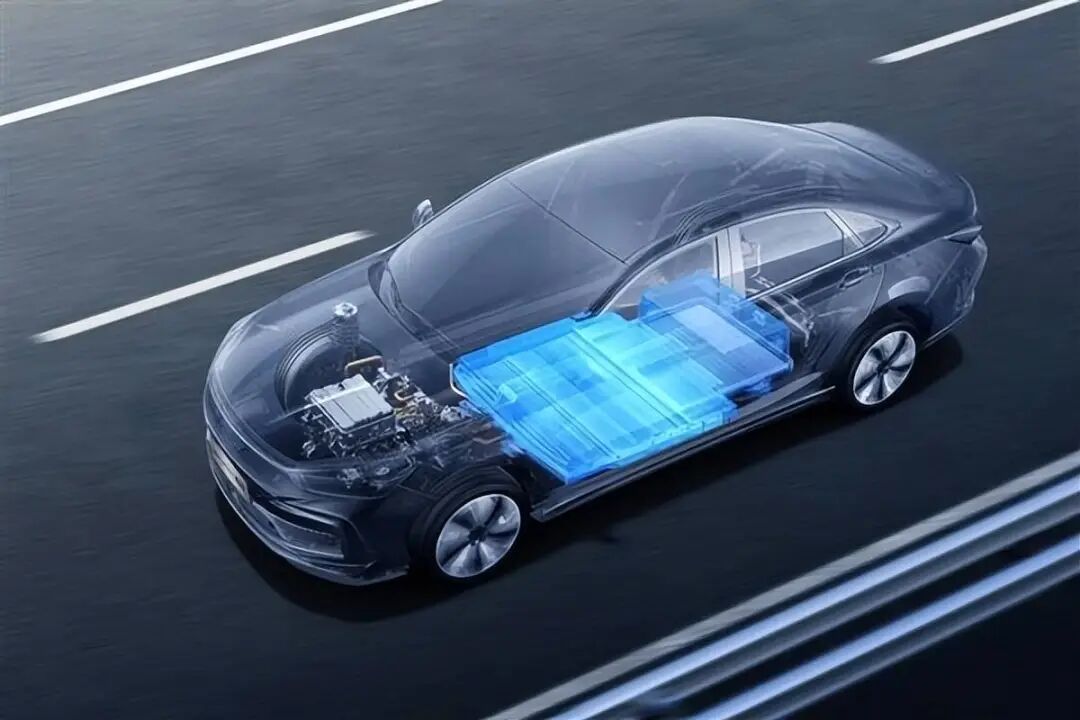
"The quote for a battery replacement is 80,000 yuan, while the residual value of the vehicle is only 30,000 yuan." Quite a number of new energy vehicle owners whose vehicles are out of warranty are stuck in a dilemma between "replacing the battery" and "replacing the whole vehicle with a new one."
As we all know, the battery pack has always been the component with the highest cost in electric vehicles. Before the popularization of intelligent configurations such as intelligent driving assistance and smart cockpit, the battery cost even accounted for more than half of the vehicle purchase price. When these battery packs go out of warranty along with the vehicles, their capacity attenuates and the cruising range no longer meets the daily travel demands, no matter replacing the battery pack or replacing the electric vehicle, the problem starts to become tricky.
The problem behind this is not about a single vehicle or a single car owner, but the real side of the "out-of-warranty wave" being pushed from behind the scenes to the front stage after the rapid development of new energy vehicles up to now.
Admittedly, in the past decade of rapid development of China's automobile industry, electrification has been the longest main line. Ten years ago, electric vehicles were still labeled as "products of policy", being questioned and ridiculed. But ten years later, they have become the well-deserved protagonist in China's new car market.
In China, the retail penetration rate of new energy passenger vehicles hit 67% in September, and the monthly sales proportion of fuel vehicles fell below 1/3 for the first time. Overseas, the export volume of new energy vehicles reached 2.355 million units in the first half of the year, with a year-on-year increase of 1.2 times, accounting for more than half of the total automobile exports for four consecutive months. It can be said that new energy has become an important driving force promoting the development of China's automobile industry at home and abroad.
From the reversal of the oil-electricity pattern to Chinese automakers becoming the most prominent players in the global electrification wave, over the past more than ten years, all parties from the supply chain to complete vehicle manufacturers and then to the energy replenishment network have jointly built up the industry. This achievement was obtained through ten years of efforts by policies, capital and engineers, with extremely high gold content.
However, behind the rapid development, many problems discovered in the new energy track force us to attach importance to and examine them.
For example, the "hastily manufactured vehicles" and pseudo-innovation of electric vehicles exposed by the industry before are all existing problems. In addition, the "out-of-warranty wave" is also becoming another major problem that needs to be properly solved urgently in the new energy track.
20 Million Vehicles Are Expiring Their Warranty
An Unavoidable Issue for Car Owners
"What should we do with the battery after a new energy vehicle is used for 8 years?" This question was not taken seriously by anyone for a very long time in the past.
It should be noted that the real mass adoption of domestic household electric vehicles dates back to around 2016, and the mainstream three-electric system warranty in the industry follows the rule of 8 years or 120,000 kilometers (whichever comes first). In the era of explosive growth of incremental market, 8 years might sound very far away.
Although later some new vehicles extended the warranty to 8 years or 160,000 kilometers, even claiming to offer lifetime warranty, the lifetime warranty is a commercial policy rather than a legal obligation, almost all tied with harsh conditions. The warranty for commercial vehicles is even shorter, generally 5 years or 500,000 kilometers. For electric vehicles delivered in 2016, they have long passed the warranty expiration date.
So we can see that from 2024 to 2025, even earlier, the warranty of the first batch of vehicles expired one after another, and the scale expanded rapidly from 2026. Cui Dongshu from CPCA (China Passenger Car Association) pointed out that by the end of 2026, the number of new energy vehicles with a vehicle age of more than 8 years in China will be about 2.6 million units. If commercial vehicles that are out of warranty in advance are included, about 3.5 million new out-of-warranty vehicles will be added in 2025.
Based on the ex-factory date of sold new vehicles, industry estimates cited by China Economic Net show that from 2025 to 2032, nearly 20 million new energy vehicles will cross the battery warranty line one after another.
So for the earliest group of people who bought electric vehicles, who will cover their battery costs after their vehicles have been used for 8 years and the three-electric system warranty expires?
In the past, most car owners bore this risk, or it can be said that car owners paid this bill. From expensive repair costs to discontinued spare parts, to vague battery attenuation judgment standards and non-interconnected detection results, various problems make car owners suffer a lot.
And in this bill, the most intractable problem is that repairing a car is even more expensive than buying a new one.
According to a report from CNR, from the quotation obtained at a new energy maintenance store, the replacement of the entire battery pack for a compact pure electric vehicle generally starts at 40,000 yuan, and for a mid-size SUV, it often costs 80,000 to 100,000 yuan. But in contrast, the residual value of an old electric vehicle with a vehicle age of 8 years is often only 20,000 to 40,000 yuan. The money spent on battery replacement is enough to buy another second-hand car.
Repairing it makes people feel distressed; not repairing it, the cruising range shrinks year by year with hidden dangers hanging over the head, and the insufficient cruising range in actual use is also a problem. After calculating all aspects, some car owners said, "It's better to directly scrap the car for replacement."
Not only that, some car owners plan to repair their cars, but there are no matching replacement parts available.
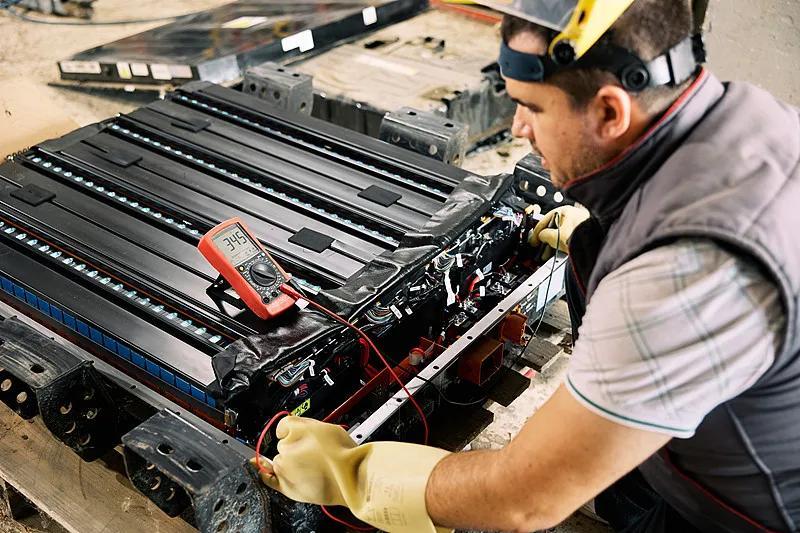
Because the early CTP integrated battery pack encapsulates the cells, BMS and cooling pipelines all together, the official after-sales service, for the sake of safety and process simplification, will basically replace the whole pack uniformly in case of collision or single cell failure. And those early models have long been out of production, the original manufacturer no longer prepares battery modules and special shells, and there are almost no standardized compatible parts from third parties.
Some car owners even complained: "For the fuel car I owned before, there are abundant non-original parts and dismantled car parts everywhere, and the car can be repaired anywhere."
In addition, each manufacturer has its own test standard for the SOH (State of Health) algorithm of batteries, and the display error on the vehicle machine is large. Car owners feel that the cruising range has been reduced by 30%, but after testing at the 4S store, it does not reach the attenuation threshold agreed by the manufacturer, so they cannot enjoy the free battery replacement service. However, the data tested by third-party institutions will not be recognized by automobile enterprises. The lack of a unified national standard makes car owners' rights protection hit a wall everywhere.
Even the lifetime warranty promised by many automobile enterprises is harsh in actual implementation, and even hides hidden traps.
Such conditions as the first owner, no ownership transfer, annual mileage cap, must be maintained at the official 4S store all the time, no private modification, no commercial operation, etc. If any one of them is not met, the lifetime warranty will be invalid. This means that when a second-hand car owner takes over an electric vehicle with lifetime warranty, he actually only enjoys the basic 8-year warranty. Once the original owner transfers the ownership, the rights and interests are basically cleared.
The superposition of these problems has spawned a vicious circle: the price of old electric vehicles in the second-hand car market has been hit to a very low level. Buyers will press down the price as soon as they hear that the battery is about to go out of warranty, and sellers simply do not register the cars. The regular maintenance channels are unaffordable, and the gray channels take advantage of the opportunity: unqualified workshops privately disassemble battery packs, replace dismantled cells, modify lines, and do not follow the standards for insulation, sealing and cooling, leading to a sharp rise in fire risk.
Although the physical life of some high-quality cells is far more than 8 years, many cars are not broken, but the free coverage period has expired. But for car owners, the absence of warranty coverage is the same as the car being broken in terms of the cost they need to pay.
Proper Handling of This Issue
Will Have Far-reaching Impacts on the Development of Electric Vehicles
In fact, the market has already noticed the problem of the "out-of-warranty wave" of new energy vehicles, and has even started to solve it, though the progress varies.
The policy end took the lead in breaking the deadlock.
On June 18, 2026, 9 departments including the Ministry of Commerce jointly issued the "Notice on Several Measures to Cultivate and Expand Consumption in the Automobile Aftermarket". The Notice requires automobile enterprises to enrich the supply of new energy maintenance channels and spare parts, and must not restrict consumers from independently choosing maintenance channels. At the same time, it guides complete vehicle and battery enterprises to open maintenance technology authorization, explicitly encourages repairing instead of replacing, and forbids replacing the whole pack whenever a problem occurs.
This is the first time that the official has used documents to loosen restrictions on third-party maintenance, which is equivalent to admitting that the closed after-sales model is not feasible.
In addition, GB/T 47439—2026 "Safety Requirements for New Energy Vehicle Maintenance Operations" was implemented on August 1 this year. High-voltage maintenance technicians must hold a special operation certificate for electricians, and two people must operate together for electricity-related operations. This set of national standards not only standardizes the process, but also sets access thresholds for maintenance, allowing qualified and technically skilled stores to enter the market, and keeping unqualified workshops out.
In addition, CATL launched the "Ningjia Service" in August 2024, using CTP in-depth maintenance technology to only replace the problematic cells instead of replacing the whole pack. At present, the coverage of repairable models has reached more than 70%, with original parts and original technology, and the repaired vehicles are also covered by official warranty.
It is reported that the cost of this module-level maintenance is only 10% to 50% of the cost of replacing the whole pack. It has also designed R1 to R4 graded technology authorization to open maintenance capabilities to chain channels. After all, battery manufacturers know batteries best. When they carry out the "repair instead of replacement" model, they can not only get new profit sources, but also ensure the quality of maintenance.
Automobile manufacturers are also making efforts to varying degrees.
For example, NIO's BaaS (Battery as a Service) has been promoted since August 2020. The registered capital of Wuhan NIO Energy, the battery asset company, is about 2.675 billion yuan. This model directly avoids the problem of expensive paid major repair of batteries after the warranty expires. The attenuation, aging and failure of the battery pack are uniformly handled by the asset side, and old car owners can also upgrade to large-capacity batteries as needed. Independent brands such as XPeng and Geely are also adjusting their after-sales services in the past two years, opening module-level maintenance for some old models, and no longer uniformly replacing the whole pack.
But it must be admitted that a large number of traditional automobile enterprises and early new forces are still waiting and seeing, which means that conservative practices such as non-open diagnostic protocols, discontinued spare parts for old models, and invalid lifetime warranty after ownership transfer will not disappear on their own in the short term.
On the whole, the industry is still in the primary stage of solving the out-of-warranty wave of new energy vehicles. To what extent the diagnostic protocol will be opened, how low the price of third-party spare parts can be reduced, and whether the battery manufacturer's maintenance network can sink to the third- and fourth-tier cities, all need more time to get the results. However, at least the direction to solve the out-of-warranty wave of new energy vehicles is clear now.
Responsible Editor: Yang Jing Editor: He Zengrong
This article is from WeChat Official Account "Auto Community" (ID: iAUTO2010), Author: Li Sijia, published by 36Kr with authorization.