Incubated by Liu Chunbao of Jilin University, the post-2000s entrepreneurial team behind the bionic dexterous face project has secured tens of millions of yuan in financing | 36Kr Exclusive
Source / Enterprise
This article contains approximately 3500 words, with an estimated reading time of 9 minutes
Author丨Ou Xue
Editor丨Yuan Silai
36Kr Hardmole has learned that Hangzhou Lingyan Technology Co., Ltd. (hereinafter referred to as "Lingyan Technology"), a company specializing in bionic dexterous face and emotional interaction technology, has recently completed tens of millions of yuan in seed round and seed+ round financing. Investors in the seed round include In Capital, Zhejiang Torch Center, while investors in the seed+ round include Yida Capital, Plum Ventures, and Linglu Capital. Existing shareholder In Capital continued to make additional investments. Linglu Capital acted as the financial advisor for this and subsequent financing rounds. The raised funds will be mainly used for product iteration, core component R&D, algorithm platform construction, and team expansion.
Against the backdrop of the explosive growth of the embodied intelligence and humanoid robot industry, while most attention is focused on the "limbs" and "trunk" of robots, Lingyan Technology has chosen an extremely vertical yet critical track — developing the "face" for humanoid robots.
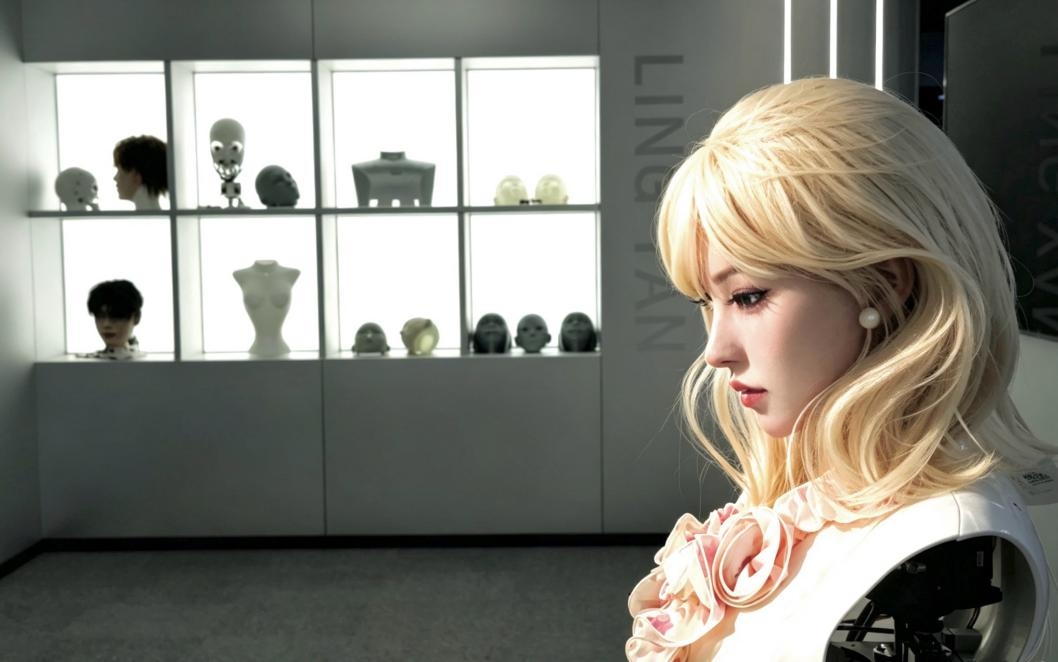
Founded in June 2026 and headquartered in Hangzhou, Lingyan Technology is the first domestic R&D enterprise of bionic dexterous face agents that realizes the synchronization of audio, lip and eye movements, providing the full-stack FaceSoul Agent emotional interaction solutions for humanoid robots, service robots and emotional companion devices.
Zhao Changyi, the founder and CEO of the company, is a post-2000s PhD from Jilin University. He once participated as a core member in the early stage of Wuxi QuanzhiBo (a leading domestic joint motor company) and Hangzhou Heiman Technology (the dexterous hand supplier of UBTECH Robotics). All three enterprises are derived from the Key Laboratory of Bionic Engineering of Ministry of Education, Jilin University, and their founders are all students of Professor Liu Chunbao, a leading "Tang Aooqing Scholar" (who currently serves as the chief scientist of the three companies), forming a close collaborative relationship in the industrial chain.
Relying on this industrial ecosystem, Lingyan Technology has launched its core product — FaceSoul Agent. It is a full-stack technical architecture of bionic dexterous face agents, aiming to provide a complete emotional interaction solution from "form" to "soul" for humanoid robots, service robots and emotional companion devices.
In the definition of Lingyan Technology, FaceSoul Agent consists of two parts. "Face" (the form of bionics) is responsible for high-fidelity physical presentation, which restores the most real facial morphology and reactions of human beings through bionic skin, muscle transmission design, expression temperature and posture perception. "Soul" (the core of the soul) carries large AI models, social cognition, memory learning and emotional engine, endowing robots with the abilities of self-understanding, emotional cognition and value judgment.
In terms of product matrix, the company has launched four series: "Lingshu M1" for the education and scientific research market, "Lingshu W1" for commercial services, "Lingyun Series" for the consumer market, and "Lingneng Series" for humanoid robot OEMs. In addition, the company also provides IP customization services.

Product display (Source / Enterprise)
The background of starting a business with fellow alumni from the same lab brings extremely high technology reuse rate and cost advantages to Lingyan Technology. Zhao Changyi frankly told Hardmole that the cable-driven technology path of Lingyan Technology is derived from the accumulation of Heiman Technology in the field of dexterous hands, while the technology of micro drive motor modules is reused from the accumulation of QuanzhiBo in robot joints.
What is the key role of cable-driven technology for the "face" of humanoid robots? At present, most bionic face enterprises on the market adopt link drive, but in Zhao Changyi's view, link drive has pain points such as high noise and large space occupation, and the quick-return characteristic of the link will cause sudden speed change at the end.
Lingyan Technology is one of the few domestic enterprises that take the technical path of cable-driven dexterous face. Cable-driven technology not only saves facial space, making the facial degrees of freedom of the product reach 32, the highest among similar domestic products, but also makes the expression generation more anthropomorphic and delicate by imitating the arrangement of human muscles.
In addition, at the software and algorithm level, Lingyan Technology avoids the red ocean competition of large dialogue models, and firmly locks the R&D focus on "expression generation algorithm".
Zhao Changyi believes that OEMs usually take over functions such as dialogue and memory by themselves, and the rigid demand for dexterous face suppliers is to "convert voice and visual input into synchronized speaking, accurately aligned lip shapes and eye movements". This is a process that encodes phonemes, prosody, semantic states and emotional intentions in Chinese speech into a unified time series representation, and generates continuous expressions in the multi-degree-of-freedom motion space of the robot.
In addition, there is another core pain point in the industry: the computing power of most peers depends on external local servers, which is difficult to be truly integrated into the humanoid robot body.
Relying on a large number of high-quality face data and bionic project experience from the Jilin University laboratory, Lingyan Technology has independently developed a complete set of lightweight end-side expression generation models. Through cross-modal distillation, continuous collaborative modeling and end-side quantitative deployment, it has opened up the closed loop from speech understanding, expression generation to execution feedback.
When talking about performance and implementation, Zhao Changyi revealed that within four months since the company was established, it has reached cooperation or intentional cooperation with operators, cultural tourism exhibition, commercial services and some humanoid robot OEMs. The company plans to focus on To B/To C direct sales and IP customization this year, accounting for about 90% of the total revenue; next year, with the release of OEM demand, the supporting business of humanoid robots will occupy half of the total revenue.
Zhao Changyi has a clear understanding of the "uncanny valley effect" when robots interact with humans: 75%-85% anthropomorphism is the uncanny valley interval, and the effect will disappear when the anthropomorphism degree exceeds 85%.
Therefore, Lingyan Technology has made the anthropomorphism degree of C-end and B-end product lines over 90% through the texture of bionic skin materials and high-precision algorithms; while in the IP customization line (such as animals and cartoon images), the anthropomorphism degree is deliberately controlled below 65% to avoid the uncanny valley interval.
The following is an excerpt of the dialogue between Hardmole and Zhao Changyi, founder and CEO of the company (edited):
Hardmole: At present, most players in the industry generally adopt link drive, but you insist on taking the cable-driven path. Will there be pressure on cost? Where will the industry go in the future?
Zhao Changyi: On the contrary, the cost of cable drive is even lower, because there are too many non-standard parts for links. The reason why everyone uses link drive now is that many enterprises have poured into the dexterous face track recently, and everyone is racing against time to quickly enter the first echelon, so they choose the link form with shorter design cycle first.
But in the future, the technical path for robot faces will definitely converge to cable drive. It is hard for the dexterous hand track to converge to this path because cable drive has the problem of fatigue life; but the force that the face needs to pull the skin is very small. Only the cable-driven pulling form can imitate the muscle driving mechanism. At present, we are the only domestic enterprise that is seriously doing cable-driven dexterous face, because cable drive requires long-term accumulation. For example, we have done bionic mechanism tests in the laboratory for the position of each muscle and the winding form of each cable.
Hardmole: What advantages does Lingyan Technology have in the mass production and implementation of hardware?
Zhao Changyi: At the hardware level, the biggest pain point in the industry at present is that no one can achieve mass production, and most products on the production line can only be manually assembled. But Lingyan has carried out modular design, with eyebrows, eyes and necks as independent modules respectively, which can be produced on 4 separate production lines in the future.
As for production capacity guarantee, a foreign partner recently placed a demand for hundreds of units. We have an advantage that if our own production lines can not meet the orders in the early stage, we can first use the production lines of Heiman or QuanzhiBo to help us fulfill the orders.
Hardmole: Where is the explosive inflection point of the dexterous face market? In addition to the B-end and C-end, what other increments are there in the future business planning?
Zhao Changyi: I judge that there will be a wave of concentrated outbreak at the end of this year or Q1/Q2 next year. Because the application of humanoid robots in factories is gradually converging, OEMs are shifting to To B and To C scenarios. They lack the ability to develop robot faces and need to find external suppliers.
This year's business will focus on independent product operation, supplemented by IP customization and OEM supporting services; next year, we will focus on increasing the proportion of OEM supporting business to make it an important support, while continuing to promote direct B-end sales and IP customization business to form a diversified and collaborative development pattern.
In addition, we are also exploring overseas markets at the same time. For example, customers in the Middle East are very interested in health monitoring, and we are promoting the product line of "Little Ling Doctor"; for the European and American markets, we will promote the sales of IP customization. In terms of product iteration, we will launch a full cable-driven product with 43 degrees of freedom (46 degrees of freedom including the neck) in the future, which will fully realize human-like presentation.
Views of Investors:
Seed+ round investor Yida Capital: Humanoid robots are crossing the "technology verification" stage and entering the deep water zone of "large-scale commercial application". The competition in ontology and motion control links has been fully sufficient, and the emotional expression layer is a high-value area that is almost blank in the industrial chain. We have successively invested in QuanzhiBo, an integrated joint enterprise, and Heiman Technology, a dexterous hand enterprise. We have established long-term trust in this team derived from the Key Laboratory of Bionic Engineering of Ministry of Education of Jilin University. Joints, dexterous hands and dexterous faces share supply chains, customers and industrial resources, mutually empower each other in technology and manufacturing links, and form an ecological play. Lingyan has full-stack independent R&D from bionic skin, micro drive to emotion model with zero external dependence, which forms a hard-to-replicate competitive barrier. Investing in Lingyan is investing in the infrastructure of the embodied intelligent interaction entrance.
Seed and seed+ round investor In Capital: We believe that robots should not only have trunks and limbs, but also have an expressive face. The dexterous face is the most scarce interactive component in the embodied intelligence industrial chain. The real-time expression generation of Lingyan does not rely on preset libraries, and the anthropomorphic interaction of audio-lip-eye synchronization has reached the leading level in China. After the seed round, we chose to continue to increase our investment, because the team completed the leap from concept verification to product finalization in a very short time, and the productization ability and engineering efficiency exceeded our expectations. In Capital firmly values teams that can truly turn technology into products, and is willing to use patient capital to accompany them to go further.
Seed+ round investor Plum Ventures: Early-stage investment is to invest in future scarcity. The first half of embodied intelligence competition focuses on motion control, while the second half focuses on product implementation and customer payment. The dexterous face is exactly the interaction entrance for robots to evolve from "being able to move" to "being able to communicate". Plum Ventures has long focused on entrepreneurship of Jilin University alumni: behind Lingyan is the only ministerial key laboratory in China with bionics as the core research direction, and the exclusive synchronized face data constitutes a data barrier that cannot be bought with money. Technology can be purchased, large models can be called, but such a team and platform cannot be bought. The expressions of Lingyan are generated in real time by the emotion base model without relying on preset libraries, and the combination of audio-lip-eye synchronization and dynamic pupil has no similar products in China. Upstream we sell shovels, and hardware is king. We are optimistic that Lingyan will become the definer of the emotional expression layer.
Seed+ round investor Linglu Capital: Linglu Capital focuses on cutting-edge technology tracks such as AI and embodied intelligence, and is committed to discovering and long-term empowering future unicorn enterprises. Every transition of computing platform is essentially a transition of interactive interface. The interactive interface in the robot era is not a screen, but a dexterous face. Lingyan's large model-based real-time expression generation technology has no similar solutions in China, and its product form and scene adaptability are ahead of peers. We are optimistic about Lingyan's scarce position in the emotional expression layer and the engineering speed of the team, and will provide full life cycle resource empowerment around the company, accompanying it to become a key participant in embodied intelligent interactive components.
Seed round investor Zhejiang Torch Center: Lingyan Technology is a typical target of "investing in early-stage, hard technology and domestic substitution". The team is derived from the Key Laboratory of Bionic Engineering of Ministry of Education, which has the dual attributes of artificial intelligence and high-end equipment, and has a complete capability chain from basic research, core components to mass production of complete machines. It is a vivid sample of the "last mile" for scientific and technological achievements to move from the laboratory to industrialization. The center has been deeply engaged in science and technology services for more than 30 years, and will continue to provide achievement transformation, policy docking and entrepreneurial incubation support for local technology enterprises that master core technologies and are in the key stage of industrialization.