Apple's second foldable device has been exposed, this time it is a tablet. Are the boundaries between different types of devices about to disappear?
Developing foldable screen devices is either zero times or countless times?
After the debut foldable phone iPhone Duo caused a sensation, Apple's second foldable device is just around the corner. Recently, digital blogger @Kang broke the news that Apple is testing a huge foldable tablet, similar to Huawei's device.
The Huawei device mentioned by the blogger should be the foldable screen laptop MateBook Fold. From this perspective, this Apple device is very likely to integrate the advantages of tablets and laptops just like the MateBook Fold.
Verified by Leitech (ID: Leitech), as early as a year ago, TF International Securities analyst Ming-Chi Kuo broke the news that Apple is developing a foldable tablet with a size of 18-20 inches when unfolded. Earlier this year, Bloomberg reporter Mark Gurman reported that Apple is still advancing the project, but it may not be released in 2028 and is likely to be postponed to 2029.
However, what Leitech really cares about is not the foldable tablet itself, but that the entire digital technology field is blurring the boundaries between smartphones, tablets and laptops, making digital products like "crossover" models such as coupe SUVs that take into account the advantages of different categories.
Integration of form and functions has become an industry trend
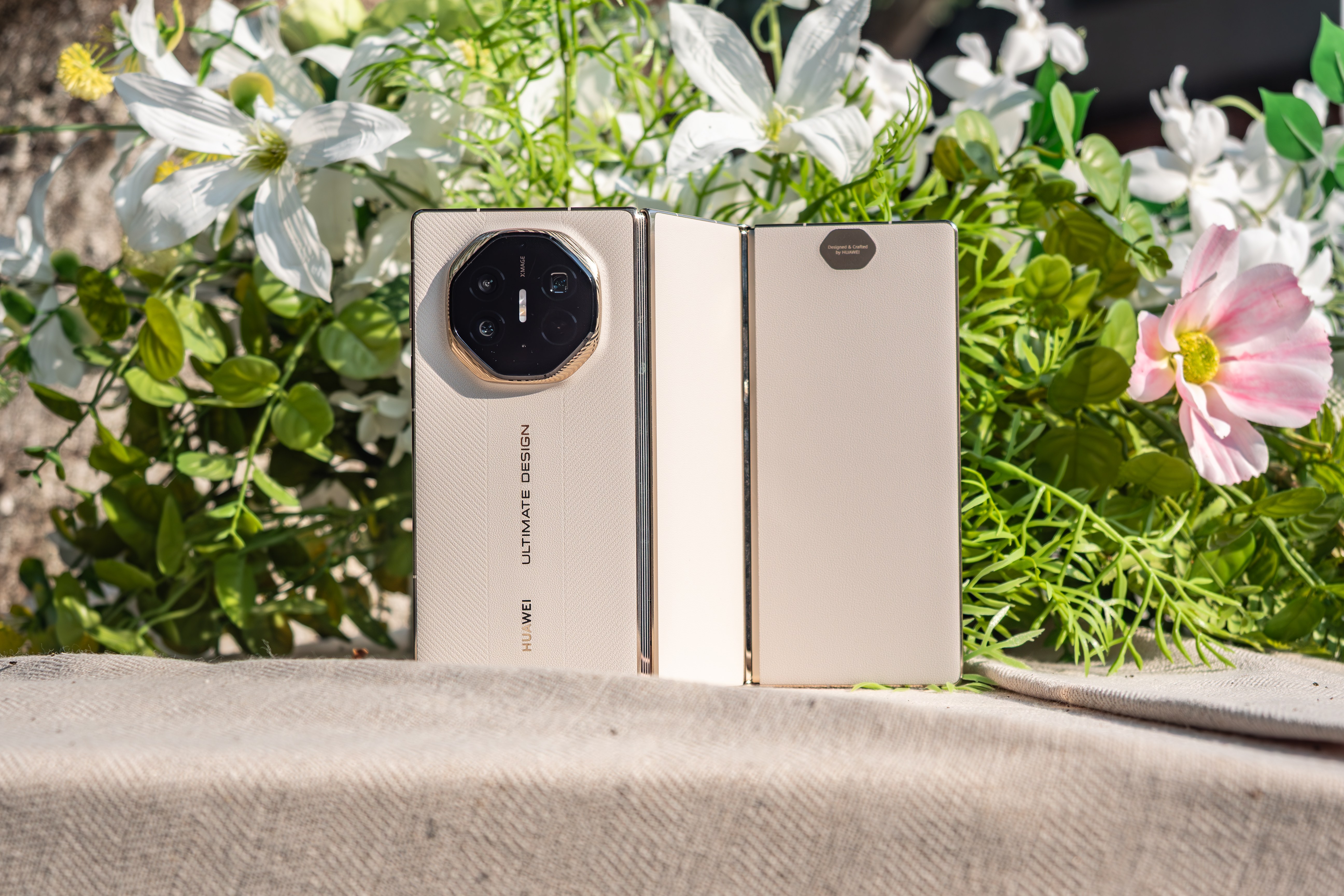
In 2019, Samsung and Huawei successively launched foldable phones. The inner screen of the Galaxy Fold reached 7.3 inches when unfolded, and the large screen of the Mate X even reached 8 inches when unfolded. At that time, the mainstream industry argument was that a foldable phone is an ordinary bar phone when closed, and can be turned into a small-sized tablet when unfolded, serving two purposes with one device.
Subsequently, Huawei and Samsung also launched tri-fold phones, among which the maximum screen size of Huawei Mate XT can reach 10.2 inches when unfolded, and the office, audio and video entertainment experience catches up with large-sized tablets.
(Source: Photo taken by Leitech)
While smartphones are crossing over to challenge tablets, tablets are also fighting back against smartphones through small size + game optimization. Even some small tablets have added support for SIM or eSIM, which can make and receive calls, just like a giant-screen phone of 8-9 inches.
The same is true in the field of tablets and laptops. In the early days, enterprises improved the office experience of products by providing keyboards and styluses for tablets, added touch screen functions to laptops, and even adopted a detachable design of screen and keyboard, which can provide grip operation similar to that of tablets.
The magnetic and Bluetooth detachable keyboards for tablets are very popular in the industry, and many products such as Apple iPad and Huawei MatePad support them. Touch screens and detachable laptops are also not uncommon. Many laptops under Huawei and Xiaomi support touch screens, and the new MacBook Pro that Apple is revealed to release on October 28 is suspected to be equipped with a touch OLED screen.
Huawei MateBook E series and ROG Zephyrus X series laptops adopt a detachable keyboard design, which can be used both as a large-sized tablet and as an ordinary laptop.
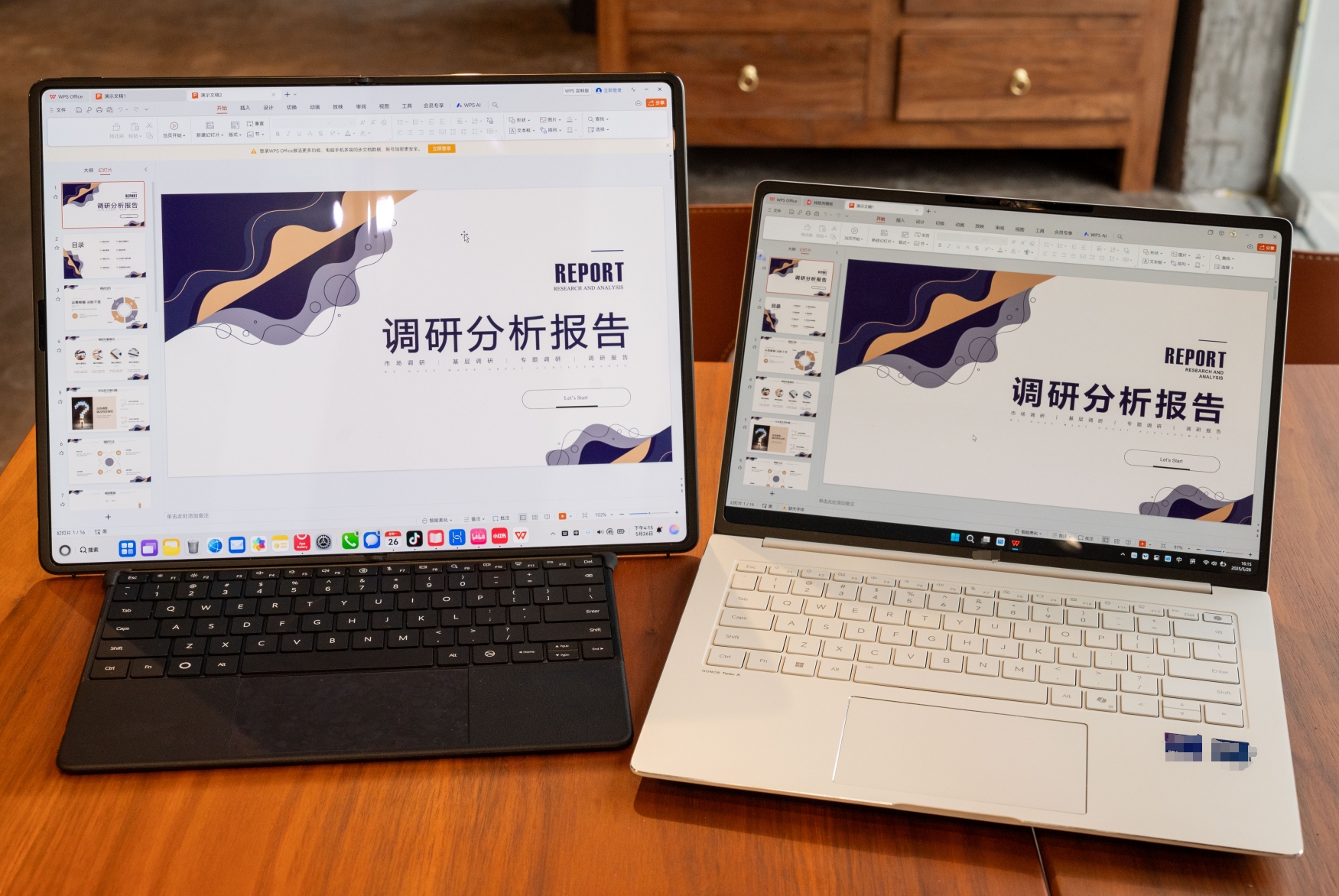
Huawei MateBook Fold brings the foldable screen technology, which is common in the smartphone field, to the laptop industry. The device is as large as 18 inches when unfolded, and supports the external Huawei StarLeap portable keyboard. If you don't want to carry the keyboard, you can also evoke the virtual keyboard after folding the MateBook Fold by 90°-150°.
(Source: Photo taken by Leitech)
The reason why the boundaries between smartphones, tablets and laptops are blurred is firstly that users' needs have changed, and secondly that the logic of human-computer interaction is also changing.
In the early years, users' needs were fragmented: they used mobile phones for communication and socializing, tablets for audio and video entertainment, and computers for office work. Today, what users need is task continuity. We use mobile phones to view materials on the road, and directly edit on the large screen when sitting down, without transferring files back and forth or reopening projects. When colleagues from Leitech are on business trips, they often use foldable screen phones to write manuscripts on buses, subways and planes, which is more convenient than taking out a laptop to work in a narrow space.
The relay, multi-screen collaboration and cross-end file transfer launched by manufacturers are essentially responses to this demand. Only some consumers do not want to buy or carry a bunch of devices, and hope that one device can adapt to multiple scenarios.
The development of AI has changed our operation logic when performing some tasks. For example, when we see a good picture, we want AI to help remove a certain object in the background, or slightly adjust the position of the main subject in the picture. On a mobile phone, we can completely use our fingers on the touch screen to circle and select.
On the computer, it is easy to operate with an external mouse, but if you use the touchpad, the operation will be more troublesome. Previously, in order to solve this problem, some computer manufacturers even added a dual-screen design to the laptop, that is, an additional touch screen is equipped above the keyboard area to perform operations such as circle selection and smearing.
However, if smartphones, tablets and laptops want to completely replace each other, the most critical thing is to overcome the ecological difficulties.
System ecosystem, the biggest difficulty in blurring boundaries
Although manufacturers have been trying to blur or even eliminate the boundaries between smartphones, tablets, laptops and other devices through form design and functional changes, up to now, foldable smartphones still cannot completely replace tablets, and there is a world of difference between tablets and laptops.
Many factors such as system, efficiency, energy consumption, heat dissipation and usage habits are hindering different devices from bridging the gap. Among these factors, the system ecosystem is definitely the most important one.
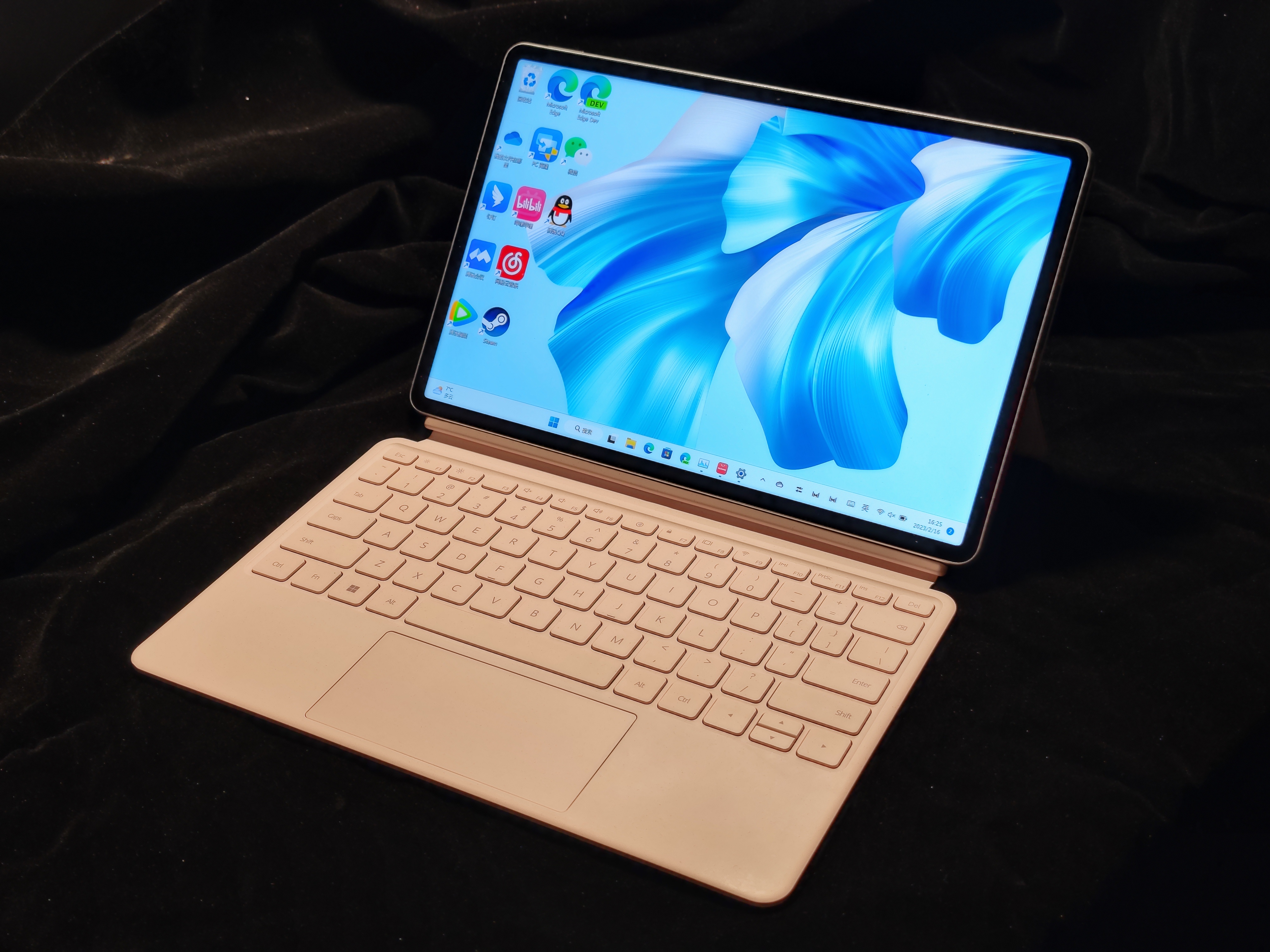
As a MateBook E user, I can clearly feel the awkwardness of the Windows system when operating on the touch screen. Its UI controls are designed for the mouse cursor rather than fingers, and many operations still follow the logic of single-click to select and double-click to open, which is completely different from tablets and smartphones, and the adaptation of third-party applications is even a mess.
(Source: Photo taken by Leitech)
When using Android-based foldable smartphones, Leitech also found that many applications have not been adjusted according to the inner and outer screen proportions of the foldable smartphones, and there is a forced stretching situation in the unfolded state. Even Apple, which is known for its system adaptation and optimization, has similar problems. Leitech tested 10 car apps with iPhone Duo, and only Tesla has done special adaptation, but there are still problems in the details, such as abnormal display of app pictures.
Fortunately, compared with devices based on Android and Windows, Apple and Huawei have great advantages in blurring device boundaries.
After Apple's self-developed M-series chips replaced Intel chips, the chips of Apple's smartphones, tablets and laptops are unified into the ARM architecture. Moreover, the chips of Apple's smartphones, tablets and laptops can theoretically be mixed. For example, the iPad Air uses the M4 chip, the MacBook Neo is equipped with the A18 Pro chip, etc., which makes software adaptation and migration more convenient.
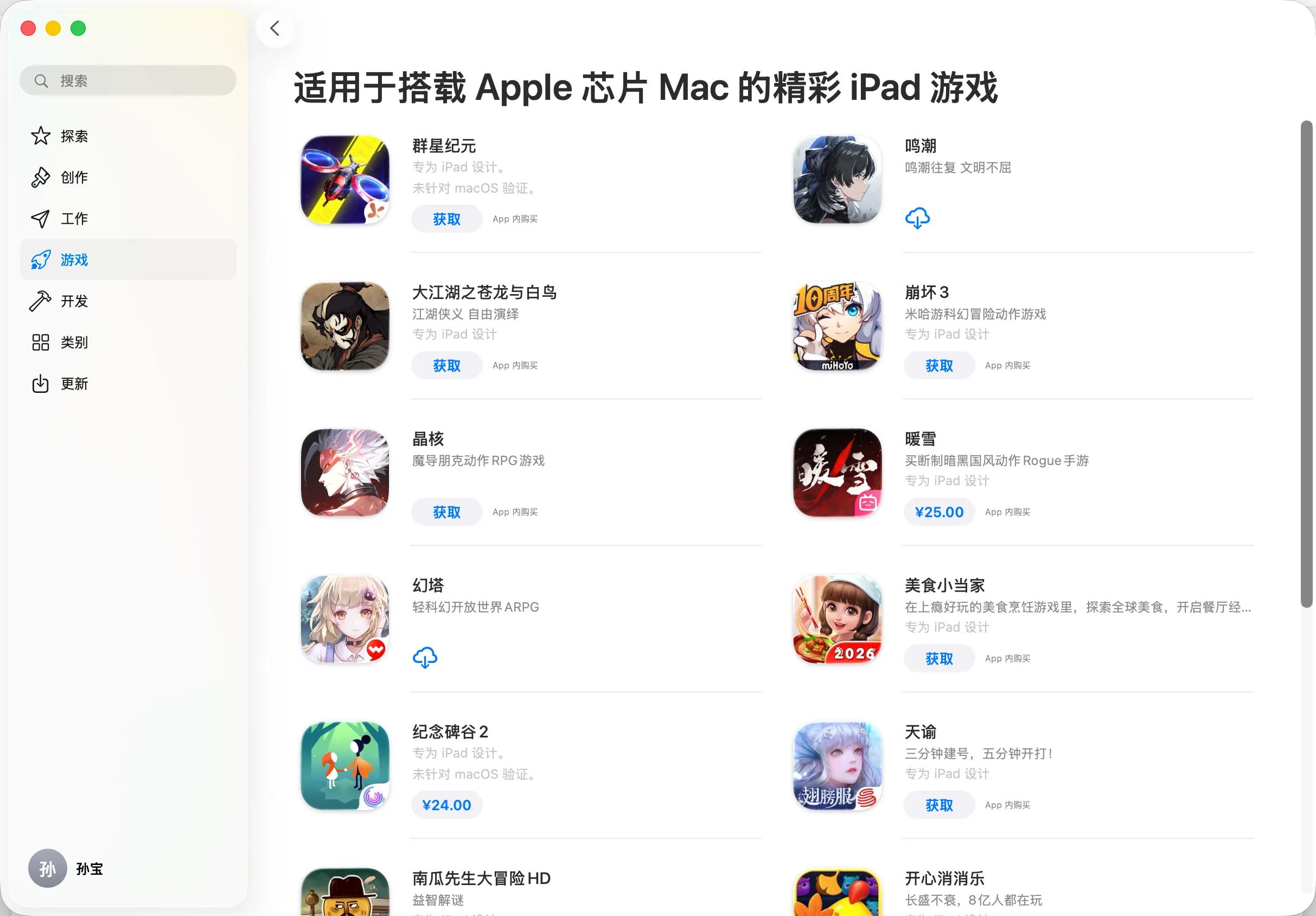
Currently in the Mac App Store, we can already see many "excellent iPad games for Mac with Apple chips".
(Source: Screenshot from Mac App Store)
Huawei goes a step further. HarmonyOS supports one-time development and multi-terminal deployment. Developers only need to write a set of ArkTS/ArkUI codes and package a HarmonyOS HAP package, which can be installed and run on HarmonyOS devices such as smartphones, tablets, foldable screens, HarmonyOS PCs, smart screens, car machines, watches and other HarmonyOS devices. The system can automatically change the UI layout, interaction mode and available functions according to the screen size, input method and hardware capabilities.
Of course, this does not mean that HarmonyOS applications can run perfectly directly on different categories of devices. Developers still need to plan the information hierarchy under different sizes, define layout switching rules, optimize interaction logic, display features and so on. The significance of sharing core codes is that it can greatly reduce the time and economic cost required for cross-end adaptation of software.
The biggest problem with Android and Windows devices is that there are too many stock APK and EXE software, and many developers have no motivation to adapt to functions and designs such as touch screens and folding.
Apple has the unique appeal in the industry. Although the adaptation of iPhone Duo is not perfect at present, and MacBook has not tried touch screen design in the past, I believe that as long as Apple is given a certain amount of time, developers can complete the adaptation.
Huawei HarmonyOS and its ecosystem are almost built from scratch, with late-mover advantages. In terms of system architecture, it is more in line with the interaction logic of intention priority, cross-device collaboration and service atomization in the AI era, and it is still continuously optimized. The shortcoming of HarmonyOS is that the scale of third-party applications is still growing, and the efficiency dividend of "one-time development, multi-terminal deployment" can only be realized after the number of applications crosses the critical point.
Device boundaries will narrow, but categories will not disappear
While launching one "crossover" device after another, manufacturers are facing a new problem: if consumers buy one of the devices, will they no longer need to buy other devices? Can selling them separately by category make more money?
At this stage, enterprises do not need to consider this issue in depth, because although the boundaries between devices are narrowing, the differences are still huge. These products that blur the boundaries of devices can only provide an experience close to other devices in limited scenarios for the time being. There will be no situation where one replaces the other among smartphones, tablets and laptops in the short term.
Take the foldable smartphone as an example. Its large screen is close to a small-sized tablet in terms of audio and video experience, but its small battery and weak heat dissipation make its gaming experience unable to compete with that of a small-sized tablet.
Huawei MateBook Fold can input through a virtual keyboard when folded to a certain angle, similar to a laptop, but the virtual keyboard without key travel cannot compare with the real laptop keyboard in typing feel at all. Not to mention some industrial scenarios, which have strict requirements on the operating system and hardware configuration of the devices, and are difficult to be replaced by "crossover" devices.
Therefore, Leitech believes that with the continuous improvement of the system ecosystem and the continuous upgrading of hardware such as foldable screens, hinges, UTG ultra-thin glass and flexible OLED, crossover devices such as foldable smartphones, foldable screen laptops, foldable screen tablets, and touch screen and dual-screen laptops can provide a more complete experience in specific scenarios, but most likely will never completely replace each other.