The Hidden AI Battle in the Double 11 Shopping Carts
This year's Double 11 shopping festival has welcomed a special new participant in users' shopping carts.
It can filter products, compare prices, stack coupons for consumers, and even actively apply for price protection refunds; it can also monitor inventory for merchants, analyze delivery effects, and generate marketing materials in batches. The complex and tedious processes that previously required repeated operations by both buyers and sellers are now being taken over by AI.
On October 13, Alibaba launched its personal intelligent assistant "Qianwen Go!", incorporating shopping price protection, price comparison and life service processing into its AI capability scope. The next day, the e-commerce version of Qianwen Work was released, attempting to use an AI workstation to uniformly manage merchants' cross-platform businesses.
Almost at the same time, the Doubao mobile assistant encountered a collective boycott.
On October 14, Doubao Mobile Assistant announced the latest progress of the Screen Automated Operation Agreement Protocol (SAEP), with more than 150 applications explicitly refusing to be automatically operated by AI. High-frequency applications such as Taobao, Alipay, Meituan and Pinduoduo are all on the list, while JD.com is not included for the time being.
On one hand, e-commerce platforms are competing to embed AI into the shopping link, on the other hand, mainstream apps are firmly preventing external AIs from interfering in their own transaction processes.
AI is reshaping e-commerce, but the strongholds that various companies try to occupy are completely different.
For Qianwen, e-commerce is the best entry point for C-end personal AI assistants and B-end enterprise-level Agents; for Doubao, shopping is the core scenario to verify cross-application task execution capabilities; for JD.com and Pinduoduo, the value of AI always revolves around traditional e-commerce indicators such as product selection, conversion and operational efficiency.
Behind similar capabilities lie completely different commercial calculations. This new game around the shopping cart is fully emerging during the Double 11 period.
01 Alibaba's Two Sets of Accounts
Alibaba's AI layout for this year's Double 11 is carried out simultaneously on both the user and merchant sides.
On the user side, Qianwen's role is being upgraded from a "shopping consultant" to a "shopping agent".
In May this year, the Qianwen App was fully connected with Taobao, accessing more than 4 billion products of Taobao Tmall. Users can complete the whole process of discovery, comparison, order placement and after-sales service through natural language. The Qianwen AI shopping assistant has also been launched inside the Taobao App, focusing on AI virtual fitting and preferential arrangement.
The business forms of Taobao and Tmall are more concentrated on the shelves. Users need to simplify their needs into keywords for search to discover and compare their favorite products. Now Qianwen is trying to reconstruct the interaction logic. For example, when buying furniture for small apartments, users only need to describe the living space and budget, and AI can automatically complete condition matching and screening.
The "Qianwen Go!" tested on October 13 goes a step further and starts to intervene in specific matters such as shopping price protection, flight claim settlement, and car maintenance inquiry. From "helping consumers find products" to "doing things for consumers", Qianwen has begun to leap from an intelligent search box to the first entry for users to express their consumption needs.
This year's Double 11 has naturally become the examination room for Taobao Tmall's new "shopping agent", with assessment indicators of order conversion rate, customer unit price and repurchase rate. The rules during Double 11 are complicated, and AI calculates the optimal solution for users, which can directly reduce the cost of price calculation and recover the orders abandoned due to tedious operations.
On the other hand, the long-proven shopping festival is the traffic peak of the Chinese Internet. High-frequency e-commerce transactions are also the ideal place to cultivate a super AI entry, and the assessment indicator is the retention habit of users to let AI handle daily affairs.
Alibaba's confidence lies in its ecological closed loop. Taobao, Alipay, Amap and Fliggy form a complete performance system. Qianwen helps Taobao complete transactions, and Taobao in turn promotes Qianwen to become a versatile AI service entry.
On the merchant side, the e-commerce version of Qianwen Work attempts to replicate this logic in the enterprise service field.
The e-commerce version of Qianwen Work released on October 14 provides functions such as cross-platform operation dashboard, trend insight, material generation and cross-platform ROI optimization, and is connected to operation tools such as Business Advisor, Qianniu and Youzan. The conference data shows that e-commerce industry users have accounted for more than 20% of its paid users.
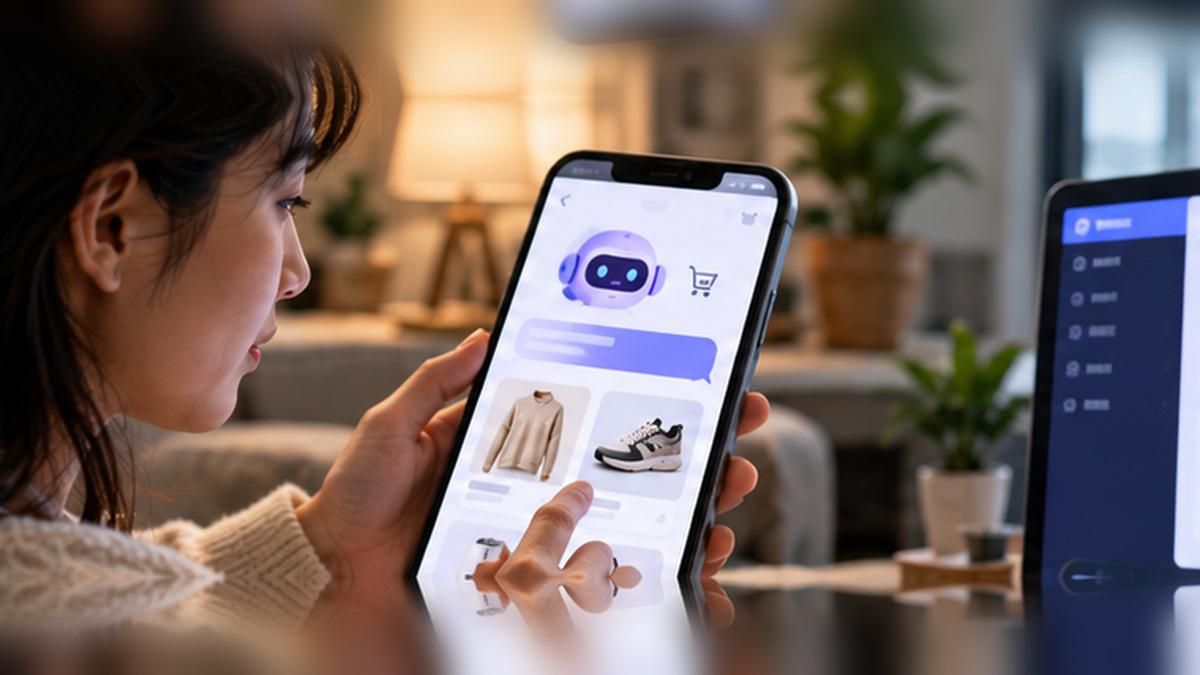
Multi-platform operation is the normal state of current merchants, but order, inventory and advertising data are scattered in different backends. Qianwen Work tries to become an independent third-party e-commerce Agent, unifying the scattered data into the same AI workstation.
The ambition of this positioning is that if merchants get used to handing over the reports, marketing plans and inventory strategies of various platforms to Qianwen Work, the operation context and workflow it precipitates will be transformed into an extremely solid B-end software barrier.
Although the core capability of Qianwen Work at the present stage still stays at data integration and decision support, and the specific delivery is still limited by API permissions and manual confirmation, its strategic intention is very clear.
Alibaba not only wants to use AI to make Taobao sell more products, but also takes advantage of e-commerce scenarios to let Qianwen take root in the daily workflow of consumers and enterprises.
02 Which wall did Doubao hit?
If Qianwen's shopping capability is built within Alibaba's own ecosystem, then Doubao Mobile Assistant is trying to solve another ultimate problem.
Can users skip the App and directly assign tasks to AI?
In September this year, relying on mobile system permissions, API interfaces and GUI (Graphical User Interface) automation technology, Nubia's second-generation Doubao mobile assistant began to try to understand user instructions, simulate manual clicks, swipes and inputs, and perform cross-application tasks such as problem searching, price comparison and order placement.
This GUI automation mode greatly reduces the threshold for calling existing Apps, and also pushes Agent to the forefront of ecological confrontation.
Although simulating manual operations can save users tedious steps, it is very easy to touch the red lines of platform account permissions, payment security and risk control. The deeper conflict lies in the redistribution of commercial traffic entries.
The business model of traditional e-commerce is built on the link of "search - recommendation - browsing - advertising", and the platform realizes monetization through exposure and traffic distribution. Once consumers entrust all their needs to external AI, product screening and comparison will be completed outside the App.
When external AI re-sorts products and distributes traffic, the original advertising monetization mechanism and recommendation algorithm of e-commerce platforms are in danger of failure. The platform may still provide payment and performance, but it loses the core user attention and traffic control power. This is the deep reason why Doubao Mobile Assistant suffered a collective boycott.
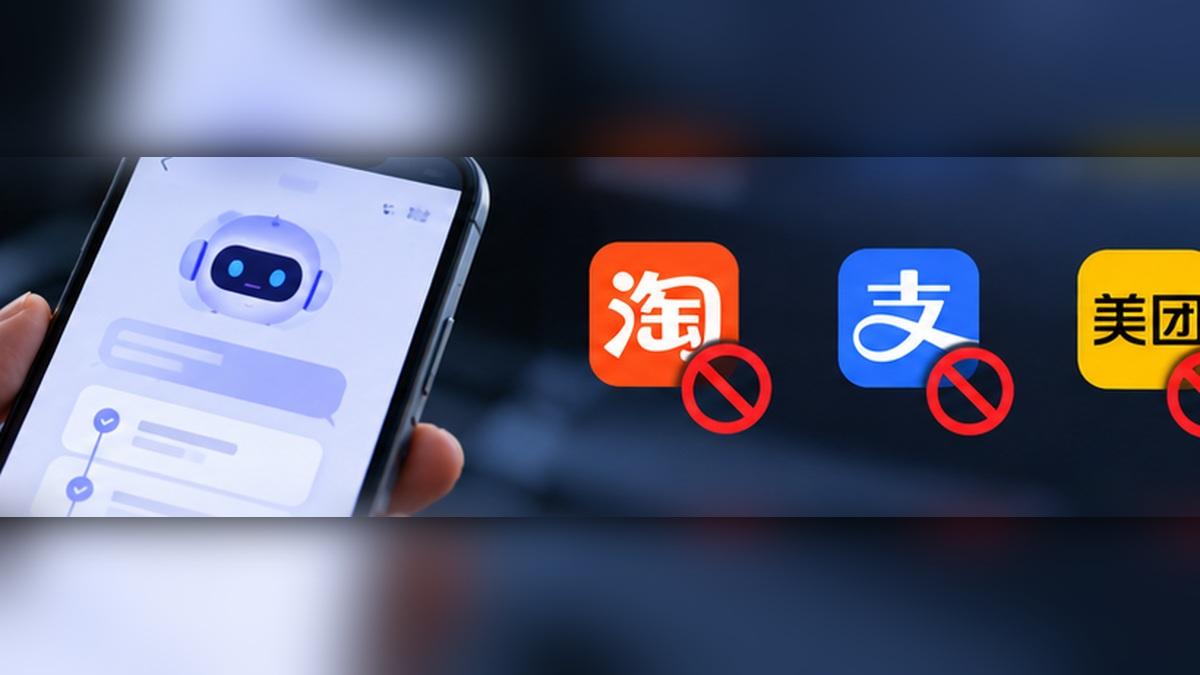
As mentioned earlier, as of October 14, the list of platforms that refused Doubao's SAEP agreement has increased to more than 150, including giants such as Taobao, Alipay, Meituan, Pinduoduo and WeChat.
It needs to be clarified that what the platforms resist is the unauthorized automated operation of external assistants on their own applications, not the technology itself. Taobao has its own AI assistant, Pinduoduo has in-station AI search, and all platforms welcome AI to improve the transaction efficiency of their own platforms, but firmly guard against external Agents eroding user relationships across rules.
For Doubao, shopping is the touchstone to prove its cross-application Agent deployment capability; but for trading platforms, once this capability is scaled up, the App will be reduced to a pure background performance tool. The more AI wants to become an independent super entry, the greater the ecological resistance it will face.
This also forces the industry to think in another direction: if you do not compete for independent entries, and only let AI empower existing e-commerce transactions, will the resistance be much smaller?
03 JD.com and Pinduoduo, another transaction account
In Doubao's rejection list, JD.com is a subtle exception.
As of October 14, JD.com's applications have not been explicitly included in the rejection list. In terms of business logic, this implies a possible choice: if external AI can bring new orders and transaction performance is still in its own hands, the platform does not exclude moderate opening up.
Xiaohongshu, which was once ridiculed by the industry as a large open loop, has repeatedly opened and shut down external link jumps in the process of cultivating its platform e-commerce ecosystem. Earlier, Xiaohongshu launched the "Direct to Purchase" function, allowing advertising notes to directly jump to pages of external e-commerce platforms such as Taobao and JD.com. This approach of giving up part of the front-end decision-making traffic in exchange for the whole network orders and conversion revenue is exactly the compromise product after the game between the traditional traffic platform and the performance platform.
JD.com's long-term accumulated self-operated supply chain and logistics performance system is its strongest defense line. Even if users compare prices through external AI, what ultimately determines the transaction is still price, inventory and delivery timeliness. External AI is responsible for stimulating and screening demands, and JD.com undertakes performance, the logic is still unobstructed.
Of course, JD.com is also building its own AI defense line. On the user side, JD.com has upgraded its AI shopping assistant "Dongdong", and launched JoyAI real-time video digital human to connect shopping and life services; on the merchant side, it has launched the Jingmai AI operation center, which plans to provide digital human live broadcast services for more than 90,000 merchants during Double 11.
JD.com's logic of developing AI is pure enough, that is, focusing on services, fully embedding into the existing supply chain and transaction process, and reducing friction between buyers and sellers.
Compared with JD.com's high-profile display, Pinduoduo's approach is more hidden on the basis of pragmatism.
In May this year, Pinduoduo quietly launched the AI search function. When users input complex long-tail demands such as "find low prices, limited brands, black label or 10 billion subsidy", AI will accurately disassemble the conditions and match the product library. Before that, the platform also successively launched C-end functions such as fitting room, AI friend interaction, and AI interactive drama, which are either for user activation or to assist decision-making and conversion.
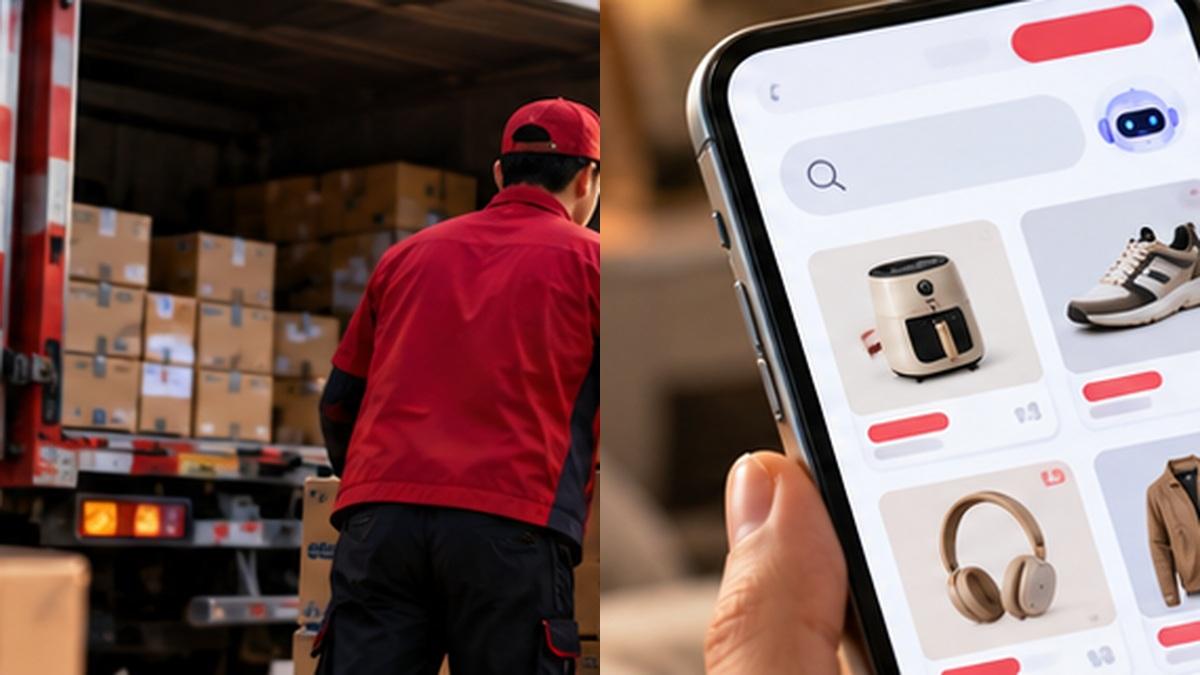
It can be seen that Pinduoduo positions AI purely as an efficient internal tool. Whether it is product distribution or user activation and retention, the launch of a series of small functions has clear purposes, and will not interfere too much with users' usual shopping habits. This is in sharp contrast to the industry's practice of building a new conversational "shopping guide" to try to change users' shopping habits.
There are rumors that Pinduoduo still "follows" traditional programming internally. The reason is that the group does not care whether employees use Vibe Coding to improve efficiency, but pays more attention to actual output. This extreme efficiency orientation is exactly the same as that of Pinduoduo's current co-chairman Zhao Jiazhen when he built the agricultural product upward supply chain in the early years.
On the merchant side, Pinduoduo's official open platform has long opened order and logistics interfaces to merchants, allowing third-party service providers to develop AI customer service and product management tools under authorization. A Pinduoduo merchant said that the platform's customer managers even encouraged the use of ByteDance's e-commerce material generation tools, and would teach them step by step.
The pragmatic paths of JD.com and Pinduoduo show that AI does not have to rush to subvert consumers' interaction entries, but can start from specific and time-consuming transaction links first.
E-commerce is an extremely result-oriented industry. If AI helps merchants generate 10,000 marketing images but cannot improve the conversion rate, its commercial value will be greatly reduced; if AI compares prices for consumers ten rounds but the final experience is poor, it is difficult to form repurchases.
Help merchants manage their business, make decisions for users. This year's Double 11, the competition of e-commerce AI has moved to the "agent layer".
No matter how the front-end entry evolves, the product supply capacity, performance timeliness and after-sales guarantee are still the cornerstones that determine whether the transaction can be established. It can change the flow direction of traffic, but cannot subvert the most basic law of supply and demand.
AI that can facilitate transactions more efficiently is good AI.
The copyright of the cover image and the illustrations of the article belongs to the copyright owner. If the copyright owner believes that their works are not suitable for public browsing or should not be used for free, please contact us in time, and this platform will correct it immediately.