Exclusive Interview with the Father of Brain-Computer Interface: What Elon Musk's BCI company can do, my monkeys could do it 20 years ago
This year, the capital pouring into the brain-computer interface track is extremely hot.
In the first half of the year alone, more than 60 financing transactions took place in China's brain-computer interface sector, with the total financing amount exceeding 70 billion yuan.
In this breakout year for brain-computer interfaces, Miguel Nicolelis, the "Father of Brain-Computer Interface", came to Beijing again and had a long in-depth conversation with Pencil News.
"Those things it makes patients do, my monkeys could do them 20 years ago."
Sitting in front of Pencil News, Nicolelis did not hide his opinions on Neuralink at all. He believes that despite a valuation of hundreds of billions of dollars, Neuralink has no future and is a company that "only knows how to put on demonstrations".
The famous Silicon Valley venture capital institution a16z once called him specially to ask for his views on Neuralink. When he learned that the institution had already invested huge sums of money, he did not hold back: "That's your money. You are going to burn it, not mine."
This scientist who has studied brain-computer interfaces for decades once promoted monkeys to control mechanical devices with their brains, and also helped paralyzed patients take steps again with the help of exoskeletons. But he believes that today's brain-computer interface industry is falling into a technical race: investors are keen on chips, electrodes and implantation surgeries, but ignore the most important business model issues — how many patients can actually be treated, how high the cost is, and who is willing to pay for it?
"Where is the Apple in the brain-computer interface field?" he asked rhetorically. The answer is that it does not exist yet.
He also crossed boundaries to write a science fiction novel *2036: The End of the Brain Web*. In this work, financial giants attempt to use the brain web constructed by brain-computer interface technology to control human thoughts, but are hit by a super solar storm powerful enough to destroy digital civilization.

Three brain-computer related works by Nicolelis: *Beyond the Brain*, *The New Brain-Computer Interface Revolution*, *2036: The End of the Brain Web*
From the commercial prospects of Neuralink, to the route dispute between invasive and non-invasive brain-computer interface technologies, and then to the Silicon Valley AI bubble, the veteran scientist shared many views that investors are reluctant to hear. Below is our exclusive conversation with him.
Why are you optimistic about non-invasive solutions?
Pencil News: How far is the current brain-computer interface from practical application?
Miguel Nicolelis: For motor behaviors, we have been able to perform quite well. This point is very important. But people keep saying that memories can be decoded and uploaded, which is not true. What we are talking about are motor behaviors, such as moving hands, walking, and even speaking is also a motor behavior. We have mastered this type of behavior quite well, and hundreds of applications are already in use right now.
Pencil News: You mean in terms of motor functions?
Miguel Nicolelis: Exactly. Other things are different, far more complicated. That's why I have been emphasizing for 12 or 13 years that the brain is not a computer. It is not a digital device, and you cannot treat the brain the way you treat a computer. This is the main confusion in this field.
Some people who are not neuroscientists and mainly work in computer science think the brain is a digital device, which is not the case. To put it more academically, we have known this for a long time, and the founders of the digital era basically accept this point. Claude Shannon knew it, so did Alan Turing. The brain is an uncomputable system, the human brain, or the brain of any living creature. Norbert Wiener, the founder of cybernetics, also knew this. And John von Neumann, the greatest genius of the 1950s, a very famous mathematician who created the architecture of digital devices, wrote a book before his death in 1955, clearly stating that the brain cannot be computerized.
What I am saying is not new. This part of history has just been erased, or put into a box because it does not fit the needs of some people. Most people in the field of neuroscience now agree that this is the main debate between us and computer science. Later, John McCarthy proposed the term "artificial intelligence" at the Dartmouth Conference in 1956, and Shannon was the vice organizer of the conference. He said: "I do not agree with this term, it is inaccurate, because machines do not have intelligence. Intelligence is a biological property. Intelligence resides in the brain."
These people are all founders of the digital era, not irrelevant figures. Alan Turing, Norbert Wiener, John von Neumann, Claude Shannon, they all hold basically the same view.
In my opinion, this is the main confusion people have about the capabilities of brain-computer interface technology. There is another point to clarify: brain-computer interface, namely BCI, such as brain-controlled cursor, typing, language decoding, is a branch of the larger field of brain-machine interface, namely BMI, such as brain-controlled robotic arms, robots, exoskeletons. Can I get a pen? If there is a piece of paper, I can draw it for you. This large section is BMI, brain-machine interface. Inside it is BCI, where you control a computer. But with BMI, you can also control robots, exoskeletons, virtual avatars, trucks. We have even controlled an electric car. So BCI is only a branch of the entire field.
Pencil News: In China, most people talk about BCI, and few people talk about BMI.
Miguel Nicolelis: BMI is the historically established term. This concept was proposed by me in a paper published in *Nature* in 2000, when this field was just established. The term BCI came from Niels Birbaumer at the University of Tübingen, who led the first non-invasive patient study in 1999. Even he admits that BMI is a larger concept. Because using the term BCI limits it to computers, while we can control many other things.
Take the "Walk Again" project as an example. Patients wear virtual reality glasses to control their own virtual avatars, and at the same time can control the exoskeleton robot equipment that helps them walk. This cannot be called just BCI, because the two things happen at the same time.
There has always been some confusion here. I know the term BCI is more common in China, and that's fine. But in my opinion, if you only use BCI, you limit this field to one single choice.
Pencil News: That's the first important thing we learned today. Since we are talking about BCI, it is divided into invasive and non-invasive types, right?
Miguel Nicolelis: Yes, the same applies to BMI. You can further distinguish them into non-invasive and invasive types. I invented the invasive technology, and I hold related patents. Although Elon Musk has never respected it, I do have them, and the patents have now expired. I invented it at that time to study how the brain works in animals. It is the best way for this kind of research, because the signal fidelity is high, very clear, it can distinguish single neurons, record the electrical signals of single cells, and record hundreds or thousands of neurons. If you want to study how the brain works, there is no doubt that it can provide high-fidelity signals. But what is the problem? Patients do not care about these. What they want is to regain the ability to walk, speak, or restore bladder control. We found that non-invasive solutions can achieve most of these goals. So even though I invented the invasive technology, I still advocate that non-invasive is the main solution now.
Pencil News: So you think we should take the non-invasive path now?
Miguel Nicolelis: That's exactly what I use on human patients.
Pencil News: Why? It can be used for many treatments?
Miguel Nicolelis: Exactly. I came up with an acronym SEAS for it. What advantages does non-invasive have over invasive? First of all, it is safer (Safety).
Pencil News: There is no need to open the skull.
Miguel Nicolelis: Right, no need to open it. I have medical training, and I have performed craniotomy when studying medicine. There are risks of infection and rejection. If the implant stops working, you cannot simply take it out, because the removal process will take away healthy tissue together, and the patient will lose brain tissue. You would never want that to happen.
Secondly, non-invasive solutions are effective (Efficacy), they can achieve the goals, allow people to walk and speak. The technology may not be so fancy, no microchips, no Wi-Fi that engineers and computer scientists love. But I am a doctor, I need to make sure that patients come first.
Besides, it is affordable (Affordability). It is several orders of magnitude cheaper than invasive solutions. In the United States, a single implantation surgery may cost 250,000 US dollars, which no one can afford. Today, 3.4 billion people around the world are affected by at least one of the 37 most common brain diseases. This does not include mental illnesses, only neurological diseases such as epilepsy, Alzheimer's disease, and Parkinson's disease. This group accounts for 43% of the total human population, 3.4 billion people, which is a very large number. These studies estimate that there may be 450 million patients in China. These are estimates published in the literature. To treat so many people, 250,000 US dollars per person, where can you find so many neurosurgeons to perform the implantation? It's completely crazy.
Three of my students founded Neuralink, they did not tell me at that time, and later the company was acquired by Elon Musk (Note from Pencil News: The three students are Max Hodak, Tim Hanson and Joseph O'Doherty. The first two are co-founders of Neuralink, and O'Doherty is a senior researcher. But Musk participated in the founding of Neuralink from the very beginning, and did not acquire it later).
Pencil News: They are your students?
Miguel Nicolelis: Three of the founders are my former students. Some founders came from California, but these key figures came out of my lab. So since 2017, I have been saying that Neuralink has no future and no commercial prospects.
Pencil News: What does S stand for in SEAS?
Miguel Nicolelis: Scalable. You can expand non-invasive solutions to millions of people, but you cannot do that with invasive solutions. Invasive treatment should be the last resort. For example, for severe locked-in syndrome, where the patient cannot move a single muscle in the body, is locked inside, cannot speak, cannot even move their eyes, but is still alive and has normal cognition. Professor Birbaumer started his research with this type of patients. Even though they cannot move a single muscle in their body, he enabled them to spell emails. They can think and operate, just not as fast as you might imagine. Invasive solutions are a bit faster, but there is another problem that no one talks about: biocompatibility. No one has solved it so far. For many invasive treatments, the implant stops working after a few months or about a year, because the brain will react to it, produce an immune response, wrap the sensor, and eventually it fails.
Pencil News: The signal disappears.
Miguel Nicolelis: So you look at most of these companies, including Neuralink, have you heard any news about their first implanted patient later?
Pencil News: No, I haven't heard anything about it anymore.
Miguel Nicolelis: They will show demonstrations right after the implantation. After a few months or years, there is nothing left. The implant probably no longer works. It's not that the patient stops working, it's that the implant stops working, the patient is still there, but the implant is useless.
What Neuralink can do, my monkeys could do 20 years ago
Pencil News: Do you still think that way about Neuralink now?
Miguel Nicolelis: It is just a toy for arrogant maniacs to show off. One day, I received a call from someone at Andreessen Horowitz (the venture capital firm a16z). I asked: "How did you get my phone number?" She said: "We got your number. What do you think of Neuralink?" I said: "My opinion is public, it will not have a bright future." She said: "We have invested a lot of money in Neuralink, and we think it is a valid investment." I said: "That's good for you, but that's your money, you are going to burn it, not mine. I will not invest a cent in that company." She kept insisting on talking to me. I said: "Do you really want to hear my opinion?" She said: "Yes, we do." I said: "Then pay me. You have invested 600 million US dollars in this company, and you still want to keep calling to get my opinion for free? No, you have to pay." Then she disappeared. The reality is that many things in the technology field today, especially in the United States, are bubbles in my opinion. With my humble personal opinion, all they want is to push the company to IPO.
Pencil News: They want to capitalize on it.
Miguel Nicolelis: Exactly, they want to go public through IPO, so that the losses can be spread to the shareholders.
Pencil News: That's what I think too.
Miguel Nicolelis: They have already made money when they sell their options. They don't care at all whether the company is sustainable. There is a very famous venture capitalist in the United States who wrote a book about Mark Zuckerberg called *Zucked* (Note from Pencil News: This investor is Roger McNamee, an early investor of Facebook and a mentor of Zuckerberg, who later became one of the most well-known critics of Facebook). He is retired now, a very decent and honest person. He said: "When I first started doing venture capital in the 1970s and 1980s, I hoped to create viable companies that could exist for 30, 50, 60 years. The new generation doesn't care if the company disappears next month. For them, as long as they push it to IPO and sell their shares, they win. Because the losses belong to the shareholders and the public."
Pencil News: But I think Neuralink can still help some people.
Miguel Nicolelis: Yes, it will help a few people. But all the demonstrations they did, we did them 20 years ago, 10 years ago, there is nothing new. It's just that technologies like chips and Wi-Fi are impressive. Look at the things the patient does after receiving the treatment, my monkeys could do them 20 years ago. So it's like a demonstration-focused company.
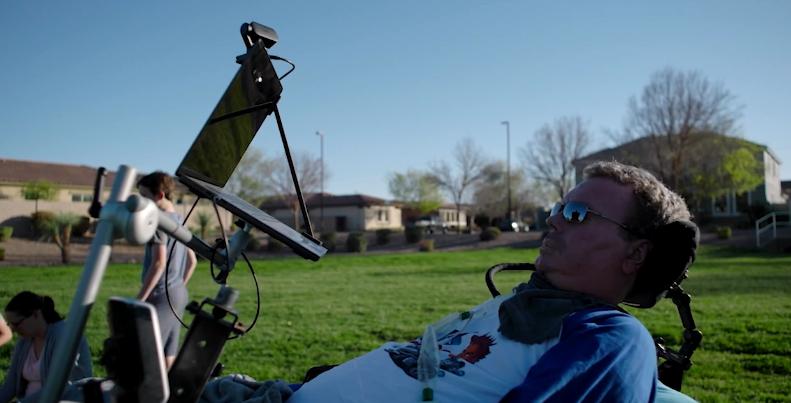
Example of Neuralink brain-computer interface demonstration
Pencil News: If I understand correctly, the FDA will not approve it for commercialization?
Miguel Nicolelis: It will get approved, because he controls the FDA now. But there is no market outside the United States. First of all, you need a hospital that can perform this kind of implantation surgery. Secondly, you need neurosurgeons who are competent for this kind of surgery. Good luck finding them all over the world. Third, who will pay for it? Will medical insurance, public medical insurance pay for it? No one knows.
Pencil News: What do you think of DBS (Deep Brain Stimulation)?
Miguel Nicolelis: DBS is a completely different matter, it targets deep brain areas. And it will stop working after a few years too.
Pencil News: Really?
Miguel Nicolelis: Yes, because the biocompatibility problem has not been solved.
Pencil News: But Medtronic has done a lot